
Many families choose above ground pools for their affordability and ease of installation. But what happens when the sides of your pool start bowing in? This problem can cause worry, but it’s more common than you think. Bowing sides not only look bad but can also mean your pool is at risk of further damage or even collapse.
Understanding why above ground pool sides bow in, and learning how to fix and prevent it, will help you enjoy a safe and long-lasting pool season.
This article explores all aspects of above ground pool sides bowing in. You’ll learn the causes, see real examples, discover solutions, and get practical advice for both new and experienced pool owners. If you want your pool to stay strong, beautiful, and safe, read on.
Why Above Ground Pool Sides Bow In
Bowing means the pool walls curve inward instead of standing straight. This can happen suddenly or over time. Some people notice it after filling the pool, while others see it months later. Here are the main reasons:
1. Water Pressure Imbalance
Water pressure should push outward on the pool walls, keeping them straight. If the water level drops too low, the pressure from the outside ground can push the walls inward. This is common if you drain the pool or lose water from a leak.
2. Poor Installation
How you set up your pool matters. If the ground is not level, or the frame is not assembled correctly, the sides may not be strong enough. Even small mistakes during installation can cause long-term problems.
3. Weak Or Damaged Pool Walls
Older pools, or pools made from thin metal, can become weak. Over time, rust, dents, or repeated stress can cause the walls to lose their shape and start bowing.
4. Soil And Ground Movement
If the ground under your pool shifts, the support for the walls changes too. Heavy rain, freezing and thawing, or poor soil compaction can all cause the ground to move.
5. Pool Overfilling Or Underfilling
Too much water puts extra force on the walls. Too little water removes the support that helps them stay straight. Both can cause bowing.
6. Winter Damage
In cold climates, ice can expand and press against the pool walls. If you don’t winterize your pool correctly, frozen water can do serious harm.
7. Poor Support Structure
Some pools rely on vertical posts or horizontal rails for strength. If these supports are weak, missing, or damaged, the sides can bend inward.
8. Liner Problems
A wrinkled, stretched, or torn liner can pull on the walls unevenly, making them bow.
Non-obvious insight: Many people think only water pressure matters, but ground conditions and support posts are just as important. Ignoring these can lead to problems, even if your water level is perfect.
What Are The Risks Of Bowed Pool Sides?
Bowing sides are not just a cosmetic problem. They can lead to:
- Leaks: Curved walls can tear the liner or create gaps where water escapes.
- Structural failure: Severe bowing may cause the wall to collapse or pop out of the track.
- Injury risk: If a wall fails while people are in the pool, it can cause serious accidents.
- Shortened pool lifespan: Continuous stress weakens materials, making your pool last fewer years.
Practical example: A pool owner in Florida noticed his pool bowing after a rainstorm. He ignored it, and weeks later, the wall split open, flooding his yard and damaging his deck.
How To Identify Bowing In Pool Sides
Sometimes, bowing is obvious: you see the sides curving inward. Other times, it’s less clear. Watch for:
- Uneven waterline (water higher on one side)
- Visible inward curve of the walls
- Wrinkles or stretching in the liner
- Loose or shifting top rails
- Unusual sounds (creaking or popping from the frame)
Check your pool at least once a month, especially after storms or heavy use.
Common Types Of Above Ground Pools And Bowing Risk
Not all pools are equally prone to bowing. Here’s a quick comparison:
| Pool Type | Bowing Risk | Why |
|---|---|---|
| Steel Wall | Medium to High | Strong, but rust and dents can weaken over time |
| Resin Frame | Medium | Resists rust, but plastic parts can crack |
| Soft-Sided (Inflatable) | High | Walls rely on water pressure and can easily bow with low water |
| Hybrid (Steel + Resin) | Low to Medium | Combines strength and rust resistance |
Non-obvious insight: Even high-end pools can bow if installed poorly or placed on soft ground. Quality matters, but so does preparation.
Step-by-step: What To Do If Your Pool Sides Are Bowing
If you spot bowing, act quickly. Here’s how to respond:
1. Stop Using The Pool
Safety first. Get everyone out. Do not swim until you understand and fix the problem.
2. Check The Water Level
Is the water too low or too high? Restore it to the correct range (usually just below the skimmer). Never leave an above ground pool empty for long.
3. Inspect For Leaks
Look for wet spots, liner tears, or dropping water levels. Fix leaks before anything else.
4. Examine The Frame And Supports
Are any posts, rails, or plates bent, rusted, or missing? Tighten loose bolts and replace any broken parts.
5. Assess The Ground
Check for signs of soil erosion, washout, or shifting. Hard-packed, level ground is essential.
6. Straighten The Walls
If the bowing is minor, you can sometimes gently push the wall outward while the pool is full. Do this carefully and only with proper support. For serious bowing, you may need to partially drain the pool, reshape the wall, and reinforce the area.
7. Reinforce Weak Spots
Add extra support where needed. This might mean new posts, braces, or wall foam. Make sure everything is stable before refilling.
8. Refill And Monitor
After repairs, refill to the correct water level. Watch the sides closely for a few days.
Preventing Above Ground Pool Sides From Bowing
Prevention is easier than repair. Here’s how to keep your pool walls straight:
Proper Installation
- Level the ground: Use a long level and compact the soil.
- Follow manufacturer’s instructions: Don’t skip steps or use the wrong parts.
- Install a base: Use sand, stone dust, or a pool pad to create a smooth, stable base.
Maintain Water Level
- Never drain your pool below the skimmer unless you must repair it.
- If you must drain, do so quickly and refill as soon as possible.
Support Structure Checks
- Inspect posts and rails every month.
- Replace rusted or bent parts right away.
Ground Care
- Watch for soil erosion, especially after rain.
- Add landscaping or edging to direct water away from the pool.
Winterizing
- Lower water to the correct level for your climate.
- Use a proper winter cover and ice compensators.
- Remove heavy snow from the cover to avoid extra weight.
Liner Maintenance
- Smooth wrinkles when installing.
- Patch tears immediately.
- Don’t let the liner stretch too much.
Don’t Overfill
- Keep water at the recommended level.
- Never let water overflow, as this can stress the walls.
Advanced tip: For extra peace of mind, install a retaining wall or gravel trench around the pool to control soil and water movement.
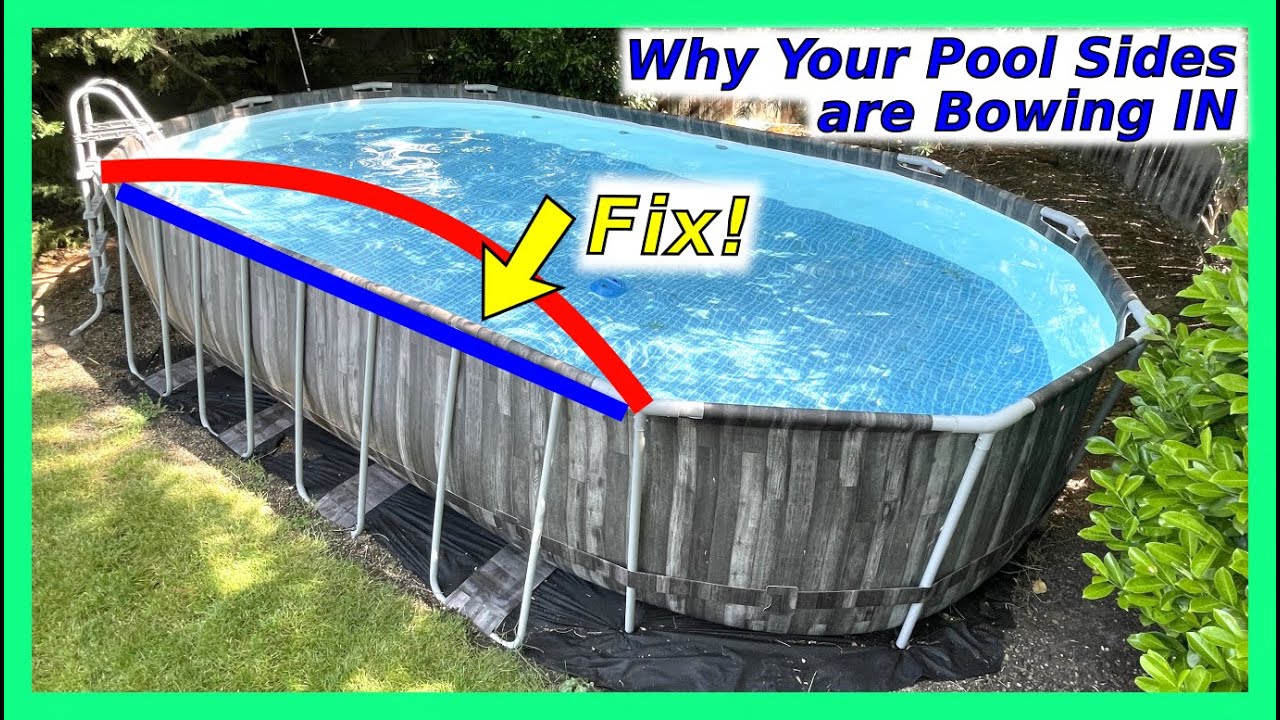
Credit: www.youtube.com
Real-life Examples: Above Ground Pool Sides Bowing Stories
Hearing from other pool owners can help you understand what to expect.
Case 1: The Sudden Bow
A family in Ohio noticed their 24-foot round steel pool bowing inward after a heavy rain. The ground under one side had washed out, allowing the wall to lose support. They drained the pool halfway, rebuilt the base with compacted stone dust, and re-leveled the supports.
The wall straightened, and the pool survived.
Case 2: The Liner Stretch
A new pool owner in Texas filled his pool too quickly, causing the liner to stretch and pull the walls inward. He drained several inches, smoothed the liner, and slowly refilled. The bowing disappeared.
Case 3: The Hidden Rust
A 10-year-old pool in New York began to bow inward with no clear cause. On closer inspection, the owner found rust holes at the base of the wall. The rust had eaten through, making the wall weak. They replaced the damaged section and added a wall foam protector to prevent future rust.
Key lesson: Most problems are fixable if you act early. Delaying repairs can turn a small bow into a disaster.
Diy Vs. Professional Help: When To Call An Expert
You can handle many small repairs yourself, but sometimes you need a pro.
Diy Is Okay If:
- The bowing is minor (less than 2 inches inwards)
- The frame is not damaged
- The ground is stable
- You have basic tools and confidence
Call A Professional If:
- The bowing is severe or covers a large area
- The wall is cracked, split, or rusted through
- The pool is older or you’re unsure of the structure
- Ground movement or erosion is involved
A professional will have the tools and experience to fix big problems safely.
Comparing Above Ground Pool Wall Materials
Some materials resist bowing better than others. Here’s how common options compare:
| Wall Material | Strength | Longevity | Cost |
|---|---|---|---|
| Galvanized Steel | High | 10-20 years | Medium |
| Resin (Plastic) | Medium | 7-15 years | High |
| Aluminum | Medium | 10-15 years | Medium |
| Inflatable Vinyl | Low | 1-3 years | Low |
Pro tip: Invest in a pool with a strong, rust-resistant wall for best results.
Tools And Supplies For Fixing Bowed Pool Sides
If you need to repair your pool, gather these items first:
- Screwdrivers and wrenches (for tightening or replacing bolts)
- Rubber mallet (for gentle tapping)
- Pool wall foam or padding (for added strength)
- Replacement frame parts (if needed)
- Pool liner patch kit
- Shovel and tamper (for ground work)
- Level (for checking straightness)
- Water hose (for refilling)
Important: Always use manufacturer-approved parts and follow their instructions.

Credit: www.youtube.com
Long-term Maintenance Tips
Keeping your pool in top shape reduces the risk of bowing.
- Monthly Inspections: Walk around your pool and look for changes in wall shape, liner condition, and support posts.
- Seasonal Deep Checks: Before opening and after closing the pool, check for rust, loose bolts, and ground stability.
- Water Quality: Balanced water prevents corrosion and liner wear.
- Cover Use: Always use a cover when not swimming for long periods.
- Landscaping: Keep plants and roots at least 2 feet away to prevent ground movement.
Non-obvious tip: Avoid placing heavy items (like planters or grills) next to your pool. These can shift and damage the support structure.
What If You Ignore Bowed Pool Walls?
Some owners wait, hoping the problem goes away. This rarely works. The risks of ignoring bowing include:
- Sudden wall collapse
- Expensive repairs or total pool replacement
- Water damage to your yard, deck, or home
- Injuries to swimmers or pets
If you notice bowing, act now. It’s cheaper and safer than dealing with a disaster later.
Is It Ever Safe To Swim With Bowed Sides?
Generally, no. Even small bows can signal a bigger problem. The wall could fail without warning, especially with people in the pool. Always fix bowing first.
Insurance And Above Ground Pool Damage
Many homeowners wonder if insurance covers pool damage. Policies vary, but most standard home insurance plans do not cover damage from poor installation, rust, or ground movement. Some may cover sudden accidents, but you must check with your insurer.
Tip: Take photos of any damage and keep records of repairs. This helps if you ever need to file a claim.

Credit: www.reddit.com
Should You Replace Or Repair A Bowed Pool?
This depends on:
- Age of the pool: Older pools with many problems may be better replaced.
- Severity of damage: Small bows can be fixed. Cracked or split walls often require replacement.
- Cost: Compare repair costs with buying new. Sometimes a new pool is cheaper in the long run.
Talk to a pool professional for honest advice if you’re unsure.
How To Choose A New Above Ground Pool To Avoid Bowing
If you decide to replace your pool, consider these features:
- Thick steel or resin walls for strength
- Strong vertical supports and horizontal rails
- Reinforced liner with UV and puncture resistance
- Quality base material (not just sand)
- Good warranty for parts and structure
Research before you buy. Look for reviews and talk to other owners. For more information on pool types and safety, visit the Wikipedia swimming pool page.
Comparing Repair Vs. Replacement Costs
Here’s a look at average costs for both options:
| Repair Type | Average Cost | When to Choose |
|---|---|---|
| Minor Bowing Fix | $100 – $300 | Small bends, good condition |
| Frame/Support Replacement | $200 – $800 | Damaged posts or rails |
| Wall Panel Replacement | $500 – $1,200 | Large rust or cracks |
| Full Pool Replacement | $1,500 – $6,000 | Severe, old, or unsafe pool |
Tip: Get multiple quotes before starting big repairs.
Frequently Asked Questions
Why Do Above Ground Pool Sides Bow In After Heavy Rain?
Heavy rain can soften the soil around your pool. If the ground washes out or shifts, it removes the support holding your pool walls upright. This lets the sides bow inward. Make sure your pool is on well-compacted, level ground and direct rainwater away with landscaping.
Can You Fix Bowed Pool Walls Without Draining The Pool?
For small bows, you can sometimes gently push the wall outward while the pool is full, using strong support on the outside. For larger problems, you usually need to lower the water to reduce pressure, then reshape and reinforce the wall before refilling.
Is Bowed Pool Wall Repair Covered By Warranty?
Most warranties cover defects in materials or workmanship, not damage from poor installation, ground movement, or rust. Always read your pool’s warranty and keep records of installation and maintenance.
How Do I Know If My Pool Wall Is About To Fail?
Warning signs include a loud pop or creak, a sudden new curve in the wall, a dropping water level, or the frame pulling away from the wall. If you see these, get out of the pool and call a professional immediately.
What’s The Best Way To Prevent Pool Sides From Bowing?
Install your pool on firm, level ground, keep water at the correct level, inspect supports monthly, and repair any rust or frame damage right away. Use a winter cover in cold areas and direct rainwater away from the pool.
—
Above ground pools bring joy, but bowed walls can quickly turn fun into stress. By understanding the causes, acting quickly, and following smart maintenance, you can prevent most problems. Always prioritize safety, check your pool regularly, and don’t hesitate to ask for professional help if you need it.
With care, your pool will stay strong, safe, and ready for summer memories year after year.