
A kitchen sink’s plumbing might look simple, but small changes can cause big problems. One question that often comes up is: can you have 2 P traps under a kitchen sink? Maybe you’re upgrading your kitchen, adding a dishwasher, or just curious about how drains work. This topic is not only about what’s possible, but also about what’s safe, efficient, and allowed by plumbing codes.
Many homeowners and even some handymen think adding another P trap helps with drainage or odor control. But what really happens when you put two P traps under your kitchen sink? Will your sink drain slower, or could you face flooding?
This article will break down the facts, explain the science, and help you avoid common mistakes that lead to costly repairs.
Let’s explore the full story behind P traps—what they do, why you usually only need one, what plumbing codes say, and what happens if you break the rules. Whether you’re a DIY enthusiast or just want to understand your kitchen better, this guide will give you the clear answers you need.
Understanding P Traps: What They Do
A P trap is a U-shaped pipe found under almost every sink. Its main job is to stop sewer gases from coming up through the drain and entering your home. It does this by holding a small amount of water at the bottom of the “U” shape, creating a seal.
But the P trap does more than just block smells. It also:
- Catches debris that falls down the drain, stopping it from clogging the main pipes.
- Prevents small objects (like rings or earrings) from getting lost forever.
- Helps with proper drainage by connecting the sink to the home’s venting system.
Most kitchen sinks have one P trap per drain. If you have a double-bowl sink, both bowls might connect to a single P trap, or sometimes to two separate traps. But is that a good idea?
The Standard Plumbing Setup For Kitchen Sinks
In a typical home, the kitchen sink’s drain system works like this:
- Water flows from the sink into the drain pipe.
- The drain pipe leads to a P trap.
- After the P trap, the pipe connects to the main drain line, which usually connects to a vent pipe.
The vent pipe is critical. It lets air into the plumbing system so water can flow smoothly and the trap seal stays in place. Without proper venting, the trap can lose its water, letting sewer gases in.
For most kitchen sinks, only one P trap is installed under the sink, even if there are two bowls. Here’s why:
- One trap is enough to block gases for both bowls.
- It keeps the system simple and less likely to clog.
- It matches what most plumbing codes require.

Credit: forum.nachi.org
Why Some People Consider Using 2 P Traps
If one P trap works well, why do people think about adding a second? There are a few reasons:
- Double sinks: People assume each bowl needs its own trap.
- Adding a dishwasher or disposal: Some think each appliance should have its own trap.
- DIY misunderstandings: Without plumbing knowledge, it seems logical to “double” protection.
- Old house plumbing: Sometimes homes are remodeled and end up with two traps by accident.
While these ideas sound reasonable, they often lead to more problems than solutions.
What Plumbing Codes Say About Multiple P Traps
Most building codes are clear about P traps. The International Residential Code (IRC) and the Uniform Plumbing Code (UPC) both say that you should not have more than one trap per fixture or fixture drain.
Here’s a summary:
- One fixture, one trap: Each sink or group of connected fixtures should have a single P trap.
- No double trapping: Two traps in the same drain line are not allowed.
- Vent required: All traps must be properly vented.
The reason is simple—two traps in the same line can cause water to get stuck, leading to slow drainage or even siphoning out the water that seals the traps. This can let sewer gas into your home.
Code Example
The UPC Section 1004.1 states:
“Each trap shall be self-cleaning and shall be designed so that it will not lose its seal under varying conditions of flow. ”
Two P traps can make it hard for this to happen. If you ever have a plumbing inspection, having two P traps under your kitchen sink will almost certainly be flagged as a violation.

Credit: www.amazon.com
How Two P Traps Affect Drainage
It might seem like adding a second P trap gives you extra protection or better drainage, but the opposite is true. Here’s what happens:
- Water can get trapped between the two P traps, creating a “double seal.”
- This double seal can slow down water flow, making the sink drain slowly or not at all.
- Air pressure problems can cause one trap to lose water, breaking the seal.
Let’s look at a simple comparison of a single P trap versus double P traps:
| Feature | Single P Trap | Two P Traps |
|---|---|---|
| Drainage Speed | Fast, smooth | Slow, can gurgle |
| Odor Control | Reliable | Risky if one trap dries out |
| Clog Risk | Normal | Higher (debris can get stuck between traps) |
| Code Compliance | Yes | No |
As you can see, two P traps don’t just break the rules—they make your plumbing worse.
Common Problems Caused By Double Trapping
Using two P traps under your kitchen sink may seem harmless, but it can create real headaches. Some of the most common issues include:
1. Slow Draining Sinks
Water can’t flow smoothly when it has to pass through two water seals. You might notice your sink is always half-full or takes minutes to empty.
2. Gurgling Noises
Air gets trapped between the two P traps. As water moves, it creates a vacuum, causing strange gurgling or bubbling sounds.
3. Sewer Gas Odors
When the water seal in one trap is sucked out (a process called siphoning), sewer gas can enter your kitchen. This can lead to bad smells and even health risks.
4. Frequent Clogs
The space between two P traps is a perfect place for grease, food scraps, and other debris to collect. This leads to more frequent and harder-to-remove clogs.
5. Pipe Leaks Or Bursts
Extra pressure from trapped air and water can stress pipes, leading to leaks or even burst pipes over time.
6. Failed Plumbing Inspections
If you ever sell your home or do major renovations, a double trap setup will not pass inspection. You’ll be forced to fix it, often at a higher cost.
What To Do If You Find Two P Traps
Sometimes, you move into a home and discover there are already two P traps under the kitchen sink. What should you do?
- Don’t panic. This is a common mistake, and it’s usually easy to fix.
- Call a licensed plumber. Removing the extra trap and rerouting the pipes to a single P trap is a straightforward job for a pro.
- Check for other code violations. If a previous owner made this mistake, there may be others.
Here are the basic steps a plumber might follow:
- Turn off the water to the sink.
- Disconnect both P traps.
- Install a new drain arm to connect both sink bowls (if double sink) to a single P trap.
- Connect the P trap to the main drain line.
- Test for leaks and proper drainage.
If you’re handy and know basic plumbing, you might do it yourself. But be careful—bad plumbing can cause expensive water damage.
Real-life Examples And Case Studies
Let’s look at what happens in real homes when two P traps are installed.
Example 1: Slow Draining And Odors
A homeowner added a garbage disposal to one side of a double sink. To “play it safe,” they installed a second P trap for the disposal. Soon, the sink started draining slowly, and a strong smell developed. After calling a plumber, they learned the extra trap was causing both problems.
Removing it fixed everything.
Example 2: Failed Home Inspection
During the sale of a house, an inspector found two P traps under the kitchen sink. The buyer’s lender refused to approve the mortgage until it was fixed. The seller had to pay for emergency plumbing repairs before the sale could close.
Example 3: Diy Fix Gone Wrong
A homeowner tried to fix a leaky drain by copying a setup seen online, adding a second P trap. Within weeks, the pipe burst under the sink, flooding the kitchen and causing $2,000 in damage. Insurance covered repairs, but not the cost of lost food and kitchenware.
These stories show that double trapping is not just a technical problem—it can create stress, cost money, and even ruin your day.
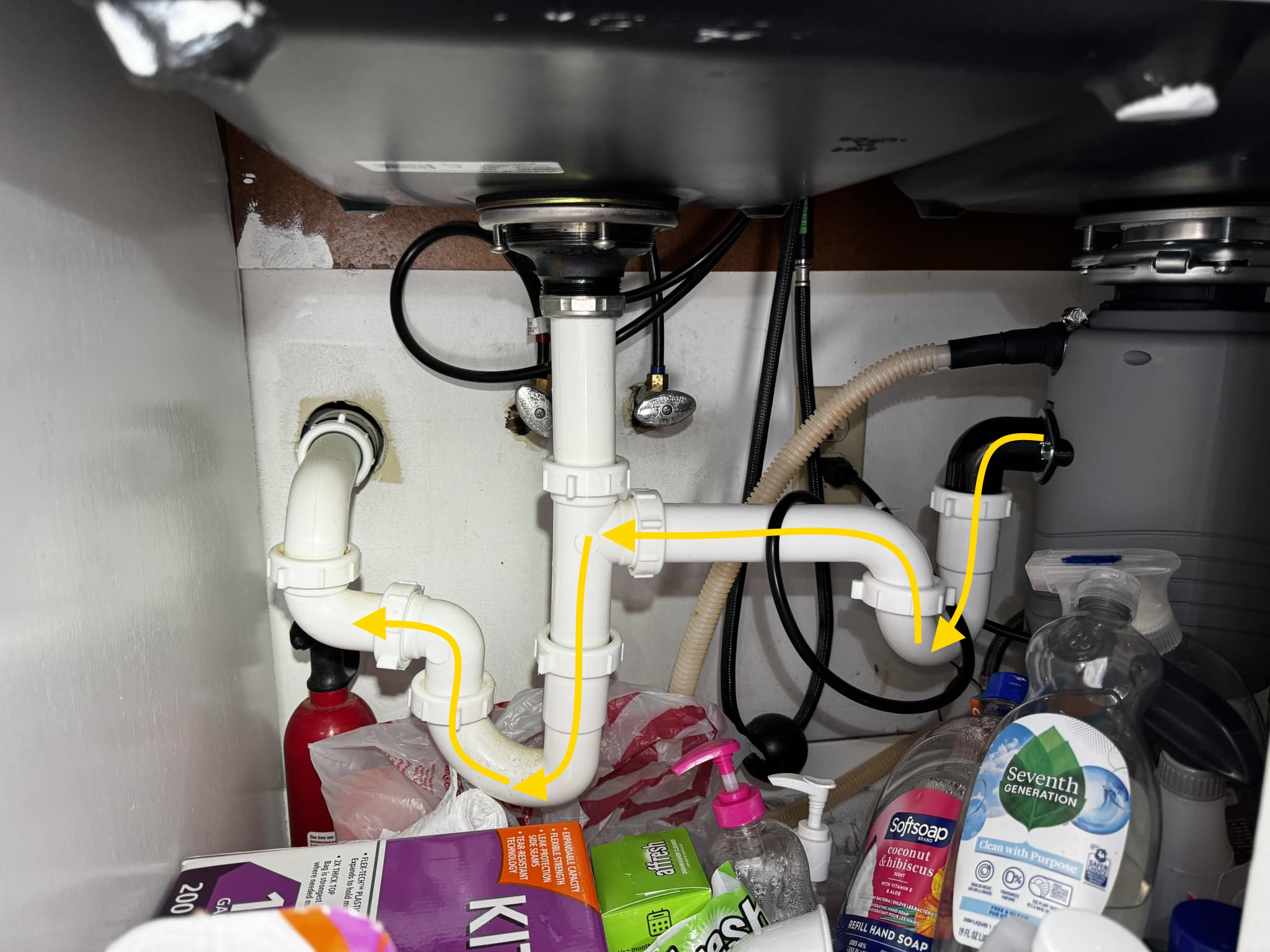
Credit: structuretech.com
When Multiple Traps Are Allowed (and When They’re Not)
While two P traps under a single kitchen sink are not allowed, there are some cases where more than one trap is used—just not in the same drain line.
Allowed
- Separate fixtures: If you have two completely separate sinks (like in different rooms), each one gets its own P trap.
- Commercial kitchens: Some large kitchens have special rules, but these are handled by professionals and still avoid double trapping one drain.
Not Allowed
- Two traps on one drain line: Never allowed under residential codes.
- Trying to fix a venting problem by adding a second trap: This does not work and makes things worse.
If you’re unsure, always check your local plumbing code or ask a licensed plumber.
The Science Behind Trap Seals And Venting
P traps work because of water seals and venting. Let’s break down how these interact, and why adding a second trap causes problems.
- Water seal: The “U” shape of the P trap holds water, which blocks sewer gases.
- Venting: A vent pipe lets air into the system, so water can flow out smoothly without pulling all the water out of the trap.
If you put two P traps in a row, the water in the first trap can get pulled out by the flow through the second trap. This is called siphoning, and it destroys the water seal.
Here’s a simple diagram of correct and incorrect setups:
| Setup | Description | Result |
|---|---|---|
| Single P Trap with vent | One trap, vented after trap | Works correctly |
| Two P Traps in a row | Trap, pipe, second trap, vent | Siphoning and odors |
The key is always to have one P trap per fixture, vented properly. More traps do not mean more protection.
Why Double Trapping Persists: Myths And Misunderstandings
Even with clear codes and evidence, the idea of double trapping shows up again and again. Why?
- Old plumbing books sometimes show two traps, but these were for different fixtures, not one.
- “More is better” thinking makes people believe two traps block more gas or catch more debris.
- Copying old homes: In very old houses, you might see odd setups that pre-date modern codes.
It’s important to know that plumbing has evolved. What was done in the past may not be safe or legal today.
Alternatives To Double Trapping For Problem Sinks
If your sink has problems like odors or slow draining, don’t add a second P trap. Instead, try these solutions:
- Check for clogs: Clean out the existing trap and drain line.
- Inspect the vent pipe: A blocked vent is a common cause of slow drainage and odors.
- Upgrade the trap: If your P trap is old or leaking, replace it with a new one.
- Install an air admittance valve: In some cases, these can help with venting where a full vent pipe isn’t possible (check your local code).
- Use a proper drain cleaner: Avoid harsh chemicals, but use safe products or a plumber’s snake.
If these steps don’t help, call a professional before changing your plumbing layout.
The Importance Of Plumbing Codes And Inspections
Plumbing codes exist for a reason—they protect your health, your home, and your wallet. Here’s why following them matters:
- Health and safety: Sewer gas is not just smelly—it contains harmful substances like methane and bacteria.
- Property value: Homes with code violations are harder to sell and often worth less.
- Insurance: Some insurance policies won’t pay for water damage caused by illegal plumbing changes.
- Peace of mind: Knowing your plumbing is safe and legal lets you relax.
Never skip permits or inspections for plumbing work. The extra step can save you thousands later.
How To Tell If You Have Double Trapping
Not sure if your kitchen sink has two P traps? Here’s how to check:
- Open the cabinet under your sink.
- Look for two “U” shaped pipes: If you see two, you have double trapping.
- Follow the pipes: If both U-shaped pipes connect to the same main drain, that’s a double trap.
- Take a photo and show it to a local plumber if you’re unsure.
Fixing this now can prevent bigger problems in the future.
The Right Way To Plumb A Double Kitchen Sink
If you have a double-bowl kitchen sink, you might wonder how to connect both sides to one P trap. The answer is a Y or T fitting that joins both drains before the trap.
Here’s a simple breakdown:
- Each bowl has its own drain tailpiece.
- Both tailpieces connect to a horizontal pipe (using a Y or T fitting).
- The horizontal pipe leads to a single P trap.
- The P trap connects to the main drain line.
This setup is code-compliant, drains well, and keeps smells out.
Hidden Problems With Double Traps: What Most People Miss
Some issues caused by double trapping are not obvious until it’s too late. Here are two insights beginners usually miss:
- Trap seal evaporation: If one trap gets used less, water can evaporate, breaking the seal and letting in sewer gases.
- Microbial growth: Water standing between two traps can become stagnant, encouraging bacteria and mold growth. This can cause strange smells and even health problems.
In both cases, the fix is to remove the extra trap and stick to a single, well-vented P trap.
Cost Comparison: Single Vs. Double Trap Setups
You might think adding a trap is cheap, but the long-term costs can be high. Here’s a quick cost comparison:
| Setup | Initial Cost | Maintenance Cost (5 years) | Repair Risk |
|---|---|---|---|
| Single P Trap | $20-$50 | $0-$50 | Low |
| Double P Trap | $40-$100 | $100-$500+ | High (leaks, clogs, code violations) |
Sticking with a single P trap saves money and avoids headaches.
Professional Advice: What Plumbers Recommend
Ask any experienced plumber, and the advice is clear:
- Always use one P trap per fixture.
- Never double trap a drain line.
- If in doubt, ask a pro.
Plumbers see the damage caused by code violations every day. Trust their experience—you’ll save money and avoid trouble.
Summary: The Bottom Line On 2 P Traps Under Kitchen Sink
To answer the main question: No, you should not have 2 P traps under your kitchen sink. It’s against plumbing codes, creates drainage problems, increases the risk of odors, and can lead to expensive repairs and failed inspections.
Stick to a single, well-vented P trap for each fixture. If you discover a double trap in your home, have it fixed as soon as possible. Good plumbing is about safety, simplicity, and reliability—not doubling up on what already works.
For more on this topic, you can check resources like the International Code Council.
Frequently Asked Questions
Is It Ever Legal To Have Two P Traps Under One Kitchen Sink?
No, it is not legal under most plumbing codes to have two P traps on the same drain line for a kitchen sink. Codes require one trap per fixture, and double trapping can cause drainage and odor problems.
What If My Double Sink Has Two Drains—do I Need Two P Traps?
You do not need two P traps. Both drains should connect to a single P trap using a Y or T fitting. This is the standard, code-compliant method and ensures good drainage.
Will Having Two P Traps Make My Kitchen Sink Drain Better?
No, two P traps will likely make drainage worse. Water can get trapped, causing slow draining and gurgling sounds. It may also increase the risk of clogs and odors.
Can Adding A Second P Trap Fix A Smelly Sink?
No, adding a second P trap does not help with odors and can make them worse if one trap dries out. Instead, check for clogs, blocked vents, or a dry trap. Fix the root problem, not the symptoms.
How Can I Fix Double Trapping In My Kitchen Sink?
The best fix is to remove one of the P traps and connect both sink drains to a single P trap. If you’re unsure how, contact a licensed plumber for help. This will make your plumbing code-compliant and safer.
With the right knowledge, you can keep your kitchen sink working smoothly and avoid the troubles that come from double trapping. Always stick with proven plumbing practices for the best results.