
If you work with plumbing or are considering a project at home, you might wonder about the materials and methods you can use. One common question is: Can you ProPress Type M copper? With new joining technologies like ProPress making installation faster and easier, it’s important to know what pipes are compatible. Using the wrong type can lead to leaks, failed inspections, or even dangerous situations. In this article, you’ll learn exactly what Type M copper is, how ProPress works, what manufacturers and codes say, and the real-world risks and benefits. You’ll get practical advice, expert comparisons, and clear answers to help you make safe, confident choices.
Understanding Copper Pipe Types
Before jumping into ProPress compatibility, you need to know the differences between copper pipes. There are three main types used in plumbing:
- Type K: The thickest wall. Used for underground and high-pressure applications.
- Type L: Medium thickness. Standard for most residential and commercial water lines.
- Type M: Thinnest wall. Popular for low-pressure, above-ground water distribution.
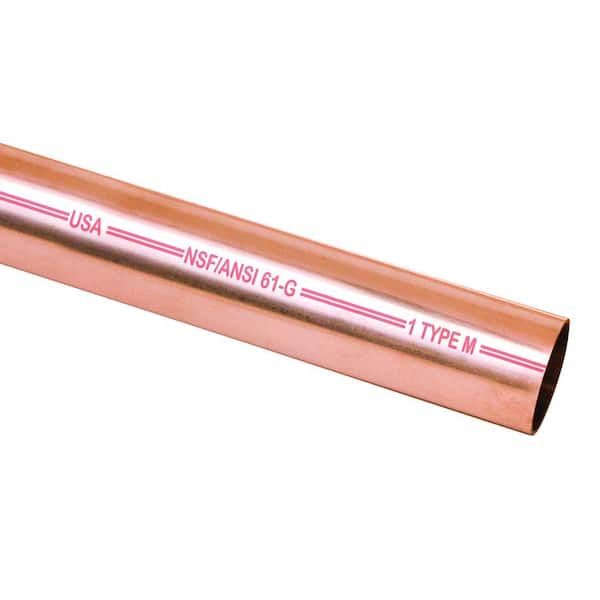
Type M is colored red for identification, Type L is blue, and Type K is green. These color codes help inspectors and plumbers quickly check what’s installed. Type M is less expensive, lighter, and easier to cut, but it’s not as strong as L or K.
It’s mainly for interior water supply lines and not for gas, refrigeration, or high-pressure systems.
Important fact: In many regions, local plumbing codes restrict where you can use Type M. Some don’t allow it at all, especially in multi-story buildings or for underground work.
What Is Propress?
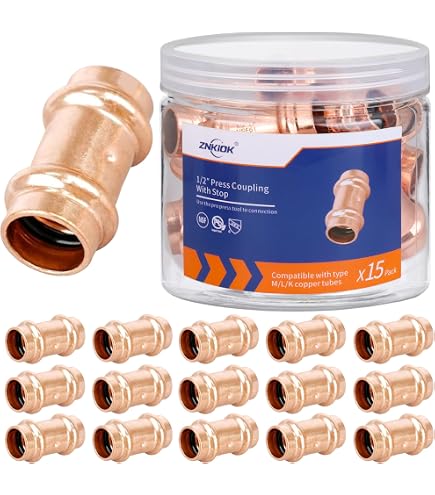
ProPress is a joining system developed by Viega that allows you to connect copper pipes without soldering. The ProPress tool uses special fittings with an O-ring inside. When you press the tool around the fitting, it deforms the copper and compresses the O-ring, creating a watertight and permanent seal.
Why Propress Changed Plumbing
Before ProPress, most copper joints were made with solder. Soldering is reliable but requires skill, an open flame, and time. ProPress:
- Reduces installation time by up to 60%
- Works in tight spaces and around flammable materials
- Can be used with water in the pipe (no need to drain everything)
- Makes it easier for less-experienced installers to get leak-free joints
Because of these advantages, ProPress is now widely used in new buildings, repairs, and even hospitals where open flames are a problem.
Credit: www.homedepot.com
Can You Propress Type M Copper?
This is the key question. The short answer is: Yes, you can ProPress Type M copper—but with important conditions and limitations.
What Manufacturers Say
Leading companies like Viega, Milwaukee, and Ridgid design their ProPress systems primarily for Type K and Type L copper. However, the official technical documentation states that Type M is also compatible for water and low-pressure systems, as long as the local code allows its use.
Manufacturers recommend:
- Only use ProPress fittings approved for the specific type of copper pipe
- Follow all local building codes
- Do not use with gas, fuel oil, or high-pressure steam
Plumbing Code Requirements
The International Plumbing Code (IPC) and Uniform Plumbing Code (UPC) are the main references in the US. Both allow Type M copper for interior water piping in many cases, but not for underground or high-pressure use.
Warning: Local codes may be stricter. Some cities or states do not allow Type M with press fittings at all, or only in certain buildings. Always check with your local inspector before starting a project.
Real-world Results
Many plumbers have used ProPress on Type M copper successfully for years in homes and small commercial buildings. If installed correctly, these systems can last decades. But there are real risks if the pipe is damaged, improperly supported, or used in high-pressure applications.
Propress Fittings Vs. Soldering For Type M
To understand if ProPress is right for your Type M copper job, you need to compare it with traditional soldering. Here’s a direct comparison:
| Feature | ProPress Fittings | Soldered Joints |
|---|---|---|
| Speed | Very fast (seconds per joint) | Slower (minutes per joint) |
| Skill Level | Easy to learn | Requires practice |
| Flame/Heat | No flame needed | Open flame required |
| Quality Control | Consistent factory seal | Depends on installer skill |
| Cost | Higher (fittings + tool) | Lower (fittings + solder) |
| Rework | Difficult (fitting is permanent) | Can be reheated and redone |
| Pipe Compatibility | K, L, M copper (if approved) | K, L, M copper |
Practical tip: ProPress is a great choice for fast, clean installations. But if you’re working with older Type M pipes, check them for thin spots or damage before pressing. Soldering can work better for repairs on old, brittle copper.
How To Identify Type M Copper
Identifying copper pipe type is critical before you use ProPress. Mistaking Type M for Type L could mean using the wrong fitting or not following code.
Look For These Clues
- Color Stripe: Type M has a red stripe printed on the pipe. Type L has blue, and Type K has green.
- Pipe Wall Thickness: Type M is thinner. For 1/2-inch pipe:
- Type M wall: 0.028 inches
- Type L wall: 0.040 inches
- Markings: The pipe will be labeled “Type M” every few feet.
- Weight: Type M feels lighter than L or K.
If you’re not sure, measure the wall thickness with a caliper or bring a short piece to your local hardware store for help.
Step-by-step Guide: Using Propress On Type M Copper
If you have Type M copper and want to use ProPress, follow these steps for a reliable, code-approved installation.
1. Check Local Codes
Before buying fittings or tools, call your local building department. Ask if Type M copper is allowed with press fittings for your project type (residential, commercial, etc. ). Get approval in writing if possible.
2. Inspect The Pipe
Type M is thinner, so dents, scratches, or bends can weaken the joint. Run your hand along the pipe. If you feel damage, cut out that section and use a new piece.
3. Cut Squarely
Use a pipe cutter, not a saw. The cut must be straight and smooth. Any burrs can cut the O-ring in the ProPress fitting.
4. Deburr And Clean
Use a deburring tool or sandpaper to remove sharp edges. Wipe the pipe with a clean cloth. Do not use oil or grease.
5. Mark Insertion Depth
Each ProPress fitting has a mark showing how far the pipe must be inserted. Use a marker or pencil to mark the pipe.
6. Insert The Pipe
Push the pipe into the fitting until it touches the stop. Do not twist or force it.
7. Press The Joint
Select the correct jaw size for your ProPress tool. Center the jaw over the fitting, squeeze the trigger, and let the tool finish the cycle. You will hear a click when done.
8. Inspect The Joint
Check that the fitting and pipe are fully pressed and the mark is visible. Wipe away any dirt or water.
9. Pressure Test
After all joints are finished, test the system to the pressure required by code (usually 1. 5 times working pressure). Watch for leaks.
Insider tip: Don’t rush. Take your time to prepare the pipe and fitting. Most leaks happen because of bad preparation, not because of the ProPress system itself.
When You Should Not Propress Type M Copper
There are situations where you should not use ProPress with Type M copper. These risks are often overlooked by beginners.
High Pressure Or Commercial Jobs
Type M is rated for lower pressure than L or K. Never use it for:
- Commercial hydronic systems
- Fire sprinkler pipes
- Main water lines
- Any system above 150 psi
Gas, Oil, Or Steam
Type M and ProPress are not approved for gas, oil, or steam. Use only approved pipe and methods for these systems.
Underground Or Concealed Installations
Type M is not allowed underground or in slabs. The thin wall can be damaged by rocks, settling, or corrosion. Use Type K or L for these applications.
Local Code Restrictions
Some inspectors will fail installations that use Type M and ProPress together, even if technically allowed. Always ask before you start.
Advantages And Limitations Of Propress On Type M Copper
Here’s a closer look at the real pros and cons:
Advantages
- Speed: Joints take seconds, not minutes.
- Consistency: Less chance of cold solder joints or leaks.
- No Flame: Safer in homes, hospitals, and near electrical wiring.
- Easier Repairs: Can press wet pipes—no need to drain the line completely.
Limitations
- Tool Cost: ProPress tools are expensive (often $1,000+). Not ideal for one-off jobs.
- Fitting Price: Press fittings cost more than soldered ones.
- Permanent: Once pressed, the fitting can’t be reused or repositioned.
- Pipe Quality: Thin Type M can deform if over-pressed or damaged.
Credit: www.amazon.com
Common Mistakes When Propressing Type M Copper
Many DIYers and new plumbers repeat the same errors. Avoid these to get the best results:
- Skipping Pipe Inspection: Even small dents or bends in Type M can cause leaks after pressing.
- Not Deburring: Burrs can cut or move the O-ring, leading to leaks.
- Wrong Fitting Type: Not all ProPress fittings are rated for Type M. Check packaging.
- Incorrect Tool Jaw Size: Using the wrong jaw will not seal the joint.
- Ignoring Local Codes: Always check if your area allows press fittings on Type M.
Real-world Example: Propressing Type M In A Home Remodel
Let’s look at a practical scenario. A homeowner wants to replace old galvanized pipes with copper during a bathroom remodel. They choose Type M copper to save money and ProPress for speed.
- The local code allows Type M for interior water supply.
- The homeowner checks each pipe for damage before pressing.
- All joints are marked and pressed carefully.
- System is pressure-tested at 180 psi (well below the Type M limit).
- After five years, the system has zero leaks.
Non-obvious insight: Even if your code allows Type M, using Type L for critical or concealed pipes adds peace of mind. Save Type M for short, accessible runs.
Data: Pressure Ratings For Copper Types
Understanding pressure ratings helps you know when Type M is safe. Here’s a quick data table for common sizes:
| Pipe Size | Type M Max Pressure (psi) | Type L Max Pressure (psi) | Type K Max Pressure (psi) |
|---|---|---|---|
| 1/2″ | 700 | 1145 | 1235 |
| 3/4″ | 560 | 985 | 1015 |
| 1″ | 495 | 850 | 920 |
Note: These are maximum ratings at room temperature. Most residential systems operate below 80 psi.
Comparing Propress Fittings For Type M, L, And K
Some buyers worry that ProPress fittings might not grip thinner Type M pipe as well. Manufacturers design most ProPress fittings to fit all three types, but always double-check the box or specs.
| Fitting | Fits Type K | Fits Type L | Fits Type M |
|---|---|---|---|
| Standard ProPress | Yes | Yes | Yes* |
| Gas ProPress | Yes | Yes | No |
| XL-C (large diameter) | Yes | Yes | Yes* |
*Check local code before using on Type M.
Key Factors When Choosing Pipe And Joining Method
If you’re deciding whether to use ProPress and Type M copper, consider these factors:
- Budget: Type M plus ProPress is fast and affordable for accessible, low-pressure systems.
- Building Type: Type L or K is better for commercial, high-rise, or underground jobs.
- Installer Skill: ProPress is easier and safer for beginners.
- Tool Access: If you don’t own a ProPress tool, soldering may be more practical.
- Local Code: Always your final authority.
Advanced advice: Consider future repair access. ProPress joints are permanent. If you might need to change pipes later, use traditional fittings in those spots.
What Inspectors Look For
When an inspector checks your plumbing, they look for:
- Pipe type (matching plans and code)
- Proper use of fittings (ProPress approved for pipe type)
- Good workmanship (no visible damage, clean joints)
- Pressure test results (no leaks at required test pressure)
If you used Type M where only L or K is allowed, you could be forced to redo the work.
The Cost Side: Is Propress On Type M Worth It?
ProPress tools are expensive to buy, so they’re more cost-effective for professionals or large projects. However, you can often rent them from tool supply stores.
Type M copper is about 20-30% cheaper than Type L for the same size pipe. But the savings can disappear if you need to replace faulty pipes later.
Press fittings cost 3-5 times more than solder fittings, but the labor savings (especially for pros) can make up for it.
Real-life tip: For a small job at home, soldering Type M may be cheaper if you already have the tools. For a big project, ProPress can save days of work.
Propress Myths And Misunderstandings
There are many myths about ProPress and Type M. Let’s clear up the most common ones:
- Myth: ProPress can’t be used on Type M at all.
- Fact: It can, if code and fitting rating allow.
- Myth: ProPress joints are weaker than solder.
- Fact: Properly installed, they are just as strong for water systems.
- Myth: You can press any copper pipe.
- Fact: Only use with pipes approved by the fitting manufacturer and local code.
- Myth: Pressed fittings always leak over time.
- Fact: Studies show pressed joints are as reliable as soldered ones when installed correctly.
For more technical details, visit the Viega ProPress official site.

Credit: terrylove.com
Frequently Asked Questions
Can I Use Propress On Old Type M Copper Pipes?
You can, but only if the old pipe is undamaged and clean. Inspect for corrosion, thin spots, or dents. Older Type M can be brittle. In many cases, replacing with new pipe is safer.
Are Propress Fittings Approved Everywhere For Type M Copper?
No. Approval depends on local plumbing codes and the specific fitting manufacturer’s guidelines. Always ask your local inspector and read the fitting documentation.
Is Propress Better Than Soldering For Type M Copper?
ProPress is faster and safer for most interior water piping projects, but soldering is less expensive and allows for easier rework. For DIYers with experience, soldering Type M can be just as reliable.
What Pressure Can Propress With Type M Handle?
Type M copper is rated up to 700 psi (1/2″), but ProPress fittings are usually rated for systems up to 200 psi. Always check the lowest-rated component and follow code requirements.
What Is The Main Risk Of Using Propress On Type M Copper?
The main risks are using it where code does not allow, pressing damaged or thin-walled pipe, or using the wrong fittings. These can cause leaks or failed inspections.
Final Thoughts
You can use ProPress with Type M copper pipe for many interior water supply systems, as long as you follow manufacturer guidelines and local codes. ProPress offers speed, safety, and consistent results, making it a smart choice for both pros and serious DIYers.
However, Type M’s thinner wall means you must be extra careful to avoid dents and always check for approval. When in doubt, Type L copper gives more safety margin, especially in concealed or high-pressure systems. Before starting any plumbing job, spend time planning, check with your inspector, and invest in the right tools for the job.
That’s the best way to avoid costly mistakes and enjoy a leak-free system for years to come.