
When you turn your shower on and nothing happens, it’s frustrating. You expect a strong stream of water, but instead, you get silence. If you have a Delta shower valve and no water comes out, you’re not alone. This is a common problem that can leave you confused and annoyed. But understanding why this happens—and how to fix it—can save you time, money, and stress.
Delta shower valves are popular for their durability and smooth operation. But like all plumbing parts, they can face problems. No water from your Delta shower valve doesn’t always mean the valve itself is broken. Sometimes, the problem is something simple you can fix quickly.
Other times, you may need a deeper look or even professional help. This article breaks down the real reasons why your Delta shower valve has no water, explains what you can do, and gives you expert tips to prevent the problem in the future.
How A Delta Shower Valve Works
Before you jump into solutions, it helps to know how your Delta shower valve actually works. The valve is the part inside your wall that controls water flow and temperature. When you turn the handle, you move an internal cartridge. This cartridge mixes hot and cold water and sends it out to your showerhead.
There are different types of Delta valves:
- Single-handle valves (most common in modern homes)
- Dual-handle valves (older models)
- Pressure balance and thermostatic valves (for consistent temperature)
No matter the type, if no water comes out, the basic troubleshooting steps are similar. The good news is, most causes have clear signs and simple fixes.
Quick Checks Before Troubleshooting
Sometimes, the simplest issues cause the biggest headaches. Start with these quick checks:
1. Is The Main Water Supply On?
Sometimes, water to the bathroom is turned off for repairs. Check under your sink or near your water heater. Ensure all water valves are fully open.
2. Have You Recently Done Plumbing Work?
If you or a plumber worked on the pipes, a shut-off valve may still be closed.
3. Are Other Fixtures Working?
Try the sink and toilet. If they also have no water, the problem is likely with your house’s water supply, not just the shower valve.
4. Is There A Water Outage In Your Area?
Check with your local water utility or neighbors to see if there’s a supply issue.
If you’ve checked all these and only your Delta shower valve has no water, it’s time to dig deeper.
Common Reasons For No Water From A Delta Shower Valve
Several things can block water flow through your Delta valve. Here are the most frequent causes:
1. Clogged Or Dirty Cartridge
The cartridge inside your Delta valve can collect debris, mineral buildup, or even bits of solder from new plumbing work. When clogged, water cannot pass through, or flow is very weak.
Symptoms:
- Handle turns, but no water comes out
- Handle is hard to turn
- Water flow is weak or stops suddenly
Why does this happen?
If you live in a hard water area, minerals from your water can build up quickly. Sometimes, old pipes shed rust or particles that end up in the valve.
2. Shut-off Stops Left Closed
Many Delta valves have built-in stops—small, flat screws on the valve body. These can be closed to turn off water to just the shower during repairs.
Symptoms:
- No water right after valve installation or repair
- Other fixtures in the bathroom work
Why does this happen?
Installers sometimes forget to open these stops after finishing the work.
3. Debris In The Supply Lines
Pipes, especially older ones, can send dirt, rust, or even bits of pipe into the valve. New construction can also leave debris in the lines.
Symptoms:
- Water stops after a recent plumbing job
- Only one side (hot or cold) works
- You see particles when you remove the cartridge
4. Broken Or Stuck Cartridge
A worn-out or damaged cartridge can break internally, preventing water flow even if the handle turns.
Symptoms:
- Handle is loose or spins freely
- Water leaks behind the wall
- No water even after cleaning
5. Supply Line Issues
Sometimes, pipes running to the valve are blocked, frozen, or have burst. This is less common but can happen, especially in cold climates.
Symptoms:
- No water to the shower and, possibly, to other fixtures on the same line
- Unusual noises in the wall
- Water damage near the valve
6. Incorrect Valve Installation
If the valve was installed incorrectly, water may not reach it. This can happen with new bathrooms or after renovations.
Symptoms:
- Problem started right after installation
- Other showers work fine
- Plumber reports low pressure or wrong connections
7. Pressure-balancing Spool Jammed
Delta’s pressure-balance valves have a spool that can jam due to debris, blocking all water.
Symptoms:
- Sudden loss of water after a pressure surge
- Handle is hard to turn
- Only cold or hot water works
8. Anti-scald Feature Engaged
Many Delta valves have an anti-scald or temperature-limiting device. If set incorrectly, it can stop water.
Symptoms:
- Only a trickle comes out, or only cold water
- You recently adjusted the handle’s stop
9. Hot Or Cold Water Shut-off At The Source
Sometimes, one line (hot or cold) is turned off at the heater, under the sink, or in the basement.
Symptoms:
- Only hot or cold water doesn’t work
- Other fixtures have the same problem
10. Rare Valve Body Failure
In rare cases, the brass valve body itself cracks or corrodes, blocking flow.
Symptoms:
- All other troubleshooting fails
- Visible corrosion or leaks behind the wall
Step-by-step Troubleshooting Guide
Solving a Delta shower valve no water problem is easier if you follow these steps:
Step 1: Confirm Water Supply
Check the main water shut-off and all local shut-off valves. Open the sink faucet—if you get water here but not in the shower, the issue is likely in the valve or its supply lines.
Step 2: Check The Stops On The Valve
Remove the shower handle and trim plate to expose the valve. Look for flathead screws on both sides of the valve. Turn them counterclockwise (open) gently. Don’t force them—they can break.
Step 3: Remove And Inspect The Cartridge
- Shut off water to the shower.
- Remove the handle and trim plate.
- Unscrew the retaining nut and carefully pull out the cartridge with pliers.
- Inspect for debris, damage, or mineral buildup.
- Clean with vinegar or replace if worn or broken.
Step 4: Flush The Valve
With the cartridge out and water off, place a towel in the valve opening. Briefly turn the water on to flush out debris. Be careful—water will come out quickly.
Step 5: Check Hot And Cold Lines
With the cartridge out, briefly open the stops (one at a time) to see if water comes out of both hot and cold sides. If one side is dry, the supply line could be blocked.
Step 6: Replace The Cartridge
If the cartridge is old, cracked, or stuck, replace it with a genuine Delta part. Knock-offs can cause problems.
Step 7: Reassemble And Test
Put everything back together. Turn the water on and test the shower. If water flows, you’ve solved the problem.
When To Call A Plumber
Some issues require professional help:
- You suspect supply line blockage or frozen pipes
- Valve body is leaking behind the wall
- You tried all steps but still have no water
What Makes Delta Shower Valves Unique?
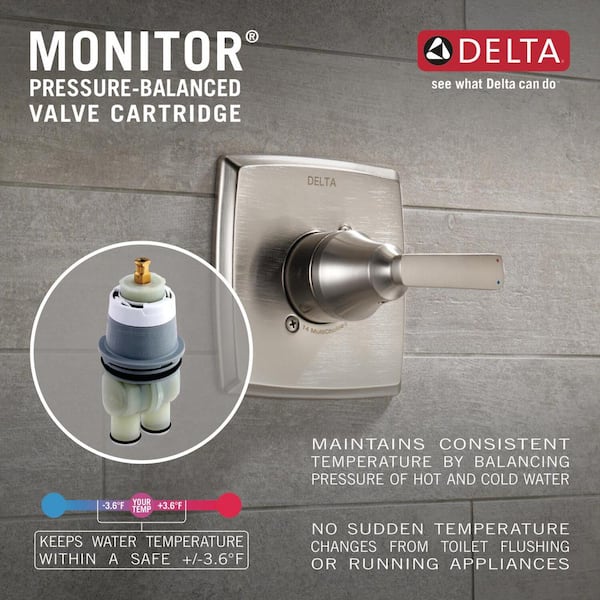
Delta’s design uses cartridge-based technology, making it easy to repair without replacing the whole valve. Most models use a pressure balance system, which keeps the water temperature steady even if someone flushes a toilet.
Delta valves also have:
- Easy-to-replace cartridges
- Stops for quick shut-off
- Universal compatibility with Delta cartridges
This design is user-friendly, but you must use genuine Delta parts for best results.
Tips To Prevent No Water Problems
Prevention is always better than repair. Here’s how to avoid future Delta shower valve issues:
1. Flush The Lines After Plumbing Work.
Always flush pipes before installing a new cartridge to remove debris.
2. Use A Water Filter Or Softener.
If you have hard water, a filter reduces mineral buildup.
3. Replace The Cartridge Every 5-7 Years.
Don’t wait for problems—regular replacement keeps everything working.
4. Check Stops After Repairs.
Always reopen the stops on the valve after maintenance.
5. Don’t Force The Handle.
If the handle is stuck, forcing it can break the cartridge.
6. Insulate Pipes In Cold Areas.
This prevents freezing and bursting during winter.
Real-world Examples
Let’s look at a few real situations:
Case 1:
After a bathroom remodel, a homeowner had no water in the shower, but the sink worked fine. The plumber forgot to open the stops on the Delta valve. Once opened, the water flowed perfectly.
Case 2:
A family in a hard water region found their shower suddenly stopped working. The cartridge was packed with white mineral buildup. Soaking it in vinegar and brushing off the scale restored flow.
Case 3:
A new shower installation had no water on the cold side. Flushing the valve showed debris from recent pipe soldering. After cleaning and replacing the cartridge, both hot and cold water worked.
Comparison: Delta Vs. Other Shower Valves
Here’s how Delta valves compare to similar brands:
| Feature | Delta | Moen | Kohler |
|---|---|---|---|
| Cartridge Replacement | Easy, universal fit | Easy, but different sizes | More complex |
| Stops on Valve | Most models | Some models | Rare |
| Hard Water Resistance | Good | Good | Average |
| Price | Moderate | Moderate-High | High |
Credit: www.homedepot.com
Signs Your Valve Needs Replacement
A good Delta valve can last decades, but here are signs it’s time for a new one:
- Repeated leaks after replacing cartridge
- Handle wobbles or won’t stay in place
- Visible corrosion
- No water even after all troubleshooting
If you’re replacing your valve, consider a newer pressure-balance or thermostatic model for better temperature control.
Cost Of Fixing A Delta Shower Valve With No Water
Here’s what you might expect to pay:
| Repair Type | DIY Cost | Professional Cost |
|---|---|---|
| New cartridge | $20–$60 | $120–$220 (labor + part) |
| Flush valve | Free | $100–$150 |
| Replace supply line | $30–$75 | $150–$350 |
| Replace valve body | $60–$120 | $300–$600 |
DIY repairs are often possible, but if you’re not comfortable, a licensed plumber can prevent damage and ensure a lasting fix.
Non-obvious Insights Most People Miss
1. Even New Valves Can Clog.
People think only old valves have problems. In reality, construction debris, solder, and even packaging materials can block a brand-new Delta shower valve.
- After water is shut off for repairs, small debris can move into the valve.
When the water comes back on, pressure changes push dirt into the cartridge, blocking flow days or weeks later.
- Some Delta cartridges look similar but fit only certain models.
Always match your cartridge to your valve’s model number. Using the wrong one can cause leaks or no water.
How To Identify Your Delta Valve Model
Knowing your valve model helps you get the right parts. Look for:
- Stamped numbers on the trim plate or valve body
- Old manuals or receipts
- Delta’s customer service—send them a photo for help
Delta’s website has a tool for identifying your valve. This step saves time and avoids buying the wrong cartridge.
When No Water Means A Bigger Plumbing Problem
If your Delta shower valve has no water and you’ve tried all the above, consider these possibilities:
- Main supply pipe blocked or frozen
- Severe corrosion inside old pipes
- Hidden leaks behind walls
These are rare, but they do happen, especially in older homes. A plumber can use cameras or pressure tests to find hidden problems.
How Hard Water Impacts Delta Valves
Minerals in hard water (like calcium and magnesium) cause white buildup inside cartridges. Over time, this:
- Reduces water flow
- Makes the handle stiff
- Causes the cartridge to fail early
A water softener or regular cleaning with vinegar can extend your valve’s life.

Credit: www.youtube.com
How To Clean A Delta Cartridge
You don’t always need to replace a clogged cartridge. Here’s how to clean it:
- Remove the cartridge.
- Soak in white vinegar for 1–2 hours.
- Scrub gently with an old toothbrush.
- Rinse and reinstall.
If the cartridge is cracked or the rubber seals are worn, replace it instead.
What If Only Hot Or Cold Water Doesn’t Work?
If one side is out:
- Check that both hot and cold supply valves are open.
- Flush each side separately.
- Inspect for debris or blockage in the cartridge.
Sometimes, a faulty water heater or a shut-off valve under the sink is the real culprit.
The Importance Of Using Genuine Delta Parts
Generic cartridges may cost less but often don’t seal properly. This leads to leaks, no water, or even damage to the valve body. Always use genuine Delta cartridges or parts for long-term reliability.
Useful Resources
For more technical diagrams and troubleshooting steps, Delta’s official support page offers guides and videos. You can visit the Delta Faucet Service & Parts page for accurate, up-to-date information.

Credit: www.amazon.com
Frequently Asked Questions
Why Does My Delta Shower Valve Have No Water After Installing A New Cartridge?
Often, debris enters the valve during installation. Remove the cartridge, flush the valve, and ensure the stops are open. If the problem continues, check that you used the correct cartridge model.
How Do I Know If My Delta Cartridge Is Clogged Or Broken?
If the handle is hard to turn or water flow is weak or stopped, the cartridge may be clogged. Remove and inspect it. If you see cracks, warped rubber, or can’t clean it, replace it.
Can I Fix A Delta Shower Valve No Water Problem Myself?
Many blockages and cartridge issues are DIY-friendly. If you’re comfortable with tools and follow steps carefully, you can save on repairs. For supply line issues or leaks behind the wall, call a plumber.
How Often Should I Replace My Delta Shower Valve Cartridge?
Most cartridges last 5–7 years, but in hard water areas, you may need to replace them more often. If you notice reduced flow, leaks, or stiffness, replace the cartridge.
Is It Safe To Use Vinegar To Clean My Delta Cartridge?
Yes, soaking the cartridge in white vinegar removes mineral buildup safely. Rinse and dry before reinstalling. Avoid harsh chemicals that could damage rubber seals.
A Delta shower valve with no water can be frustrating, but with the right steps, you can fix most problems quickly. Understanding how the valve works, using genuine parts, and following good maintenance habits will keep your shower running smoothly for years.
If you ever feel stuck, don’t hesitate to seek professional help—solving small plumbing problems early prevents bigger headaches later.