
se soda ash (sodium carbonate) to raise it. Always add chemicals slowly and in small amounts, testing between doses to avoid overshooting your target. It’s tempting to fix everything at once, but patience leads to better results and avoids wild swings in water chemistry.
Step-by-step Example: Balancing After Shock
Let’s say you shocked your pool and, after 12 hours, your pH is 8.0 (too high). Here’s a practical way to bring it back:
- Test all parameters: Check pH, alkalinity, and chlorine.
- Calculate acid dosage: For a 15,000-gallon pool, you might need about 10 ounces of muriatic acid to bring pH from 8.0 to 7.5 (always check the product label and use a pool calculator).
- Add acid safely: Pour acid slowly near return jets with the pump running.
- Wait and retest: Circulate for 2-4 hours, then retest. Repeat small doses if needed.
- Fine-tune alkalinity if necessary: If your alkalinity drops below 80 ppm, add baking soda to restore it.
Extra tip: Never add acid and shock at the same time. The strong reaction can reduce chlorine effectiveness and create dangerous fumes.
Mistakes Pool Owners Make With Shocking And Ph
Many new pool owners run into trouble because of a few common mistakes. Here’s what to look out for:
- Testing too soon: Measuring pH right after shocking can give false highs or lows. Wait until the chlorine level drops below 5 ppm for a true reading.
- Ignoring alkalinity: Fixing pH without checking alkalinity first means you’ll chase your tail. Alkalinity acts as a buffer, so always balance it before tweaking pH.
- Over-correcting: Adding too much acid or base after shocking can send your pH swinging wildly. Always add chemicals in small steps.
- Using the wrong shock: Some owners use cal-hypo in pools with high calcium, causing scale, or trichlor in fiberglass pools, which can etch surfaces.
- Not circulating water: After adding shock or pH adjusters, always run the pump for several hours. Stagnant water doesn’t mix chemicals evenly, leading to inaccurate test results.
- Ignoring stabilizer levels: Using dichlor or trichlor repeatedly can raise cyanuric acid (CYA) too high, which reduces chlorine’s effectiveness and can unbalance pH over time.
Real insight: The best practice is to test, adjust, and then retest. Relying on “feel” or guessing is a recipe for green water and frustration.
Real-life Scenarios: What To Do
Scenario 1: High Ph After Cal-hypo Shock
You shock your pool with cal-hypo, and the next day your pH is 8. 2—clearly above the safe range. Chlorine is back to normal. What should you do?
- Wait until chlorine is below 5 ppm.
- Add muriatic acid in small doses, circulating between additions.
- Retest in 2-4 hours until pH is between 7.2 and 7.8.
Scenario 2: Ph Drops After Non-chlorine Shock
You use potassium monopersulfate, and the pH falls from 7. 6 to 7. 1. Chlorine is unaffected, but swimmers complain of eye irritation.
- Add a small amount of soda ash to raise pH.
- Retest after circulation.
- Avoid over-correction, as pH below 7.2 can be harsh on swimmers and equipment.
Scenario 3: Cloudy Water And Unpredictable Ph
After a storm, you shock with liquid chlorine. The next day, pH is 7. 2, but after a week, it’s back up to 7. 8. Why?
- Rain and debris added organics, which were oxidized and produced acids, temporarily lowering pH.
- As chlorine is consumed and water settles, pH returns to its buffered level.
- Regular testing and small adjustments keep the pool balanced.
Pro tip: Environmental factors like rain, dust, and heavy use can change how your pool reacts to shock. Always adapt your routine to current conditions.

Credit: www.amazon.com
Advanced Tips: Managing Ph For Problem Pools
Some pools seem to have constant pH drift, either up or down. Here’s what experienced pool managers do:
- Use borates: Adding borates (30-50 ppm) can help stabilize pH. Borates act as a secondary buffer and also inhibit algae.
- Aerate the water: If your pH is low and you want to raise it without affecting alkalinity, point return jets up or use a fountain. Aeration releases CO2 and nudges pH upward.
- Switch shock types as needed: If you struggle with high pH, use dichlor or non-chlorine shock. For low pH, use cal-hypo or liquid chlorine.
- Monitor fill water: Sometimes tap or well water has unusual pH or alkalinity. Test your source water and adjust your maintenance plan accordingly.
Non-obvious insight: Consistently high or low pH usually means an underlying issue—like unbalanced alkalinity, too much stabilizer, or a hidden chemical source. Fix the root cause, not just the symptom.
The Bottom Line: Chlorine Shock And Ph
So, does chlorine shock raise pH? The answer is: it depends on the type of shock and your pool’s chemistry. Cal-hypo and liquid chlorine usually raise pH, dichlor is nearly neutral or slightly lowers it, and trichlor or non-chlorine shock can lower pH. But the effect may be temporary, especially after heavy oxidation.
For healthy, clear water:
- Test pH and alkalinity before and after shocking.
- Use the right type of shock for your pool’s needs.
- Adjust chemicals in small steps, and never rush.
- Retest after 24 hours for accurate results.
A little knowledge goes a long way. By understanding how chlorine shock interacts with pH, you’ll have fewer problems, happier swimmers, and less work in the long run.
If you want to dive deeper into pool water chemistry, the [Centers for Disease Control and Prevention (CDC)](https://www.cdc.gov/healthywater/swimming/residential/disinfection-testing.html) has reliable pool safety guidance.
By mastering the basics of chlorine shock and pH, you’re already ahead of most pool owners. Take your time, test often, and enjoy a sparkling, safe pool all season long.
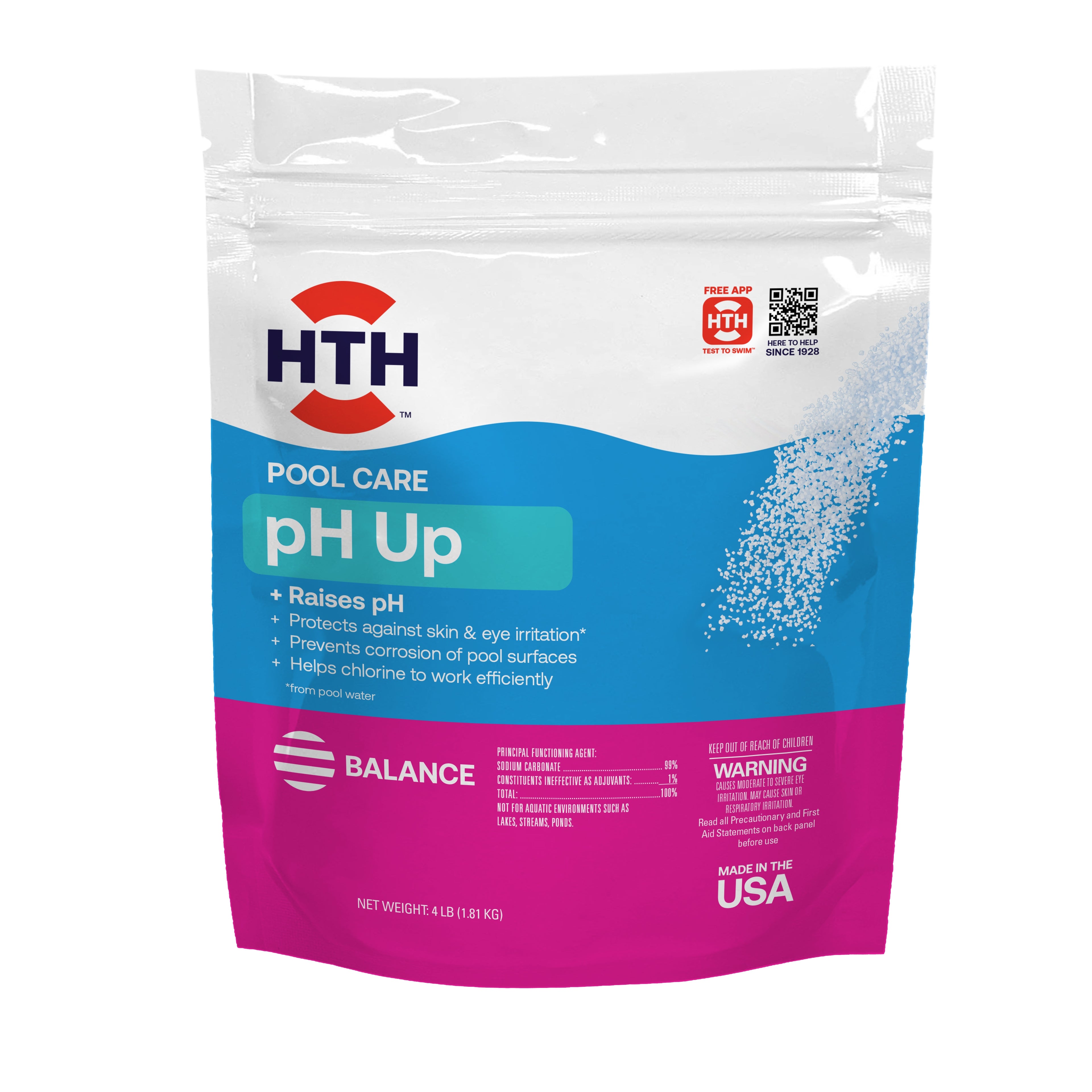
Credit: hthpools.com