
Heating a swimming pool often feels like a battle against nature. Traditional pool heaters can be expensive to install and run, pushing many homeowners to search for cheaper, simpler solutions. One of the most popular DIY approaches is heating a pool with black hose. This method uses the sun’s energy, a bit of physics, and some creativity to warm your pool water with very little cost. But how does it really work? What do you need to get started, and is it right for your pool? This guide explains everything—step by step, with practical advice, expert tips, and real-world insights that most beginners miss.
How Does Heating A Pool With Black Hose Work?
The basic idea is simple. Water travels through a long, black hose that sits in the sun. As water flows, the black hose absorbs solar energy and transfers heat into the water. This warm water then returns to your pool, raising the overall temperature.
The process relies on three key principles:
- Solar absorption: Black color absorbs more sunlight than lighter colors.
- Surface area: A long hose increases the area exposed to the sun.
- Circulation: Moving water through the hose helps transfer heat efficiently.
This method is not just a clever hack—it’s a practical use of solar thermal energy, scaled down for home use.
Benefits Of Heating A Pool With Black Hose
Choosing a black hose for pool heating has several important benefits:
- Low cost: Black hose is much cheaper than commercial solar panels or gas heaters.
- Easy setup: Most people can build and install a system in an afternoon.
- Eco-friendly: No gas or electricity is needed—just sunlight.
- Flexible: You can add more hose or change the layout as needed.
- Minimal maintenance: No moving parts or electronics to break down.
Compared to other methods, black hose heating is perfect for those wanting a low-risk, low-cost way to extend their swimming season.
What You Need To Get Started
Before you begin, gather the right supplies. Here’s what you’ll need for a basic setup:
- Black polyethylene hose (often called irrigation hose), usually 100–400 feet (30–120 meters)
- Garden pump or your pool’s existing pump
- Hose connectors and clamps
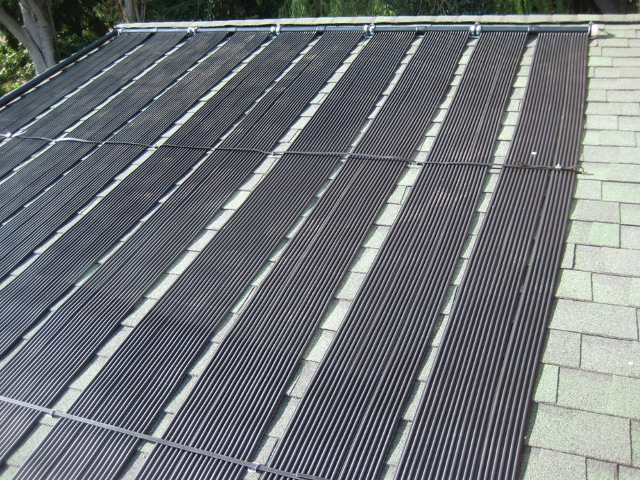
- A flat, sunny area for the hose (roof, patio, or lawn)
- Bypass valve (optional, for more control)
- Thermometer to monitor water temperature
Some people add insulation under the hose to reduce heat loss, or use reflective material to focus more sunlight on the coils.
Choosing The Right Black Hose
Not all hoses are the same. Picking the right type and size makes a big difference.
Key Factors To Consider
- Diameter: Common sizes are 1/2 inch, 3/4 inch, and 1 inch. Larger diameter means higher flow, but may heat less per foot.
- Length: Longer hose means more heating, but needs a stronger pump.
- Material: Polyethylene is durable and affordable.
- UV resistance: Hoses rated for outdoor use last longer in sunlight.
- Pressure rating: Ensure the hose can handle your pump’s output.
Example Comparison
Here’s a quick look at how hose diameter affects flow and heating:
| Hose Size | Max Flow Rate (GPH) | Heating Efficiency | Best For |
|---|---|---|---|
| 1/2 inch | 200–300 | High | Small pools, slow heating |
| 3/4 inch | 300–500 | Medium | Medium pools, balanced heating |
| 1 inch | 500–800 | Lower per foot | Large pools, fast flow |
Many pool owners find 3/4 inch hose to be the best balance between flow and heating power.
Planning Your Setup
A good plan saves time and money. Here are the key decisions to make before you start:
Where To Place The Hose
- Direct sunlight is essential. The more sun, the better.
- Flat surfaces work best: Roof, patio, deck, or lawn.
- Avoid shaded areas, especially in morning and late afternoon.
- Some people build DIY frames or racks to keep coils in place and off the ground.
How Much Hose Do You Need?
A general rule: 50–100 feet of hose per 1,000 gallons (3,800 liters) of pool water. For a small above-ground pool (5,000 gallons), 250–500 feet is typical. For larger pools, you may need 1,000 feet or more.
How To Connect To Your Pool
- Use your pool’s existing pump for best results.
- For above-ground pools, a small garden pump may be enough.
- Add a bypass valve so you can turn off the heater when not needed.
- Make sure hoses and connectors are compatible with your pool system.
Step-by-step Installation Guide
Follow these steps to build and install your black hose pool heater.
1. Unroll And Arrange The Hose
Lay out your black hose in a sunny area. The most common pattern is a large coil (like a snail shell). This keeps the hose compact and maximizes sun exposure.
- Use zip ties, garden stakes, or wire to keep the hose in place.
- If placing on grass, consider a tarp or board underneath to prevent grass from dying.
2. Connect The Hose To Your Pool
- Attach one end of the hose to the pool’s pump output (after the filter).
- Run the other end back to the pool.
- Use hose clamps and adapters as needed for a watertight seal.
- Test connections with a short water run before final setup.
3. Optional: Add A Bypass Valve
A bypass lets you control when water flows through the hose. This is useful for maintenance or when you don’t want extra heating.
- Install the valve at the connection point.
- Choose a simple manual or automatic type.
4. Prime And Test The System
- Turn on the pump.
- Check for leaks and fix them with extra clamps or tape.
- Monitor water flow—ensure it’s steady and strong.
- Use a pool thermometer to check the temperature at the hose exit.
5. Adjust And Optimize
- Experiment with hose length, flow rate, and coil shape.
- More hose increases heating, but slows flow.
- A slower flow allows water to heat more, but may not circulate enough for large pools.
Tips For Maximizing Heating Efficiency
Getting the most from your black hose setup requires more than just unrolling plastic in the sun. Here’s how to boost your results:
- Increase sun exposure: Angle the hose coils toward the midday sun.
- Insulate the underside: Place foam, cardboard, or wood under the hose to reduce heat loss to the ground.
- Use a solar cover: Trap heat in the pool overnight by covering it when not in use.
- Add more coils: Stack hoses or build a frame to layer them for greater surface area.
- Reduce flow at peak sun: Slower water moves through the hose, absorbing more heat.
- Minimize shade: Trim back trees or move obstacles that block sunlight.
- Keep hoses clean: Dust and dirt reduce solar absorption. Hose off the coils regularly.
One often-overlooked trick: painting the surface under the coils black increases heat absorption even more.
Real-world Example: Heating A 10,000-gallon Pool
Let’s look at a practical setup.
- Pool size: 10,000 gallons (38,000 liters)
- Hose used: 600 feet of 3/4 inch black polyethylene hose
- Placement: Coiled on a south-facing roof
- Pump: Standard pool pump, 1.5 HP
Results:
- On a sunny day (ambient temp 80°F / 27°C), the system raises pool temperature by 4–6°F (2–3°C) in 8 hours.
- Over a week, the pool stays 8–12°F (4–7°C) warmer than an unheated pool.
Key insight: Adding more hose and better insulation increased efficiency by 15% compared to the first setup.
Comparing Black Hose Heating To Other Methods
How Does This Diy Solution Stack Up Against Commercial Options?
| Heating Method | Initial Cost | Operating Cost | Heating Speed | Maintenance |
|---|---|---|---|---|
| Black Hose | Low ($50–$250) | Near zero | Slow to moderate | Very low |
| Gas Heater | High ($1,500+) | High (fuel) | Very fast | Moderate |
| Electric Heater | Medium-High | High (electricity) | Fast | Moderate |
| Solar Panels | High ($1,500+) | Low | Moderate | Low |
Insight: Black hose heating is best for those who want low cost and simplicity, not instant results.
Common Mistakes And How To Avoid Them
Many first-time DIYers make simple errors that reduce performance. Here are the biggest pitfalls:
- Too little hose: Using only 50–100 feet for a large pool won’t make a difference.
- Poor sunlight: Placing the hose in partial shade or on the wrong side of the house limits heating.
- Wrong connections: Loose fittings lead to leaks and wasted water.
- Not using a bypass: Running water through the hose on cold days can actually cool your pool.
- Ignoring insulation: Letting the coils sit on cold ground wastes heat.
- High flow rate: Pumping water too fast through the hose gives it no time to heat up.
A smart approach is to start with a basic system, measure results, and upgrade in small steps.
Maintenance And Care
A black hose pool heater is low-maintenance, but not maintenance-free. Here’s what to do:
- Check for leaks weekly, especially at connectors.
- Clean debris off the coils monthly for best solar gain.
- Inspect for cracks in the hose at the start and end of the season.
- Drain and store the hose over winter in freezing climates.
- Check water flow regularly to avoid blockages.
Most hoses last 3–5 years outdoors. Upgrading to UV-resistant hose can extend life.
When Is A Black Hose Pool Heater Not The Best Choice?
This method is simple, but not perfect for every situation.
- Very large pools (over 20,000 gallons) may need more heating power than practical.
- Cloudy or cold climates: If there’s little sun, results are limited.
- Year-round swimming: Hose systems can’t keep a pool warm in winter.
- Complex pool plumbing: Some in-ground pools may need professional help for safe connection.
If you want to swim in early spring or late fall, or need precise temperature control, a gas or electric heater is better.

Credit: permies.com
Safety And Environmental Considerations
Heating a pool with black hose is generally safe, but keep these points in mind:
- Hose material: Use only hoses rated for potable water (if possible), to avoid leaching chemicals.
- Secure hoses: Prevent tripping hazards by securing hoses out of walkways.
- Water temperature: Never heat pool water above 90°F (32°C) for safety, especially for children.
- Eco-friendly: This method uses no fossil fuels, and the hose can be recycled at end of life.
Using solar energy is a win for both your wallet and the planet.
Advanced Tips And Customizations
Once you’ve mastered the basics, you can boost performance with a few clever upgrades:
- Add a temperature controller: An automatic valve can turn off flow when the pool is warm enough.
- Use multiple coils: Run several hoses in parallel to increase heating without reducing flow.
- Paint surfaces: Black paint under the hose increases absorption.
- Build a mini-greenhouse: Placing the coils under a clear plastic cover traps even more heat.
- Automate with a timer: Run the pump only during peak sun hours for best efficiency.
One advanced trick: using copper tubing (painted black) instead of plastic hose increases heat transfer, but costs more and requires careful installation.
Real User Stories
Many pool owners share their experiences online. Here are two examples:
Sarah (California):
“We used 400 feet of black hose for our 8,000-gallon above-ground pool. After a week, the water was 10 degrees warmer than before. The kids could swim every afternoon—even in early May. ”
Mike (Ontario, Canada):
“I tried a hose heater on my 15,000-gallon in-ground pool. It worked well in June and July, raising the temperature by about 5°C. But in cloudy weather, it struggled. Still, for the price, I’m happy. ”
These stories show the method works best in sunny climates, or for small to medium pools.
Frequently Asked Questions
Credit: rimstar.org
What Size Black Hose Works Best For Pool Heating?
For most home pools, 3/4 inch black polyethylene hose offers the best balance of water flow and heating. For small above-ground pools, 1/2 inch hose is fine. Larger in-ground pools may need 1 inch hose, but will require a stronger pump.
How Long Does It Take To Heat A Pool With Black Hose?
Heating speed depends on sun, hose length, and pool size. A typical system can raise pool temperature by 2–6°F (1–3°C) per sunny day. For faster heating, use more hose and maximize sun exposure.
Can I Use My Pool’s Existing Pump With A Black Hose Heater?
Yes, most pool owners connect the hose to their existing pump system. Just make sure the pump is strong enough to push water through the extra length of hose. If not, a small booster pump can help.
Is Black Hose Pool Heating Safe For Kids And Pets?
Yes, if installed properly. Always use drinking-water-safe hose if possible, and never overheat the pool (keep below 90°F/32°C). Secure hoses out of walkways to avoid tripping hazards.

Credit: www.youtube.com
Where Can I Learn More About Diy Solar Pool Heating?
You can find more details, plans, and community advice at resources like the Wikipedia Solar Pool Heating page.
Heating a pool with black hose is a smart, affordable project. With careful planning and a few practical upgrades, you can enjoy warmer water and a longer swim season—without high energy bills or complex equipment. This simple solar solution puts the power of the sun, and a little DIY spirit, to work for you.