
A gas stove oven is a common appliance in many kitchens around the world. For some, it is the heart of the home, used daily to prepare meals and bake treats. Yet, many people do not really know how a gas stove oven works.
Understanding how it functions can help you use it safely, cook better food, and even save energy. This article will guide you through everything you need to know about how a gas stove oven works, from the basics of combustion to tips for maintenance and troubleshooting.
Whether you are new to cooking or have used an oven for years, you will find valuable information and practical advice here.
What Is A Gas Stove Oven?
A gas stove oven is an appliance that uses natural gas or propane to produce heat for cooking. It has two main parts: the stovetop burners and the oven compartment. The stovetop is used for boiling, frying, and simmering, while the oven is for baking, roasting, and broiling.
Most gas ovens are fueled by natural gas supplied through pipelines, but some use liquefied petroleum gas (LPG) stored in tanks. The oven is connected to a gas supply line, which brings fuel to the burners. Gas ovens have been popular since the 19th century because they heat up quickly, offer good temperature control, and are generally more energy-efficient than electric ovens.
Main Parts Of A Gas Stove Oven
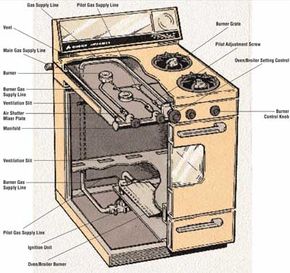
To understand how a gas stove oven works, you need to know its main parts. Here are the key components:
- Burners – These are found both on the stovetop and inside the oven. They mix gas and air to produce a steady flame.
- Ignition system – This lights the gas. It can be a pilot light (always burning) or an electric spark ignition (creates a spark when you turn the knob).
- Oven cavity – The insulated box where food is baked or roasted.
- Thermostat – A sensor that measures the oven’s temperature and controls the gas flow to maintain the set heat level.
- Control knobs – Used to adjust the flame or set the oven temperature.
- Safety valves – These shut off the gas if the flame goes out, preventing leaks.
- Ventilation system – Allows gases to escape safely outside or into the kitchen.
Each part works together to provide safe and reliable cooking.
How Gas Is Delivered And Burned
The process starts when you turn the oven knob to your desired temperature. Here’s what happens step by step:
- Gas flows into the burner – Turning the knob opens the valve, allowing gas to move into the burner.
- Air mixes with gas – The burner has small openings that let air mix with the gas, creating a mixture that burns efficiently.
- Ignition – The ignition system (either a pilot light or a spark) lights the gas-air mixture.
- Combustion – The gas burns, creating a steady blue flame.
- Heat production – The flame heats the oven cavity, raising the temperature to your chosen level.
This simple process is repeated every time you use the oven. The thermostat and safety systems ensure it stays safe and controlled.
The Role Of The Thermostat
One of the most important parts of a gas oven is the thermostat. This small sensor constantly checks the oven’s temperature. When the oven reaches the set temperature, the thermostat signals the gas valve to reduce or stop the flow of gas. If the temperature drops, the thermostat opens the valve again, letting in more gas to maintain the heat.
A well-calibrated thermostat helps you bake or roast food evenly. If the thermostat is faulty, your food might burn or stay undercooked. This is why it’s wise to check your oven’s temperature with an oven thermometer now and then, especially if you notice uneven baking.
Types Of Ignition Systems
Gas ovens use one of two main ignition systems:
Pilot Light
A pilot light is a small, always-burning flame inside the oven. When you turn the oven on, gas flows to the main burner, and the pilot light ignites it. Pilot lights are reliable, but they use a small amount of gas all the time, even when the oven is off.
Electric Spark Ignition
Many modern ovens use an electric spark ignition system. When you turn the knob, electricity creates a spark that lights the gas. This system is more energy-efficient because there is no need for a constantly burning flame.
Both systems are safe, but spark ignition is more common today due to its energy savings and lower risk of accidental leaks.
The Oven Burner And Heat Distribution
The oven burner is usually located at the bottom of the oven cavity. It creates a long, blue flame that heats the air inside. Some ovens also have a broiler burner at the top for grilling or browning food.
Heat rises from the bottom burner and circulates through the oven. The oven walls are insulated to keep heat inside and ensure even cooking. Some ovens use convection fans to move hot air around, but traditional gas ovens rely on natural air movement.
Heat Zones
Most gas ovens have hotter spots near the bottom and cooler spots near the top. This can affect baking results, especially for items like cakes and cookies. Experienced bakers sometimes rotate their pans halfway through cooking for even results.
Oven Racks
The position of the oven racks also impacts heat distribution. Placing food in the center usually gives the best results, but moving it closer to the burner is useful for broiling or fast roasting.
Credit: home.howstuffworks.com
Gas Stove Ovens Vs. Electric Ovens
Gas and electric ovens both cook food, but they work differently. Here’s a direct comparison:
| Feature | Gas Oven | Electric Oven |
|---|---|---|
| Heating Time | Heats up quickly | Heats up slower |
| Temperature Control | Instant heat adjustment | Delayed response |
| Moisture | Moister heat, less drying | Dry heat, can dry food out |
| Running Cost | Usually lower (depends on gas prices) | Usually higher (depends on electricity rates) |
| Baking Quality | Good for roasting, bread | Good for cakes, pastries |
| Installation | Needs gas line/tank | Needs electric outlet |
One non-obvious point is that gas ovens tend to produce a more humid heat, which can help prevent food from drying out during long roasts. Electric ovens, on the other hand, are often chosen by bakers who want perfectly even heat for delicate cakes.
How The Stovetop Burners Work
The stovetop part of a gas stove works on the same principles as the oven burner but is more visible. When you turn the knob, gas flows through a tube to the burner head. Air mixes with the gas in a venturi tube, and the mixture is ignited by a spark or pilot light.
The flame size can be adjusted by turning the knob, which changes the amount of gas entering the burner. This gives you precise control over the cooking temperature, which is why professional chefs often prefer gas stoves.
Flame Color And What It Means
A healthy gas flame is blue. If the flame is yellow or orange, it means the gas is not burning completely. This can create soot and release dangerous carbon monoxide. If you see a yellow flame, clean the burner or have it checked by a professional.
The Importance Of Proper Ventilation
Burning gas produces not just heat but also water vapor, carbon dioxide, and sometimes carbon monoxide if the flame is not perfect. Proper ventilation is vital for safety. Most ovens have a built-in vent that lets gases escape, but some kitchens need an exhaust hood or fan, especially if the oven is used a lot.
Never block the oven’s vents, and always use your range hood if you have one. Good airflow keeps your kitchen safe and comfortable.
Safety Features In Modern Gas Ovens
Today’s gas ovens have several safety features:
- Flame failure device – Shuts off gas if the flame goes out.
- Thermocouple – Detects heat from the pilot light or main burner and closes the gas valve if no heat is detected.
- Child lock – Prevents children from turning on the oven accidentally.
- Auto shut-off – Turns off the oven after a set time or if it overheats.
These features make modern gas ovens much safer than older models.
Energy Efficiency And Environmental Impact
Gas ovens are generally more energy-efficient than electric ovens. They convert about 60-65% of the energy in gas into heat for cooking, while electric ovens are closer to 70-75%. However, gas is often cheaper than electricity, so the running cost can be lower.
On the environmental side, gas ovens produce carbon dioxide and, if not maintained, small amounts of carbon monoxide. Electric ovens do not produce emissions in your home, but the electricity used might come from fossil fuels, depending on your area.
If you want to reduce your environmental impact, keep your oven well-maintained, use it efficiently, and consider the source of your energy.
How To Use A Gas Stove Oven Safely
Gas ovens are safe if you follow basic guidelines:
- Always check for gas leaks before use. Smell for gas or use a soapy water test on joints and hoses.
- Never use the oven if you suspect a leak. Turn off the gas supply and call a professional.
- Do not cover oven vents.
- Keep flammable items away from burners.
- Use oven mitts to avoid burns.
- Clean spills promptly to prevent fires.
- Teach children not to touch the stove or oven knobs.

Credit: www.youtube.com
Common Problems And Troubleshooting
Even the best gas ovens can develop problems. Here are some common issues and how to fix them:
Oven Does Not Heat
- Possible causes: Igniter failure, blocked gas line, or faulty thermostat.
- What to do: Listen for the click of the igniter. If you don’t hear it, it may need replacing. If the igniter works but no flame appears, check the gas line and valves.
Uneven Cooking
- Possible causes: Poor heat distribution, faulty thermostat, or blocked burner ports.
- What to do: Rotate food halfway through cooking. Check for blocked burner holes and clean as needed. Test the oven temperature with a thermometer.
Yellow Or Flickering Flame
- Possible causes: Dirty burner, wrong gas pressure, or insufficient air.
- What to do: Clean the burner. If the problem persists, call a technician.
Gas Smell
- Possible causes: Leak in the line or valve.
- What to do: Turn off the gas supply immediately. Open windows and leave the area. Call your gas company or emergency services.
Oven Door Won’t Close
- Possible causes: Warped door, broken hinges, or gasket issues.
- What to do: Inspect the door and hinges. Replace any broken parts. A loose door lets heat escape and wastes energy.
How To Maintain A Gas Stove Oven
Good maintenance keeps your oven working safely and efficiently. Here are some tips:
- Clean regularly – Wipe up spills after each use. Remove oven racks and wash them with warm soapy water.
- Check burners – Clean burner holes with a soft brush or pin. Blocked holes can cause uneven flames.
- Inspect the ignition system – Make sure the pilot light or spark igniter works properly.
- Test the thermostat – Use an oven thermometer to check the actual temperature.
- Check for leaks – Inspect hoses and connections for wear. Replace any that look damaged.
- Ventilation – Ensure vents are clear and the range hood works.
- Professional service – Have a technician check your oven yearly, especially if it is older.
Gas Stove Oven Cooking Tips
Cooking with gas can be a joy if you know a few tricks:
- Preheat your oven for 10-15 minutes for the most even results.
- Use shiny pans for baking to avoid burnt bottoms, as gas ovens often have hot spots near the burner.
- Place a baking stone or heavy tray on the bottom rack to even out heat if you have trouble with uneven baking.
- If your oven doesn’t have a window, avoid opening the door often; each time you open it, heat escapes quickly.
- For broiling, move the rack closer to the top burner for a crisp finish.
- If you need gentle heat, use the upper rack position, as it is farther from the main flame.
Myths And Facts About Gas Ovens
There are many beliefs about gas ovens. Let’s clear up some common myths:
- Myth: Gas ovens are dangerous and always cause leaks.
Fact: Modern gas ovens have many safety features. Regular maintenance keeps them safe.
- Myth: You should always smell gas when the oven is on.
Fact: A properly working oven should not leak gas. If you smell gas, turn off the oven and check for leaks.
- Myth: Gas ovens cook unevenly.
Fact: Most uneven cooking comes from blocked burners or poor rack placement, not the oven itself.
- Myth: Gas ovens are less efficient than electric.
Fact: Gas ovens are usually more cost-effective, especially if gas is cheap in your area.
The Science Behind Gas Combustion
When gas burns, it combines with oxygen to create heat, water vapor, and carbon dioxide. The chemical equation looks like this:
CH₄ (methane) + 2 O₂ → CO₂ + 2 H₂O + heat
If there isn’t enough oxygen, the gas may produce carbon monoxide (CO), which is dangerous. That’s why air supply and burner design are so important.
A blue flame means complete combustion, producing only heat, water vapor, and carbon dioxide. A yellow flame means incomplete combustion, which is less efficient and more hazardous.
Gas Oven Innovations And Modern Features
Modern gas ovens offer features that make cooking easier:
- Convection fans – Circulate hot air for more even baking.
- Programmable timers – Set cooking times and temperatures in advance.
- Self-cleaning functions – Burn off spills at high temperature for easy cleaning.
- Digital displays – Show temperature, time, and settings.
- Wi-Fi connectivity – Control your oven from your smartphone.
These features can save time and improve your cooking results.

Credit: www.coastappliances.ca
Choosing The Right Gas Stove Oven
If you are buying a new gas oven, consider these factors:
- Size and capacity – Match the oven size to your kitchen space and family needs.
- Type of gas – Make sure the oven is compatible with your gas supply (natural gas or LPG).
- Number of burners – More burners mean you can cook more dishes at once.
- Oven features – Look for convection, self-cleaning, and safety features.
- Ease of cleaning – Removable parts and smooth surfaces are easier to clean.
- Price and warranty – Choose a reputable brand with good support.
Here’s a quick comparison of key features in gas ovens:
| Feature | Basic Model | Premium Model |
|---|---|---|
| Burners | 2-4 | 4-6 |
| Oven Capacity | 40-60 liters | 60-90 liters |
| Convection Fan | No | Yes |
| Self-Cleaning | No | Yes |
| Digital Display | No | Yes |
| Wi-Fi Connectivity | No | Optional |
Environmental Considerations And Gas Stove Alternatives
As people become more aware of environmental concerns, some are looking at alternatives to gas ovens, such as induction or electric models. Gas stoves emit greenhouse gases, while electric ovens can be powered by renewable energy if your grid supports it.
However, gas ovens still offer benefits like lower running costs and reliable performance in areas with unstable electricity. If you want to reduce your impact, use your oven efficiently, maintain it well, and consider energy sources when buying new appliances.
Practical Example: Baking Bread In A Gas Oven
Let’s look at how a gas oven works in a real-life situation. Baking bread is a good test because it needs steady, even heat.
- Preheat the oven to the required temperature (usually 220°C/425°F). This takes 10-15 minutes.
- Place the dough on the middle rack, away from the burner.
- Monitor the baking – Gas ovens can have hot spots, so check the bread halfway and turn the pan if needed.
- Use a baking stone on the lower rack to even out heat. This absorbs and releases heat, reducing temperature swings.
- Check doneness – Use a thermometer or tap the bread to check if it is cooked through.
Baking in a gas oven often produces bread with a nice crust because of the moist heat, but it may require some practice to get perfectly even results.
When To Call A Professional
Some oven problems need expert help:
- You smell gas and cannot find the source.
- The oven will not light, even after cleaning the burners.
- The flame is always yellow, despite cleaning.
- The oven makes strange noises or smells.
Regular professional servicing can prevent many problems and keep your oven safe.
Non-obvious Insights For Gas Oven Users
Many people miss these important points:
- Humidity matters – Gas ovens naturally create more moisture. This can be an advantage for roasting meats or baking bread but may not be ideal for crispy cookies. Adjust your recipes if needed.
- Altitude effects – At higher altitudes, gas ovens may heat differently because of lower air pressure. You may need to adjust cooking times and temperatures, or ask your oven manufacturer for guidance.
Frequently Asked Questions
How Do I Know If My Gas Oven Is Working Properly?
A properly working gas oven should have a steady blue flame, heat up to the set temperature within 10-15 minutes, and cook food evenly. If you notice yellow flames, gas smells, or uneven cooking, check the burners and thermostat. If the problem continues, call a professional.
Is It Safe To Use A Gas Oven For Heating A Room?
No. Gas ovens are designed for cooking, not heating. Using them to heat a room can cause dangerous levels of carbon monoxide and is a serious safety risk. Always use appliances as intended.
Why Does My Gas Oven Take A Long Time To Bake Food?
This could be due to a weak burner flame, blocked air vents, or a faulty thermostat. Clean the burner and check the oven temperature with a thermometer. If it still takes too long, have the oven serviced.
What Is The Best Way To Clean A Gas Oven?
Let the oven cool, then remove racks and soak them in soapy water. Wipe the interior with a damp cloth and a mild cleaner. Use a soft brush to clean burner holes. Avoid using harsh chemicals, especially near the burners and thermostat.
Can I Convert A Natural Gas Oven To Use Lpg?
Some ovens can be converted by changing the burner jets and adjusting the pressure regulator. However, this must be done by a qualified technician to ensure safety and proper operation. Check your oven’s manual or contact the manufacturer for guidance.
For further technical details about gas ovens and their safety standards, you can visit the Wikipedia page on gas stoves.
Gas stove ovens are reliable kitchen companions when used and maintained properly. With the right knowledge, you can enjoy safe, efficient, and delicious cooking for years to come.