
Owning a swimming pool is a joy—nothing beats a cool dip on a hot day. But a pool isn’t just about fun; it needs proper care to stay clean, safe, and inviting. One question most pool owners ask is: How often should you fill your pool? While it may sound simple, the answer depends on several factors, from pool type to water loss and local climate. In this guide, you’ll get clear, practical advice on when and why you should refill your pool, plus tips to keep your water sparkling all year.
Understanding Pool Water Loss
Every pool loses water, but not always for the same reasons. Some loss is normal, while other causes point to bigger problems. Knowing what’s normal and what’s not will help you act before small problems become expensive headaches.
Natural Water Loss
Pools lose water naturally through evaporation and splash-out. On hot, sunny days, evaporation speeds up. Wind also makes it worse. Expect to lose around 2.5 to 5 centimeters (1-2 inches) per week from a standard backyard pool in summer.
The rate of evaporation can also change during the day. For example, pools exposed to direct sunlight without any shade will lose water faster, especially in the late afternoon when temperatures peak. Even at night, warm air and breezes can continue to take water from your pool, though it’s usually a bit less.
Splashing is another common cause of water loss. Kids jumping in and out, dogs playing fetch, or even adults having fun can lower the water level much faster than you might expect. Over a busy weekend, you might find yourself needing to add a few extra centimeters of water just to get back to normal.
Unnatural Water Loss
Leaks are the biggest concern. If you notice your pool losing more than 5 centimeters per week, it could be a leak. Leaks can cause expensive damage if left unchecked.
Sometimes, leaks are easy to spot, like a wet area around the pool or soggy ground. But small leaks are harder to find. They might only show up as a slow, steady drop in water level. Over time, even a minor leak can add up to thousands of liters lost, higher water bills, and potential damage to your pool’s structure or the surrounding area.
Backwashing And Maintenance
If you have a sand or DE filter, you’ll need to backwash. This process uses up water, meaning you’ll need to top off the pool after each cleaning.
Regular maintenance like vacuuming or cleaning the filter also sends some water out of the pool system. Some automatic pool cleaners use water jets that can increase water loss, too. Even small maintenance tasks, when done often, add up over time.
How Often Should You Fill Your Pool? The Short Answer
For most pools, a weekly top-up is enough to keep the water at the right level. But a full refill is much less frequent—sometimes only every 5-7 years or when certain problems arise. Let’s break down what influences this timing.
Remember, frequent small top-ups are normal. If you’re consistently adding large amounts, or see a sudden, unexplained drop in water, it’s time to investigate for leaks or other issues. Don’t ignore unusual changes, as they often signal underlying problems.
Factors Affecting How Often You Fill Your Pool
Many things can change how quickly your pool loses water or gets dirty enough to need a full refill. Understanding these factors helps you make better decisions.
1. Pool Size And Type
Larger pools naturally lose more water because their surface area is bigger. Above-ground pools sometimes lose water faster due to thinner walls and less insulation. Infinity pools lose more to evaporation because of their design.
Fiberglass pools generally lose less water compared to concrete pools, as their smooth surfaces are less likely to develop cracks or leaks. Pools with dark finishes can also warm up faster, increasing evaporation. If you’re planning a new pool, considering the type and finish can help reduce water loss in the long run.
2. Climate
Hot, dry, and windy climates speed up evaporation. In humid areas, water loss is lower. For example, a pool in Arizona may need more frequent topping off than one in London.
If you live in a region with strong seasonal changes, you’ll notice evaporation rates shift throughout the year. During heatwaves, you might need to add water every few days, while in cooler, wetter months, evaporation slows down. Even the direction your pool faces can matter—pools exposed to strong afternoon sun experience more loss.
3. Pool Usage
More swimmers means more splash-out. Pool parties and children playing rough can drop the water level quickly. If you use your pool daily, expect to add water more often.
Even solo swimmers make a difference. Activities like swimming laps create waves that carry water out of the pool. Water games or frequent in-and-out movement by children or pets can double or triple your usual refill needs for the week.
4. Pool Cover Use
A pool cover is the best way to slow evaporation. Covered pools need less topping up, especially in hot weather. Leaving your pool uncovered can double your water loss.
Covers do more than just prevent evaporation—they also keep debris out, which means you’ll spend less time cleaning and backwashing (saving water there, too). Many pool owners overlook how much a simple cover can save, not just in water, but in heating and chemical costs.
5. Water Chemistry
Bad water chemistry can lead to algae or stains, which sometimes require a full drain and refill. High calcium hardness or total dissolved solids (TDS) can also make a refill necessary.
Over time, chemicals, sunscreen, and even dust add to TDS. If you notice cloudy water, scaling on pool surfaces, or trouble keeping chlorine levels steady, it may be time to test your water. Regular testing helps you act before water quality gets too far out of balance.
6. Maintenance Practices
Backwashing, vacuuming, and filter cleaning all use water. If you maintain your pool often, you may need to add water more frequently.
Some automatic pool cleaners use more water than manual methods. Also, cleaning out debris with a pool net first can reduce the need for extra backwashing, helping you save water in your routine.
7. Leaks
Leaks change everything. If you suspect a leak, don’t just keep adding water—find and fix the problem first.
Small leaks can hide behind pool equipment, underground pipes, or inside pool walls. Early leak detection saves you money and prevents more serious structural issues.
How To Tell If Your Pool Needs Topping Up Or Refilling
Knowing the difference between a simple top-up and a full refill can save you time and money.
Signs You Need A Top-up
- Water level has dropped 1-2 inches below the skimmer
- Recent hot, dry, or windy weather
- After heavy pool use or backwashing
It’s normal for the pool water to fluctuate a little. If the water falls below the bottom edge of the skimmer, the pump can suck in air, which isn’t good for the equipment. Check your pool’s manual for the ideal water line, but most pools work best with water halfway up the skimmer opening.
Signs You Need A Full Refill
- Water looks or smells bad despite cleaning and chemicals
- Stubborn algae or stains won’t go away
- Very high TDS or calcium hardness (test with a pool kit)
- Pool has been contaminated by a major accident (e.g., flood, animal intrusion)
- You need to repair the liner or structure
If you’re using more chemicals than usual and the water still won’t clear, or you notice persistent green or black stains, these are signs it’s time for a deeper solution.

Credit: www.sandiegopools.com
How To Top Up Your Pool Safely
Topping up is simple, but a few tips make it safer and more efficient.
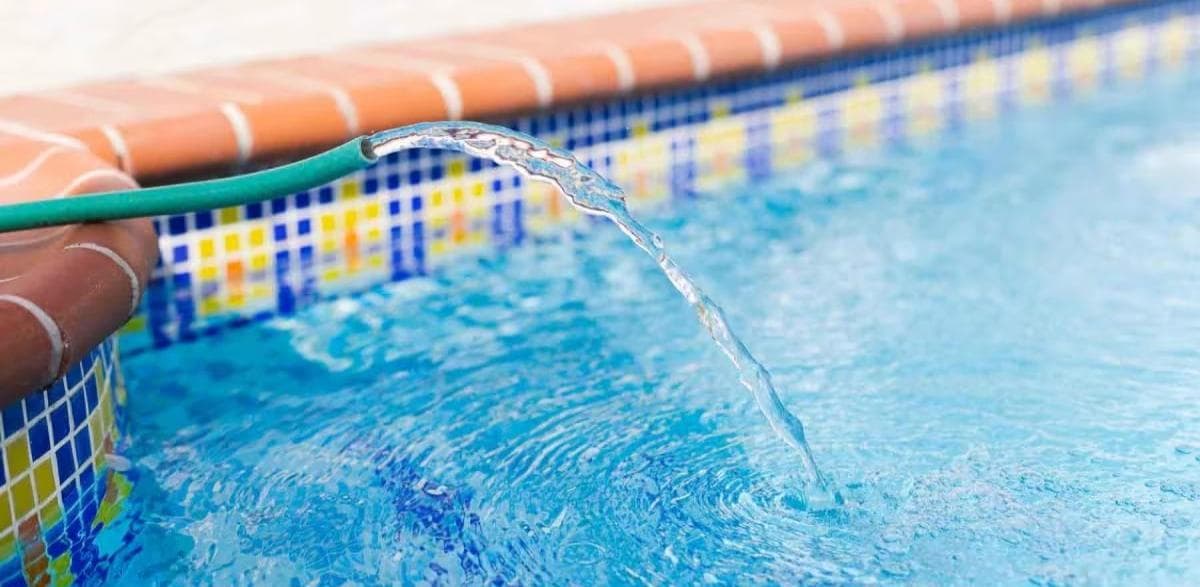
- Use a clean garden hose. Make sure it hasn’t been lying in mud or grass.
- Add water slowly. Fast filling can disturb chemicals and stir up debris.
- Check the water level at the midpoint of the skimmer—this is ideal for most pools.
- Test your water chemistry after topping up. Fresh water can change the balance.
- Add chemicals as needed to bring the water back to safe levels.
If your local water is hard or contains metals, consider using a pre-filter on the hose to reduce scale or staining. If you’re topping up after heavy use or storms, check and clean out debris first so you don’t stir up dirt.
How To Fully Refill Your Pool
A full refill is a bigger job. Plan for a full day (sometimes longer) to drain, clean, and refill your pool.
- Drain the pool according to local rules. Some cities restrict where you can drain pool water.
- Clean the surfaces. This is a good time to scrub away stains, algae, or dirt.
- Inspect for damage. Check the liner, tiles, and fittings before refilling.
- Refill slowly. Fill to the proper level, checking for leaks or problems as you go.
- Balance the water. Test and add chemicals before swimming.
Use the refill time to check for loose tiles, cracks, or worn-out parts. Fixing these now prevents future leaks and keeps your pool in top shape. Once refilled, allow your filtration system to run for at least 24 hours before swimming, to ensure chemicals are mixed and the water is safe.
How Much Water Does A Pool Lose Weekly?
Most pools lose 2.5–5 centimeters (1–2 inches) per week. For a typical 10 x 20-foot pool, that’s about 500–1,000 liters (130–260 gallons) each week. This adds up over a season.
Here’s a comparison of weekly water loss for different pool sizes:
| Pool Size | Weekly Loss (cm) | Weekly Loss (liters) |
|---|---|---|
| 8 x 16 ft (24 m²) | 2.5 | 600 |
| 12 x 24 ft (43 m²) | 2.5 | 1,100 |
| 16 x 32 ft (48 m²) | 2.5 | 1,300 |
If you notice a sudden jump in water loss, it’s a good time to review weather conditions and check for leaks. Consistent tracking helps you spot problems before they get worse.
When Is A Full Refill Necessary?
Most pools only need a full refill every 5–7 years if maintained well. But sometimes, you’ll need to do it sooner.
1. High Tds Or Calcium
When TDS (total dissolved solids) gets too high, chemicals stop working well. Water can become cloudy, and algae grow faster. If TDS is over 2,000 ppm, consider refilling.
High calcium can lead to scaling on tiles and equipment. If you see white, chalky marks that won’t scrub away, test your water. Regularly diluting your pool with top-ups can help, but eventually, a full refill may be required.
2. Severe Contamination
Flooding, animal waste, or chemical spills can make water unsafe. If you can’t fix the problem with chemicals, a full drain is safest.
Contaminants like oil, pesticides, or fertilizers from a flood are difficult or impossible to remove with standard cleaning. Don’t risk health—refill if in doubt.
3. Major Repairs
If you need to repair the liner, tiles, or structure, you’ll need to drain the pool first.
This is a good time to do a full inspection, replace worn parts, or make upgrades. Preventative repairs now save money later.
4. Stubborn Algae Or Stains
Sometimes, no amount of shock or algaecide will clear up the water. If you’ve tried everything, a refill may be your only option.
If you’re battling recurring green, black, or yellow algae, or dark stains that don’t brush off, it’s often a sign your water chemistry is beyond rescue.

Credit: www.poolwaternh.com
How To Check For Pool Leaks
A common beginner mistake is to keep adding water without checking for leaks. Here’s a simple method:
- Fill a bucket with pool water and mark the water level inside and outside.
- Place the bucket on a pool step, with the top above water.
- Wait 24 hours. If the pool loses more water than the bucket, you may have a leak.
If you find a leak, check common spots first: around lights, skimmers, and fittings. For stubborn leaks, call a pool professional for pressure testing or advanced leak detection.
Water Conservation Tips For Pool Owners
Pools use a lot of water, but you can reduce waste.
- Use a pool cover. This stops up to 95% of evaporation.
- Fix leaks quickly. Even a small leak can waste thousands of liters per year.
- Don’t overfill. Keep water at the middle of the skimmer.
- Backwash only when needed. Too much backwashing wastes water.
- Limit splash-out. Encourage gentle play and avoid overfilling.
Consider landscaping with native plants or rocks around your pool, which don’t require extra watering and help block wind.
The Cost Of Filling A Pool
Refilling a pool isn’t cheap. Water rates vary, but on average, filling a 20,000-gallon (75,000-liter) pool costs between $80 and $200 in water charges, depending on where you live. Some cities charge extra for high water use.
Here’s a look at costs for different pool sizes:
| Pool Size (gallons) | Liters | Estimated Cost (USD) |
|---|---|---|
| 10,000 | 38,000 | $40-$100 |
| 20,000 | 75,000 | $80-$200 |
| 30,000 | 114,000 | $120-$300 |
If you’re on a water meter, check with your supplier for off-peak rates or discounts. Some areas also offer rebates for using covers or water-saving equipment.
How To Calculate How Much Water To Add
To top up your pool, you need to know the volume you’ve lost. Here’s a simple formula:
- Measure the drop in water level (in centimeters).
- Multiply by the pool’s surface area (in square meters).
- 1 cm drop over 1 square meter = 10 liters.
Example: If your pool is 40 m² and the water drops by 2.5 cm, you’ve lost 1,000 liters.
For round or irregular pools, estimate the area as closely as possible. Keeping track of these numbers helps you spot changes and plan top-ups more accurately.
How Pool Covers Affect Refill Needs
A pool cover is the best investment for reducing refill frequency. Covers stop sunlight and wind from taking water. In hot, dry climates, a cover can cut water loss by 30–50%.
Types Of Covers
- Solar covers: Trap heat and cut evaporation.
- Solid covers: Block debris and nearly all evaporation.
- Mesh covers: Allow rain through but reduce debris.
Solar covers also help warm the pool, which can extend your swimming season. Solid covers are best for long-term closure, like over winter. Mesh covers are good in rainy climates where you want to avoid puddling on top.
Using a cover can save thousands of liters per year and reduce your water bill.
How Rain Affects Pool Filling
Rain adds water to your pool, sometimes reducing the need to fill. But too much rain can also dilute chemicals and even overflow your pool. After heavy rain, check water chemistry and adjust as needed.
If you live in an area with frequent storms, invest in a good overflow system or sump pump to manage excess water. Always test for pH and chlorine after a storm, as rain is usually slightly acidic and can disrupt your chemical balance.
Common Mistakes When Filling Pools
Many pool owners make simple mistakes that waste water or harm the pool.
- Overfilling: More water isn’t always better. Overfilling can damage pool equipment and waste chemicals.
- Ignoring leaks: Constant topping up often hides a leak. Always check if you’re adding water too often.
- Not testing new water: Tap water can change your pool’s chemical balance. Always test and adjust after adding.
- Filling too fast: High pressure can stir up debris and cause uneven chemical mixing.
- Filling during hot sun: Water added during the hottest part of the day evaporates faster.
Another common mistake is neglecting to clean the pool before refilling. Dirt, leaves, or algae left during a refill can quickly cause problems, making all your hard work go to waste.
How Weather Changes Affect Pool Water Needs
Hot, windy, and dry weather speeds up evaporation. In winter, you may need to add water less often. In some regions, winter rains can keep your pool full for months.
Here’s a simple comparison of evaporation rates by climate:
| Climate | Evaporation Rate (cm/week) |
|---|---|
| Hot, dry (e.g., Arizona) | 5+ |
| Humid, mild (e.g., Florida) | 2.5-4 |
| Cool, wet (e.g., UK) | 1-2 |
Sudden heatwaves or unexpected dry spells can change your normal refill routine. Pay extra attention during seasonal changes and adjust your pool care as needed.
Special Cases: Saltwater And Heated Pools
Saltwater pools lose water just like chlorine pools, but topping up with fresh water dilutes salt. You’ll need to check and adjust salt levels after each refill.
If you add large amounts of fresh water, your salt cell may not work well until you bring the salt back to the correct level. Always test and add salt if needed after rain or a major top-up.
Heated pools lose water faster, especially if left uncovered. Heat increases evaporation, so heated pools often need more frequent topping up.
Using a thermal pool cover when not swimming can save both heat and water.
How To Plan Refills For Large Or Commercial Pools
Large and public pools may have strict rules about draining and refilling. Always check local regulations before starting. Some cities require permits or specify how you can dispose of pool water. Commercial pools often use water meters to track loss and plan refills.
Staggering refills during off-peak hours can help lower costs and meet community requirements. For hotels or gyms, scheduling regular inspections and maintenance keeps water quality high and reduces emergency refills.
Environmental Concerns
Draining and refilling pools uses a lot of water. In drought-prone areas, this can be a problem. Always follow local water use rules. Consider reusing pool water for landscaping if allowed and safe.
Some pool chemicals can harm plants or animals, so always check before using pool water on your garden. There are also eco-friendly pool products available that reduce chemical use and make water disposal safer.
Non-obvious Insights Most Pool Owners Miss
- Pool water gets “old” even if it looks clean. Over time, dissolved solids build up from sweat, sunscreen, and chemicals. High TDS can make it hard to balance your water, even if you never see a problem.
- Refilling a little every week is better than a big refill once a year. Small, regular top-ups keep your chemistry stable, save money, and reduce waste.
Another hidden tip: check your pool’s water level after long absences. If you leave for vacation, turn off automatic fillers and check for leaks when you return.
Credit: www.testyourownpool.com
Expert Tips To Minimize Refills
- Install an automatic water leveler to keep water at the right height.
- Landscape with windbreaks or fences to block wind and slow evaporation.
- Use enzymes and clarifiers to keep water cleaner, reducing the need for a full refill.
- Maintain good pool chemistry—balanced water slows algae and helps equipment last longer.
Regularly brushing your pool’s walls and floor prevents algae and scale, reducing chemical use and keeping water fresher for longer.
How To Track Your Pool’s Water Use
Keep a simple log. Write down water levels once a week. Note weather and pool use. If you see a big change, check for leaks or new problems.
Some pool owners find it helpful to snap a weekly photo of the water level against a fixed marker, like the skimmer or tile line. This visual record makes it easy to spot trends.
Frequently Asked Questions
How Do I Know If My Pool Is Losing Too Much Water?
Losing more than 5 centimeters (2 inches) per week is a red flag. Try the bucket test. If your pool loses more than the bucket, suspect a leak.
Can I Fill My Pool With Well Water Or Rainwater?
You can, but test the water first. Well water may have minerals or metals that stain. Rainwater is soft but can be acidic. Always balance chemicals after filling.
If you use well or bore water, let it run for a few minutes before filling to flush out sediment. Filtering well water before it goes into the pool can also prevent staining.
How Long Does It Take To Fill A Pool?
Filling a 20,000-gallon (75,000-liter) pool with a standard garden hose (40 liters/minute) takes over 30 hours. Start early and monitor the process.
Try to fill during cooler parts of the day to avoid wasting water to evaporation.
Is It Safe To Swim Right After Topping Up The Pool?
Wait until you’ve tested and balanced the water. Fresh tap water can change pH, chlorine, and other levels. Test, adjust, and then swim.
Where Can I Find More About Pool Water Chemistry And Maintenance?
A reliable source is the CDC Healthy Swimming page, which covers pool care, water chemistry, and safety.
A pool is an investment in fun and relaxation, but it needs regular care. Knowing how often to fill your pool—whether a weekly top-up or a full refill every few years—keeps your water clean, safe, and inviting. By understanding water loss, using smart tools like covers, and watching for leaks, you’ll save money and enjoy your pool more. A little attention each week means fewer big problems later. Dive in, stay safe, and keep your pool sparkling all season!