
Keeping your swimming pool clean and healthy is a lot more than just adding chemicals or skimming out leaves. One crucial but often overlooked part is aeration. Many pool owners don’t realize how important it is to give their water enough oxygen. Proper aeration can make your pool more comfortable, help your chemicals work better, and keep algae away. If you want to keep your pool in top shape, learning how to aerate your pool is essential.
But how exactly do you aerate a pool? Is it just about running a pump, or do you need special tools? What problems can you solve with good aeration, and what mistakes should you avoid? This guide will answer all these questions in clear, simple English, with plenty of practical advice for both beginners and experienced pool owners.
By the end, you’ll know exactly why aeration matters, how to do it, and how to make your pool water stay sparkling fresh.
Why Aeration Matters In A Pool
Before you start, it’s important to understand why aeration is so important. Aeration means adding more air—specifically, more oxygen—into your pool water. This simple process helps in several ways:
- Raises pH naturally: Aeration releases carbon dioxide, which increases the water’s pH without adding chemicals.
- Improves water clarity: More oxygen helps break down organic waste and keeps water clear.
- Fights algae: Algae prefer still, poorly oxygenated water. Aeration makes it harder for them to grow.
- Enhances swimmer comfort: Well-aerated water feels fresher and less irritating to skin and eyes.
- Boosts sanitizer efficiency: Chlorine and other sanitizers work better in well-aerated, balanced water.
Most pool owners only focus on chemicals, but even perfect chemical balance can’t replace good aeration. In fact, many common pool problems—cloudy water, stubborn algae, burning eyes—are made worse by poor aeration.
How Pool Aeration Works
Aeration in a pool is basically about mixing air into water. When you do this, you increase the level of dissolved oxygen. This is important for a few chemical reasons:
- PH Control: Pools often become acidic (low pH) due to rain, organic matter, or heavy use. Aeration lets carbon dioxide escape, which raises pH naturally.
- Chlorine Efficiency: Chlorine works best at certain pH levels. When you aerate, you keep the pH in the right zone.
- Oxidation: Oxygen in the water helps break down organic waste, making your sanitizers’ job easier.
It’s not just about bubbling water for fun. The actual chemical changes make your pool easier to manage and safer for swimmers.

Credit: www.epoolsupply.com
Signs Your Pool Needs Aeration
How do you know if your pool needs more air? Here are some signs:
- Low pH that won’t rise: If you’re adding soda ash but the pH stays low, your water may be saturated with carbon dioxide.
- Cloudy water: This can mean waste is building up faster than your chlorine can handle.
- Algae blooms: If you’re fighting algae even with good chemical levels, poor oxygen could be a factor.
- Strong chlorine smell: This is actually chloramine, a waste product. Aeration helps remove it.
If you notice any of these, it’s time to aerate your pool.
Methods To Aerate A Pool
There are many ways to add air to your pool. Some are simple and free, while others require equipment. Below are the main methods, with tips on how to use each effectively.
1. Pool Return Jets
Most pools have return jets that push water back into the pool after it’s filtered. You can use these jets for aeration by adjusting them:
- Aim the jets upward: Point the nozzles toward the water’s surface. This creates ripples and splashes, mixing air into the water.
- Increase pump speed: If your pump is adjustable, running it faster will boost aeration.
- Use all jets: If you have multiple returns, open them all for maximum surface movement.
This method is simple and doesn’t require buying anything new.
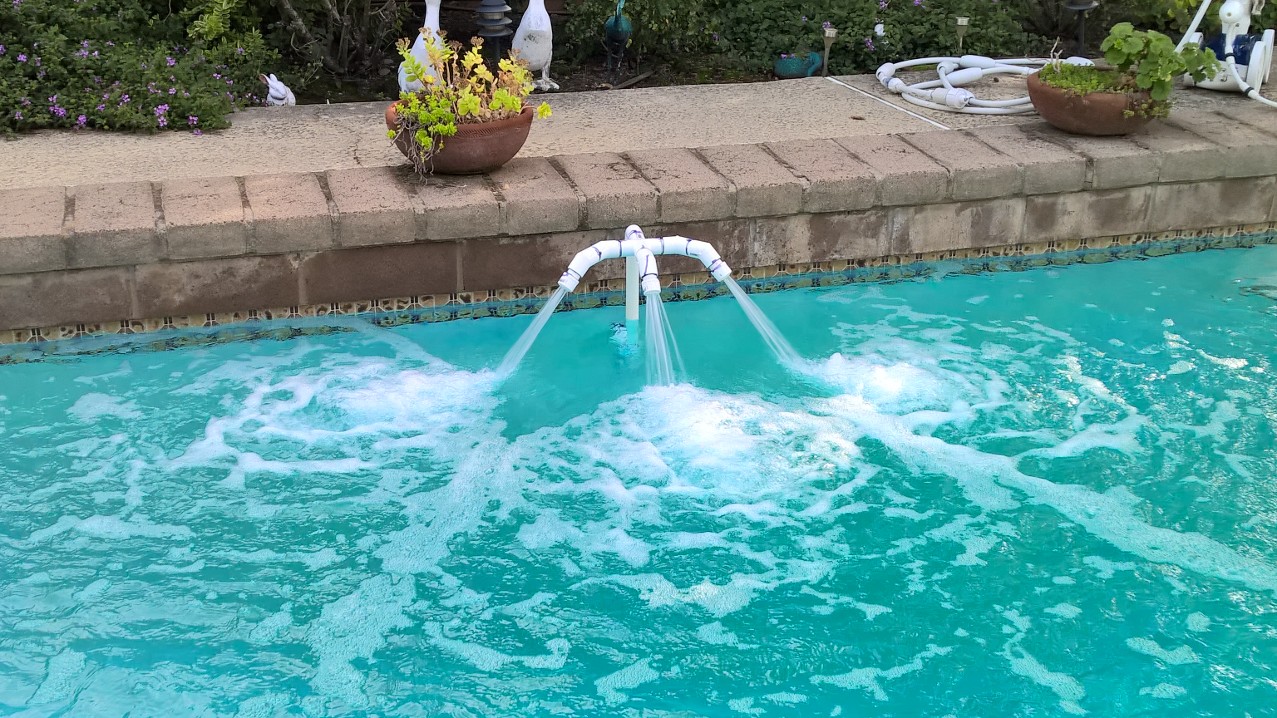
2. Water Fountains And Sprayers
Adding a fountain or sprayer is one of the most effective ways to aerate. Here’s why:
- Breaks water surface: When water shoots up and falls back, it grabs air and mixes it in.
- Customizable: You can buy plug-and-play fountains, or attach a spray head to a return jet.
- Extra benefit: Fountains can cool the pool in hot weather.
Many pool supply stores sell affordable fountain attachments that fit standard jets. Just be sure your pump is strong enough to handle the extra flow.
3. Waterfalls
If your pool has a waterfall feature, this is an excellent way to aerate. The key is to run the waterfall as much as possible, especially after adding chemicals or during hot weather. Waterfalls create lots of splashing and surface agitation, which pulls in oxygen.
For pools without a built-in waterfall, you can buy portable waterfall attachments or DIY a simple version with PVC pipe.
4. Manual Agitation
This is the most basic method. Use a pool brush or long pole to stir the water vigorously. Splashing, swirling, and agitating the surface for 10-15 minutes can help in a pinch. It’s less effective than other methods but useful if you don’t have aeration equipment.
5. Compressed Air Systems
Some pool owners install compressed air diffusers at the pool’s bottom. These systems use a small compressor to blow air through special stones or discs, creating a stream of bubbles from below. This method is common in commercial pools and very effective for deep pools.
It is more expensive and requires installation, but it provides constant, powerful aeration.
6. Pool Bubblers
Pool bubblers are similar to air diffusers but are designed for shallow areas, like tanning ledges or steps. They send streams of bubbles upward, aerating and making these spots more fun for kids.
7. Water Features (deck Jets, Scuppers)
Many pools have additional water features, such as deck jets (arcs of water that shoot from the deck) or scuppers (wide, flat flows over a wall). These features agitate the surface and add oxygen.
8. Pool Vacuums With Venturi Attachments
Some automatic pool vacuums have a “Venturi” option, which mixes air into the water as they clean. If your cleaner has this feature, use it to add extra aeration during cleaning.
9. Pool Aerators
A pool aerator is a special attachment you can screw onto a pool return. It’s designed to draw in air and mix it with the returning water, creating a strong bubbling effect. Aerators are cheap and easy to install.
10. Splashing And Play
Believe it or not, just having people jump, dive, and splash can help aerate the water. While not a substitute for real equipment, active swimming and games mix air into the pool naturally.
Comparing Pool Aeration Methods
To help you choose, here is a comparison of the most popular aeration methods for home pools:
| Method | Effectiveness | Cost | Setup Difficulty | Best For |
|---|---|---|---|---|
| Return Jets | Moderate | Free | Easy | All pools |
| Fountains/Sprayers | High | Low to Medium | Easy | Small to medium pools |
| Waterfalls | High | Medium to High | Medium | Custom or luxury pools |
| Manual Agitation | Low | Free | Easy | Emergency use |
| Compressed Air | Very High | High | Hard | Large/Commercial pools |
| Pool Bubblers | Moderate | Medium | Medium | Shallow areas |
Step-by-step Guide: How To Aerate Your Pool
Now, let’s walk through the basic process for aerating your pool, using the easiest and most common methods. You don’t need to use all methods at once—pick what works for your pool type and budget.
Step 1: Test Your Water
Before starting, check your pool’s pH and alkalinity. Use a reliable test kit. If your pH is low (below 7.2), aeration will help raise it without adding more chemicals.
Step 2: Adjust Pool Equipment
- Point return jets upward: Find the adjustable nozzles inside your pool. Turn them so they shoot water toward the surface, creating bubbles and ripples.
- Turn on waterfalls or fountains: If you have these features, run them for several hours.
- Increase pump speed (if possible): A stronger flow will boost aeration.
Step 3: Add Aeration Devices (optional)
If you want more power, install a fountain attachment, pool aerator, or bubbler. These are usually easy to install:
- Screw the aerator or fountain head onto a return jet.
- Make sure it’s secure, then turn on the pump.
Step 4: Run Equipment For Several Hours
Let your jets, fountains, or bubblers run for 4–8 hours, or overnight if possible. The more time, the more air is mixed in.
Step 5: Retest Water
After aeration, test your pH again. If it’s reached your target (usually 7. 4–7. 6), you’re done. If not, repeat the process or consider other methods.
Step 6: Routine Maintenance
Aeration isn’t a one-time fix. Make it part of your weekly routine, especially after:
- Heavy rain
- Pool parties or heavy swimming
- Adding acid or shocking the pool
Regular aeration keeps water balanced and prevents problems.
Credit: www.troublefreepool.com
Common Mistakes When Aerating A Pool
Aeration is simple, but there are a few mistakes to watch out for:
- Over-aerating: If you run fountains or jets too long, your pH can rise too high, making the water cloudy or scaling.
- Ignoring alkalinity: Aeration only raises pH, not alkalinity. If your total alkalinity is too low, fix it first with baking soda.
- Poor circulation: Make sure your pump and filter are working well. Aeration can’t help if water isn’t moving.
- Not testing water: Guessing at chemical levels can lead to trouble. Always test before and after aerating.
- Wrong equipment size: Don’t use a huge fountain in a small pool or a weak aerator in a large one. Match the tool to your pool size.
How Often Should You Aerate?
How often you aerate depends on your pool’s needs:
- Raising pH: Aerate daily until the right pH is reached.
- Routine maintenance: Run fountains, jets, or aerators at least 2–3 times a week for several hours.
- After heavy use: Aerate after pool parties or storms.
- Hot weather: More aeration is needed during heat waves, when oxygen levels drop.
As a rule, if your pool is used often or has many chemical adjustments, aerate more frequently.
Pool Aeration For Different Pool Types
Not all pools are the same. Here’s how to adapt aeration for different setups:
Inground Pools
- Use return jets, fountains, and waterfalls.
- Install aerators or bubblers for extra power.
- Larger pools may need more than one method.
Above-ground Pools
- Use plug-in fountains or sprayers designed for above-ground pools.
- Manual agitation works well in small pools.
- Point return jets upward if possible.
Saltwater Pools
- Aeration works the same as for regular pools.
- Salt systems also benefit from good oxygen levels, which help with chlorine generation.
Commercial Pools
- Use professional-grade air diffusers or large fountains.
- Monitor water chemistry closely, as large volumes can change slowly.
The Science Behind Aeration: What Really Happens
Aeration is more than just bubbles. Here’s a quick look at what’s happening:
- Carbon Dioxide Removal: Water naturally absorbs CO2 from the air and swimmers. Too much CO2 makes the water acidic. When you aerate, CO2 escapes into the air, raising pH.
- Oxygen Addition: Aeration boosts dissolved oxygen. This helps beneficial bacteria in your pool filter break down waste faster.
- Chloramine Removal: Aeration helps remove combined chlorine (chloramines), which cause strong smells and eye irritation.
This combination of chemical balance and physical cleaning is why aeration is so powerful.
Advanced Aeration Techniques
Most home pools only need basic aeration, but some owners want to go further. Here are advanced options:
Installing A Dedicated Aeration System
- Compressor & diffuser setup: Install a small air pump and diffuser stones. This is common in koi ponds, but works in pools.
- Programmable timers: Run aeration only at night to avoid heat loss.
- Automation: Link aerators to your pool’s smart system for easy control.
Integrating With Pool Automation
Smart pool systems can automate aeration based on water chemistry. Some controllers can turn on fountains or air pumps when pH drops.
Combining Aeration With Other Treatments
Aeration works well with:
- Shocking: After heavy chlorination, aeration removes chloramines faster.
- Flocculants: Aeration helps mix these clarifiers for better results.
Cost Of Pool Aeration
Aeration can be free or cost a little money. Here’s a look at the typical costs:
| Method | Equipment Cost | Electricity Cost (per month) | Maintenance Needed |
|---|---|---|---|
| Return Jets | $0 | Low | None |
| Fountain Attachment | $20–$80 | Low | Clean occasionally |
| Compressed Air System | $150–$500 | Medium | Annual checkup |
| Manual Agitation | $0 | None | None |
Most home pool owners spend less than $100 for basic aeration, and the electricity cost is similar to running your pool pump.
Practical Tips For Better Aeration
To get the most from your aeration:
- Aerate in the evening: Cooler air dissolves into water better, and you avoid excess evaporation.
- Clean filters and pumps first: Dirty equipment reduces flow and aeration.
- Watch for scaling: If your pH rises too high, white deposits may form. Back off aeration if this happens.
- Combine methods: Use jets and a fountain together for maximum results.
- Monitor chemical changes: Aeration can raise pH quickly, so test daily at first.
Non-obvious Insights For Better Pool Aeration
Here are two important tips many pool owners miss:
- Aeration can cool your pool: In very hot climates, running fountains or sprayers at night can lower water temperature by several degrees. This makes swimming more comfortable in summer.
- Aeration helps reduce chemical costs: With better oxygen and pH balance, you may need less chlorine and fewer pH adjusters. Over the season, this can save money and reduce chemical smell.

Credit: www.flawlessimagepoolservice.com
Environmental Impact Of Pool Aeration
Aerating your pool is also good for the environment—if done right. By reducing the need for strong chemicals, you create less chemical runoff and lower your household’s chlorine footprint. However, be careful not to waste electricity by running pumps longer than needed.
Use timers and efficient equipment when possible.
For more on pool chemistry and sustainable practices, check the Wikipedia page on swimming pool sanitation.
Frequently Asked Questions
What Is The Easiest Way To Aerate A Pool?
The simplest way is to aim your return jets upward to create surface movement. If your pool has a fountain or sprayer attachment, use that as well. Both options require no extra equipment and work for most home pools.
Will Aeration Raise My Pool’s Ph?
Yes. Aeration removes carbon dioxide, which naturally raises pH. This is helpful if your water is too acidic, but be careful not to overdo it, or your pH may go too high.
Can I Aerate My Pool Without Special Equipment?
Absolutely. Manual agitation—stirring or splashing the water—works in emergencies. For routine aeration, adjusting return jets or installing a cheap fountain attachment is enough for most pools.
How Long Should I Aerate My Pool?
Run your aeration system (jets, fountains, etc.) for 4–8 hours per session, or overnight if you need to raise pH quickly. For routine maintenance, 2–3 times per week is enough for most pools.
Is Pool Aeration Safe For All Pool Types?
Yes. Aeration is safe for inground, above-ground, and saltwater pools. Just match the method and equipment size to your pool. Always monitor water chemistry to avoid unwanted changes.
Keeping your pool clean and healthy doesn’t have to be hard or expensive. By understanding and using aeration, you’ll make your water clearer, your chemicals work better, and your swimmers more comfortable. Aeration is one of the smartest pool care habits you can develop—simple, effective, and surprisingly powerful.