
A mandoline slicer is an amazing kitchen tool. It helps you slice vegetables and fruits quickly and evenly. With it, you can make perfect potato chips, thin cucumber slices, or even beautiful carrot julienne for salads. But there’s a catch—mandoline slicers can get messy fast. Food bits stick in the blades, juices dry and harden, and if you don’t clean it well, it can even rust or smell. Many people feel nervous about cleaning a mandoline because the blades are so sharp. But if you understand the right steps, cleaning a mandoline slicer is easy and safe.
This guide will show you, step by step, how to clean a mandoline slicer properly. You’ll learn how to take it apart, wash every piece, and keep your slicer sharp and safe for years. You’ll also see common mistakes that can ruin your slicer or even cause injuries.
Whether you use your mandoline every day or just for special dishes, these tips will help you save time and keep your kitchen tools in top shape.
Why Cleaning A Mandoline Slicer Matters
A mandoline slicer’s main job is food prep. But when it’s not cleaned well, it can cause problems you might not expect. First, leftover food can dry on the blades and become difficult to remove. Over time, this can lead to bacteria growth, bad smells, and even mold.
If you cut vegetables for a salad and notice a strange taste, your slicer may not be clean enough.
Second, not cleaning your mandoline can make it harder to use. Food particles can jam the blade, making it less sharp. This means your slices will be uneven, and it will take more force to cut. For busy home cooks, this can slow you down and make the tool frustrating instead of helpful.
Finally, a dirty mandoline slicer can be dangerous. Sticky blades or food build-up can cause your hand to slip, increasing the risk of cuts. For safety and food quality, always keep your mandoline clean.
Getting Ready: What You Need Before Cleaning
Cleaning a mandoline slicer is simple if you have the right tools. You don’t need special cleaners, but a few basic items make the job easier and safer.
- Soft sponge or dishcloth: For gentle cleaning. Avoid using steel wool or rough pads, which can scratch the blades.
- Small brush or toothbrush: Helps get into tiny grooves and around the blades.
- Dish soap: Regular dishwashing soap is perfect.
- Warm water: Not too hot, as high heat can warp plastic parts.
- Cut-resistant gloves: Highly recommended, especially for beginners. These protect your hands from the sharp blades.
- Clean towel or drying rack: For air drying the parts.
Before you start, always make sure your mandoline slicer is unplugged if it’s an electric model. For most manual mandolines, just make sure it’s stable on a flat surface.
:max_bytes(150000):strip_icc()/how-to-use-a-mandoline-FT-BLOG1020-fffcdbdbcd2e4fc796b73b2c1a9eb195.jpg)
Credit: www.foodandwine.com
Step-by-step Guide: How To Clean A Mandoline Slicer
1. Disassemble The Slicer
Most mandoline slicers come apart for easier cleaning. Remove the food holder, blade inserts, and any adjustment knobs. Some slicers have legs or stands that fold away.
If you’re not sure how to disassemble your model, check the instruction manual or look for an online guide. Never force any part—if it doesn’t come off easily, it may not be meant to.
Non-obvious tip: Take a quick photo before you take it apart. This makes it easier to reassemble later, especially if there are many blades or settings.
2. Remove Food Debris Immediately
Don’t let food dry on your mandoline. As soon as you finish slicing, use a soft brush or the edge of a sponge to gently scrape away any food particles.
Why this matters: Dried food is much harder to remove and can hide bacteria. If you wait too long, you’ll have to scrub harder, which could dull the blade or scratch the surface.
3. Soak The Removable Parts
Fill your sink or a large bowl with warm, soapy water. Place the blades, food holder, and other removable parts in the water. Let them soak for a few minutes. This loosens stubborn bits of food and makes the next steps much easier.
Practical example: If you sliced potatoes, you may see a sticky residue. Soaking helps dissolve the starch.
4. Clean The Blades With Care
This is the most important part—and the most dangerous. Mandoline blades are razor-sharp, even after many uses.
How to clean safely:
- Wear cut-resistant gloves or use a dish brush with a long handle.
- Hold the blade insert by the dull edge or plastic frame—never touch the cutting edge.
- Use a soft sponge or brush to wipe away food. Move in the direction of the blade, not across it.
- For very stubborn spots, use a toothbrush dipped in soapy water.
Non-obvious insight: Never twist or bend the blade insert while cleaning. This can misalign the blade, making your mandoline less effective.
5. Wash The Main Body
With the blades removed, wash the main frame of the mandoline. Use a soft sponge, paying special attention to corners, rails, or grooves where food can hide.
Common mistake: Some people try to wash the whole mandoline under running water with the blades still attached. This is dangerous and less effective. Always remove the blades first.
6. Rinse Thoroughly
After cleaning, rinse every part under running water. Make sure all soap is gone. Soap residue can affect food taste and may irritate your skin if not washed away.
7. Dry Each Part Completely
Water left on your mandoline can cause rust, especially on metal blades. Dry each piece with a clean towel, or place them on a drying rack.
Practical tip: Let the parts air dry for at least 30 minutes before putting them back together.
8. Reassemble The Slicer Carefully
Once everything is dry, put your mandoline slicer back together. Use your photo as a guide if you took one earlier. Make sure each part clicks or locks into place.
Check the blade alignment before use. If anything feels loose, stop and check the manual. A badly assembled mandoline can be dangerous.
9. Store Safely
Store your mandoline in a dry place, away from moisture. Some slicers come with blade covers or cases—use them. This keeps the blades sharp and protects your hands when reaching for the tool.
Advanced tip: A few drops of food-grade mineral oil on the blade can prevent rust if you live in a humid area.
Cleaning Different Types Of Mandoline Slicers
Not all mandolines are the same. Some are made of plastic, some of stainless steel, and others have ceramic blades. Each type has its own cleaning needs.
Plastic Mandoline Slicers
Plastic slicers are lightweight and often dishwasher safe. However, they can stain easily (for example, after slicing carrots or beets).
- Rinse immediately after use to prevent stains.
- Use baking soda paste (baking soda + water) for tough stains, but avoid harsh chemicals.
- Check if your slicer is labeled “dishwasher safe” before putting it in the machine.
Stainless Steel Mandoline Slicers
These are strong and usually rust-resistant, but not rust-proof.
- Dry all parts well to prevent rust spots.
- Never leave soaking for hours—long soaks can damage the steel.
- If you see rust, gently scrub with a paste of baking soda and water.
Ceramic Blade Mandoline Slicers
Ceramic blades don’t rust but are more fragile.
- Avoid dropping or banging ceramic blades—they chip easily.
- Clean with a soft sponge only. Never use abrasive pads.
- Don’t twist the blade when re-inserting.
Dishwasher Use: Is It Safe For Mandoline Slicers?
Many people wonder if they can just put their mandoline slicer in the dishwasher. The answer depends on your model.
Pros Of Dishwasher Cleaning
- Saves time and effort.
- Good for most plastic parts.
Cons Of Dishwasher Cleaning
- High heat can warp plastic or dull blades.
- Blades may bang against other items and get damaged.
- Not all parts are dishwasher safe—always check the manual.
Data comparison: See below for a quick overview of which parts are usually safe for the dishwasher.
| Mandoline Part | Dishwasher Safe? | Notes |
|---|---|---|
| Plastic Frame | Usually Yes | Top rack only |
| Stainless Steel Blade | Sometimes | Can dull blade; hand wash preferred |
| Ceramic Blade | No | Hand wash to avoid chipping |
| Food Holder/Guard | Usually Yes | Check for small parts |
| Adjustment Knobs | Varies | Check manual |
Expert advice: Even if your slicer is dishwasher safe, hand washing is always gentler and extends the tool’s life.
Cleaning After Slicing Sticky Or Oily Foods
Some foods, like potatoes, cheese, or cooked meats, can leave sticky or greasy residue. This requires a bit more effort.
- Use warm, soapy water to break down oil.
- For very sticky residue, add a few drops of white vinegar to your wash water.
- Rinse and dry thoroughly.
Non-obvious insight: If you slice something with a strong smell (like onions or garlic), wipe the blades with a lemon wedge before washing. This removes odors and leaves your slicer fresh.

Credit: chefsupplyco.com.au
Deep Cleaning Your Mandoline Slicer
Even if you clean your mandoline after every use, sometimes it needs a deeper clean. This is especially true if you see discoloration, smell odors, or haven’t used it for a while.
Steps For Deep Cleaning
- Disassemble all parts.
- Soak parts in a mix of warm water and a tablespoon of baking soda for 15 minutes.
- Scrub carefully with a toothbrush, focusing on grooves and around blades.
- Rinse well with fresh water.
- Dry every part completely.
- Rub a little white vinegar on the blade with a cloth to remove mineral deposits or rust spots, then rinse and dry again.
How often? Deep clean at least once a month or after slicing very oily or strong-smelling foods.
Common Cleaning Mistakes To Avoid
Cleaning a mandoline slicer isn’t hard, but a few mistakes can cause trouble.
- Touching the blade directly: Always use gloves or a brush to avoid cuts.
- Letting food dry on the slicer: Clean soon after use.
- Using abrasive pads: These can scratch plastic and dull the blade.
- Not drying completely: Wet blades can rust.
- Forcing parts apart: If something won’t come off, check the manual instead of pulling hard.
- Ignoring small grooves: Food can hide in small spaces. Use a toothbrush to clean these.
- Storing while damp: This can cause mold or rust.
How To Keep Your Mandoline Slicer Clean Longer
Regular cleaning is important, but you can make the job easier by following these tips.
- Lightly oil the blade with food-safe mineral oil after cleaning. This prevents rust.
- Use the food holder or guard every time. This keeps your hands safe and stops sticky fingerprints.
- Don’t overload the slicer. Slice small amounts at a time, so food doesn’t get stuck.
- Rinse after every use, even if you’re slicing more than one kind of vegetable.
- Store your mandoline in a dry, clean place. Avoid keeping it near the stove or sink, where moisture can build up.
Comparing Mandoline Slicer Maintenance To Other Kitchen Tools
You might wonder: Is a mandoline slicer harder to clean than other slicers or graters? Here’s a quick comparison for common kitchen slicers:
| Tool | Cleaning Difficulty | Special Precautions |
|---|---|---|
| Mandoline Slicer | Medium to High | Very sharp blades; disassemble for full cleaning |
| Box Grater | Medium | Sharp edges; brush recommended |
| Vegetable Peeler | Low | Simple, but blade still sharp |
| Food Processor Slicer Attachment | High | Many parts; dishwasher safe but needs full drying |
Mandolines take a bit more care, mainly because the blade is exposed and can cut you easily. But with the right steps, cleaning is not much harder than other tools.
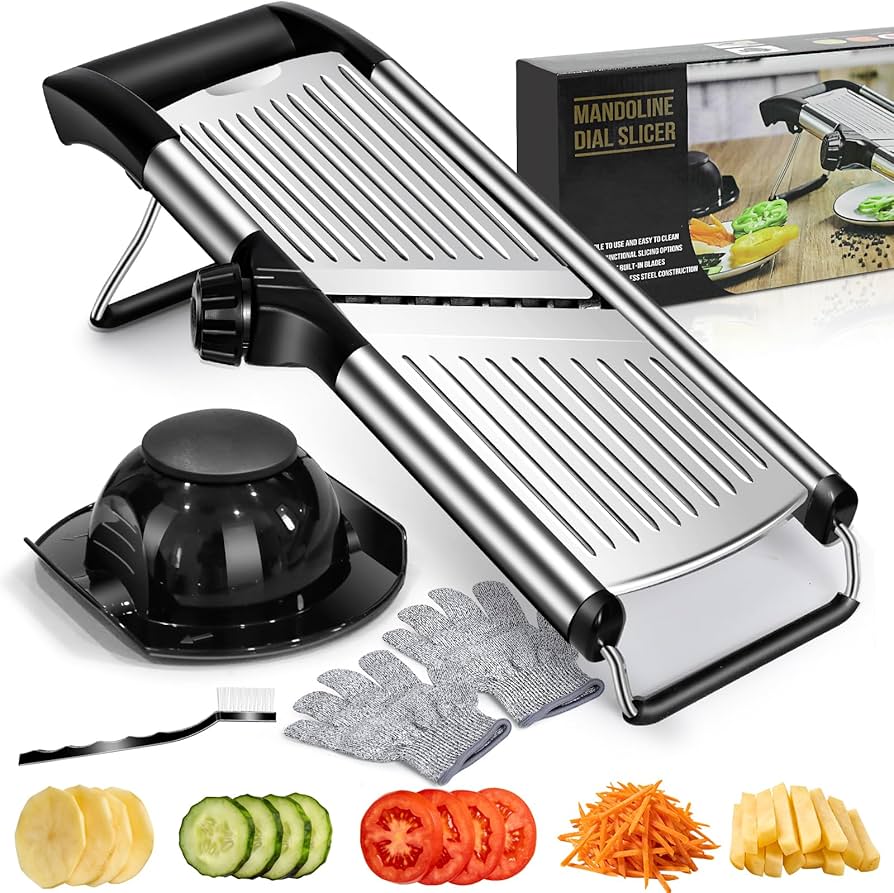
Credit: www.amazon.com
Safety Tips For Cleaning A Mandoline Slicer
Because mandoline slicers are so sharp, safety is key. Here are the most important safety tips:
- Always wear cut-resistant gloves when cleaning.
- Never rush. Take your time, especially when scrubbing near the blades.
- Use a brush or sponge, not your bare hands, for the blade area.
- Dry blades away from your body.
- Store blades in covers or cases.
- If you have children, keep the mandoline out of their reach.
Experience-based advice: If you ever drop the blade, don’t try to catch it—let it fall. It’s better to clean up a mess than get a deep cut.
How To Deal With Blade Dullness Or Rust
A clean slicer should also be sharp. But if you notice your mandoline isn’t slicing well, the blade may be dull or rusty.
Dull Blades
Most home mandolines have fixed blades. If your blade is dull:
- Try sharpening with a special ceramic rod or small knife sharpener.
- If not possible, check if your model allows replacement blades.
Rust Spots
If you see orange or brown rust:
- Make a paste of baking soda and water.
- Rub gently with a toothbrush or cloth.
- Rinse and dry well.
- For heavy rust, replace the blade if possible.
Non-obvious tip: Avoid using acidic foods (like tomatoes or lemons) directly on a rusty blade. This can make rust worse.
What To Do If You Cut Yourself
Even with care, accidents can happen. If you cut yourself while cleaning:
- Rinse the cut with water.
- Apply pressure to stop bleeding.
- Clean with an antiseptic.
- Cover with a bandage.
- If the cut is deep or won’t stop bleeding, seek medical help.
Prevention is best: Always use a guard or gloves and never rush.
How To Choose An Easy-to-clean Mandoline Slicer
If you’re buying a new mandoline, look for these features to make cleaning easier:
- Removable blades: Easier to wash all surfaces.
- Simple design: Fewer parts mean less to clean.
- Dishwasher safe: Saves time, but still check for blade safety.
- Non-stick coating: Food is less likely to stick, which means faster cleaning.
- Sturdy food holder: Keeps hands safe and prevents food from jamming.
Check online reviews or the manufacturer’s site before buying. For more details about mandoline slicer designs, see Wikipedia’s Mandoline Slicer page.
Frequently Asked Questions
How Often Should I Clean My Mandoline Slicer?
Clean your mandoline slicer after every use. Even if you only sliced a small amount, leftover food can dry, attract bacteria, and dull the blade.
Can I Put My Mandoline Slicer In The Dishwasher?
Some mandoline slicers are dishwasher safe, but not all. Check your manual. If you do use the dishwasher, put blades and small parts on the top rack, and always dry immediately.
What’s The Safest Way To Clean The Blade?
Wear cut-resistant gloves or use a brush. Hold the blade by the dull edge or plastic part. Never touch the sharp edge with bare hands, and never rush.
My Mandoline Slicer Smells Bad. How Do I Fix It?
Soak all parts in warm water with baking soda or a little vinegar. Scrub, rinse, and let the slicer air dry. Wipe blades with a lemon wedge to remove strong odors.
Is It Normal For My Mandoline To Rust?
A little rust can happen, especially if you don’t dry the slicer well. Remove rust with baking soda paste and a brush. Prevent it by drying the slicer completely and storing it in a dry place.
Keeping your mandoline slicer clean is the best way to enjoy fast, safe, and delicious food prep. With these steps, you’ll make cleaning easy and protect your hands and your tool for years to come.