
Cleaning a pepper grinder may seem simple, but many people struggle to do it properly. Over time, pepper residue, oils, and even moisture can build up inside your grinder. This not only affects the taste of your freshly ground pepper, but it can also cause the grinder to jam or become less effective.
If you want your pepper grinder to work smoothly and last for years, regular cleaning is essential.
Many home cooks ignore cleaning their pepper grinder until it starts to malfunction. Often, the real problem is not just the visible pepper dust, but also the hidden debris and oils stuck in hard-to-reach places. Cleaning your grinder doesn’t require special skills, but it does need the right approach and a bit of care.
This guide will walk you through everything you need to know, from taking your grinder apart to reassembling it, and even how to maintain it for the long run. Whether you use a classic wooden grinder, a metal mill, or an electric model, you’ll find clear steps and useful tips here.
Why Clean Your Pepper Grinder?
A pepper grinder is more than just a kitchen tool. It’s the key to fresh, flavorful pepper. But if you don’t clean it, problems can develop:
- Flavor changes: Old pepper residue and oils can make new pepper taste stale or bitter.
- Clogging: Pepper dust and moisture can block the grinding mechanism.
- Bacteria growth: Peppercorns are dry, but moisture can sneak in, creating a home for germs.
- Reduced performance: A dirty grinder produces uneven grinds and may require more effort.
Regular cleaning helps your grinder work smoothly and delivers the best flavor. It also keeps your kitchen more hygienic.
Types Of Pepper Grinders And How Cleaning Differs
Not all pepper grinders are the same. The materials and design affect how you clean them. Here are the most common types:
Manual Grinders
These are hand-operated and often made of wood, ceramic, or stainless steel. They usually have a twist-top or crank handle.
- Cleaning tip: Manual grinders are usually easy to take apart. Wooden models need extra care to avoid water damage.
Electric Grinders
Battery-operated or rechargeable, these offer convenience but have more parts and sometimes electronics inside.
- Cleaning tip: Never immerse electric grinders in water. Clean the grinding chamber and exterior only.
Adjustable Grinders
These allow you to change the grind size, often with a knob or dial.
- Cleaning tip: Pay attention to the adjustment mechanism, as pepper dust often collects here.
Disposable Grinders
Some peppercorns come in cheap plastic grinders meant to be thrown away.
- Cleaning tip: Most are not designed to be opened or cleaned. Consider switching to a reusable grinder.
Comparison: Grinder Materials And Cleaning Needs
Below is a quick comparison of common grinder materials and what to watch for when cleaning.
| Material | Water Safe? | Cleaning Notes |
|---|---|---|
| Wood | No | Wipe only, avoid soaking |
| Stainless Steel | Yes | Rinse and dry thoroughly |
| Ceramic | Yes | Handle gently to avoid breakage |
| Plastic | Yes | Easy to wash, but can retain odors |
| Electric | No | Wipe with a dry or damp cloth only |
Tools And Materials You’ll Need
Before you begin, gather your cleaning supplies. Having the right tools makes the job easier and protects your grinder.
- Soft brush (like a pastry or toothbrush) for removing dust
- Small spoon or scoop to empty peppercorns
- Microfiber cloth for wiping parts
- Cotton swabs for tight spaces
- Mild dish soap (only for non-wood, non-electric parts)
- Warm water
- Rice (uncooked, for deep cleaning)
- Paper towels or a drying rack
Avoid harsh chemicals, metal brushes, or soaking wooden or electric parts.
How To Disassemble Your Pepper Grinder
Taking your grinder apart is the first step. Most manual grinders are easy to open, but the process varies.
- Remove the top knob or cap: Most grinders have a knob on top. Twist it off to open.
- Take off the lid: Lift or twist off the lid to access the pepper chamber.
- Empty remaining peppercorns: Pour out any pepper inside. Use a small scoop for stuck pieces.
- Remove the grinding mechanism: Some models let you pull out the inner mechanism. Follow your grinder’s manual if unsure.
If you have an electric grinder, check the manual before opening. Never force the parts; you could break the grinder.
Example: Taking Apart A Classic Wooden Grinder
- Hold the body firmly.
- Unscrew the metal knob on top and lift off the lid.
- Turn the grinder upside down and gently shake out the grinding mechanism.
- Set aside all pieces for cleaning.
Step-by-step Cleaning Instructions
Now, let’s clean each part of your pepper grinder. The steps below cover most models. Adjust as needed for your specific grinder.
1. Brush Out Loose Residue
Use a soft brush to sweep out pepper dust and residue from the chamber, lid, and grinding mechanism. Pay attention to corners and threads where buildup occurs.
Non-obvious insight: Pepper oils can make dust stick, so brushing before washing helps prevent smearing.
2. Wash Non-wood, Non-electric Parts
Fill a bowl with warm, soapy water. Place ceramic, stainless steel, or plastic parts in the water.
- Swish parts around to loosen stuck pepper.
- Use a toothbrush or cotton swab for crevices.
- Rinse thoroughly with clean water.
Important: Never soak wood or electric components.
3. Clean Wooden Parts
Wipe wooden bodies and lids with a damp microfiber cloth. If needed, use a tiny bit of mild soap, then wipe with a clean, damp cloth.
Extra tip: Dry wood parts immediately to avoid warping or cracking.
4. Wipe Electric Grinders
For electric models, use a dry or slightly damp cloth to clean the exterior. Wipe the grinding chamber with a dry brush or cloth.
Never submerge or rinse electric components.
5. Tackle Stubborn Residue
If residue remains, dip a cotton swab in soapy water and gently clean affected spots. Rinse or wipe as needed.
Non-obvious insight: Sometimes, pepper oils can gum up the grinder. A bit of white vinegar on a cloth can help dissolve these oils, but rinse well to avoid flavor transfer.
6. Dry Thoroughly
Lay all washed parts on a paper towel or drying rack. Make sure every part is completely dry before reassembling.
Moisture left inside can cause pepper to clump and encourage mold.
7. Clean The Grinding Mechanism
If removable, give the grinding mechanism extra attention. Pepper oils and dust often collect here.
- Brush off dry residue first.
- Wash with warm, soapy water (unless wood/electric).
- Rinse and dry completely.
8. Optional: Deep Clean With Rice
For a deeper clean, especially if you notice lingering odor or oily buildup:
- Fill the grinder with uncooked white rice.
- Grind the rice until it turns into a powder.
- Empty the rice powder and brush out any dust.
Rice helps absorb oils and scrapes away remaining pepper dust.
Deep Cleaning Frequency
How often should you deep clean? If you use your grinder daily, clean every 2–3 months. For occasional use, every 6 months is fine.
Reassembling Your Pepper Grinder
Once all parts are dry, it’s time to put your grinder back together.
- Insert the grinding mechanism into the body.
- Replace the lid.
- Screw the top knob back on.
- Test for smooth operation with a few peppercorns.
If you notice any stiffness, check for leftover debris or misaligned parts.
Caution: Never force the pieces together. If something doesn’t fit, double-check the assembly order.
How To Maintain Your Pepper Grinder After Cleaning
A well-maintained grinder lasts longer and keeps pepper tasting fresh. Here’s how to keep it in top condition:
- Store in a cool, dry place. Avoid humidity, which can cause pepper to clump or mold.
- Only use dry peppercorns. Avoid flavored or pre-oiled peppercorns, which can leave sticky residue.
- Don’t overfill. Leave a little space so peppercorns can move freely.
- Occasionally run a few grains of rice through the grinder to absorb oils.
- Wipe the exterior regularly to prevent dust buildup.
Common Mistakes When Cleaning A Pepper Grinder
Many people make simple errors that can damage their grinder or reduce its lifespan. Watch out for these:
- Washing wood or electric parts: This can ruin the finish or the motor.
- Using harsh cleaners: Strong chemicals can strip metal or leave flavors.
- Not drying parts fully: Trapped moisture causes mold and clumping.
- Forcing parts apart: This may break delicate mechanisms.
- Skipping deep cleaning: Only brushing or wiping misses hidden oils and dust.
Signs Your Pepper Grinder Needs Cleaning
Sometimes it’s obvious your grinder needs attention, but not always. Look for these signs:
- Hard to twist or crank
- Uneven or reduced output
- Strange taste or odor
- Visible dust or residue
- Jamming or blocked mechanism
If you notice any of these, it’s time to clean.
Troubleshooting Problems After Cleaning
Sometimes, a grinder acts up even after cleaning. Here’s how to solve common issues:
- Still hard to turn: Check for misaligned parts or leftover debris. Disassemble and brush again.
- Pepper not grinding: Make sure the grinding mechanism is seated correctly. Try adjusting the grind size.
- Strange taste: Rinse all parts again to remove any soap or vinegar residue.
- Parts don’t fit: Review your grinder’s manual or look for assembly videos online for your specific model.
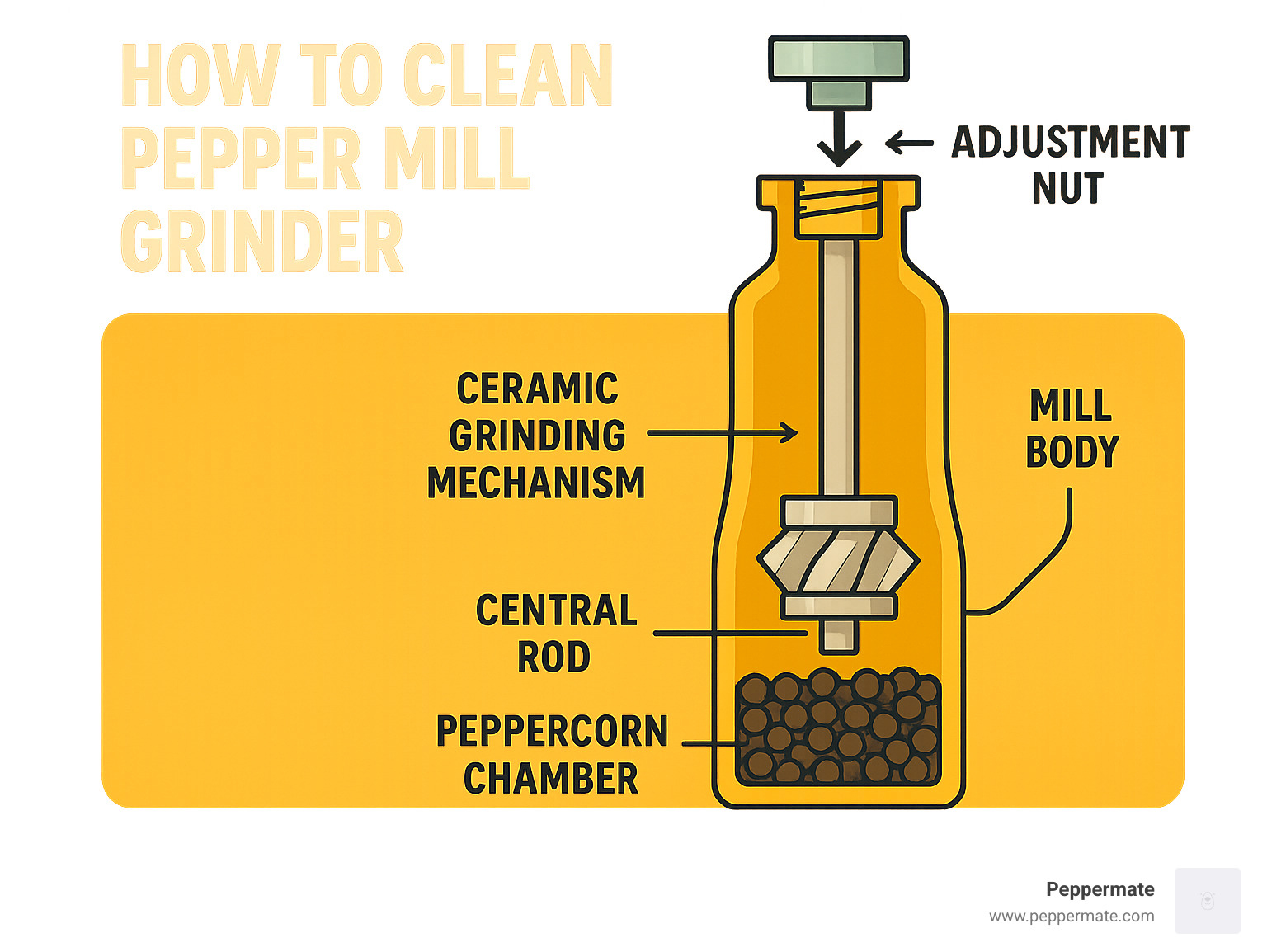
Credit: www.peppermate.com
How To Clean Old Or Vintage Pepper Grinders
Older grinders need gentle care. Here are special steps:
- Avoid water on any part unless you’re sure it’s rustproof.
- Use a dry brush or compressed air to clean inside.
- For rusted metal, gently scrub with a bit of baking soda on a damp cloth.
- Oil wooden exteriors with food-grade mineral oil if they look dry.
If the grinder squeaks, a drop of mineral oil on the metal shaft (not the grinding surfaces) can help.
Comparing Pepper Grinder Cleaning Frequency By Usage
How often you clean depends on how much you use your grinder. Here’s a simple guide:
| Usage Level | Cleaning Frequency | Deep Clean |
|---|---|---|
| Daily | Wipe every 2 weeks | Every 2–3 months |
| Weekly | Wipe monthly | Every 4–6 months |
| Rarely | Wipe as needed | Every 6–12 months |
Cleaning Other Spice Grinders: Similarities And Differences
Many people use the same grinder for salt, spices, or even coffee beans. However, cleaning needs can differ.
- Salt grinders: Salt attracts moisture and can corrode metal. Clean more often and dry thoroughly.
- Spice grinders: Strong flavors can linger. Use rice to neutralize odor and flavor.
- Coffee grinders: Oils are heavier. Brush and wipe after every use.
If you switch between spices, always clean before changing to avoid flavor transfer.
Should You Use Cleaning Products Or Just Water?
For most grinders, warm water and mild dish soap are enough. Avoid strong cleaners—they can damage materials and leave an aftertaste.
White vinegar is safe for metal and ceramic but rinse well. Never use bleach or strong solvents.

Credit: www.holar.com.tw
How To Store Your Grinder To Keep It Clean
Storage affects how often you’ll need to clean. Here are best practices:
- Keep in a dry, cool cupboard away from the stove.
- Avoid direct sunlight, which can dry out wood and fade finishes.
- Store upright to prevent pepper from leaking into the mechanism.
If you live in a humid climate, add a few grains of uncooked rice to the peppercorns. This absorbs moisture and prevents clumping.
When To Replace Your Pepper Grinder
Even with the best care, grinders don’t last forever. Here are signs it’s time for a new one:
- Cracked or warped body
- Grinding mechanism is worn or dull
- Persistent jamming after cleaning
- Rust that won’t scrub off
- Loose or broken parts
A well-maintained grinder can last 5–10 years or more, but replacement is sometimes the best option for flavor and safety.
Pepper Grinder Cleaning: Myths Vs. Facts
Many myths surround pepper grinder care. Here are some common ones:
- “You never need to clean a pepper grinder.” False—residue and oils build up, affecting flavor and function.
- “All parts are dishwasher safe.” False—wood and electric parts can be ruined in the dishwasher.
- “Rice is bad for grinders.” False—uncooked rice is safe and helpful for cleaning most models.
- “Any cleaner is fine.” False—strong chemicals can damage the grinder and flavor your pepper.
Eco-friendly Pepper Grinder Cleaning
Want to clean green? Here are eco-friendly tips:
- Use baking soda and white vinegar for tough residue.
- Skip paper towels and use reusable microfiber cloths.
- Buy quality grinders that last, reducing waste.
- Compost old peppercorns instead of tossing them in the trash.
Pepper Grinder Cleaning And Food Safety
Dirty grinders can harbor bacteria, especially if exposed to moisture. Clean regularly to avoid:
- Cross-contamination: Especially important if you touch raw meat and then the grinder.
- Mold: Can develop in moist or rarely used grinders.
- Flavor transfer: Old, stale pepper can ruin dishes.
Cleaning is an easy way to keep your food safe and tasty.
The Best Pepper Grinders For Easy Cleaning
Some grinders are easier to clean than others. Look for:
- Simple designs with few parts
- Removable grinding mechanisms
- Stainless steel or ceramic materials
- Clear instructions for disassembly and cleaning
Brands like Peugeot, OXO, and Cole & Mason often score high for ease of maintenance. For more on different pepper grinder types and reviews, check Wirecutter.

Credit: coleandmason.com
Frequently Asked Questions
How Often Should I Clean My Pepper Grinder?
For daily use, a quick wipe every two weeks and a deep clean every 2–3 months is best. If you use your grinder less often, a deep clean every 6 months is usually enough.
Can I Put My Pepper Grinder In The Dishwasher?
Most pepper grinders, especially those made of wood or with electric parts, are not dishwasher safe. Only some stainless steel or plastic grinders allow this, and it’s always best to check the manufacturer’s instructions.
Is It Safe To Use Rice To Clean My Pepper Grinder?
Yes, grinding uncooked white rice is a safe and effective way to remove oils and residue from most manual grinders. Avoid using rice in electric or very old grinders unless the manual recommends it.
What Should I Do If My Grinder Still Smells After Cleaning?
If odors remain, grind a small amount of rice or baking soda to absorb smells. Make sure all soap or vinegar is rinsed off. Air dry the grinder thoroughly before refilling.
Can I Grind Other Spices In My Pepper Grinder?
You can, but always clean thoroughly between spices to prevent flavor transfer. Some spices, like cloves or coriander, have strong oils that linger and may require extra cleaning.
Keeping your pepper grinder clean doesn’t have to be complicated. With a bit of regular care, you’ll enjoy fresh, flavorful pepper every time and extend the life of your favorite kitchen tool. If you treat cleaning as part of your cooking routine, your grinder will reward you with years of reliable service.