
Caraway pans have quickly become a favorite in many kitchens. Their beautiful design, non-toxic ceramic coating, and nonstick surface make cooking easy and enjoyable. But, to keep your Caraway pans working well for years, you need to know the best cleaning methods. Many people make mistakes, like using the wrong tools or cleaning products, which can damage the pan’s surface. This guide will help you clean your Caraway pans the right way. You’ll learn step-by-step instructions, common mistakes to avoid, and answers to questions that beginners often have. Whether you use your pan every day or only for special meals, these tips will help you keep it looking and cooking like new.
Why Caraway Pans Need Special Care
Caraway pans are different from traditional nonstick or metal pans. They use a ceramic nonstick coating that is free from toxic materials like PTFE, PFOA, and heavy metals. This coating is great for health, but it’s also more delicate. Scratches, harsh chemicals, or sudden temperature changes can damage it.
If you use the wrong cleaning tools, the nonstick layer may wear out quickly. This means food will start sticking, and the pan will lose its easy-to-clean feature. That’s why it’s important to know exactly how to clean your Caraway pans—so you get both safety and long life from your cookware.
Tools And Products: What To Use And What To Avoid
Before you start cleaning, let’s look at what you should and shouldn’t use on Caraway pans. Using the right tools can make a big difference.
Safe Tools For Cleaning
- Soft sponges (non-abrasive)
- Microfiber cloths
- Soft dish brushes
- Mild dish soap
- Warm water
Tools To Avoid
- Steel wool
- Abrasive scrubbers
- Scouring powders
- Hard-bristle brushes
- Bleach or strong chemicals
- Dishwasher (for regular cleaning)
A common mistake is using steel wool or rough scrubbers. They may work on stainless steel pans, but they scratch the ceramic surface on Caraway pans. Even one scratch can make the nonstick layer less effective.
Step-by-step: How To Clean Caraway Pans After Each Use
Cleaning your pan right after cooking is the easiest way to keep it in good shape. Here’s the best process:
- Let the pan cool down. Never put a hot Caraway pan under cold water. Sudden temperature changes can warp the pan or damage the coating.
- Wipe out food residue. Use a paper towel or soft cloth to remove any oil or leftover food.
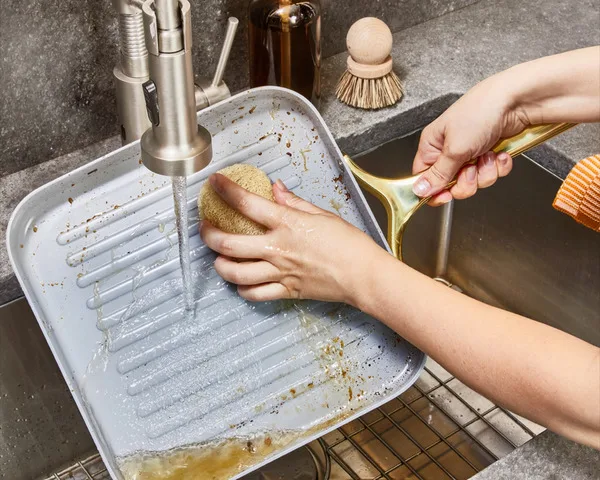
- Wash with warm, soapy water. Fill the sink with warm water and add a few drops of mild dish soap. Use a soft sponge or cloth to gently clean the surface. Don’t press too hard.
- Rinse well. Make sure all soap is removed. Soap left on the pan can cause buildup over time.
- Dry fully. Use a towel to dry the pan right away. This prevents water spots and keeps the pan looking shiny.
Example: After Frying Eggs
Frying eggs often leaves a thin film of oil and bits of egg. Let the pan cool for a few minutes, wipe out the oil, and follow the steps above. You’ll see the pan comes clean with almost no scrubbing.
Dealing With Stubborn Stains Or Burnt-on Food
Even with careful cooking, sometimes food sticks or burns. Caraway pans can handle a little soaking, but you need to be gentle.
How To Remove Stuck-on Food
- Soak the pan. Fill with warm, soapy water and let it sit for 15-30 minutes. This softens food bits.
- Use a nylon scraper or soft brush. Carefully lift the food off. Never use metal tools.
- Rewash with sponge and soap. Clean as usual.
Tip: If food is really stuck, try boiling a little water with some baking soda in the pan for a few minutes. Let it cool, then gently clean as before.
What Not To Do
Never try to chip off burnt food with a knife or metal spatula. This can scratch or ruin the ceramic coating.
How Often Should You Deep Clean Caraway Pans?
Regular washing after each use is enough for daily care. But, you should deep clean your pans about once a month or if you notice oil or color stains that don’t come off with normal washing.
Deep Cleaning Process
- Mix a baking soda paste. Combine 2 tablespoons of baking soda with a few drops of water until it forms a paste.
- Spread gently on stains. Use a soft cloth to rub the paste on the stained areas.
- Let sit for 5-10 minutes. This helps lift stains without scrubbing.
- Wipe clean. Use a damp cloth or sponge to remove the paste.
- Wash as usual.
Baking soda is gentle but effective. Avoid using vinegar, as its acidity can weaken the ceramic coating if used often.
Can You Put Caraway Pans In The Dishwasher?
Caraway says their pans are technically dishwasher-safe, but it’s not recommended. Dishwashers use strong water jets and high heat that can damage the ceramic layer and cause discoloration over time.
Comparison: Hand Washing Vs. Dishwasher
Here’s a quick look at how the two methods affect your pans:
| Method | Effect on Nonstick Surface | Pan Lifespan |
|---|---|---|
| Hand washing | Very gentle, preserves coating | 5+ years (with care) |
| Dishwasher | Harsh; may chip or fade surface | 2–3 years (risk of early wear) |
If you want your Caraway pans to last, hand washing is the safest choice.
Credit: www.carawayhome.com
Removing Discoloration And Oil Buildup
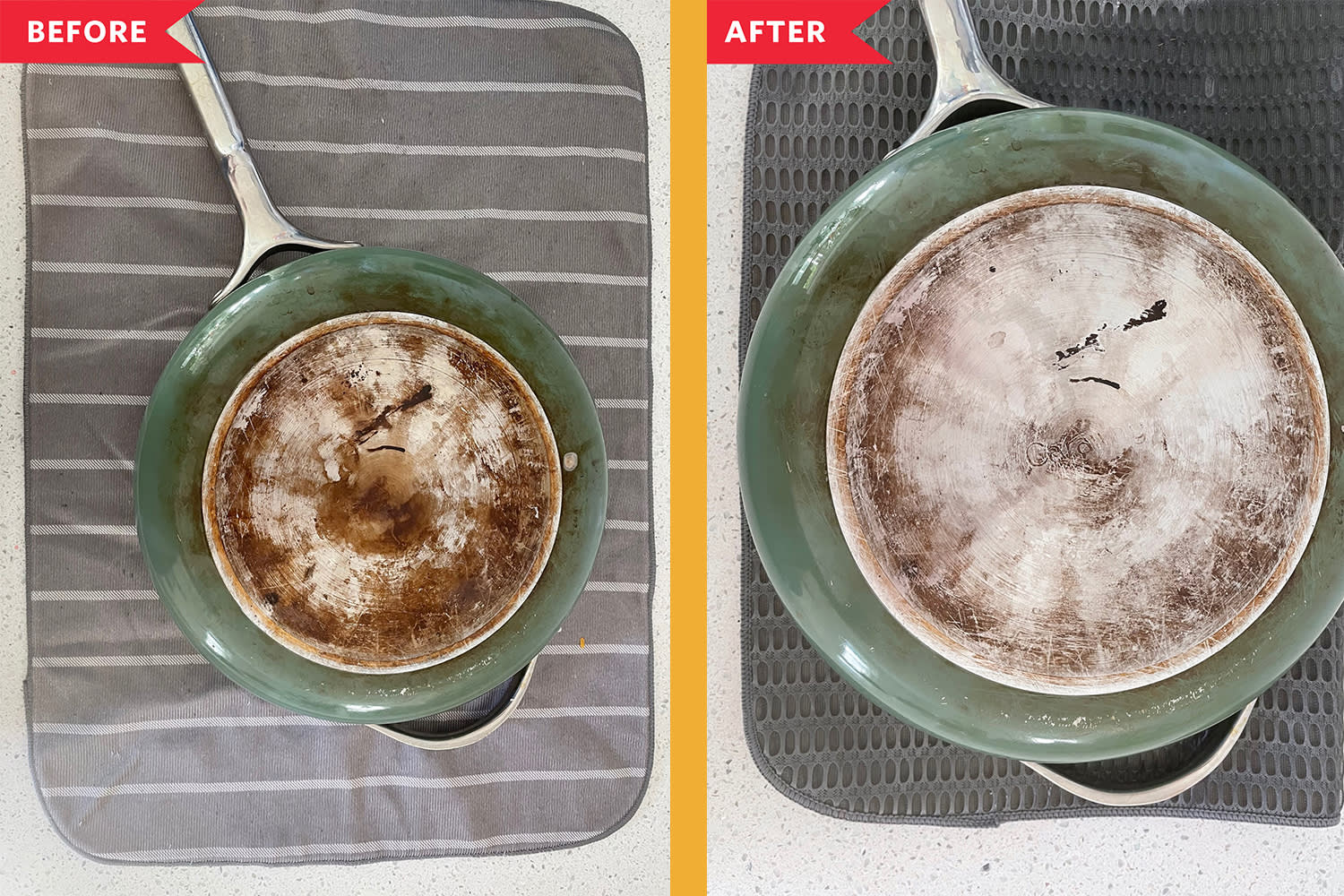
Over time, the bottom and sides of your pan may change color or develop a sticky feel. This is normal and happens with all cookware, especially if you cook with high heat or oils.
How To Remove Discoloration
- Make a paste of baking soda and water.
- Apply to the stained area.
- Let it sit for 10–15 minutes.
- Wipe off with a damp cloth.
- Repeat if needed.
If the bottom (exterior) of the pan is stained, you can use a soft scrub pad, but never use abrasives on the cooking surface.
Non-obvious insight: Many people forget the pan’s handles and edges. Oil can build up here too. Wipe these areas with a soapy cloth during deep cleans.
How To Clean The Bottom (exterior) Of Caraway Pans
The outside of the pan is often exposed to flames, spills, and grease. While the ceramic coating is strong, it still needs gentle care.
Steps For Cleaning The Bottom
- Cool the pan completely.
- Wipe off loose crumbs or oil.
- Use a sponge and soapy water. Scrub gently.
- For tough stains, use a baking soda paste.
- Avoid metal or rough pads.
If you use your pans on a gas stove, check for carbon buildup (black soot). This can be removed with baking soda and a soft brush, but never scrape it off with metal.
Credit: www.thekitchn.com
What About The Lids And Handles?
Caraway’s glass lids and stainless steel handles also need cleaning, but the methods are a little different.
- Glass lids: Wash with soapy water and a soft sponge. For water spots, use a little white vinegar, then rinse well.
- Handles: Wipe with a damp, soapy cloth. Dry right away to prevent water stains.
- Handle crevices: Use a toothpick or soft brush to get food out of tight spaces.
Handles can get hot during cooking, but avoid soaking them for long periods. This keeps the attachment strong and prevents rust.
Drying And Storing Caraway Pans
Drying your pans well is just as important as cleaning. Water left on the pan can cause mineral spots and dull the finish.
Best Practices For Drying
- Towel dry immediately after washing.
- Let air dry for a few minutes before storing.
- Store with pan protectors or a soft cloth between pans if stacking, to prevent scratches.
Stacking pans without protection is a common mistake. Even the pan bottom can scratch the ceramic surface if not protected.

Credit: www.reddit.com
Quick Cleaning Tips For Busy Days
Sometimes you don’t have time for a full clean. Here are some shortcuts that are still safe for your Caraway pans:
- Wipe out with a damp cloth if you’ve only cooked dry foods.
- Rinse with hot water right after use, then wash when you have time.
- Use a soft brush to lift crumbs before they stick.
Never skip cleaning completely, as old food and oil can build up and damage the nonstick surface.
Mistakes To Avoid When Cleaning Caraway Pans
Many people damage their pans by accident. Here are some errors to watch out for:
- Using metal utensils: These can scratch the coating, even during cleaning.
- Cleaning while hot: Sudden temperature changes can warp the pan or crack the coating.
- Soaking for too long: A short soak is okay, but leaving the pan in water overnight can loosen the handle or damage the coating.
- Using harsh chemicals: Bleach, oven cleaner, and strong degreasers can ruin the pan.
- Skipping drying: Storing a wet pan can cause stains or even mold.
How Caraway Pans Compare To Other Nonstick Pans
Understanding how Caraway pans are different can help you adjust your cleaning routine. Here’s a comparison:
| Pan Type | Nonstick Material | Cleaning Difficulty | Recommended Cleaning Method |
|---|---|---|---|
| Caraway | Ceramic | Easy (with care) | Hand wash, soft tools |
| Teflon | PTFE | Easy, but coating can flake | Hand wash, avoid dishwasher |
| Stainless Steel | None | Harder (food sticks) | Scrub with steel wool if needed |
| Cast Iron | Seasoned oil layer | Medium (must avoid soap) | Hot water, no soap, oil after |
Caraway pans are among the easiest to clean—if you use the right methods.
How To Restore A Caraway Pan That Has Lost Its Nonstick Power
If your Caraway pan starts to lose its nonstick ability, don’t worry. Sometimes, a good deep clean will restore the surface.
Steps To Restore Nonstick Function
- Clean thoroughly with baking soda paste as described earlier.
- Rinse and dry.
- Rub a tiny amount of oil (like vegetable or avocado oil) over the cooking surface. Wipe off any excess.
- Heat the pan gently for a few minutes, then let it cool and wipe again.
This is not the same as seasoning cast iron, but it helps fill small pores and restore smoothness.
Non-obvious insight: Sometimes, the nonstick layer feels less effective because of a thin layer of oil or soap buildup. Removing this with baking soda often fixes the problem.
What To Do If Your Pan Gets Scratched
Scratches are hard to fix. If you notice a small scratch:
- Stop using metal utensils.
- Clean only with soft sponges.
- Try the oil rub method above.
If the scratch is deep and food sticks badly, it may be time for a new pan. Scratched ceramic is still safe, but it won’t perform as well.
Cleaning Caraway Bakeware And Accessories
Many people use Caraway’s baking sheets, loaf pans, and storage organizers. These use the same ceramic coating.
- Clean as you would a pan: Soft sponge, mild soap, warm water.
- For baking sheets: Remove baked-on stains with baking soda paste.
- For racks and organizers: Wipe with a damp cloth.
Never put bakeware in the dishwasher, even if it fits.
How To Remove Sticky Residue Or Old Oil
Sometimes, old oil forms a sticky layer on your Caraway pan. This is usually caused by cooking sprays or high heat.
How To Remove Sticky Residue
- Make a thick baking soda paste.
- Rub gently on the sticky area.
- Let sit for 15 minutes.
- Wipe and rinse well.
- Repeat if needed.
Cooking sprays can leave a film that is hard to see but makes food stick. Using a small amount of regular oil is better.
What About Hard Water Stains?
If you live in an area with hard water, you may see white spots on your pans. These are harmless, but they can look bad.
- Wipe with a cloth dipped in white vinegar.
- Rinse and dry right away.
Don’t use vinegar every day, but it’s safe for removing occasional mineral spots.
When To Replace Your Caraway Pan
A well-cared-for Caraway pan can last 5 years or longer. But if you notice these signs, it may be time for a new one:
- Deep scratches or chips
- Nonstick surface is gone and food always sticks
- Warped shape
- Loose or damaged handle
Regular cleaning can delay these problems, but all pans wear out eventually.
Environmental Impact Of Cleaning Products
Caraway pans are made to be eco-friendly, and the cleaning products you use matter too.
- Choose biodegradable soaps.
- Avoid harsh chemicals that pollute water.
- Reuse towels or cloths where possible.
This keeps your kitchen healthier and reduces your impact on the planet. For more information about eco-friendly cleaning products, you can check this EPA guide to safer cleaning products.
How To Clean Caraway Pans On The Go (camping, Travel, Or Shared Kitchens)
If you use your Caraway pan outside the home, the same gentle rules apply:
- Bring a soft sponge and small soap bottle.
- Wipe out food right after cooking.
- Avoid using unfamiliar or strong cleaners.
If you can’t clean right away, soak with just water, then finish cleaning when you can.
How Heat And Cooking Style Affect Cleaning
Cooking on high heat can make cleaning harder and shorten pan life.
- Use medium or low heat for best results.
- Preheat pans slowly to avoid warping.
- Don’t leave empty pans on hot burners.
High heat burns oil and food, creating sticky messes that are tough to clean. Cooking gently keeps both food and pans in better shape.
How To Clean Caraway Pans After Cooking Acidic Foods
Tomatoes, citrus, and vinegar-based foods can sometimes leave stains or dull the coating.
- Clean soon after cooking.
- Use mild soap and warm water.
- Avoid letting acidic food sit in the pan.
If a stain remains, try the baking soda paste method.
Storing Caraway Pans Safely
Proper storage helps keep the nonstick surface perfect.
- Hang pans if possible, using the handle.
- Use felt or silicone pan protectors when stacking.
- Keep lids off until dry to prevent moisture buildup.
Never stack bare pans on top of each other, as even a smooth pan bottom can scratch the surface below.
The Role Of Warranty And Customer Support
If you have a problem with your Caraway pan despite careful cleaning, Caraway offers a warranty. Contact their support with photos and details. They can advise if your issue is covered or if you need a replacement.
Frequently Asked Questions
How Often Should I Deep Clean My Caraway Pan?
Deep cleaning is needed about once a month or whenever you see stains or sticky spots that don’t wash off easily. Regular gentle cleaning after each use is enough for daily care.
Can I Use Olive Oil Or Cooking Spray In My Caraway Pan?
You can use a small amount of olive oil, but avoid cooking sprays. Sprays can leave a film that builds up and makes cleaning harder. Regular oils wipe off more easily.
Is It Safe To Use A Dishwasher For Caraway Pans Sometimes?
While Caraway pans are technically dishwasher-safe, regular dishwasher use can damage the nonstick coating and shorten pan life. Hand washing is always the safer choice.
What Should I Do If My Caraway Pan Gets A Scratch?
If your pan gets a small scratch, stop using metal tools and switch to only soft sponges. Try cleaning with a baking soda paste and rubbing in a small amount of oil. Deep scratches can’t be fixed, but careful use can prevent more.
Why Does Food Suddenly Start Sticking To My Caraway Pan?
Food usually sticks when there’s oil or soap buildup on the surface or the pan is scratched. Try a deep clean with baking soda. Also, avoid using high heat and always preheat gently with a little oil.
Caraway pans can be a joy to use and easy to clean, but only if you know the right methods. With these tips, your pans will look beautiful and work well for years. Taking a few minutes for careful cleaning now means you’ll cook better meals and save money in the long run.