
Keeping your Ninja Air Fryer Oven in top shape is the key to delicious, healthy meals every time. But there’s one part that often gets overlooked: the heating element. This hidden hero is what makes your air fryer cook food so well. If it gets dirty, your oven can smoke, smell bad, or even stop working as it should. Many users don’t realize how important regular cleaning of the heating element is, and most guides only focus on baskets and trays. In this article, you’ll learn everything about how to safely and effectively clean your Ninja Air Fryer Oven heating element—even if you’re a beginner.
You don’t need to be a kitchen pro or tech wizard to do this. With a few easy steps, simple tools, and the right know-how, you can keep your oven working like new. You’ll get practical tips, warnings about common mistakes, and answers to questions you didn’t even know you had.
Let’s dive in and help your Ninja Air Fryer Oven last longer and perform better.
Why Cleaning The Heating Element Matters
The heating element is the heart of your air fryer oven. It gets very hot and cooks your food using rapid air. When grease, crumbs, or oil build up here, several problems can happen:
- Smoke or burning smell during cooking
- Uneven cooking or longer cook times
- Reduced energy efficiency
- Fire risk if too much grease collects
- Shorter oven lifespan
Many owners clean only the basket and trays, missing the heating element entirely. Over time, this can create stubborn residue that’s hard to remove. Some users think if they don’t see visible dirt, it’s clean. But even a thin layer of grease can cause smoke and odors.
It’s important to remember that a clean heating element also means your food tastes better and smells fresher. You’ll also save money on repairs and energy bills.
How The Ninja Air Fryer Oven Heating Element Gets Dirty
Understanding how dirt builds up helps you prevent future problems. When you use your Ninja Air Fryer Oven, fat and oil from food can splatter upward. Small crumbs and batter drips can float with the hot air and stick to the heating element. Over time, this residue bakes on and becomes harder to clean.
Certain foods make things worse:
- Fatty meats like bacon or sausage
- Foods with marinades or sauces
- Battered or breaded items
Even if you use parchment or liners, some oil or vapor will still reach the heating element. The more often you use your oven, the faster this buildup happens.

Credit: www.youtube.com
Signs Your Heating Element Needs Cleaning
Many people wait until there’s a problem before cleaning the heating element. Don’t make this mistake! Watch for these signs:
- Smoke or a burning smell during preheating or cooking
- Visible grease or brown spots on the element
- Uneven cooking—one side of food is burnt, the other is raw
- Oven struggles to reach temperature
- Frequent error codes or oven shutting off automatically
If you notice any of these, it’s time for a deep clean. Even without these signs, regular maintenance prevents future trouble.
Tools And Supplies You’ll Need
Cleaning a Ninja Air Fryer Oven heating element doesn’t need fancy products. Here’s what you’ll need:
- Soft brush (like a clean paintbrush or pastry brush)
- Microfiber cloth
- Non-abrasive sponge
- Dish soap (mild, not strong degreasers)
- Baking soda
- White vinegar (optional, for tough residue)
- A flashlight (to see hidden spots)
- Small bowl for mixing solutions
- Step stool (if you need to reach inside comfortably)
Avoid metal scrubbers or harsh chemicals. These can damage the element or oven interior. Always check your Ninja user manual for specific warnings or instructions.
Credit: www.alsothecrumbsplease.com
Safety First: Preparing For Cleaning
Before you start, safety comes first. The heating element can be very hot, and water plus electricity is a dangerous mix.
- Unplug your Ninja Air Fryer Oven from the wall. Never clean while plugged in.
- Wait until the oven is completely cool. The heating element can stay hot for 30 minutes or more after use.
- Remove all trays, racks, and baskets. Wash these separately in warm, soapy water.
- Position your oven on a stable surface with good lighting.
If your oven is built-in or heavy, don’t try to move it alone.
Step-by-step: How To Clean Ninja Air Fryer Oven Heating Element
Let’s get to the main part. Follow these steps for best results. This process works for most Ninja Air Fryer Oven models (like the SP101, DT201, or Foodi Digital Air Fryer Oven).
Step 1: Access The Heating Element
Open the oven door fully. The heating element is usually on the top inside, like a metal coil. Use a flashlight to see clearly. If your oven has a crumb tray or bottom panel, remove it for easier access.
Step 2: Dry Brushing
Use a soft, dry brush to gently sweep away loose crumbs and dust. Hold a plate or tray below to catch falling debris. This step prevents wet crumbs from sticking later.
Step 3: Mix A Cleaning Solution
In a small bowl, mix:
- 1 tablespoon mild dish soap
- 1 cup warm water
For tough grease, add 1 tablespoon baking soda. Never use straight vinegar or harsh chemicals on the heating element—they can damage the finish.
Step 4: Damp Wipe
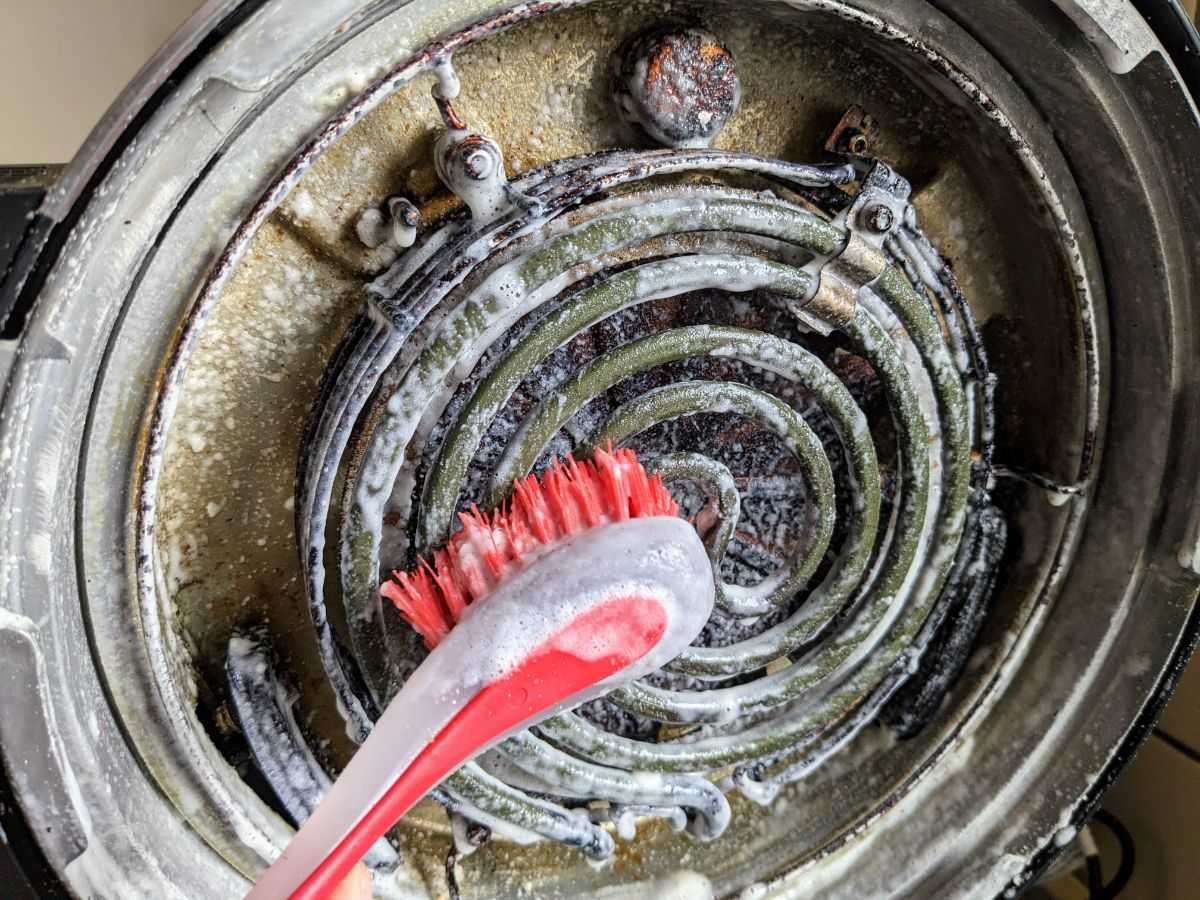
Dip a microfiber cloth or non-abrasive sponge into the solution. Wring it out well—the cloth should be damp, not dripping. Carefully wipe the heating element and the area around it. Never soak the element or let water drip into the oven.
If you see stubborn brown spots, make a paste of baking soda and a few drops of water. Apply gently with your finger or a soft brush. Let it sit for 10–15 minutes, then wipe off with a damp cloth.
Step 5: Rinse And Dry
Use a clean, damp cloth to wipe away any soap or baking soda left behind. Finally, use a dry microfiber towel to remove all moisture. Let the oven air-dry for at least 30 minutes before using.
Step 6: Reassemble And Test
Replace all trays, baskets, and racks. Plug the oven back in. Run it empty at 350°F (175°C) for 5 minutes. This burns off any last traces of cleaning solution and checks that everything works.
Extra Tips For Stubborn Buildup
Sometimes, you’ll find burnt grease that won’t come off with soap and water. Here’s what you can do:
- Make a thick paste of baking soda and water. Dab it on the tough spots and let it sit overnight. Next day, wipe gently.
- For really tough stains, use a little white vinegar on a cloth. Never pour vinegar directly onto the element.
- Never scrape with metal tools. Scratches can lead to rust or electrical problems.
- Repeat the cleaning process every few months, even if you don’t see visible dirt.
What Not To Do (common Mistakes)
Many users accidentally damage their air fryer oven by cleaning incorrectly. Avoid these mistakes:
- Using steel wool, wire brushes, or scouring pads
- Spraying cleaning solutions directly onto the heating element
- Using bleach, ammonia, or oven cleaner sprays
- Cleaning while the oven is plugged in or hot
- Forcing the heating element to move or bend
These errors can break the oven, void your warranty, or even cause injuries.
How Often Should You Clean The Heating Element?
There’s no one-size-fits-all answer, but here’s a simple rule:
- Light use (1–2 times per week): Clean every 2–3 months
- Heavy use (daily or greasy foods): Clean once a month
- After cooking fatty or saucy foods: Spot-clean when cool
If you notice smoke, smell, or uneven cooking, clean right away.
Cleaning Comparison: Heating Element Vs Other Parts
Not all oven parts need the same care. Here’s a quick comparison:
| Part | Cleaning Frequency | Tools Needed | Common Issues |
|---|---|---|---|
| Heating Element | Monthly or as needed | Soft brush, microfiber cloth, mild soap | Smoke, odors, uneven cooking |
| Baskets/Trays | After every use | Sponge, dish soap | Grease buildup, sticky residue |
| Oven Door | Weekly | Glass cleaner, cloth | Cloudy glass, fingerprints |
This shows that the heating element doesn’t need daily cleaning, but regular attention is still important.
Real-world Example: Cleaning Results
Let’s look at a quick before-and-after example. A user who cooked bacon in their Ninja Air Fryer Oven for two weeks without cleaning the heating element noticed:
- Heavy smoke during preheat
- A strong burnt smell
- Food tasted odd
After following the steps in this guide, the next batch cooked with no smoke, no smell, and tasted much better. The user also noticed the oven heated up faster.
How To Prevent Future Buildup
Prevention is always easier than deep cleaning. Here are ways to keep the heating element cleaner:
- Use tray liners or parchment paper (but don’t block airflow).
- Wipe down the interior after each use once it’s cool.
- Avoid overfilling baskets—this reduces splatter.
- Cook greasy foods at lower temps to reduce splatter.
- Clean baskets and trays regularly to stop crumbs from floating up.
If you do these, you’ll spend less time scrubbing and more time enjoying your food.
Troubleshooting: When Cleaning Doesn’t Work
Sometimes, even after cleaning, problems remain. Here’s how to troubleshoot:
| Problem | Possible Cause | What to Do |
|---|---|---|
| Continued smoke | Hidden grease or missed spots | Check above, behind element; repeat cleaning |
| Element not heating | Loose connection, damage from water | Unplug and contact Ninja support |
| Strange noises | Moisture on element | Let oven air dry longer before use |
If your oven still doesn’t work after cleaning and drying, contact Ninja customer service. Don’t try to repair electrical parts yourself.
Ninja Air Fryer Oven Models: Are There Differences?
Ninja makes several air fryer oven models. Most have a similar heating element design, but access can be slightly different.
- SP101/Flip models: Heating element is easy to see, but space is tight.
- DT201/XL ovens: Larger size makes cleaning easier, but element may be deeper inside.
- Foodi Digital Air Fryer Oven: Similar access as above, but check your manual for warnings.
Always check your specific model’s instructions before cleaning. If you can’t find your manual, you can usually download one from the official Ninja support site.
Is It Safe To Use A Dirty Heating Element?
Some people wonder if it’s okay to keep using the oven if the heating element is dirty. The short answer: it’s risky.
A dirty element can:
- Cause smoke that sets off alarms
- Make food taste burnt
- Pose a fire hazard if grease catches fire
- Reduce oven lifespan
Even if you’re in a hurry, try to at least wipe off grease before your next use.
Environmental Impact: Cleaning And Waste
It’s smart to think about the environmental impact of your cleaning routine. Try these eco-friendly tips:
- Use reusable cloths instead of paper towels.
- Avoid harsh chemicals—mild soap and baking soda work well.
- Clean only when needed, not after every use.
- Dispose of greasy water safely—don’t pour down the sink.
This saves you money and helps protect the planet.
When To Call For Professional Help
Most cleaning jobs you can do yourself. But call a professional or Ninja support if:
- The heating element is loose, bent, or damaged
- There are visible sparks or burn marks
- The oven won’t heat after cleaning
- You see melted plastic or wires
Never try to open the oven’s back panel or repair wiring yourself—this is dangerous and can void your warranty.
Key Insights Beginners Miss
Many first-time owners make these mistakes:
- Assuming the heating element is self-cleaning. It is not—manual cleaning is needed.
- Thinking the element can’t be reached. With the right tools and patience, you can clean it safely.
- Using too much water. The element needs only a damp cloth, never soaking.
- Ignoring the oven after cooking fatty foods. Grease builds up much faster than you think.
By knowing these, you’re already ahead of most users.
Maintenance Schedule For Long Life
A regular maintenance schedule keeps your Ninja Air Fryer Oven working like new. Here’s a simple guide:
- After each use: Wipe basket and trays, check for visible splatter
- Every 2 weeks: Wipe oven interior, check heating element
- Every 1–2 months: Deep clean heating element and hard-to-reach spots
Set reminders in your phone or calendar—just like for oil changes in a car.
Quick Reference: Cleaning Do’s And Don’ts
Here’s a handy list for next time you clean:
- Do: Unplug and cool oven first
- Do: Use only soft, non-abrasive tools
- Do: Wipe gently and avoid soaking
- Do: Dry thoroughly before use
- Don’t: Spray cleaner directly on the element
- Don’t: Use steel wool or harsh chemicals
- Don’t: Force the element to move or bend
Keep this list near your oven for a quick reminder.

Credit: www.reddit.com
Frequently Asked Questions
How Often Should I Clean The Heating Element In My Ninja Air Fryer Oven?
For most users, cleaning the heating element every 1–3 months is enough. If you cook greasy foods often, clean more frequently. Spot-clean if you notice smoke or smells.
What Happens If I Never Clean The Heating Element?
If you never clean the element, you’ll get smoke, strange smells, and possibly even a fire risk. Food will taste worse, and your oven may wear out faster.
Can I Use Oven Cleaner Spray On My Ninja Air Fryer Oven Heating Element?
No. Most oven cleaner sprays are too harsh and can damage the heating element. Use only mild dish soap, baking soda, and water.
Is It Safe To Clean The Heating Element While It’s Still Warm?
Never clean the element while it’s warm or hot. Wait until it’s completely cool, then unplug the oven before cleaning.
What Should I Do If The Heating Element Doesn’t Work After Cleaning?
If the heating element doesn’t heat up after cleaning, unplug the oven and let it dry longer. If it still doesn’t work, contact Ninja customer support for help.
Cleaning your Ninja Air Fryer Oven heating element may feel like extra work, but the rewards are clear: better food, safer cooking, and a longer-lasting oven. Taking a few minutes now can save you trouble later. With the steps and tips above, you have everything you need to keep your oven running at its best—meal after meal.