
Grease spills in your oven can feel overwhelming. A bit of cooking oil or fat drops onto the oven floor, and suddenly your kitchen smells bad, smoke fills the air, and baked-on stains seem impossible to remove. Many people try to clean grease using quick fixes, but these often make things worse.
If you want your oven to stay clean, safe, and work well, you need a smart, step-by-step approach. This guide shows you exactly how to clean spilled grease in your oven, avoid mistakes, and keep your kitchen healthy.
Why Cleaning Spilled Grease Matters
When grease spills inside an oven, it does not just look messy. It can affect your food, your oven’s performance, and even your health. Grease burns at high temperatures, creating smoke and sometimes dangerous fumes. These odors can stick to your next meal, making it taste strange. If grease is not cleaned, it can also cause small fires. In fact, according to the National Fire Protection Association, cooking is the leading cause of home fires, with many starting in ovens due to grease buildup.
Another problem is that old grease attracts bacteria and pests. It can make your kitchen feel dirty and unsafe. Cleaning grease quickly and thoroughly is the best way to prevent these issues.
Understanding Your Oven Type
Before you start cleaning, you need to know what kind of oven you have. Different ovens require different cleaning methods. Some modern ovens have self-cleaning features, while older ovens need manual cleaning.
Here is a quick comparison to help you identify your oven:
| Oven Type | Cleaning Difficulty | Best Cleaning Method |
|---|---|---|
| Self-Cleaning Oven | Easy | Self-clean cycle + manual wipe |
| Non-Self-Cleaning Oven | Medium | Manual scrubbing with cleaners |
| Steam-Clean Oven | Easy to Medium | Steam cycle + manual wipe |
| Gas Oven | Medium | Manual cleaning, avoid gas elements |
| Electric Oven | Medium | Manual cleaning, avoid heating coils |
Knowing your oven type helps you choose the right products and tools. For example, self-cleaning ovens use high heat to burn off debris, but you should never use harsh chemicals inside them, as this can damage the coating. Gas ovens have burners you must protect from water and cleaning liquids.
Safety First: Preparing To Clean
Cleaning oven grease is not just about scrubbing. Safety is important. Here are steps to prepare:
- Turn off the oven and unplug it, if possible. Wait for it to cool completely.
- Wear gloves to protect your hands from chemicals and sharp edges.
- Open windows or turn on a kitchen fan for good ventilation.
- Remove oven racks and trays for separate cleaning.
- Gather supplies: Paper towels, sponges, dish soap, baking soda, vinegar, a plastic scraper, and a bowl.
Some people skip these steps, but this is a mistake. Cleaning a hot oven or using strong chemicals without ventilation can be dangerous.
Quick Action: Cleaning Fresh Grease Spills
If you notice grease has spilled during cooking, act quickly. Fresh spills are much easier to clean than baked-on grease. Here’s what to do:
- Let the oven cool until it is safe to touch.
- Blot the grease with paper towels. Do not wipe, as this spreads the grease.
- Mix dish soap and warm water in a bowl. Dip a soft sponge and dab the area.
- Rinse the sponge and repeat until the greasy spot is gone.
- Dry the area with a clean towel.
One common mistake is rubbing the grease, which pushes it deeper into the oven surface. Blotting is much more effective.
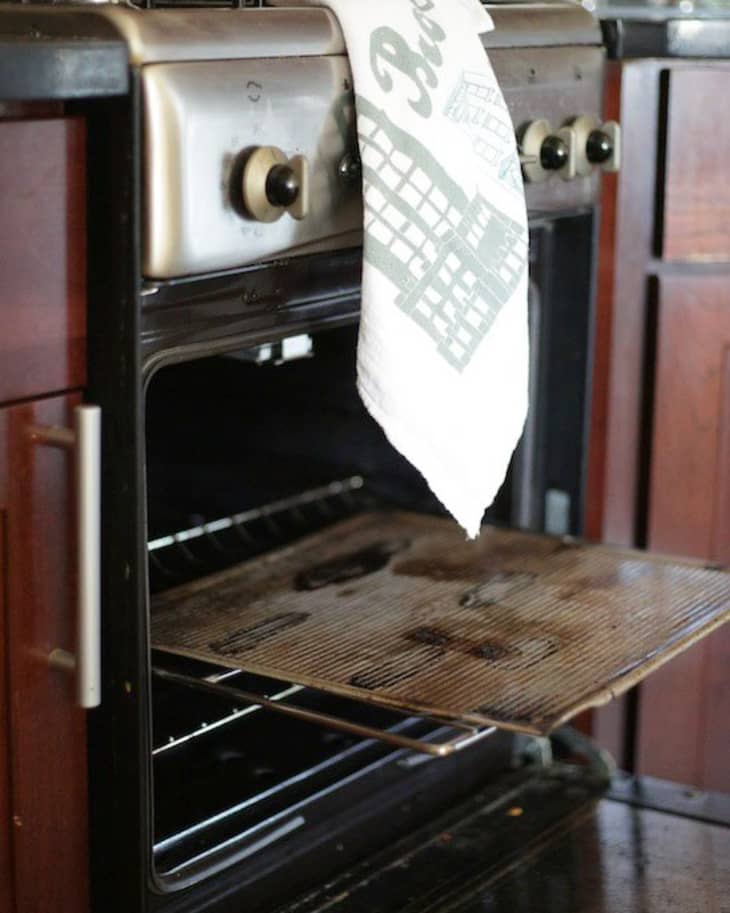
Credit: www.thekitchn.com
Deep Cleaning Baked-on Grease
Sometimes, grease has already hardened and cannot be cleaned with simple soap. You need a deep cleaning method.
Step 1: Baking Soda Paste
Baking soda is a gentle abrasive and neutralizes grease odors.
- Mix ½ cup baking soda with a few tablespoons of water. Make a thick paste.
- Spread the paste over the greasy areas. Cover all visible spots.
- Let the paste sit for at least 30 minutes (up to 12 hours for tough stains).
Step 2: Scrubbing
After the paste has rested:
- Use a plastic scraper or sponge to gently scrub the area.
- Avoid metal scrapers, which can scratch your oven.
- Wipe away the paste and loosened grease with damp cloths.
Step 3: Vinegar Spray
Baking soda leaves a powdery residue. Vinegar helps remove it.
- Fill a spray bottle with white vinegar.
- Spray over the cleaned areas. The vinegar will react with baking soda, fizzing and loosening any remaining residue.
- Wipe with a clean, damp cloth.
Step 4: Final Rinse
- Once the grease is gone, rinse the area with clean water.
- Dry thoroughly to prevent rust or water spots.
Many beginners forget the final rinse, leaving behind cleaning residues that burn when the oven heats up again.
Cleaning Oven Racks And Accessories
Grease often spills onto oven racks and trays. These must be cleaned separately.
- Remove racks and trays from the oven.
- Place them in a bathtub or large sink.
- Fill with hot water and add dish soap.
- Let them soak for at least 2 hours.
- Scrub with a sponge or brush. For tough grease, sprinkle baking soda and scrub.
- Rinse and dry before putting back in the oven.
Some people use the dishwasher for racks, but this can damage the coating and make racks rust. Soaking and scrubbing is safer.

Credit: www.reddit.com
Oven Door Cleaning Tips
Grease also splashes onto the oven door. If your oven door is glass, you can use a special method.
- Mix equal parts vinegar and water.
- Spray the glass and wipe with a microfiber cloth.
- For baked-on stains, use a baking soda paste and let it sit for 20 minutes, then scrub gently.
If your oven door has a removable panel, take it off and clean inside. Many people miss this hidden area, causing bad smells.
Using Commercial Oven Cleaners
If homemade methods do not work, you can use commercial oven cleaners. These products are strong and work fast, but must be used carefully.
- Read the label and follow instructions.
- Only use in a cool oven.
- Wear gloves and ventilate the kitchen.
- Spray the cleaner, wait as directed, then wipe away.
These cleaners often contain chemicals like sodium hydroxide. Never mix them with bleach or ammonia, as this creates toxic fumes.
| Cleaner Type | Effectiveness | Safety Level | Recommended Use |
|---|---|---|---|
| Natural (baking soda & vinegar) | Medium | High | Light to moderate grease |
| Commercial spray | High | Medium | Heavy grease, baked-on stains |
| Self-clean cycle | High | High | General cleaning, not fresh spills |
Self-cleaning Cycle: When And How To Use It
Many ovens have a self-cleaning function. This uses high heat (up to 500°C/900°F) to burn off grease. Use it only when the oven is empty and only for baked-on spills.
- Remove racks and accessories.
- Close the oven door and start the cycle.
- Wait for the cycle to finish. The oven will lock itself for safety.
- When cool, wipe away ashes with a damp cloth.
Do not use the self-cleaning cycle for fresh, liquid grease. The heat will cause smoke and bad smells.
Dealing With Grease Smells
Even after cleaning, ovens can still smell like grease. To remove odors:
- Place a bowl of baking soda inside the oven overnight.
- Or, bake lemon slices at low heat for 30 minutes.
- Always air out your kitchen after cleaning.
These tricks absorb smells and leave your oven fresh.

Credit: www.reddit.com
Preventing Future Grease Spills
The best way to deal with grease is to prevent spills before they happen.
- Use oven-safe trays under food to catch drips.
- Trim fat from meats before cooking.
- Cover dishes with lids or foil.
- Check oven regularly during cooking.
Some people cook directly on racks, but this increases grease spills. Always use a tray.
Common Mistakes Beginners Make
Many people make errors when cleaning oven grease. Here are a few you should avoid:
- Using too much water inside the oven, which can damage electrical parts.
- Scrubbing with metal tools, scratching the surface.
- Forgetting to rinse after cleaning.
- Mixing cleaning chemicals (dangerous! ).
- Not removing racks before self-cleaning cycle.
Understanding these mistakes saves time and keeps your oven safe.
How Often Should You Clean Oven Grease?
It is best to clean fresh grease spills immediately. For deep cleaning, do it every 3 months or whenever you see smoke or smell bad odors. If you bake or roast often, monthly cleaning is better.
Professional Vs. Diy Cleaning
Sometimes, grease is so baked-on that professional cleaning is needed. Professionals use special tools and chemicals. DIY cleaning is cheaper and usually works for most homes. Only call a pro if:
- Grease is impossible to remove.
- Oven smells bad after cleaning.
- There is visible damage or corrosion.
| Cleaning Method | Cost | Effectiveness | Time Required |
|---|---|---|---|
| DIY (baking soda/vinegar) | Low ($5-$10) | Good for mild spills | 1-4 hours |
| Commercial cleaner | Medium ($10-$20) | Good for tough stains | 1-2 hours |
| Professional | High ($50-$150) | Excellent for heavy buildup | 2-5 hours |
Eco-friendly Cleaning Options
If you want to avoid chemicals, there are eco-friendly methods:
- Use only baking soda, vinegar, and lemon.
- Try steam cleaning with a bowl of water inside a warm oven.
- Use old towels instead of paper towels.
Many people do not realize that steam can help loosen grease. Simply place a heat-safe bowl of water in the oven at 200°F (93°C) for 20 minutes. The steam softens grease, making it easy to wipe.
What If Grease Gets Into Hard-to-reach Areas?
Grease can drip into cracks, under heating elements, or inside oven vents. To clean these areas:
- Use a toothbrush or small brush with baking soda paste.
- For vents, use a vacuum with a hose attachment.
- Never pour water directly; use damp cloths and brushes.
These spots often cause lingering odors, so cleaning them well is important.
How To Clean Grease Under The Oven
Grease sometimes drips below the oven, onto the floor or the drawer. Pull out the oven drawer and clean underneath.
- Sweep away crumbs.
- Wipe with soapy water and dry.
- For stubborn grease, use baking soda paste.
Many people forget to clean below the oven, causing pests and smells.
How To Clean Grease Around Oven Knobs And Controls
Oven controls often get greasy from cooking. Use a soft cloth with dish soap to wipe them. For tough spots, use a cotton swab. Avoid spraying liquids directly, as this can damage electronics.
Troubleshooting: If Grease Keeps Coming Back
If you clean but keep seeing grease, check these:
- Are you cooking fatty foods without a drip tray?
- Is your oven door sealing properly?
- Is your oven rack positioned too high or too low?
Adjust your cooking habits and check for oven leaks.
When To Replace Oven Parts
If grease causes damage, you may need to replace racks, seals, or panels. Signs you need to replace:
- Rust on racks or oven floor.
- Door seal is cracked or loose.
- Oven coating is peeling.
Always use genuine parts from your oven’s manufacturer.
Real-life Example: Cleaning After A Major Grease Spill
Let’s look at a real case. A family cooked roast pork, and grease spilled onto the oven floor. Smoke filled the kitchen. They followed these steps:
- Waited for oven to cool.
- Blotted up liquid grease with towels.
- Applied baking soda paste and let it sit overnight.
- Scrubbed gently, wiped with vinegar.
- Cleaned racks and trays separately.
- Used a bowl of baking soda to absorb odors overnight.
The oven was clean, smelled fresh, and worked well the next day. This shows how a simple, step-by-step process works better than quick fixes.
Extra Tips For Keeping Your Oven Clean
- Line the bottom with oven-safe liners (never foil, which can cause fires).
- Set a reminder to check for spills after each use.
- Clean small spots right away; do not let them harden.
- Use lemon juice for a fresh smell.
- Avoid overfilling trays, which causes spills.
The Science Behind Grease Cleaning
Grease is made of fats and oils that stick to surfaces. Baking soda breaks down these molecules, while vinegar dissolves any residue. Commercial cleaners use strong chemicals to dissolve grease quickly, but they can damage sensitive coatings if overused.
Why Professional Cleaning Is Rarely Needed
Most home ovens can be cleaned with simple tools and patience. Professional cleaning is useful for commercial kitchens or very old ovens. For most people, regular cleaning prevents big problems.
For more details on kitchen safety, you can check National Fire Protection Association.
Frequently Asked Questions
How Do I Clean Grease From A Self-cleaning Oven?
For self-cleaning ovens, remove racks and start the self-clean cycle. Wait for the oven to cool, then wipe away ashes with a damp cloth. Do not use harsh chemicals, as they can damage the special coating.
Can I Use Vinegar And Baking Soda Together To Clean Grease?
Yes, mixing vinegar and baking soda helps clean grease. Apply baking soda paste, let it sit, then spray with vinegar. The fizzing action loosens stuck-on grease, making it easy to wipe.
What Should I Do If Grease Causes Smoke In My Oven?
If your oven fills with smoke, turn it off and let it cool. Open windows for ventilation. Clean up the grease spill as soon as possible. Avoid using the oven until it is clean, as smoke can damage the heating elements.
Is It Safe To Use Commercial Oven Cleaners?
Commercial oven cleaners are safe if used correctly. Always follow instructions, wear gloves, and ventilate the area. Do not mix with other chemicals, and avoid using them in self-cleaning ovens.
How Often Should I Clean Grease From My Oven?
Clean fresh spills immediately. For deep cleaning, do it every 3 months. If you bake or roast often, monthly cleaning keeps your oven in good condition.
Keeping your oven free from spilled grease is not just about looks. It protects your health, keeps food tasting good, and helps your oven last longer. A smart cleaning routine makes your kitchen safer and more enjoyable for everyone.