
Thermofoil cabinets are a popular choice in many kitchens and bathrooms today. Their smooth surfaces, affordable price, and wide range of finishes make them attractive for homeowners who want a modern look without the high cost of solid wood. But when it comes to cleaning, thermofoil is different from painted wood or laminate.
If you clean them the wrong way, you can ruin the finish, cause peeling, or leave permanent marks. That’s why understanding the best methods and products is so important.
Many people think all cabinets can be cleaned with the same spray and wipe routine. In reality, thermofoil cabinets have special needs. You need to use gentle cleaners, avoid harsh scrubbing, and pay attention to moisture. Simple mistakes—like using the wrong cloth or cleaning too often with strong chemicals—can shorten the life of your cabinets. But with the right approach, you can keep thermofoil looking new for many years.
This guide will show you everything you need to know. From simple daily maintenance, to deep cleaning, to fixing tough stains, you’ll get practical steps and expert tips. You’ll also see common mistakes that even experienced homeowners make. By the end, you’ll feel confident caring for your thermofoil cabinets without fear of damage.
What Are Thermofoil Cabinets?
Thermofoil cabinets are made by covering a core material, usually medium-density fiberboard (MDF), with a thin layer of vinyl. This vinyl is heated and vacuum-pressed onto the MDF, creating a smooth, seamless surface. The result is a cabinet door that looks like painted wood or laminate but is more affordable.
Some key facts about thermofoil cabinets:
- Seamless finish: No paint lines or cracks, which means a modern, clean look.
- Variety: Available in solid colors, wood grain patterns, and gloss or matte finishes.
- Moisture resistant: The vinyl coating protects the MDF, but the doors are not fully waterproof.
- Easy to clean: The surface does not absorb stains easily, making maintenance simple.
- Sensitive to heat: Too much heat can cause the vinyl to peel away from the core.
Thermofoil cabinets are common in kitchens, bathrooms, laundry rooms, and rental properties. Many people choose them because they look great and cost less than solid wood.
Why Proper Cleaning Matters
Cleaning your thermofoil cabinets correctly does more than keep them looking good. It also protects your investment. Improper cleaning can cause:
- Peeling: Using the wrong products or too much water can cause the vinyl layer to separate from the MDF.
- Discoloration: Strong chemicals can fade or change the cabinet color.
- Warping: Excess moisture can make the MDF swell, ruining the smooth finish.
- Shorter lifespan: Over time, harsh cleaning reduces the life of your cabinets.
A gentle, regular cleaning routine keeps your cabinets shiny and prevents bigger problems. It also makes it easier to spot damage early, before it gets worse.

Credit: tdm-thedoormaker.com
Supplies You Need For Cleaning Thermofoil Cabinets
You don’t need expensive or special products for cleaning. The right supplies are usually already in your home.
Recommended supplies:
- Microfiber cloths: Soft and non-scratching, perfect for both dry dusting and wet cleaning.
- Mild dish soap: A few drops in water is enough for most cleaning jobs.
- Warm water: Not hot, as heat can harm thermofoil.
- Spray bottle: For mixing water and soap if you prefer spraying.
- Soft sponge: For gentle scrubbing if needed.
- Dry towel: For drying the surface right after cleaning.
- Cotton swabs: Useful for cleaning corners, edges, and hardware.
- White vinegar: For tough grease, but always diluted.
- Baking soda: For stubborn stains, used gently.
Avoid these supplies:
- Abrasive pads (steel wool, rough sponges)
- Strong chemical cleaners (bleach, ammonia, acetone)
- Oil-based polishes or waxes
- Steam cleaners or very hot water
These can scratch, stain, or peel the thermofoil surface.
Daily And Weekly Cleaning Routine
Keeping thermofoil cabinets clean doesn’t require a lot of time. A simple routine can prevent most problems.
Daily Maintenance
- Wipe spills immediately. Coffee, sauce, oil, or water left on the surface can cause stains or damage if not cleaned up quickly.
- Dust with a dry microfiber cloth. This keeps dirt from building up and scratching the surface.
Weekly Cleaning
- Mix a cleaning solution: Fill a bowl with warm water and add a few drops of mild dish soap.
- Dip your microfiber cloth: Wring out excess water; the cloth should be damp, not wet.
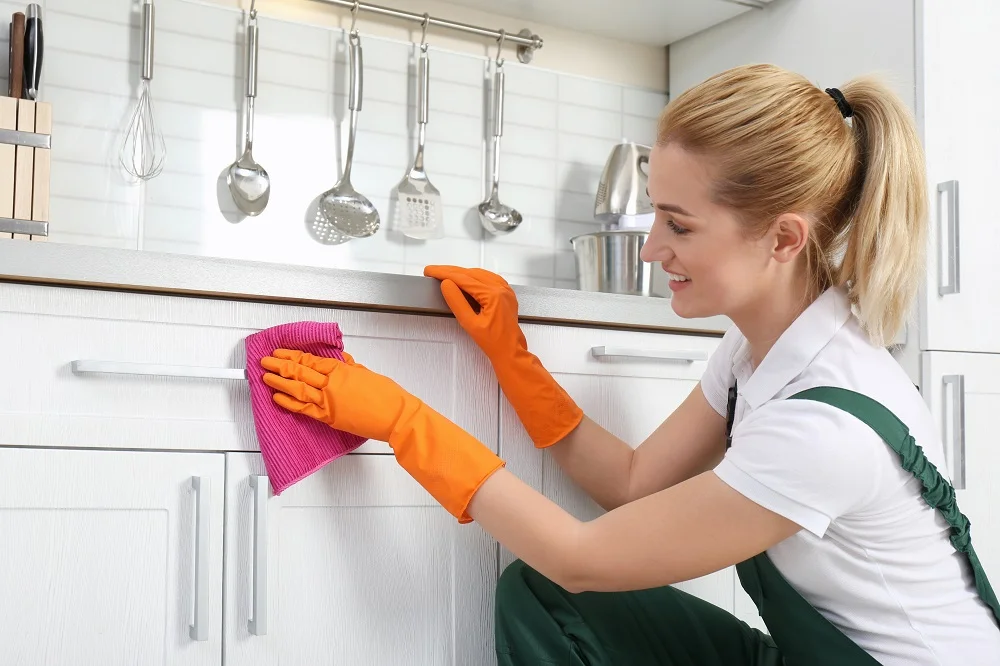
- Wipe cabinet surfaces: Clean doors, drawer fronts, and handles. Move in the direction of the grain if your cabinets have a wood pattern.
- Rinse with a clean damp cloth: This removes any soap residue.
- Dry with a towel: Prevents water spots and moisture problems.
Tip: Always clean from top to bottom, so drips won’t land on already-clean areas.
Deep Cleaning Thermofoil Cabinets
Sometimes your cabinets will need more than a quick wipe, especially in kitchens where grease and grime build up.
When To Deep Clean
- Every 1-2 months in kitchens
- After big cooking projects
- If you see greasy buildup or stains
Steps For Deep Cleaning
- Remove items: Take everything out of the cabinets and clear the countertop below.
- Clean hardware: Take off handles and knobs if possible, and wash them separately with soapy water. Dry completely before reattaching.
- Degrease surfaces: Mix a solution of 2 cups warm water, 1 tablespoon dish soap, and 1 tablespoon white vinegar in a spray bottle. Lightly spray the cabinets (do not soak) and let sit for 2-3 minutes.
- Wipe gently: Use a microfiber cloth to remove grease. For stubborn spots, use a soft sponge and a paste of baking soda and water. Rub gently in circles.
- Rinse and dry: Use a clean, damp cloth to remove residue, then dry with a towel.
Non-obvious insight: Many people forget to clean the top edges and undersides of cabinets, where grease and dust collect. Pay special attention to these hidden areas.
Removing Stubborn Stains And Marks
Not all stains can be wiped away with soap and water. Here’s how to handle tougher problems without harming your cabinets.
Grease Stains
- Mix equal parts white vinegar and warm water.
- Dip a microfiber cloth in the solution, wring it out, and gently rub the stain.
- Rinse with clean water and dry immediately.
Note: Always test in a hidden spot first. Some thermofoil surfaces are sensitive to vinegar.
Sticky Residue
- Use a small amount of mild dish soap on a damp cloth.
- For very sticky spots, a little baking soda paste (baking soda + water) can help. Rub gently and rinse.
Ink Or Marker
- Try a magic eraser sponge, but use very light pressure.
- Alternatively, use a bit of rubbing alcohol on a cotton swab. Wipe clean, then dry.
Food And Beverage Stains
- Use a mild dish soap solution and a microfiber cloth.
- For dried-on stains, let the soapy cloth sit on the spot for a few minutes before wiping.
Non-obvious insight: Never use nail polish remover (acetone) or bleach. These can instantly ruin the thermofoil finish.
How To Clean Cabinet Interiors
The inside of cabinets can collect crumbs, dust, and spills. While the interior is sometimes a different material, it’s important to clean these too.
Steps For Interior Cleaning
- Empty the cabinet: Remove all items.
- Vacuum crumbs and dust: Use a hand vacuum or soft brush.
- Wipe with soapy water: Use a damp cloth and mild dish soap.
- Dry thoroughly: Moisture left inside can cause swelling or mold.
- Replace items: Only after the cabinet is fully dry.
Extra tip: Use shelf liners to protect the interior from spills and make future cleaning easier.
Caring For Thermofoil Cabinet Hardware
Handles, pulls, and hinges also need cleaning. Greasy or sticky hardware can make the whole kitchen feel dirty.
- Remove hardware for deep cleaning when possible.
- Soak in warm, soapy water for 10-15 minutes.
- Scrub with a soft brush (like an old toothbrush).
- Dry hardware completely before putting back.
If you can’t remove hardware, clean around it with a damp cloth and use cotton swabs for crevices.
How To Prevent Damage During Cleaning
Thermofoil is tough but not indestructible. Here are ways to protect your cabinets:
- Avoid too much water. Excess moisture is the biggest enemy. Always use a damp (not wet) cloth.
- Use gentle pressure. Pressing too hard can cause scratches or peeling.
- Don’t use harsh chemicals. Stick to mild soap and water for most cleaning.
- Wipe spills quickly. Especially water, sauces, and oils.
- Keep away from heat sources. Don’t clean with steam, and avoid placing hot appliances too close.
Example: A common mistake is letting water drip down cabinet edges. Over time, this can cause the edges to swell and the vinyl to lift.
What To Do About Peeling Or Damaged Thermofoil
Sometimes, despite your best efforts, you may find a corner or edge starting to peel. This is often caused by heat, moisture, or old age.
Small Peeling Spots
- Super glue method: Apply a tiny amount of clear super glue under the peeling area. Press down with a cloth until set.
- Clamp: For larger areas, use a clamp and a piece of soft cloth to hold the vinyl in place while the glue dries.
Large Peeling Or Damage
- Replacement: Sometimes the only fix is replacing the door or drawer front. Many manufacturers sell replacements.
- Professional repair: For high-value kitchens, consider hiring a specialist.
Warning: Do not try to glue down large, loose sheets yourself. This often makes the problem worse.
Credit: kitchencabinetguys.net
Cleaning Thermofoil Cabinets Vs. Other Cabinet Types
Thermofoil is different from wood, laminate, or painted cabinets. Here’s a quick comparison to help you understand the differences:
| Cabinet Type | Best Cleaning Method | What to Avoid |
|---|---|---|
| Thermofoil | Mild soap, damp cloth, gentle drying | Harsh chemicals, excess water, scrubbing |
| Solid Wood | Wood cleaner, soft cloth | Standing water, ammonia |
| Laminate | Soap and water, non-abrasive cloth | Abrasive pads, bleach |
| Painted | Soap, water, gentle touch | Scrubbing, alcohol, strong acids |
Insight: Thermofoil is more moisture-resistant than wood but much more sensitive to heat and harsh chemicals.
Common Mistakes To Avoid
Even well-meaning cleaning can cause damage if you’re not careful. Here are mistakes to watch for:
- Using abrasive cleaners: These scratch the vinyl and shorten the cabinet’s life.
- Letting water pool: Water seeping into edges causes peeling.
- Using hot water or steam: Can make the vinyl bubble or warp.
- Cleaning too aggressively: Light pressure is enough.
- Skipping drying: Always finish with a dry towel.
- Forgetting hidden spots: The tops and bottoms collect dust and grease too.
Pro tip: Always clean with the grain if your cabinets have a wood pattern. This keeps the finish looking its best.

Credit: www.youtube.com
How To Keep Thermofoil Cabinets Looking New
A little prevention goes a long way. Here’s how to keep your cabinets in top shape:
- Install cabinet bumpers to prevent doors from slamming.
- Use range hoods or fans when cooking to reduce grease buildup.
- Regularly check for peeling or bubbling.
- Avoid hanging wet towels or cloths on cabinet doors.
- Do not stick labels or tape directly on the surface.
- Place small mats or trays under coffee makers, toasters, or other appliances.
Non-obvious insight: Open cabinet doors during and after cooking with lots of steam. This reduces moisture buildup inside.
Eco-friendly And Safe Cleaning Options
If you prefer green cleaning, there are safe choices for thermofoil:
- White vinegar and water: Good for grease, but always dilute and rinse well.
- Baking soda paste: For stains, use gently.
- Castile soap: Plant-based and safe for most surfaces.
Tip: Always avoid strong essential oils, which can damage the vinyl.
For more eco-friendly cleaning ideas, check out the resources at EPA Safer Choice.
When To Call A Professional
Most cleaning can be done yourself. But call a pro if:
- You see large peeling or bubbling areas
- Water has gotten behind the vinyl
- There is black mold growth inside the cabinet
- The surface is stained or discolored and normal cleaning does not work
A professional can advise on repair or replacement. Sometimes, investing in a new door is cheaper than trying repeated DIY fixes.
Data: How Long Do Thermofoil Cabinets Last?
Thermofoil cabinets are designed to last 10-20 years with proper care. But their lifespan depends on cleaning habits, moisture, and heat exposure.
| Condition | Expected Lifespan | Care Needed |
|---|---|---|
| Well maintained, normal use | 15-20 years | Gentle cleaning, avoid heat |
| High moisture, poor cleaning | 5-10 years | Frequent repair/replacement |
| Heavy cooking areas | 8-15 years | Regular degreasing, vent use |
Frequently Asked Questions
How Often Should I Clean My Thermofoil Cabinets?
Weekly cleaning is best for most kitchens and bathrooms. Wipe up spills right away. Deep clean every 1-2 months or whenever you see grease, stains, or buildup.
Can I Use Disinfectant Wipes On Thermofoil Cabinets?
Most disinfectant wipes are safe if they do not contain bleach or strong solvents. Always test in a small area first and dry after use to prevent moisture damage.
What Should I Do If The Thermofoil Starts To Peel?
For small spots, use a tiny amount of clear super glue and press down. For larger areas, replacement or professional repair is usually better. Avoid using lots of glue or tape.
Is It Safe To Use Vinegar On Thermofoil Cabinets?
Diluted vinegar can be used for tough grease, but always rinse with water and dry right away. Never use undiluted vinegar or let it sit on the surface for long.
How Can I Protect My Cabinets From Heat Damage?
Keep appliances like toasters, kettles, and coffee makers away from cabinet edges. Always use your range hood when cooking. Avoid cleaning with hot water or steam.
Thermofoil cabinets are a smart choice for many homes, but caring for them the right way is key. With gentle cleaning, quick action on spills, and a few simple habits, your cabinets can stay beautiful for many years. When in doubt, always use mild products and a soft touch—your cabinets will thank you.