
Sharpening a fillet knife is a skill that brings satisfaction and precision to every cut you make. If you enjoy preparing fish or meat, a sharp fillet knife is your best friend. Dull blades make filleting difficult, slow, and even dangerous.
On the other hand, a finely sharpened knife glides through flesh and skin, giving you clean, beautiful slices. Yet, many people struggle to keep their fillet knives sharp, often using the wrong tools or techniques. Learning how to sharpen a fillet knife the right way saves time, protects your blade, and improves your cooking experience.
Many beginners believe sharpening is the same for all knives. This is not true. Fillet knives are thin, flexible, and often have a very fine edge. They need special care. In this article, you will discover everything you need to know—from choosing the right sharpening tools to understanding each sharpening step.
You’ll find out why most people accidentally damage their fillet knives and how to avoid those mistakes. With clear explanations, easy steps, and expert tips, you’ll be able to keep your fillet knife razor-sharp for years.
Why A Sharp Fillet Knife Matters
A fillet knife is not just another kitchen tool. Its main job is to make very precise, delicate cuts. Whether you’re filleting a fish or trimming meat, the sharpness of your knife affects everything:
- Clean Cuts: A sharp blade cuts through flesh easily, leaving the meat or fish looking neat.
- Less Waste: With a dull knife, you lose more meat because you have to saw back and forth.
- Safety: Dull knives slip and require more force, increasing the risk of injury.
- Speed: A sharp knife works much faster, making food prep more enjoyable.
Professional chefs and anglers know that a well-sharpened fillet knife is worth the effort. If you want to get the most out of your knife, you need to learn how to sharpen and maintain it properly.
Understanding Fillet Knives And Their Edges
Fillet knives are unique. They are usually long (6-9 inches), thin, and flexible. Their edges are ground much thinner than chef’s knives or utility knives. This design lets them bend and move along the bones and skin. However, it also makes their edges more delicate.
Types Of Fillet Knife Edges
- Straight Edge: Most fillet knives have a smooth edge for precise slicing.
- Serrated Edge: Rare, but some fillet knives have serrations for cutting through tough skin.
- Grind Type: Most have a double bevel (sharpened on both sides), but the angle is often smaller (12-17 degrees per side).
Knowing your knife’s edge helps you choose the right sharpening method. Using the wrong angle or tool can ruin the fine edge or make it uneven.
Tools You Need To Sharpen A Fillet Knife
Choosing the right sharpening tools is half the battle. Here are the main options and how they compare:
| Tool | Best For | Skill Needed | Advantages | Disadvantages |
|---|---|---|---|---|
| Whetstone | All fillet knives | Medium | Precise, gentle on blade | Takes practice |
| Pull-Through Sharpener | Quick touch-ups | Low | Easy, fast | Can remove too much metal |
| Sharpening Rod (Honing Steel) | Maintaining edge | Low | Quick, good for touch-ups | Does not sharpen dull blades |
| Electric Sharpener | Fast sharpening | Low | Very fast | Can damage thin blades |
| Sharpening System (Guided Angle) | Precise angle control | Low-Medium | Consistent results | More expensive |
For most fillet knives, a whetstone is the best choice for sharpening. It gives you full control and protects the flexible, thin edge. A sharpening rod or pull-through sharpener is useful for quick touch-ups. Electric sharpeners are not recommended for delicate fillet knives—they can overheat or grind away too much steel.
Preparing To Sharpen: What You Need To Know
Before you start sharpening, there are a few important things you should check:
- Clean Your Knife: Wash and dry your fillet knife. Dirt or oil can affect sharpening.
- Check the Edge: Look for chips, dents, or a rolled edge. If your knife is very damaged, you may need professional help.
- Choose the Right Angle: Most fillet knives are sharpened at 12-17 degrees per side. Check your knife’s manual or the manufacturer’s website if unsure.
- Set Up a Safe Area: Sharpening can be messy, especially with water stones. Work on a stable surface with good lighting.
A common beginner mistake is to use a random angle or press too hard. This can ruin the fine edge or even snap the blade. Take your time in preparation—the results are worth it.
How To Sharpen A Fillet Knife With A Whetstone
Using a whetstone is the classic and most effective way to sharpen a fillet knife. Here’s a step-by-step method that works for almost every fillet knife, from budget models to high-end Japanese blades.
Step 1: Soak Or Lubricate The Whetstone
Most whetstones need to be soaked in water for 10-15 minutes before use. Some require oil instead. Read the instructions on your stone. A properly lubricated stone reduces heat and helps remove metal shavings.
Step 2: Select The Right Grit
- Coarse Grit (200-600): For repairing very dull or damaged edges.
- Medium Grit (1000-2000): For normal sharpening.
- Fine Grit (3000-8000): For polishing and finishing the edge.
Start with medium grit if your knife is just dull, or coarse if it is chipped. Always finish with fine grit to get a razor-sharp edge.
Step 3: Set The Correct Sharpening Angle
Hold the knife so the edge meets the stone at a 12-17 degree angle. If you’re not sure how this looks, a stack of two coins under the spine of the knife gives you about the right angle.
Step 4: Draw The Knife Across The Stone
Place the heel of the knife (near the handle) on the stone. With gentle, even pressure, slide the blade across the stone, moving towards the tip. Use a sweeping motion, following the curve of the blade. Repeat this 8-12 times on one side, then switch to the other side.
Key tip: Let the stone do the work. Do not press hard—gentle, steady strokes are best for fillet knives.
Step 5: Check For A Burr
A burr is a tiny, raised edge of metal that forms as you sharpen. Run your finger (carefully!) across the edge—not along it. You should feel a slight roughness. Once you have a burr along the whole blade, switch sides.
Step 6: Repeat And Refine
Move to the fine grit stone and repeat the process. Use lighter pressure for finishing strokes. Alternate sides every 2-3 strokes to polish the edge and remove the burr.
Step 7: Clean And Test The Edge
Wipe the blade with a damp cloth, then dry it fully. To test sharpness, try slicing a piece of paper or gently shaving a thin layer of tomato skin. The knife should cut smoothly with little effort.
How To Sharpen A Fillet Knife With A Sharpening Rod
A sharpening rod (also called honing steel) is not for making a dull knife sharp. It is for keeping a sharp knife sharp by straightening the edge. Here’s how to use it:
- Hold the rod vertically, tip resting on a towel or cutting board.
- Hold the knife at a 15-degree angle to the rod.
- Starting at the heel, pull the knife down and across the rod in a sweeping motion, moving towards the tip.
- Repeat 5-7 times per side.
- Use gentle pressure—imagine you are slicing a thin layer off the rod.
This quick process realigns the fine edge and keeps your fillet knife performing well between sharpenings.
Using A Pull-through Sharpener: Pros, Cons, And Steps
A pull-through sharpener is popular because it’s fast and easy. However, it’s not always the best choice for fillet knives. These sharpeners use fixed angles, which may not match your blade. They can also remove more metal than needed.
If you choose this method:
- Place the sharpener on a stable surface.
- Insert the blade into the slot, heel first.
- Pull the knife smoothly through the slot, following the curve of the blade.
- Repeat 3-5 times.
Important insight: Always check if the sharpener is suitable for thin blades. Some models have special slots for fillet knives.
Guided Angle Systems: Getting A Perfect Edge Every Time
A guided sharpening system holds the knife at a fixed angle while you move the stone across the edge. These systems are great for beginners who want consistent results. They’re also good for expensive or high-carbon fillet knives.
- Attach the knife to the clamp.
- Set the guide to the desired angle (usually 15 degrees for fillet knives).
- Use the included stones to sharpen, moving from coarse to fine.
- Follow the system’s instructions for best results.
These systems cost more but help avoid common mistakes like wobbling or uneven edges.
Electric Knife Sharpeners: Are They Safe For Fillet Knives?
Electric sharpeners are very fast, but most are not designed for thin, flexible blades like fillet knives. The strong motors and abrasive wheels can grind away too much metal or even break the tip. If you must use an electric sharpener, choose one with adjustable angles and a gentle setting for fine knives.
Still, manual sharpening is safer and usually gives better results for fillet knives.
Common Mistakes When Sharpening A Fillet Knife
Many beginners damage their knives by making simple mistakes. Here are the most frequent problems and how to avoid them:
- Wrong Angle: Sharpening at too wide an angle makes the edge thick and clumsy.
- Too Much Pressure: Pushing hard can roll or chip the fine edge.
- Inconsistent Strokes: Uneven sharpening creates an edge that won’t slice smoothly.
- Skipping Grits: Moving from coarse to fine too quickly leaves a rough edge.
- Neglecting Both Sides: Sharpening only one side creates an uneven, weak edge.
- Not Cleaning the Blade: Metal shavings and oil can dull the edge.
- Using the Wrong Tool: Electric sharpeners or cheap pull-through devices can ruin thin blades.
Practical tip: Always use gentle, even strokes and check your work often. It’s better to do several light passes than a few heavy ones.

Credit: www.aftco.com
How To Maintain A Fillet Knife Edge
Sharpening is just one part of caring for your knife. Proper maintenance keeps the edge sharp longer and prevents damage.
- Store Properly: Use a sheath, blade guard, or knife block. Never toss your knife in a drawer unprotected.
- Clean After Use: Hand wash and dry immediately. Water and fish oils can cause rust.
- Hone Regularly: Use a sharpening rod after each use to keep the edge aligned.
- Avoid Hard Surfaces: Do not cut on glass or stone. Use wood or plastic cutting boards.
- Sharpen Only When Needed: Over-sharpening wears out the blade.
Non-obvious insight: High-carbon and stainless fillet knives have different needs. Stainless resists rust but may lose sharpness faster. High-carbon stays sharp longer but needs more care to prevent rust. Choose your maintenance routine based on your knife’s steel type.
How Often Should You Sharpen A Fillet Knife?
How often you sharpen depends on how much you use your knife and what you cut. For home cooks, sharpening every 2-3 months is usually enough. If you fillet fish often, you may need to sharpen every few weeks. Regular honing (using a sharpening rod) lets you go longer between full sharpening sessions.
Here’s a simple guideline:
| Usage Level | Sharpening Frequency | Honing Frequency |
|---|---|---|
| Rare (1-2 times/month) | Every 4-6 months | After each use |
| Moderate (weekly) | Every 2-3 months | After each use |
| Heavy (daily/chef/angler) | Every 2-4 weeks | After each use |
If you notice your knife dragging, crushing, or not slicing cleanly, it’s time to sharpen.
How To Sharpen A Fillet Knife In The Field
Many anglers or outdoor cooks need to sharpen their fillet knives while away from home. Here’s how to do it with limited equipment:
- Pocket Sharpeners: Small, portable sharpeners with ceramic or diamond rods are ideal. Follow the same angle rules—gentle strokes at about 15 degrees.
- Flat River Stones: In an emergency, a smooth, flat stone can work. Wet the stone, use light pressure, and go slow.
- Leather Strop: A leather belt or strap can polish the edge after sharpening with a stone.
Non-obvious insight: Avoid using sandpaper or rough rocks. These damage the fine edge and can make it worse. A small ceramic rod or diamond plate is the best field sharpening tool.
Signs Your Fillet Knife Needs Sharpening
Sometimes, it’s not clear when your knife is dull. Here are signs to watch for:
- Tearing Instead of Slicing: The blade tears flesh or skin, making ragged cuts.
- Hard to Control: You have to push hard, and the knife slips or wobbles.
- Visible Nicks: Look for small chips or shiny spots on the edge.
- Fails the Paper Test: Try slicing a sheet of paper. If the knife snags or won’t cut smoothly, it’s dull.
- Crushing Tomatoes or Fish Skin: Instead of gliding through, the blade mashes or crushes.
Don’t wait until your knife is completely blunt. Regular maintenance saves time and protects your knife.
Safety Tips When Sharpening A Fillet Knife
Sharpening involves sharp edges and sometimes slippery water or oil. Stay safe by following these rules:
- Work on a Stable Surface: Prevent slips and accidents.
- Keep Fingers Clear: Hold the knife by the handle, not near the edge.
- Use Light Pressure: Avoid sudden slips.
- Wipe the Blade Carefully: Use a towel, not your fingers, to clean off metal shavings.
- Store Sharpening Tools Safely: Put stones, rods, or sharpeners away from children.
Key reminder: A sharp knife is safer than a dull one, but only if you handle it with care.
Troubleshooting: Fixing Common Fillet Knife Sharpening Problems
Even with the best intentions, sometimes things go wrong. Here’s how to fix common issues:
Uneven Edge
If your knife cuts well on one side but not the other, you may be sharpening unevenly. Go back to the stone and use even strokes, counting each pass. Try alternating sides every 2-3 strokes.
Rough Or Jagged Edge
This usually means you finished sharpening on too coarse a stone. Always use a fine grit for your last few passes. Polish with a leather strop if possible.
Rolled Or Bent Edge
If the edge folds over and won’t cut, you’re probably using too much pressure or a bad angle. Hone with a sharpening rod to realign the edge, then touch up with a fine stone.
Chipped Or Broken Tip
This can happen if you drop the knife or use an electric sharpener. Depending on the damage, you may need to re-profile the tip with a coarse stone or take it to a professional.
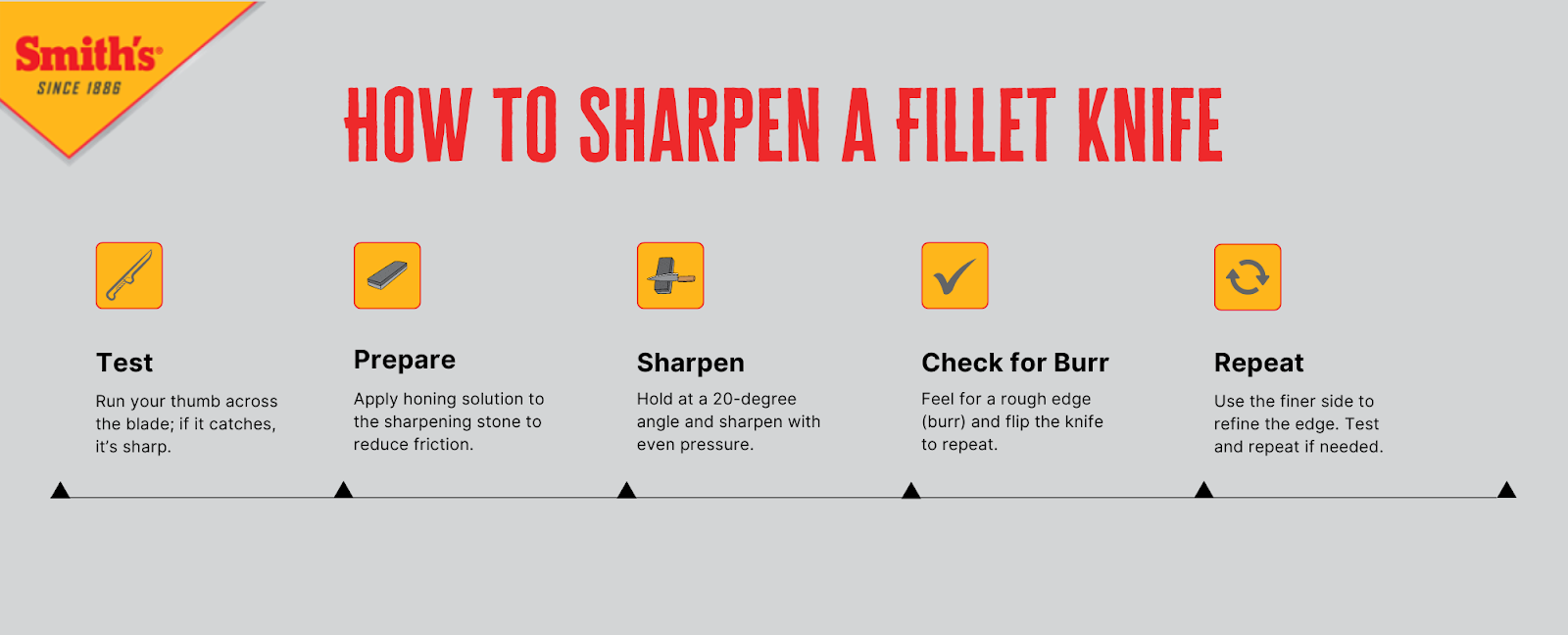
Credit: smithsproducts.com
When To Seek Professional Sharpening
Most fillet knife sharpening can be done at home, but there are times when you should seek help:
- Major Chips or Cracks: Large damage needs expert repair.
- Expensive Japanese Blades: Some high-end knives have special steels or grinds.
- Recurring Problems: If you can’t get a sharp edge no matter what you try.
Professional sharpeners use advanced equipment and can restore your knife’s original shape and sharpness. It’s worth it for valuable or specialty knives.
Environmental And Knife Care Tips
Many people forget that the way you care for your knife affects how often you need to sharpen it. Here are a few more tips:
- Avoid the Dishwasher: Hot water and detergents can damage the edge.
- Dry Immediately: Prevent rust by drying the knife after washing.
- Use the Right Board: Wood or soft plastic protects the edge; glass or stone dulls it quickly.
- Oil the Blade: For high-carbon knives, a light coat of mineral oil prevents rust.
Practical tip: Never leave a fillet knife soaking in water or fish juice. This leads to corrosion and weakens the edge.
Sharpening Different Types Of Fillet Knives
Not all fillet knives are the same. Here’s how sharpening can change depending on the material and style:
Stainless Steel Fillet Knives
- Easier to maintain, less likely to rust.
- Can be harder to sharpen, may need a diamond stone.
- Loses sharpness a bit faster than high-carbon steel.
High-carbon Steel Fillet Knives
- Takes a sharper edge, stays sharp longer.
- Prone to rust—needs careful drying and oiling.
- Softer steel, so use a gentle hand and avoid coarse stones.
Flexible Vs. Stiff Blades
- Flexible knives need extra care. Too much pressure can bend or break the edge.
- Stiff fillet knives can handle a bit more pressure but require the same sharpening angle.
Japanese Vs. Western Fillet Knives
- Japanese knives often have harder steel and a finer edge (12-15 degrees).
- Western knives are usually softer and sharpened at 15-17 degrees.
- Use a matching stone and angle for your knife’s origin.
Expert Tips For Keeping Your Fillet Knife Sharp
Here are advanced tips that even many experienced cooks and anglers miss:
- Strop After Sharpening: Use a leather strop with polishing compound to finish the edge. This step gives a razor-like sharpness and removes any micro-burrs.
- Angle Guides Help: If you struggle with keeping the right angle, use a sharpening guide for consistency.
- Check Light Reflection: Hold the blade under a light. A dull edge reflects light; a sharp edge does not.
- Use Different Grits for Repair vs. Polishing: Don’t use a fine stone to fix chips or a coarse stone to finish the edge.
- Practice on Cheap Knives First: Don’t risk your best fillet knife when you’re learning.
For more on knife sharpening angles, you can visit the Wikipedia page on Sharpening.
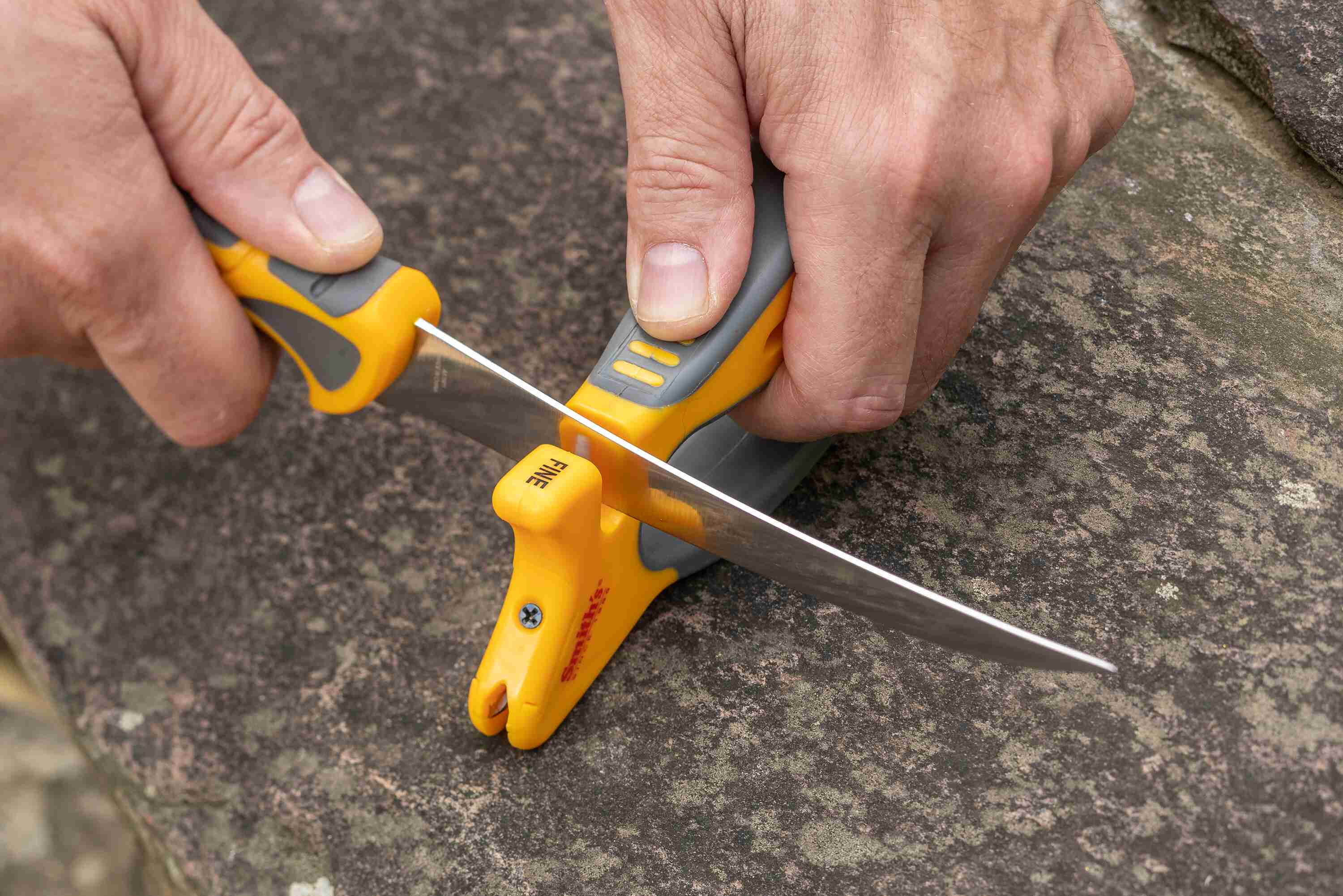
Credit: smithsproducts.com
Frequently Asked Questions
How Do I Know Which Angle To Use When Sharpening My Fillet Knife?
Most fillet knives are sharpened at a 12-17 degree angle per side. Check your knife’s instructions or the manufacturer’s website. If you’re unsure, 15 degrees is a safe starting point for most fillet knives.
Can I Use The Same Sharpener For All My Kitchen Knives?
Not always. Fillet knives are thinner and more flexible than chef’s or utility knives. Heavy-duty sharpeners, especially electric ones, can damage delicate fillet knives. Use a fine whetstone or a pull-through sharpener designed for thin blades.
How Long Does It Take To Sharpen A Fillet Knife?
If the knife is just dull, sharpening with a whetstone takes about 10-15 minutes. Damaged knives may take longer. Honing with a rod is much faster—just 2-3 minutes after each use.
Is It Safe To Sharpen A Fillet Knife Myself?
Yes, with the right tools and technique. Work slowly, use gentle pressure, and keep your fingers away from the edge. Beginners should practice on less expensive knives first.
Why Does My Fillet Knife Get Dull So Quickly?
Cutting on hard surfaces, using the knife for the wrong tasks, or storing it without protection can dull the edge. Regular honing and proper cleaning help keep it sharp longer.
A sharp fillet knife makes all the difference in the kitchen or on the water. With the right tools, knowledge, and a little practice, you can keep your fillet knife razor-sharp, safe, and ready for any task. The effort you invest in sharpening pays off every time you slice through a fresh catch or prepare a beautiful meal.