
Drying fresh basil at home can transform how you cook and store this fragrant herb. Many people grow basil in their gardens or buy it fresh from markets, but it spoils quickly if not used. Drying basil in the oven is a practical way to keep its flavor and aroma for months. If you’ve never dried herbs before, you might worry about losing flavor, burning the leaves, or making a mess. With the right steps and a little patience, you can easily dry basil leaves in your oven and enjoy their taste long after summer ends.
This guide will walk you through every detail of drying basil in the oven. You’ll discover how to pick, wash, and prepare basil, set your oven for the best results, and store your dried leaves so they stay fresh. Along the way, you’ll find real-life tips and answers to questions beginners often have.
If you want to enjoy your homegrown or store-bought basil all year, keep reading—this article is for you.
Why Dry Basil In The Oven?
Basil is best when it’s fresh, but it does not last long. The leaves can turn black, wilt, or grow mold in just a few days. Drying basil in the oven helps you avoid waste and saves you money. You’ll have flavorful basil ready for pizza, pasta, soups, and more, even in winter.
While air-drying and using a food dehydrator are other methods, the oven is fast, reliable, and doesn’t require special equipment. Most kitchens already have what’s needed, making it the most accessible option for many home cooks.
Some important advantages of oven-drying basil include:
- Speed: The process takes just 1–2 hours, compared to days for air-drying.
- Even drying: The oven’s gentle heat prevents mold and preserves more flavor.
- Convenience: No need to hang herbs or buy extra tools.
However, oven-drying also needs careful attention to avoid burning the leaves. Learning the right temperature and timing is key.
Choosing And Harvesting The Best Basil
The quality of your dried basil depends heavily on the freshness of the leaves you start with. If you use wilted, old, or yellowing basil, your dried product will taste dull and look unappealing. Here’s how to make sure you use the best basil possible.
Picking Basil At The Right Time
Harvest your basil early in the morning, right after the dew dries. This is when the leaves contain the most essential oils, which gives basil its strong aroma and taste. Try to pick before the plant starts flowering, as the flavor will be milder after that.
What Leaves To Choose
Look for:
- Bright green color – Avoid any leaves with brown spots or yellowing.
- Medium size – Young, tender leaves dry better than large, tough ones.
- No insect damage – Check both sides for holes or signs of pests.
If you buy basil from a store, choose bunches that look fresh and have a strong smell. Avoid limp, wet, or slimy leaves.
How Much Basil To Pick
A large bunch will shrink a lot when dried. In general, 1 cup of fresh basil leaves becomes about 1 tablespoon of dried basil. If you want to fill a small spice jar, you’ll need at least 2–3 cups of fresh leaves.
Preparing Basil Leaves For Drying
Proper preparation is crucial. Skipping steps like washing or drying the leaves can lead to poor results or even mold. Here’s how to get your basil ready for the oven.
Washing The Leaves
Gently rinse the basil leaves under cool, running water. This removes dirt, bugs, and any chemicals. If you picked the basil from your garden, you may see small insects hiding under the leaves.
- Place leaves in a large bowl of water and swirl them around.
- Lift the leaves out (do not pour everything through a strainer, or dirt will settle back on the leaves).
Repeat if the water looks dirty.
Drying The Leaves Before Oven
Moisture on the leaves can cause them to steam or cook instead of dry. Lay the washed basil out on a clean kitchen towel or paper towels and gently pat dry. Leave them spread out for 10–15 minutes so the surfaces are fully dry before you start oven drying.
Pro tip: For extra-fast drying, use a salad spinner after washing. This removes most water quickly and evenly.
Removing Stems
For the best results, remove thick stems and only use the leaves or small tender stems. Thick stems dry more slowly and can make the drying uneven. If you want to dry basil flowers, you can include them, but they will not be as flavorful as the leaves.
Setting Up Your Oven For Drying Basil
The right oven setup is the key to drying basil without burning it. Basil leaves are delicate. Too much heat destroys their flavor and color, while too little leaves them moist and prone to mold.
What Temperature Is Best?
Set your oven to the lowest possible temperature. Most ovens have a “Warm” or “Keep Warm” setting, which is often around 170°F (75°C). If your oven’s lowest setting is higher, you can prop the door open slightly with a wooden spoon.
This lets moisture escape and keeps the temperature down.
Ideal range: 170°F (75°C) to 180°F (80°C)
If your oven only goes as low as 200°F (93°C), check the basil frequently and shorten the drying time.
Preparing The Baking Sheet
- Use a clean, dry baking sheet.
- For easy removal, line the sheet with parchment paper or a silicone baking mat. This prevents sticking and makes cleanup easy.
- Spread the basil leaves in a single layer with no overlap. Crowding causes uneven drying.
Using A Convection Oven
If your oven has a convection (fan) setting, use it. The moving air dries basil faster and more evenly. Reduce the temperature by 5–10 degrees to avoid burning.
Oven Rack Position
Place the baking sheet in the center of the oven. This position gets the most even heat. If you’re drying a large batch, rotate the trays halfway through.
Step-by-step: Drying Basil In The Oven
Now you’re ready to start. These are the steps you need to follow for perfect dried basil.
- Preheat your oven to the lowest setting (usually 170°F–180°F / 75°C–80°C).
- Wash and dry the basil as described earlier.
- Remove stems, keeping only the leaves and small, tender stems.
- Line the baking sheet with parchment paper or a silicone mat.
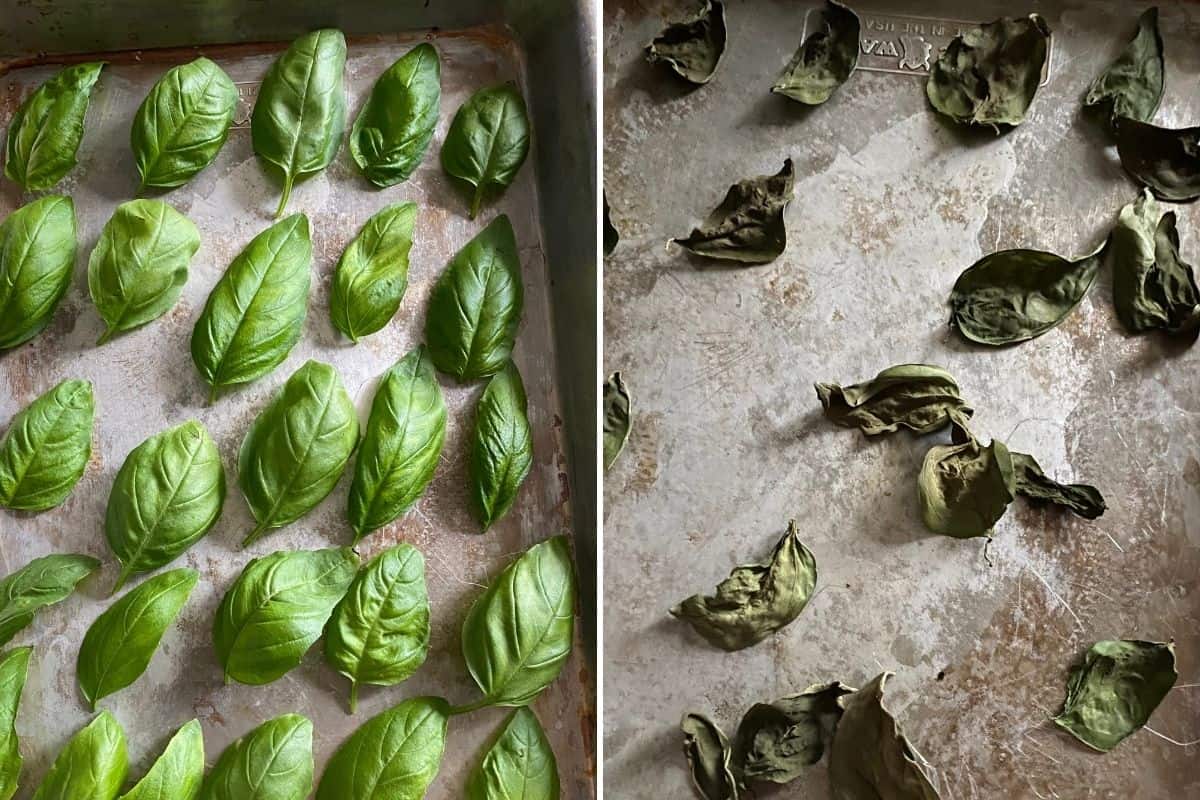
- Arrange the leaves in a single layer, not overlapping.
- Place the tray in the oven, center rack.
- Leave the oven door open a crack if your oven runs hot. This prevents overheating and helps moisture escape.
- Check after 30 minutes. The leaves should be dry at the edges but still flexible in the center.
- Continue drying in 15-minute intervals. Most basil will be fully dry in 60–90 minutes.
- Test for doneness: The leaves should crumble easily between your fingers. If they still feel soft or rubbery, they need more time.
- Cool the leaves on the tray for 10–15 minutes before storing.
- Crumble or leave whole: For spice jars, you can crumble the leaves or store them whole for more flavor.
How Long Does It Take?
Drying time depends on:
- Oven accuracy (some ovens are hotter or cooler than their settings)
- Leaf size (small leaves dry faster)
- Humidity (high humidity slows drying)
Most batches take 1–2 hours. Check every 10–15 minutes after the first hour to avoid burning.
Signs Your Basil Is Done
- Leaves feel crisp and shatter when pressed.
- No soft or “chewy” spots remain.
- Color may fade from bright green to dark or olive green—this is normal.
Common Mistakes To Avoid
- Too high heat: Causes browning and loss of flavor.
- Overlapping leaves: Leads to uneven drying and risk of mold.
- Not pre-drying after washing: Leaves will steam or cook instead of dry.
- Not checking often enough: Basil can go from perfect to burnt quickly in the final minutes.
Comparing Basil Drying Methods
Oven-drying is one of several ways to preserve basil. To help you understand how it compares, here’s a simple overview:
| Method | Time Needed | Flavor Quality | Equipment Needed | Common Issues |
|---|---|---|---|---|
| Oven Drying | 1–2 hours | Good | Oven, tray | Risk of burning |
| Air Drying | 5–10 days | Very good | String, space | Mold in humid areas |
| Dehydrator | 2–4 hours | Excellent | Dehydrator | Expensive device |
| Microwave | 2–3 minutes | Fair | Microwave, paper towels | Uneven drying, loss of oils |
Oven-drying stands out for its speed and convenience, especially if you don’t own a dehydrator.
How To Store Dried Basil Correctly
Dried basil can last for many months if stored the right way. If you do it wrong, the leaves can lose their aroma or absorb moisture and mold.
Best Storage Containers
- Airtight glass jars: These keep moisture and air out.
- Metal tins: Good for blocking light, which fades color and flavor.
- Plastic containers: Acceptable, but glass is better for keeping herbs fresh.
Tip: Reuse small spice jars from the store. Wash and dry them thoroughly before adding your basil.
Where To Store
Keep dried basil in a cool, dark place. Light, heat, and humidity all reduce shelf life and flavor. Ideal spots include a spice cabinet, pantry, or a drawer away from the stove.
Whole Leaves Or Crushed?
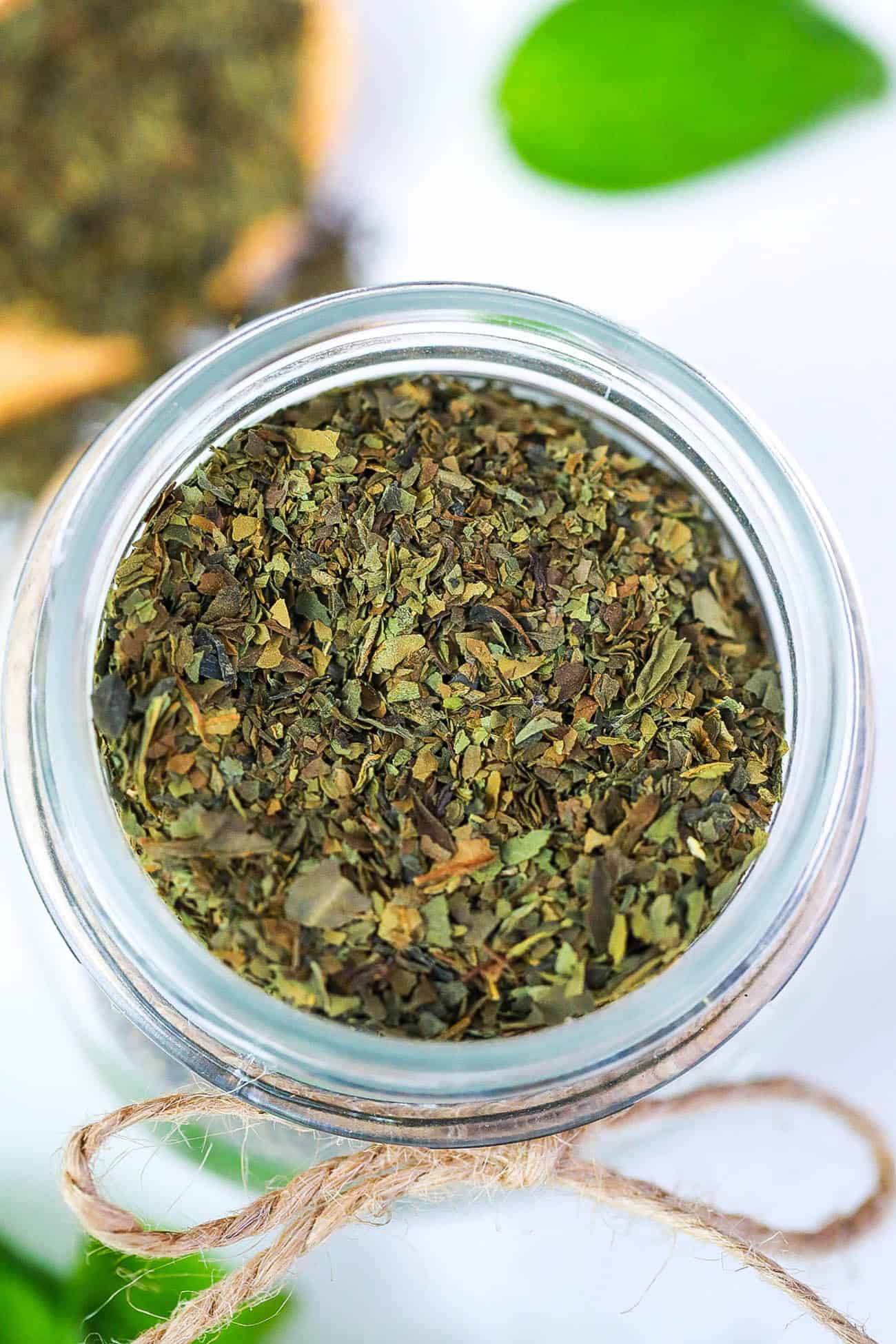
For the best flavor, store basil leaves whole and crumble them only when you use them. Crushing releases the essential oils, which can fade over time if exposed to air.
How Long Does Dried Basil Last?
If stored properly, dried basil keeps its flavor for up to 1 year. After that, it’s still safe, but the taste and aroma will fade. Label your jars with the drying date so you know when to replace them.
Practical Uses For Oven-dried Basil
Once you’ve dried your basil, you can use it in countless recipes. Dried basil is more concentrated than fresh, so you need less. Here are some ways to make the most of your homemade herb:
- Pizza and pasta sauce: Add to tomato sauce for rich flavor.
- Soups and stews: Sprinkle in during cooking.
- Herb blends: Mix with oregano, thyme, and rosemary.
- Salad dressings: Crush and stir into oil and vinegar.
- Marinades: Use for chicken, fish, or vegetables.
Conversion tip: 1 tablespoon of fresh basil equals about 1 teaspoon of dried basil.
Credit: urbanfarmie.com
Troubleshooting: When Things Go Wrong
Even with careful attention, things can go wrong. Here’s how to spot and fix the most common problems.
Basil Turns Brown Or Black
Why: Oven too hot, or leaves too close to the heat.
Fix: Lower the oven temperature and leave the door open a crack. Remove any burned leaves immediately.
Basil Is Rubbery Or Not Crisp
Why: Not fully dried, or leaves were not dried well before going in the oven.
Fix: Return leaves to the oven for another 10–15 minutes. Make sure you pat them dry after washing next time.
Mold Or Off Smell
Why: Moisture remained in the leaves, or stored in a humid place.
Fix: Discard affected basil. Always dry leaves completely and store in airtight containers.
Leaves Stick To The Tray
Why: No parchment paper or silicone mat used.
Fix: Next time, line your tray for easy removal.
Maximizing Flavor And Aroma
Dried basil is never quite as strong as fresh, but you can keep more flavor with these tips:
- Dry as soon as possible after harvesting or buying.
- Store leaves whole and crush only before using.
- Don’t dry at temperatures above 180°F (80°C). High heat destroys essential oils.
- Keep out of sunlight. Light breaks down flavor compounds.
If you want even more aroma, try blending your dried basil with a little dried lemon zest or garlic powder for homemade herb mixes.
Comparing Oven-dried Basil To Store-bought
You might wonder if it’s worth drying your own basil when store-bought is so easy. Here’s a comparison to help you decide:
| Aspect | Homemade Dried Basil | Store-Bought Dried Basil |
|---|---|---|
| Flavor | Stronger, fresher | Milder, older stock |
| Color | Greener | Often brownish |
| Cost | Low (if you grow/buy fresh basil) | Higher per ounce |
| Additives | None | May contain anti-caking agents |
| Customization | Possible (herb blends, flavored basil) | Limited |
Drying basil at home gives you control over quality and taste, plus you avoid unnecessary additives.
Non-obvious Insights For Beginners
- Oven temperature can vary: Many ovens run hotter or cooler than their settings. Use an oven thermometer if you have one for best results.
- Drying time changes with humidity: If it’s a rainy or humid day, your basil may take longer to dry, even at the same temperature.
- Whole leaves protect flavor: Storing dried basil in whole leaves, then crushing just before use, keeps more essential oils inside.
- Store away from the stove: Many people keep herbs near their cooking area, but heat and steam from cooking fade dried basil quickly.
Credit: freshexchange.com
Other Creative Ways To Use Dried Basil
- Infused oils: Add a few dried basil leaves to olive oil for salad dressings.
- Homemade herb salt: Mix crushed dried basil with sea salt for sprinkling on tomatoes or eggs.
- Herb tea: Steep a spoon of dried basil in hot water for a calming tea.
- Potpourri: Dried basil adds a fresh scent to homemade potpourri blends.
Safety Tips And Food Preservation
Drying basil at the right temperature kills most bacteria and mold spores, but it’s still important to:
- Dry leaves thoroughly before storage.
- Discard any leaves that look moldy or smell off.
- Use only clean jars and utensils.
If in doubt, check the guidelines from reputable sources, such as the National Center for Home Food Preservation, for more details on safe herb drying.
Credit: pickyeaterblog.com
Frequently Asked Questions
How Do I Know If My Dried Basil Is Still Good To Use?
If your dried basil still has a green color and a strong aroma when crushed, it’s good to use. If it smells weak, tastes dull, or is turning brown or musty, it’s time to replace it.
Can I Dry Basil In The Oven With Other Herbs At The Same Time?
Yes, you can dry other herbs like oregano, thyme, or mint with basil, as long as they have similar drying times and are spread in single layers. Watch closely, as some herbs dry faster than others.
Is It Safe To Dry Basil With Stems Attached?
Thin, tender stems are fine to dry, but thick stems take longer and may not dry evenly. Remove large stems before drying for best results.
What Can I Do If My Oven’s Lowest Setting Is Above 200°f (93°c)?
If your oven runs hot, prop the door open with a wooden spoon to lower the internal temperature. Check the basil more often to prevent burning.
How Should I Crumble Dried Basil For Recipes?
Hold a few leaves in your hand and rub them between your fingers or palms. This releases the aroma and breaks the basil into small pieces perfect for cooking.
Drying basil in the oven is a simple, rewarding way to keep this wonderful herb ready for your kitchen all year. By following the steps and tips above, you’ll get vibrant, flavorful dried basil that makes every meal better. With just a little effort, your pantry will be stocked with homemade herbs you can trust and enjoy.