
Quartz countertops have become a popular choice in modern kitchens and bathrooms. They offer a beautiful, durable surface that resists scratches and stains. However, even this tough material can develop dull spots over time. If you see a cloudy area or a patch that doesn’t shine like the rest, it can be frustrating—especially if you value a clean, polished look.
Many people believe quartz is indestructible, but that’s not true. Everyday habits, cleaning products, and even sunlight can create dull areas. The good news is that with the right approach, you can restore your quartz countertop’s shine and keep it looking new for years.
This guide will walk you through why dull spots happen, how to fix them, and how to prevent them in the future. You’ll get clear steps, easy-to-understand explanations, and expert tips that most beginners miss. By the end, you’ll feel confident handling dull spots and protecting your investment.
Why Quartz Countertops Develop Dull Spots
Quartz is known for its toughness, but it’s not immune to damage. To fix dull spots, it helps to understand why they appear in the first place.
Everyday Causes
- Harsh cleaning products: Many household cleaners contain strong chemicals, such as bleach, vinegar, or ammonia. These substances can react with the resin that binds the quartz particles, leading to dull patches.
- Abrasive scrubbing: Using rough pads or steel wool can scratch the surface, making it lose its shine.
- Heat exposure: Placing hot pans or curling irons directly on quartz can cause thermal shock. This may discolor or dull the finish.
- Water spots and mineral buildup: Hard water leaves behind minerals that can appear as cloudy or dull areas, especially if not wiped away quickly.
- Improper sealing: While quartz is non-porous and does not need sealing like granite, some manufacturers apply a protective topcoat. If this coating wears off, the counter can look dull in places.
Less Obvious Causes
- UV light: Prolonged exposure to sunlight can fade the resin, creating lighter, dull patches.
- Food acids: Lemon juice, tomato sauce, or wine can etch the surface if left uncleaned.
- Residue from cleaning wipes: Some disinfectant wipes leave behind a film that dulls the sheen.
Most people only think about scratches or stains. But, as you can see, there are many ways quartz can lose its shine.
Assessing The Dull Spot: Identify The Problem First
Before you try to fix a dull spot, you need to know what caused it. Different problems need different solutions.
How To Examine The Spot
- Look closely: Is the spot cloudy, scratched, or simply less glossy than the rest?
- Feel the texture: Run your fingers over the area. Is it rough, sticky, or just smooth but dull?
- Check the size: Is it a small patch or a large area?
- Recall recent activity: Did you spill something, use a new cleaner, or place something hot there recently?
Common Types Of Dull Spots
| Type of Dull Spot | Common Cause | How to Recognize |
|---|---|---|
| Cloudy film | Cleaner residue, hard water | Wipes off with effort, feels smooth |
| Scratches | Abrasive pads, dropped objects | Visible lines, feels rough |
| Etching | Acidic spills, strong chemicals | Looks lighter, feels unchanged |
| Heat damage | Hot pans, irons | Discolored, sometimes cracked |
Knowing the type helps you pick the right solution. For example, a cloudy film is much easier to fix than heat damage.
Tools And Materials You’ll Need
Fixing a dull spot does not require special skills, but you will need the right tools and cleaning supplies. Here’s what works best:
- Soft microfiber cloths (several)
- Mild dish soap (pH-neutral)
- Warm water
- Isopropyl alcohol (70% or higher)
- Non-abrasive sponge or soft brush
- Quartz-safe polish (optional, for restoring shine)
- Plastic scraper (for sticky residue)
- Baking soda (for gentle scrubbing, if needed)
- Mineral oil (for a natural sheen boost)
- Paper towels
- Rubber gloves (to protect your hands)
- Spray bottle (for easy application of water or cleaner)
Avoid anything rough, acidic, or highly alkaline. Never use bleach, vinegar, or bathroom cleaners on quartz.
How To Fix A Dull Spot On Quartz Countertop: Step-by-step
Now let’s get practical. Here’s how to restore your quartz’s shine, step by step. Follow these methods from least to most aggressive. Stop as soon as the dull spot disappears.
1. Basic Cleaning For Residue Or Light Film
Many dull spots are simply leftover residue from cleaners, water, or food.
Steps:
- Mix a few drops of mild dish soap in a bowl of warm water.
- Dampen a microfiber cloth with the soapy water.
- Gently wipe the dull area, working in circles.
- Rinse the cloth, then wipe with clean water to remove soap.
- Dry with a fresh microfiber towel.
- If the spot looks better, repeat once more.
Pro tip: If you see improvement after the first cleaning, the problem was likely just surface residue.
2. Remove Stubborn Film With Isopropyl Alcohol
If regular cleaning doesn’t help, the next step is to use isopropyl alcohol. This removes greasy or sticky films that water and soap can’t touch.
Steps:
- Dampen a microfiber cloth with isopropyl alcohol.
- Wipe the dull spot, applying gentle pressure.
- Let it sit for 1-2 minutes.
- Wipe again with clean water.
- Dry with a towel.
This method is safe for most quartz surfaces and can cut through many types of residue.
3. Gentle Scrubbing With Baking Soda (if Needed)
For a spot that feels rough or has a slight film that won’t go away, a gentle baking soda paste can help.
Steps:
- Mix baking soda with a little water to form a thick paste.
- Apply the paste to the dull spot.
- Rub gently with a soft, damp cloth in small circles.
- Rinse with clean water and wipe dry.
Important: Don’t scrub too hard. Baking soda is less abrasive than scouring powders, but aggressive rubbing can still scratch quartz.
4. Dealing With Hard Water Or Mineral Deposits
If you have hard water, you may see white or cloudy patches. These are mineral deposits.
Steps:
- Spray the area with a 50/50 mix of water and isopropyl alcohol.
- Let it sit for 5 minutes.
- Gently scrub with a non-abrasive sponge.
- Rinse and dry.
- For stubborn spots, repeat or use a plastic scraper gently.
Avoid using vinegar. It can damage the resin and make the problem worse.
5. Repairing Light Scratches Or Etching
Small scratches or etching from acidic spills can make quartz look dull.
Steps:
- Clean the area as above to remove any residue.
- Use a quartz-safe polish (check the label carefully) and a clean microfiber cloth.
- Apply a small amount of polish to the cloth.
- Rub the dull spot in circles, applying gentle pressure.
- Buff with a dry section of the cloth.
If the scratch is deep, polishing may not fully restore the shine. You may need professional help for serious damage.
6. Restoring Shine With Mineral Oil (for Small Spots)
For dull areas that remain after cleaning and polishing, a small amount of mineral oil can bring back luster.
Steps:
- Put a drop of mineral oil on a clean microfiber cloth.
- Rub the oil into the dull spot.
- Let it sit for a few minutes.
- Buff off any excess with a dry towel.
Mineral oil does not repair damage but can mask dullness, making the spot less noticeable.
7. When To Call A Professional
Some dull spots are too severe for DIY methods. Here’s when you should consider expert help:
- The spot is large, deep, or feels rough after all cleaning attempts
- There is discoloration from heat or harsh chemicals
- You see cracks or chips along with dullness
Professional stone restoration companies have special tools and products to polish and reseal quartz. They can often restore the original shine even after serious damage.
Credit: www.houzz.com
Preventing Dull Spots: Essential Daily Care
Fixing dull spots is useful, but prevention is even better. With simple habits, you can keep your countertop shining for years.
Dos And Don’ts For Quartz Maintenance
| Do | Don’t |
|---|---|
| Wipe spills quickly | Let acidic foods sit |
| Use pH-neutral cleaners | Use vinegar, bleach, or ammonia |
| Place hot pans on trivets | Put hot items directly on quartz |
| Clean with soft cloths | Scrub with steel wool or abrasive pads |
| Use cutting boards | Cut directly on the surface |
These habits are simple, but many owners ignore them until problems appear. Developing a cleaning routine is the easiest way to protect your investment.
Choosing The Right Cleaning Products
Not all cleaners are safe for quartz. Stick with:
- Mild dish soap and water
- Quartz-specific cleaners (check the label)
- Isopropyl alcohol for tough spots
Avoid:
- Vinegar or lemon-based cleaners
- Powdered scouring agents
- Bleach or ammonia products
- Oven or bathroom cleaners
If you’re ever unsure, test a new product on a small hidden area first.
Common Mistakes To Avoid
Many people try to “deep clean” quartz with products meant for other surfaces. This often makes the dull spot worse. Here are mistakes to watch for:
- Thinking more scrubbing equals better cleaning: Aggressive scrubbing just scratches the surface.
- Using bathroom or glass cleaners: These often contain ammonia, which dulls the resin.
- Trying home remedies like vinegar or lemon juice: These acids can etch and permanently dull quartz.
- Ignoring small spills: Even a drop of wine or tomato sauce can etch if left too long.
- Not wiping dry: Leaving water on the surface can cause spots, especially in areas with hard water.
One insight many miss: even “natural” cleaners can harm quartz if they are acidic or abrasive.
How To Handle Different Types Of Damage
Dull spots are not all the same. Here’s how to handle specific cases.
Cloudy Film From Cleaners
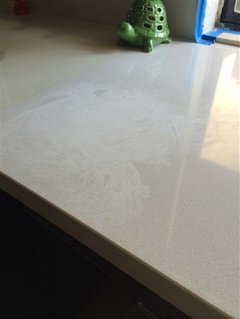
If you see a white, cloudy patch after using a new cleaner, it’s probably residue. The fix is repeated cleaning with mild soap or alcohol. In most cases, this will restore the shine.
Hard Water Stains
If you notice dull spots near the sink or faucet, these are likely from hard water. Use the alcohol-water method. For recurring problems, consider installing a water softener.
Scratches
Light scratches can sometimes be polished away with a quartz-safe polish. Deeper scratches need professional repair. Avoid using colored waxes or fillers, as they may not match your countertop.
Heat Damage
Dull, discolored spots from hot pans are usually permanent. Professional polishing can sometimes reduce the appearance, but prevention (using trivets) is key.
Chemical Etching
If the dull spot is from an acidic spill, cleaning and polishing may help. However, if the resin is damaged, the spot may remain lighter. Only a professional can fully fix deep etching.

Credit: www.reddit.com
Polishing Quartz: What Works And What Doesn’t
Many people ask if they can use granite polish or furniture wax on quartz. The answer is mostly no. Quartz has different needs.
Safe Polishing Products
Look for:
- Quartz-specific polishes (made for engineered stone)
- Mild mineral oil for temporary shine
Avoid:
- Granite polishes (may contain waxes or acids)
- Furniture polish (leaves sticky residue)
- Floor waxes (can yellow over time)
If you want a long-term shine, stick to products designed for quartz. Always follow the manufacturer’s instructions.
When Replacement Is The Only Option
In rare cases, a dull spot cannot be fixed. If the resin is burned, deeply etched, or the stone is cracked, you may need to replace the section. This is costly, but sometimes necessary for severe damage. Always try cleaning and professional repair first.

Credit: www.reddit.com
Comparing Quartz With Other Countertop Materials
If you’re frustrated with maintaining quartz, you might wonder if other materials perform better. Here’s a quick comparison:
| Material | Resists Dull Spots? | Maintenance Level | Heat Resistance |
|---|---|---|---|
| Quartz | Good, but not perfect | Low | Moderate |
| Granite | Very good | Medium (needs sealing) | High |
| Marble | Poor (easily etched) | High | Medium |
| Laminates | Good, but scratches easily | Low | Poor |
Quartz offers a good balance of shine, durability, and maintenance. But, like all surfaces, it needs care.
Long-term Care: Keeping Your Quartz Shiny Year After Year
Restoring a dull spot is only the first step. To keep your countertop looking its best:
- Clean daily: Wipe with a damp cloth and mild soap.
- Dry after cleaning: Prevents water spots.
- Use cutting boards and trivets: Avoid direct scratches and heat.
- Polish occasionally: Use a quartz-safe product every 2-3 months.
- Check for new dull spots: Address problems quickly before they get worse.
- Review manufacturer’s warranty: Some warranties are voided by improper cleaning.
One common mistake: forgetting to clean under appliances or behind the faucet. These spots can develop dullness over time.
Advanced Tips Only Experts Know
Most guides stop at basic cleaning. Here are two advanced tips that can make a big difference:
- Rotate your cleaning cloths: Reusing dirty cloths can spread residue and cause dull patches. Always use a fresh, clean cloth for the final buff.
- Check your water hardness: If you live in a hard water area, minerals may be the hidden cause of recurring dullness. Using distilled water for the final wipe can help.
These insights are often missed by beginners but help maintain a showroom shine.
When To Reseal (and Why Most Quartz Doesn’t Need It)
You may hear advice about sealing countertops. Unlike granite or marble, quartz is non-porous and does not require sealing. In fact, applying a sealant can sometimes cause streaks or dullness.
However, some quartz brands add a factory-applied topcoat. If your manufacturer recommends resealing, use only their approved product. Otherwise, stick with regular cleaning and polishing.
Trusted Resources For More Information
If you want more details about quartz care, the Natural Stone Institute offers excellent guides and safety tips. You can find expert-approved advice at Natural Stone Institute.
Frequently Asked Questions
What Is The Best Cleaner For Quartz Countertops?
The best cleaner is a mild dish soap mixed with warm water. For tough spots, use a 50/50 mix of water and isopropyl alcohol. Avoid any product with vinegar, bleach, or ammonia, as these can dull the surface over time.
Can I Use Vinegar To Clean Dull Spots On Quartz?
No, you should not use vinegar on quartz. It’s acidic and can damage the resin that holds the quartz together, leading to permanent dullness or etching. Stick with pH-neutral cleaners.
How Do I Tell If My Dull Spot Is From Heat Or Chemicals?
Heat damage often looks discolored (sometimes white or light brown) and may feel rough. Chemical etching typically causes lighter, cloudy patches without a change in texture. If unsure, think about what happened on that spot before the dullness appeared.
Will Polishing Always Fix A Dull Spot?
Polishing can restore shine for light scratches or residue. However, if the resin is damaged by heat or strong chemicals, polishing may not help. In those cases, professional repair or replacement may be needed.
Is It Normal For Quartz To Get Dull Spots Over Time?
Yes, even though quartz is tough, it can develop dull spots with heavy use, exposure to harsh products, or improper cleaning. With proper care and quick action, most dull spots can be fixed and prevented.
Quartz countertops are a smart choice for busy homes. With the right cleaning habits and a gentle touch, you can keep them looking glossy and beautiful for many years. If you ever face a stubborn dull spot, now you have the knowledge and steps to fix it—and prevent it from returning.