
If you live in a small apartment or a home where the kitchen is your best (or only) laundry area, you’re not alone. Many modern homes, especially in cities, combine these spaces to save room. But a washer and dryer out in the open can make your kitchen look crowded and messy.
The good news is, you can hide your washer and dryer in your kitchen and still keep everything looking stylish and organized.
Let’s explore the best ways to conceal your laundry appliances, from clever cabinetry ideas to creative DIY solutions. You’ll learn not just how to cover them up, but also how to make your kitchen feel bigger, more beautiful, and easier to use.
We’ll cover practical steps, design tips, cost comparisons, and common mistakes, so you can make the best choice for your home.
Why Hide A Washer And Dryer In The Kitchen?
Washing machines and dryers are useful, but they aren’t pretty. Kitchens are often the heart of the home—a place for cooking, eating, and relaxing. If your laundry units are exposed, they can clash with your kitchen’s style, make cleaning harder, and even reduce your home’s value.
Hiding your washer and dryer can:
- Make your kitchen look tidy and modern
- Reduce noise from laundry cycles
- Protect appliances from dust and grease
- Add value when selling or renting your home
Some people worry about safety or moisture, but with the right setup, it’s easy to keep everything working well. In fact, many new apartments in Europe and Asia include laundry machines in the kitchen, using smart designs to blend them in.
Planning Your Hidden Laundry Space
Before you begin, planning is key. You need to think about space, ventilation, water connections, and what style suits your kitchen. Rushing in can lead to problems later, like awkward doors, leaks, or blocked airflow.
Measure Your Space
Start with careful measurements. Measure the width, depth, and height of both your washer and dryer. Also, measure the space in your kitchen where you plan to put them.
Important tip: Don’t forget to allow extra space around the machines for opening doors, connecting hoses, and airflow.
Check Water And Power Connections
Your washer needs water and a drain. Both machines need power. Dryers might also need a vent to the outside. Make sure your kitchen has easy access to:
- Cold and hot water supply
- Proper drainage
- Electrical outlets (and possibly a higher voltage for some dryers)
- Space for venting, if using a vented dryer
If you’re not sure, ask a plumber or electrician to check your setup. Fixing mistakes later can be expensive.
Choose The Right Appliances
Some washers and dryers are better for kitchens than others. Front-loading machines are easier to hide behind doors or in cabinets. Stackable units can save floor space. Washer-dryer combos combine both in one machine, saving even more space.
Pro insight: Many people overlook the importance of noise level. Choose quieter models if your kitchen is close to living spaces.
Built-in Cabinet Solutions
The most popular and seamless way to hide a washer and dryer is with custom cabinets. This method makes the machines look like part of your kitchen furniture.
Full-height Cabinets
Tall cabinets can completely enclose your washer and dryer, from floor to ceiling. This gives a smooth, clean look. You can add shelves above for detergents, baskets, or even extra kitchen storage.
Benefits:
- Best for hiding larger machines
- Blocks noise and dust
- Customizable to match your kitchen
Drawbacks:
- Can be expensive if custom-built
- Needs enough depth for appliances
Under-counter Cabinets
If your machines are front-loaders, you can put them under the kitchen counter, just like a dishwasher. Fit cabinet doors in front for a seamless look.
Benefits:
- Saves counter space
- Easy to access machines
- Ideal for small or narrow kitchens
Drawbacks:
- Not all machines fit under standard counters
- May limit counter height
Sliding Or Bi-fold Doors
Sliding doors or bi-fold doors are great for tight spaces where swinging doors could block walkways.
Benefits:
- Easy to open and close, even in small kitchens
- Hides machines when not in use
Drawbacks:
- May not block all noise
- Can be tricky to install
Louvered Doors
Louvered doors have slats that allow air to flow, helping prevent mold or overheating.
Benefits:
- Good for ventilation
- Stylish look
Drawbacks:
- Not fully soundproof
- Dust can pass through
Comparison: Types Of Cabinet Doors
Here’s a look at how different door types compare for hiding washers and dryers.
| Door Type | Best For | Ventilation | Ease of Use |
|---|---|---|---|
| Full Panel | Complete hiding | Poor | Good |
| Louvered | Airflow needed | Excellent | Good |
| Sliding | Narrow spaces | Average | Excellent |
| Bi-Fold | Small kitchens | Good | Excellent |
Alternative Hiding Methods
Not everyone can build new cabinets or wants to spend a lot. There are other creative ways to hide your washer and dryer in the kitchen.
Curtains Or Fabric Panels
Hanging a thick curtain or fabric panel in front of your machines is a fast, cheap solution. Choose a fabric that matches your kitchen style. Heavy curtains can even help with noise.
Advantages:
- Inexpensive
- Easy to install or change
- Softens the look of the kitchen
Disadvantages:
- Less durable than doors
- Doesn’t block all noise or smell
- Fabric may need washing
Folding Screens
A folding screen can be placed in front of your laundry area when you have guests, then folded away when doing laundry.
Advantages:
- No installation needed
- Easy to move
Disadvantages:
- Takes up space when open
- Not a permanent solution
Decorative Panels Or Art
Some people use sliding art panels or large framed photos to cover appliances. When you need to do laundry, just slide the panel aside.
Advantages:
- Adds personality to kitchen
- Customizable
Disadvantages:
- May need wall mounting
- Expensive if custom-made
Rolling Cabinets
A rolling cabinet or shelf unit can be placed in front of your machines. You roll it aside when you need to use the washer or dryer.
Advantages:
- Adds storage space
- No building needed
Disadvantages:
- Can be heavy to move
- Takes up floor space
:strip_icc()/100363735-346bc98fed64421a9d29bf0d071cac2c.jpg)
Credit: www.bhg.com
Diy Vs Professional Installation
You can hide your washer and dryer with simple DIY projects or with help from professionals. Which is best depends on your skills, budget, and kitchen layout.
Diy Solutions
If you like hands-on projects, you can build basic cabinets, hang curtains, or assemble a folding screen yourself. This can save money and let you customize the look.
Tips for DIY:
- Use moisture-resistant materials (like marine plywood or laminate)
- Don’t block vents or access panels
- Double-check all measurements
Common beginner mistake: Forgetting to leave enough room for hoses, electrical cords, or the machine doors to open fully.
Professional Installation
A carpenter or kitchen fitter can design and build custom cabinets that match your kitchen perfectly. They can also handle tricky jobs like electrical work, water connections, or venting.
Benefits:
- Professional finish
- Longer-lasting
- Less risk of mistakes
Downsides:
- Higher cost
- Takes more time to arrange
Cost Comparison
Here’s an estimated price range for common hiding solutions:
| Method | DIY Cost (USD) | Professional Cost (USD) | Typical Lifespan |
|---|---|---|---|
| Curtain/Fabric Panel | $20–$100 | N/A | 2–5 years |
| Basic Folding Screen | $50–$200 | N/A | 5–10 years |
| Rolling Cabinet | $100–$400 | N/A | 5–10 years |
| Custom Cabinets | $300–$900 | $1000–$5000+ | 15–25 years |
*Note: Prices vary by region and materials. Professional costs include labor.*
Style Ideas: Blending Laundry With Kitchen Design
Making your washer and dryer “disappear” isn’t just about hiding them—it’s also about blending them with your kitchen’s style.
Match Cabinet Colors
Paint or finish your cabinet doors the same as your kitchen cabinets. This creates a built-in look that visitors may not even notice.
Use Matching Hardware
Choose handles and knobs for your laundry cabinet doors that match your kitchen’s hardware. This small detail helps everything feel connected.
Add Open Shelves
Open shelves above your washer and dryer can store laundry items, baskets, or even cookbooks. Use matching baskets or jars for a tidy look.
Install Lighting
A small LED strip light inside your laundry cabinet makes it easier to see when loading or unloading, and helps the area feel less dark or cramped.
Hide With A Pantry
If your kitchen has a tall pantry, consider combining the washer and dryer inside, with shelves above for storage. Add doors to keep everything hidden.
Style Inspiration Examples
- In a modern kitchen, use flat white doors with no handles for a minimalist look.
- In a farmhouse kitchen, try shaker-style doors with classic pulls and a soft color like sage green.
- For a playful look, use a bold curtain pattern or bright color for a fabric panel.
Non-obvious tip: Use sound-absorbing panels on the inside of cabinet doors if your machines are noisy. This is often missed but can make a big difference.
:strip_icc()/101021877-0bd9cd7ed2334fe6a55b60a394e3e613.jpg)
Credit: www.bhg.com
Practical Considerations And Mistakes To Avoid
Hiding laundry in the kitchen is not just about looks. There are important practical issues you need to get right.
Ventilation
Washers and dryers create heat and moisture. Without good airflow, you risk mold, mildew, or even appliance damage.
Always make sure:
- There are air gaps or vents in your cabinet design
- Dryer vents are never blocked
- You wipe up any leaks or spills right away
Beginner mistake: Forgetting to add vent holes or louvered panels, leading to hot, damp cabinets.
Access For Repairs
Machines will need service or repairs someday. If you block them in with cabinets, it can be very hard (and expensive) to fix problems.
Good practice:
- Use removable panels or doors
- Leave enough space to pull machines out
Regular Cleaning
Lint, dust, and detergent spills build up quickly. Plan for easy cleaning around and under your appliances.
Pro tip: Put a drip tray under your washer to catch leaks. It’s cheap and can save you from water damage.
Vibration And Movement
Washers, especially during spin cycles, can vibrate and “walk” a little. If your enclosure is too tight, it can damage both the machine and cabinets.
Best solution: Leave a small gap (at least 1 inch) on all sides and use anti-vibration pads under your washer and dryer.
Noise Control
Even hidden, washers and dryers can be noisy. Using soundproofing materials inside cabinets, or choosing quiet machines, can make a big difference—especially in open-plan homes.
Step-by-step Guide: Hiding A Washer And Dryer In Your Kitchen
Ready to get started? Here’s a straightforward process you can follow, whether you’re building cabinets or trying a quick DIY fix.
1. Measure Your Space
Measure the washer, dryer, and planned area. Allow extra room for hoses, airflow, and doors.
2. Choose Your Hiding Method
Decide between cabinets, curtains, screens, or panels based on your style, skills, and budget.
3. Plan For Water, Power, And Venting
Make sure all connections are easy to reach and safe. Hire a professional if needed.
4. Buy Materials Or Supplies
Gather cabinets, curtain rods, fabric, hinges, or panels as needed. Use moisture-resistant materials.
5. Install The Enclosure
For cabinets, build a sturdy frame. For curtains or panels, securely mount rods or tracks.
6. Add Finishing Touches
Paint or finish to match your kitchen. Add handles, shelves, or baskets for storage.
7. Test For Function And Safety
Run your washer and dryer. Check for leaks, heat, and proper venting.
8. Maintain Regularly
Clean lint, dust, and check for any moisture buildup every few weeks.
Advanced tip: If you install cabinets, use soft-close hinges to reduce noise and wear.
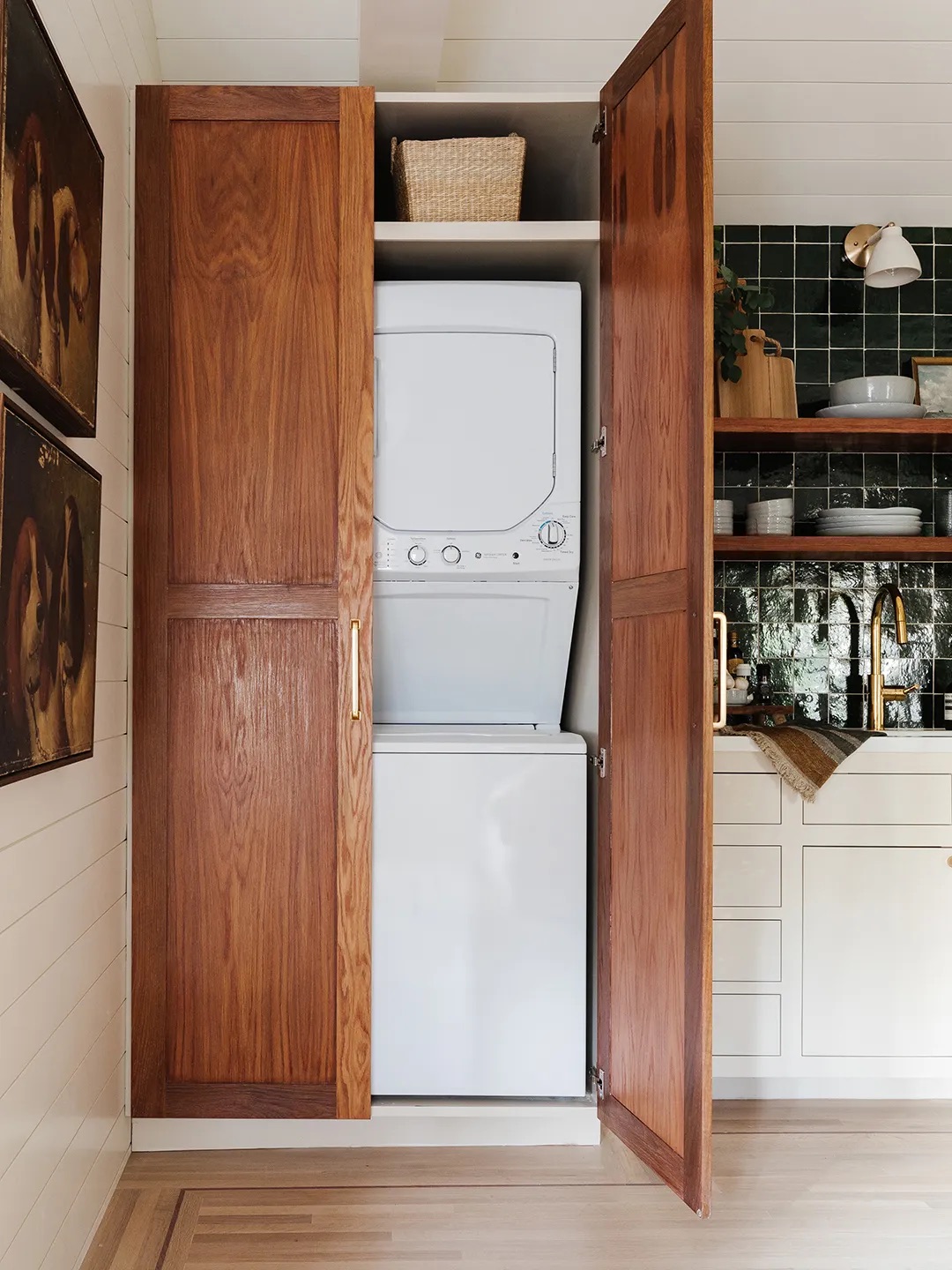
Credit: www.domino.com
When To Choose A Washer-dryer Combo
If you have very little space, consider a washer-dryer combo. These machines wash and dry in a single unit, saving room and making hiding much easier.
Washer-dryer combo pros:
- Needs only one set of water and power hookups
- Fits in smaller cabinets or under counters
- Easier to hide with doors or curtains
Cons:
- Smaller capacity than separate machines
- Drying takes longer
- More expensive to buy
Who should choose a combo?
People in apartments, studios, or homes with very small kitchens, especially if you mostly wash small loads.
Real-world Examples
Let’s look at how different people have solved the problem of laundry in the kitchen.
Example 1:
A couple in London built tall cabinets at one end of their kitchen. The bottom half holds a stacked washer and dryer, while the top has shelves for cleaning supplies. The doors match the rest of the kitchen, and there’s a small vent at the top for airflow.
Example 2:
In a studio apartment in Tokyo, the washer-dryer combo sits under the counter. A heavy curtain, matching the wall color, hides the unit. Because the combo is quiet and ventless, there are no special vents needed.
Example 3:
A busy family in New York installed a rolling pantry cabinet in front of their machines. When it’s laundry time, they roll the cabinet aside. The rest of the time, it looks like a regular kitchen shelf.
Maintenance Tips For Hidden Kitchen Laundry
Hiding your washer and dryer isn’t the end—keeping everything working well is just as important.
- Check for leaks or moisture every month
- Clean lint traps and filters often
- Leave cabinet doors open sometimes to air out the space
- Wipe down surfaces to prevent dust and mold
- Test vents and airflow at least twice a year
Overlooked detail: Many people forget to clean behind and under their machines. Use a flexible vacuum attachment to keep this area dust-free.
Environmental And Safety Considerations
Laundry appliances use water and electricity. When hiding them in the kitchen, make sure you’re being safe and efficient.
- Use energy-efficient machines if possible
- Install a water sensor alarm under your washer to catch leaks early
- Never block air vents or dryer ducts
- Check that all power outlets are grounded and safe
For more detailed safety tips, check out this Consumer Reports guide.
How Hiding Laundry Impacts Home Value
Well-designed, hidden laundry setups can actually increase your home’s value. Buyers love extra storage, a clean kitchen look, and efficient use of space.
Survey data: According to the National Association of Realtors, homes with “laundry solutions” in small kitchens sold 6% faster in urban areas.
But, if your setup looks cheap, blocks access, or is noisy, it can have the opposite effect. Quality and thoughtful design matter.
Common Myths About Hiding Kitchen Laundry
- Myth: Hiding machines is expensive.
Fact: You can use affordable solutions like curtains or DIY panels.
- Myth: It’s always noisy.
Fact: With soundproofing and quality machines, noise can be minimal.
- Myth: Repairs will be impossible.
Fact: Removable panels or doors make service easy.
- Myth: It damages kitchen cabinets.
Fact: With proper ventilation and drip trays, cabinets last for years.
- Myth: Home buyers don’t like kitchen laundry.
Fact: Many buyers prefer it, especially in small homes or apartments.
Frequently Asked Questions
How Much Does It Cost To Hide A Washer And Dryer In The Kitchen?
Costs vary widely. A simple curtain might cost $20–$100, while custom cabinets can range from $1,000 to over $5,000. DIY solutions are more affordable, but professional installations offer better durability and finish.
What Is The Best Way To Hide Laundry Appliances In A Small Kitchen?
The best way depends on your kitchen layout. Under-counter cabinets or washer-dryer combos are popular. If you have very little space, use a curtain or folding screen for a quick and flexible solution.
Can I Put A Washer And Dryer Anywhere In The Kitchen?
No, you need access to water, drainage, and power. Check that your kitchen can support the appliances safely. Always allow for proper ventilation and easy access for maintenance.
How Do I Reduce Noise From A Hidden Washer And Dryer?
Choose quiet machines, use sound-absorbing panels inside cabinets, and add anti-vibration pads under the appliances. Soft-close cabinet doors can also help.
Will Hiding My Washer And Dryer Improve My Kitchen’s Value?
Yes, if done well. Hidden laundry appliances make your kitchen look organized and modern, which can attract buyers or renters—especially in small or urban homes.
Creating a hidden laundry space in your kitchen is a smart, stylish way to maximize your home’s potential. With careful planning and the right approach, you can enjoy a beautiful kitchen and the convenience of laundry right where you need it—without the clutter.
Whether you choose cabinets, curtains, or a clever DIY fix, a hidden washer and dryer can truly change how your kitchen feels and works.