
Loading a dishwasher seems simple, but if you want your Samsung dishwasher to deliver spotless, streak-free results every time, there’s more to it than just tossing in dirty dishes. Many people miss out on the full cleaning power of their machine because they skip key steps or don’t know how to arrange items for best results. If you’ve ever unloaded cloudy glasses, greasy pans, or found food stuck to your plates, you’re not alone. The good news? A few smart habits can transform your dishwashing routine and extend the life of your appliance.
In this guide, you’ll learn everything you need to know to load a Samsung dishwasher the right way. Whether you have a basic or high-end model, you’ll discover practical steps, expert tips, and common mistakes to avoid. Plus, you’ll understand why each step matters—not just for clean dishes, but also for energy savings and fewer repairs.
Let’s break down the process and help you master your Samsung dishwasher with confidence.
Understanding Your Samsung Dishwasher Racks And Features
Before you start loading, it’s important to know the layout and unique features of your Samsung dishwasher. Most models come with three racks: a lower rack, an upper rack, and a third rack (sometimes called a cutlery rack). Each has a specific purpose.
The lower rack is designed for large, heavy items like pots, pans, dinner plates, and serving bowls. You’ll notice that the tines (the prongs that hold dishes) are usually spaced farther apart here. Some Samsung dishwashers let you fold down these tines for more flexibility.
The upper rack is where you put smaller items: glasses, mugs, small bowls, and sometimes dessert plates. The tines are closer together, and the rack is positioned so water sprays upward.
Many newer Samsung models include a third rack at the very top. This shallow tray is made for long utensils, flatware, and sometimes small cups or lids.
Common features you’ll find include:
- Adjustable racks: You can move the upper rack up or down to make space for tall items.
- Flexible tines: Fold them down to fit bigger pots or mixing bowls.
- Bottle jets: Special nozzles for cleaning baby bottles or water bottles.
- Cutlery basket or tray: For forks, knives, and spoons.
Understanding your racks and features helps you use your dishwasher’s full potential. Check your user manual if you’re unsure about your exact model’s setup.
Preparing Dishes For Loading
Even the best dishwasher can struggle if you don’t prepare your dishes properly. Taking a few seconds before loading can prevent clogs and improve results.
- Scrape off large food particles: Use a fork or spoon to remove bones, pasta, or chunks of vegetables. Modern Samsung dishwashers can handle small bits, but large pieces can block the spray arms.
- Don’t pre-rinse everything: Rinsing isn’t necessary for most loads. In fact, some detergents work best when they react with leftover food. Only rinse if food is dried or stuck hard (like baked-on cheese).
- Remove labels and stickers: If you’re washing jars or containers, peel off any paper or plastic labels. They can clog the filter or pump.
- Check for sharp items: Knives or sharp utensils should be loaded with the handle up to avoid injuries.
One insight many people miss is that over-rinsing can actually reduce cleaning power. Modern dishwashers use sensors to judge how dirty your dishes are. If everything is too clean, your Samsung may shorten the wash cycle and deliver poorer results.
How To Load The Lower Rack
The lower rack is the workhorse of your Samsung dishwasher. It handles the dirtiest and largest items. Here’s how to load it for the best results:
- Place plates and large bowls vertically: Position them so the dirty side faces the center. This way, the spray arms can reach every surface.
- Space items evenly: Don’t let plates or bowls overlap. Water can’t reach where items touch.
- Load pots and pans at an angle: Place them upside down or slightly tilted, so water drains off and detergent reaches inside.
- Avoid blocking the spray arms: Check that nothing sticks up and stops the spray arm from spinning.
- Secure lightweight plastic items: If you wash plastic cutting boards or lids, put them at the edge or between heavier items so they don’t fly around.
Here’s a quick comparison of what should and shouldn’t go in the lower rack:
| Best for Lower Rack | Should Avoid |
|---|---|
| Large plates | Delicate glasses |
| Pots and pans | Crystal or fine china |
| Serving bowls | Plastic that can melt |
| Baking sheets (if fit) | Wooden utensils |
Many Samsung dishwashers let you fold down some tines for flexibility. Use this for big pots or odd-shaped items. Just remember, if you overload or stack, you’ll end up with dirty spots and need to run another cycle.
How To Load The Upper Rack
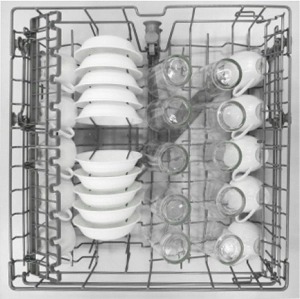
The upper rack is made for lighter, smaller items. Think about glasses, mugs, small bowls, and small plates.
- Glasses and cups: Place them upside down between the tines. This lets water reach inside and drains fully.
- Bowls: Position at an angle so water doesn’t pool. Avoid stacking.
- Plastic containers: Put them on the top rack if labeled “dishwasher safe,” as the heat is lower here.
- Wine glasses: Use the stemware holders (if your model has them) for extra support.
Spacing is important here too. Crowding can cause chipping or water spots. If you need to fit taller glasses, lower the upper rack (if your Samsung allows). For the best drying, angle items so water runs off.
Here’s a summary of where to place common items:
| Item | Where to Load | Special Instructions |
|---|---|---|
| Water bottles | Upper rack | Use bottle jets if available |
| Plastic storage lids | Upper rack | Secure to prevent movement |
| Small plates | Upper rack | Stand vertically |
| Measuring cups | Upper rack | Place upside down |
A common beginner mistake is to overload the upper rack with too many cups. This blocks water flow and leaves residue inside your glassware.
Using The Third Rack Or Cutlery Tray
If your Samsung dishwasher has a third rack, you’re in luck. This extra space is perfect for flatware, long utensils, and small items that don’t fit elsewhere.
- Arrange utensils in a single layer: Don’t stack spoons on top of each other. Spread them out, so water and detergent reach every surface.
- Lay knives flat: This is safer than placing them in a basket. Always point the blade away from you when unloading.
- Place small lids or spatulas: These can be washed safely here without falling through gaps in other racks.
For models without a third rack, use the cutlery basket. Separate forks, knives, and spoons as much as possible. Some Samsung baskets have slots to keep items apart.
A non-obvious tip: Mix up the position of utensils. Don’t put all forks together or all spoons together. This prevents “nesting,” where items stick together and don’t get clean.
How To Load Silverware And Utensils
Silverware needs special attention for hygiene and effective cleaning. Most Samsung dishwashers offer a basket or tray option.
- Mix up handles up and down: For forks and spoons, alternate handle-up and handle-down. This helps water reach every part.
- Knives: Always load with handles up for safety.
- Avoid nesting: Don’t let spoons stack inside each other. Spread them out.
- Separate materials: Don’t mix stainless steel and silver-plated utensils, as they can cause discoloration.
Here’s a quick guide on silverware loading:
| Type of Utensil | Best Loading Method | Why |
|---|---|---|
| Forks | Handle up/down mix | Better cleaning, safer unloading |
| Spoons | Alternate up/down | Prevents nesting |
| Knives | Handle up only | Prevents injuries |
| Ladles/serving spoons | Third rack or flat in basket | Ensures full wash |
If your basket has individual slots, use them for the best separation.
Credit: www.samsung.com
Special Items And How To Load Them
Some kitchen items need extra care. Here’s how to handle tricky objects in your Samsung dishwasher:
- Wine glasses: Place in stemware holders if available. Space them out to prevent breakage.
- Plastic lids and lightweight items: Secure them with clips or tuck them between heavier dishes.
- Baby bottles: Use the bottle jets or place upside down on the upper rack.
- Large baking sheets: Only load if they fit without blocking the spray arms. Place at the sides.
- Odd-shaped utensils: Lay flat on the third rack or at the edges of the upper rack.
Never put wooden, cast iron, or nonstick pans in the dishwasher. The heat and detergent can damage them. Hand-wash instead.
A useful insight: If you run a half-load, spread items out rather than grouping them in one area. This ensures the spray arms still reach everything.
Loading Tips For Maximum Cleaning And Drying
It’s not just about where you put items, but how you arrange them. Here are some tips to boost your Samsung dishwasher’s results:
- Don’t overload: Leave space between items so water can circulate.
- Face dirty surfaces toward the center: The spray arms spin and clean from the center out.
- Don’t block detergent dispenser: Make sure nothing blocks the detergent door from opening.
- Use the right wash cycle: For heavily soiled pots, use the “Heavy” or “Pots & Pans” setting.
- Use rinse aid: This helps water run off and reduces spots, especially important for glassware.
- Don’t nest bowls or cups: Overlapping prevents full cleaning.
- Check before starting: Spin the spray arms with your hand to confirm they move freely.
A common mistake is to ignore the importance of the rinse aid. Samsung dishwashers are designed to use it, and skipping it can leave water spots, especially in hard water areas.
What Not To Load In Your Samsung Dishwasher
Dishwashers are powerful, but some items should always be washed by hand. Loading the wrong things can ruin your dishes or even your machine.
Do not load:
- Wooden utensils or cutting boards: They can crack or warp.
- Cast iron pans: They’ll rust and lose seasoning.
- Nonstick cookware: The coating can peel.
- Crystal, hand-painted, or gold-trimmed dishes: They may chip or fade.
- Copper or brass items: They discolor easily.
- Sharp knives: The dishwasher dulls blades quickly.
- Disposable plastics: They can melt on the heating element.
Learning to separate these items saves you money and prevents dishwasher damage.
Adjusting Your Samsung Dishwasher For Different Loads
One advantage of Samsung dishwashers is their flexibility. You can adjust racks and tines to fit almost any load.
- Raise or lower the upper rack: For tall wine glasses or big pots.
- Fold tines down: To fit large mixing bowls or baking trays.
- Remove the cutlery basket: For extra space on the lower rack.
- Use half-load options: Some models have a zone-wash feature so you can run only the upper or lower rack.
If you often wash awkward items, get to know your model’s adjustments. The user manual or Samsung’s official site has detailed diagrams and instructions.

Credit: www.youtube.com
Cleaning And Maintaining Your Dishwasher For Best Results
Loading properly goes hand-in-hand with regular maintenance. A dirty dishwasher can’t clean well, no matter how you load it.
- Clean the filter monthly: Remove the bottom rack, twist out the filter, and rinse under water. This prevents clogs and odors.
- Wipe spray arms: If you see food particles in the spray holes, clean them with a toothpick or soft brush.
- Check the door gasket: Wipe down the rubber seal to keep it tight and prevent leaks.
- Run a cleaning cycle: Once a month, run the dishwasher empty with a cleaning solution or white vinegar.
Neglecting maintenance is a common cause of poor cleaning and dishwasher smells. Keeping up with these simple tasks makes every load more effective.
Choosing The Right Detergent And Rinse Aid
Not all detergents are created equal. For Samsung dishwashers, use high-quality tablets, powder, or gel—whatever suits your water type and local availability.
- Tablets: Convenient and pre-measured, but make sure they fit your detergent dispenser.
- Powder: Lets you adjust the amount, good for soft or hard water.
- Gel: Easy to pour, but can be less effective on tough grease.
Always use a rinse aid. It helps with drying and reduces spotting. Most Samsung models have a separate rinse aid compartment. Refill it when the indicator light comes on.
Don’t use regular dish soap. It foams too much and can flood your kitchen.
Energy And Water Saving Tips
Loading your dishwasher efficiently isn’t just about clean dishes—it’s about saving resources, too.
- Run full loads: Dishwashers use about the same water and energy, full or half-empty. Wait until you have a full load.
- Use eco or auto cycles: These adjust time and temperature to save energy.
- Air-dry when possible: Open the door slightly after the cycle ends to let dishes finish drying naturally.
- Don’t rinse dishes under running water: Modern dishwashers are designed to handle moderate food residue.
According to the U.S. Department of Energy, a modern dishwasher uses about 3.5 gallons (13 liters) of water per cycle, compared to up to 27 gallons for hand-washing dishes. Loading correctly helps maximize these savings.
Common Mistakes To Avoid When Loading A Samsung Dishwasher
Even experienced users can fall into bad habits. Avoid these frequent errors:
- Stacking dishes or bowls: Blocks water and detergent.
- Overcrowding the racks: Leads to poor cleaning and drying.
- Blocking spray arms with tall items: Prevents full rotation and coverage.
- Placing non-dishwasher-safe plastics on the lower rack: They can warp or melt.
- Not separating silverware: Causes nesting and leaves food stuck.
- Ignoring the filter: Leads to clogs and bad smells.
- Running small loads frequently: Wastes water and energy.
A pro tip: If you find you’re always running out of space for certain items (like large pots), adjust your loading pattern. Sometimes swapping the position of just one or two items opens up much more space.

Credit: www.designerappliances.com
Troubleshooting Poor Cleaning Results
If your Samsung dishwasher isn’t cleaning well, the problem often starts with loading. Here’s how to troubleshoot:
- Check for blocked spray arms: Make sure they spin freely.
- Rearrange overcrowded dishes: Separate items for better water flow.
- Make sure detergent dispenser opens: Don’t block it with a pan or large plate.
- Clean the filter and spray arms: Clogs reduce cleaning power.
- Check water temperature: Hot water (120°F/49°C or higher) works best.
If you follow all the loading tips and still get poor results, look for mechanical issues or consult your Samsung manual for model-specific advice.
For more troubleshooting and maintenance tips, the official Samsung Dishwasher Support page is a great resource.
Frequently Asked Questions
Why Are My Dishes Still Dirty After Running The Dishwasher?
Dirty dishes usually mean poor loading, blocked spray arms, or a dirty filter. Make sure items are spaced apart, nothing blocks the arms, and the filter is clean. Also, use enough detergent and the right wash cycle for your load.
Can I Put Nonstick Pans In My Samsung Dishwasher?
It’s better not to. The heat and detergent can damage the nonstick coating, making your pans wear out faster. Hand-wash them to keep the coating in good shape.
Is It Necessary To Pre-rinse Dishes Before Loading?
No, it’s not necessary for most loads. Just scrape off large food scraps. Over-rinsing can even make your dishwasher less effective, since modern models use sensors to judge how dirty the load is.
How Often Should I Clean My Dishwasher’s Filter?
Clean the filter at least once a month, or more often if you wash a lot of starchy or greasy foods. A clean filter keeps your dishwasher running well and prevents odors.
What Kind Of Detergent Works Best In Samsung Dishwashers?
High-quality tablets or powders usually give the best results. Make sure your detergent is designed for automatic dishwashers, and always use a rinse aid for best drying and spot-free dishes.
Loading your Samsung dishwasher the right way makes a huge difference in cleaning results, appliance life, and convenience. Follow these steps and tips, and you’ll spend less time rewashing, save water and energy, and enjoy sparkling clean dishes every time.