
Loading silverware in a dishwasher might sound simple. But if you’ve ever pulled out a basket full of forks still dirty, or noticed streaks on your knives, you know there’s a right way and a wrong way. Small mistakes can lead to poor cleaning, rust spots, or even damage to your dishes and machine.
Getting it right saves water, energy, and time. It also keeps your kitchenware lasting longer and looking its best.
People often focus on loading plates and cups, but silverware needs special attention. Each item—fork, spoon, knife—has its own needs. Modern dishwashers have different basket types, tray setups, and even unique features for utensils. There are also common myths, like “all handles up,” that don’t always apply. This guide will walk you through everything: from sorting and pre-rinsing to smart placement and avoiding common mistakes. Whether you use a basic model or a high-end dishwasher, you’ll learn how to make your silverware sparkle every time.
Why Proper Silverware Loading Matters
Many think dishwashers can handle anything. But poor loading leads to real problems. Dirty silverware is just the start. Over time, you might notice these issues:
- Water spots that won’t wipe off
- Rust on blades and handles
- Dull edges on knives
- Bacteria left behind, especially on serrated utensils
According to the U. S. Department of Energy, a well-loaded dishwasher can use up to 50% less water and energy compared to hand washing. But if items block the spray, you lose these savings. Proper loading improves cleaning performance, prevents damage, and extends the life of both your silverware and machine.
Types Of Silverware And Their Needs
Not all silverware is created equal. Each type needs its own care when loaded in a dishwasher.
1. Stainless Steel
Most common in homes, stainless steel is durable and dishwasher-safe. Still, it can get water spots or even rust if not loaded properly.
2. Silver-plated
Silver-plated utensils are more delicate. If they touch stainless steel during washing, a chemical reaction can cause dark spots or corrosion.
3. Sterling Silver
Real sterling silver is rare in daily kitchens. It needs extra care. Hot water and dishwasher detergent can tarnish or pit the surface.
4. Knives
Kitchen knives (especially sharp ones) can get dull if they bang against other utensils. The handles and blades need to be positioned carefully.
5. Specialty Utensils
Items like wooden handles, plastic, or gold-plated pieces often should not go in the dishwasher at all. Check manufacturer instructions.
6. Small Items
Tiny items (corn holders, small lids) can fall through the basket and damage the dishwasher.
Understanding your silverware types helps you decide what goes where and what should be washed by hand.
Prepping Silverware Before Loading
A clean result starts before you even open the dishwasher. Here’s what you should do:
Scrape, Don’t Rinse
Most modern dishwashers can handle bits of food. But scraping off large chunks prevents clogs and boosts cleaning. Rinsing is usually not needed unless food is dried or sticky (like egg yolk or oatmeal).
Soak If Needed
For dried-on food, soak silverware for a few minutes in warm, soapy water. This makes dishwasher cleaning more effective.
Separate Non-dishwasher Safe Items
Remove anything with:
- Wooden handles
- Gold or copper plating
- Plastic not marked “dishwasher safe”
These items can warp, crack, or lose their finish.
Understanding Your Dishwasher’s Silverware Setup
Not all dishwashers have the same layout for utensils. Let’s look at the main types.
Basket
The most common is the silverware basket. It usually sits in the bottom rack. Baskets have slots or open sections for spoons, forks, and knives.
Tray
Some newer dishwashers have a silverware tray—a flat shelf at the top. This keeps utensils separated and prevents nesting.
Dedicated Holders
A few machines have dedicated holders or special clips for knives and long utensils.
Removable Baskets
Many baskets can be moved or lifted out for easy loading.
Comparison: Basket Vs. Tray
Here’s how baskets compare to trays:
| Feature | Silverware Basket | Silverware Tray |
|---|---|---|
| Location | Bottom rack | Top rack (flat) |
| Capacity | Less | More (can handle long utensils) |
| Prevents Nesting | Not always | Yes |
| Best For | Everyday families | Large loads, specialty utensils |
Knowing your model’s setup helps you load silverware the right way.
The Step-by-step Guide To Loading Silverware
Now, let’s get practical. Here’s how to load silverware for the best clean, step by step.
1. Sort By Type
Sorting forks, spoons, and knives helps keep them separate during washing. It also makes unloading faster.
- Group similar items together: All forks in one area, all spoons in another.
Insight: Many people mix utensils randomly. But sorting them means fewer “nests” (stacked spoons) and cleaner results.
2. Alternate Handle Directions
Here’s a key tip: alternate handles up and down.
- Place some forks and spoons handles up, some down.
- This exposes more surface area for cleaning.
- Always place sharp knives handles up for safety when unloading.
3. Don’t Overfill
Cramming too many utensils into one slot means water can’t reach all surfaces.
- Leave space between each item.
- If your basket has slots, use them; don’t force extra pieces in.
4. Watch For “nesting”
“Nesting” is when spoons or forks fit together and block water.
- Mix up the direction and type in each slot.
- If you use a tray, lay each piece in its own groove.
5. Use Dedicated Slots For Knives
Most baskets have a spot for knives. Place them blade down, handle up for safety.
- For sharp chef’s knives, consider hand-washing to avoid dulling.
6. Separate Stainless And Silver-plated
Never let stainless steel and silver-plated utensils touch. They can react and cause spots or pitting.
- If you have both, place them in opposite corners of the basket.
7. Load Large Or Odd-shaped Utensils Separately
Long spatulas, serving spoons, or tongs can block water spray.
- Place these flat on the top rack, not in the basket.
- Avoid letting them block the detergent dispenser.
8. Place Small Items In A Mesh Bag
Tiny pieces can fall into the dishwasher’s moving parts.
- Use a small dishwasher-safe mesh bag for things like corn holders.
- Place the bag in the silverware basket.
9. Don’t Block The Spray Arms
Check that no handle or utensil sticks out and blocks the rotating spray arms.
- Run your hand around the basket before starting the wash.
10. Double-check Before Starting
A quick scan can prevent missed spots.
- Make sure nothing is stacked or tightly packed.
- Look for stray items that might block the detergent door.
Common Silverware Loading Mistakes
Many people repeat the same errors. Avoid these for a perfect clean every time.
Overloading The Basket
When too many utensils are crammed together, water and detergent can’t reach every surface. This leads to leftover food, especially on forks and spoons.
Placing All Handles Up
It seems safer, but when all handles are up, the dirty ends are clustered at the bottom—sometimes blocked from the spray. Mixing directions works better.
Nesting Spoons And Forks
Stacked spoons act like one big spoon. They shield each other from water. Alternate directions and types to keep them apart.
Washing Non-dishwasher Safe Items
Wooden or plastic-handled utensils can break down over time. Gold or copper-plated pieces can tarnish. Always check before loading.
Ignoring Knives
Sharp knives get dull if they rattle against other utensils. And pointed tips can poke through baskets, damaging the dishwasher’s coating.
Not Cleaning The Basket
Food and grime build up in the silverware basket over time. This can transfer back onto your utensils and even cause odors.
Advanced Tips For Extra Clean Silverware
If you want your silverware to look like new, try these tips.
Use The Right Detergent
Some detergents are better at removing water spots and food. Gel detergents can be gentler on silver-plated items, while powder or pods often give stronger cleaning.
Choose The Correct Cycle
Many dishwashers offer “Heavy,” “Normal,” or “Eco” cycles. Heavily soiled utensils need more time and heat. For lightly soiled silverware, a shorter cycle saves energy.
Add Rinse Aid
Rinse aid helps water run off, reducing spots and streaks. Some dishwashers have a special compartment for this.
Regularly Clean The Basket And Spray Arms
Remove the basket once a month and scrub with hot, soapy water. Check the spray arms for any blockages.
Leave Space Around The Basket
If possible, avoid placing large pots or bowls right next to the silverware basket. This ensures better water flow.
Example: Optimal Loading For A Family Meal
Suppose you have:
- 8 forks
- 8 spoons
- 8 knives
- 2 serving spoons
- 1 spatula
Here’s how you’d load:
- Place forks and spoons in alternating directions in the basket.
- Knives go handles up.
- Serving spoons and spatula flat on the top rack.
- Leave at least one slot empty between every three utensils.
Following this method, you avoid nesting, blockages, and dull knives.
How Dishwasher Design Affects Silverware Cleaning
Dishwashers have changed a lot in the last decade. Some now have spray jets just for silverware, while others use high-pressure arms or even ultrasonic cleaning.
Newer Features
- Third rack trays for utensils
- Dedicated silverware jets for extra cleaning
- Adjustable baskets for larger utensils
Older Models
- Rely more on water from the bottom
- Need more careful spacing in the basket
Data: Cleaning Effectiveness
A study from Consumer Reports showed that silverware trays in modern dishwashers cleaned 15% better than traditional baskets, especially for sticky foods. However, trays can take more time to load and unload.
| Dishwasher Type | Cleaning Score (out of 10) | Loading Time (minutes) |
|---|---|---|
| Basket Only | 8.1 | 2 |
| Tray Only | 9.3 | 4 |
| Basket + Jets | 9.0 | 2 |
If you want top results and don’t mind a little extra time, the tray is best. For speed, baskets are more convenient.
Caring For Silverware After Washing
Once your dishwasher finishes, there are a few important steps to keep your utensils in top shape.
Dry Silverware Promptly
Remove silverware soon after the cycle ends. Leaving them in a damp dishwasher encourages water spots and even rust on some metals.
Polish If Needed
If you notice any dullness or streaks, use a soft cloth to polish utensils. For silver-plated items, special silver polish can restore shine.
Store Properly
Always store silverware in a dry drawer or organizer. Avoid leaving them in the dishwasher overnight.
Hand-wash Special Pieces
For heirloom or expensive pieces, hand-washing is safest. Dishwashers can be too harsh for delicate or decorated utensils.
Silverware Loading Myths And Truths
Many tips about loading silverware are repeated online and in families—but not all are true.
Myth: All Handles Up Is Safest
It’s safer for unloading, but not for cleaning. Mixing directions cleans better.
Myth: Pre-rinsing Is Required
Modern dishwashers are designed for dirty dishes. Pre-rinsing can actually fool sensors and waste water.
Truth: Don’t Mix Metals
Mixing stainless and silver-plated really does cause pitting and corrosion.
Truth: Overcrowding Reduces Cleaning
Less is more. Fewer utensils per slot lead to better results.
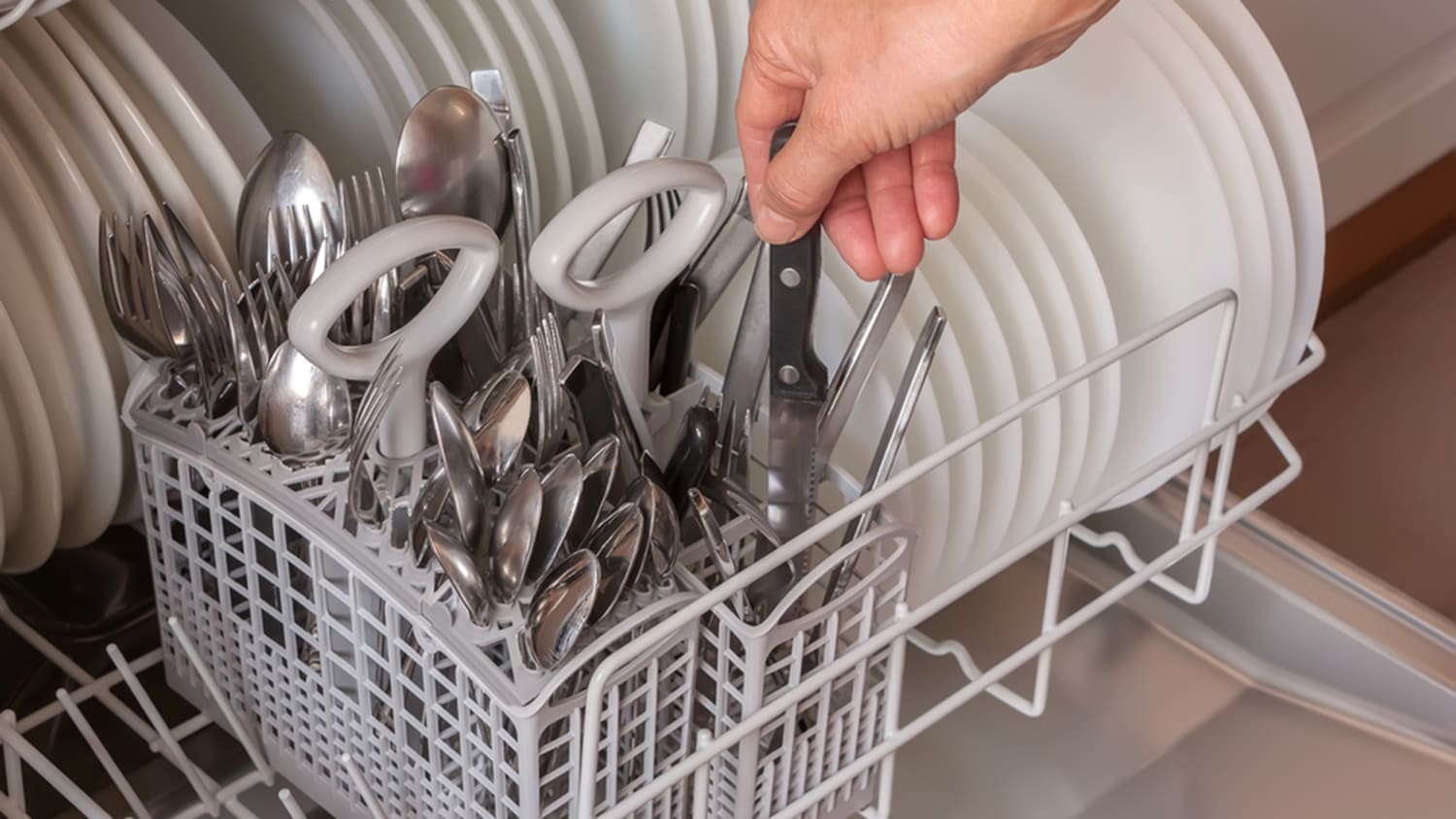
Credit: www.today.com
Environmental Impact Of Proper Silverware Loading
How you load your dishwasher doesn’t just affect cleanliness. It also impacts the environment.
- A fully but properly loaded dishwasher saves up to 3,870 gallons of water per year compared to hand washing, according to the EPA.
- Running half-empty loads wastes energy and water.
- Overloaded baskets require rewashing, using more resources.
By learning correct loading techniques, you save water, power, and detergent—helping both your wallet and the planet.
When To Replace Your Silverware Basket
Even the best baskets wear out. Signs you need a new one include:
- Cracks or holes where items fall through
- Rust on the basket coating
- Warped slots that won’t hold utensils upright
Replacement baskets are available for most brands online or at appliance stores.
Troubleshooting Common Silverware Problems
Sometimes, even with care, issues happen. Here’s what to do.
Spotty Or Cloudy Utensils
- Add rinse aid
- Use hot water
- Avoid overloading
Rust Spots
- Remove affected utensils right away
- Don’t mix metals
- Check that your dishwasher’s coating isn’t worn
Still Dirty After Washing
- Check for nesting
- Confirm spray arms aren’t blocked
- Try a stronger detergent or longer cycle
Etching Or Dulling
- Reduce detergent if you have soft water
- Hand-wash delicate items
Teaching Kids To Load Silverware Safely
Getting kids involved in chores is great, but safety matters.
- Teach them to always place knives handles up
- Show them how to separate forks and spoons
- Have them load under adult supervision until they learn the basics
This builds good habits and keeps everyone safe.
:max_bytes(150000):strip_icc()/Simply-Recipes-Utensils-In-Dishwasher-LEAD-01-4e42014ff003428fa27c64d789c28459.jpeg)
Credit: www.simplyrecipes.com
Silverware And Dishwasher Safety
Safety is part of every step.
- Never put sharp knives blade up
- Don’t let small items fall into the bottom, where they can damage the pump
- Keep chemical detergents out of reach of children
Most dishwasher accidents are easily prevented with simple awareness.
Comparing Hand Washing Vs. Dishwasher For Silverware
Is the dishwasher always better? In most cases, yes. But here’s how they compare:
| Method | Water Used (per load) | Time Required | Sanitizing Power |
|---|---|---|---|
| Dishwasher | 3–5 gallons | 1–2 hours | High (hot water, strong detergent) |
| Hand Washing | 10–27 gallons | 20–30 minutes | Lower (depends on water temperature) |
Unless your silverware is very delicate, the dishwasher is more efficient and hygienic.
When To Hand Wash Silverware
Some items should never go in the dishwasher:
- Antique or heirloom pieces
- Wooden handles
- Gold or copper plating
- Plastic not marked dishwasher safe
- Chef’s knives (optional, to protect sharpness)
Hand-washing prevents damage to these special items.
Practical Examples: Real-world Loading Situations
Big Family Dinner
After a large meal, you may have dozens of utensils. Sort by type, alternate directions, and don’t overfill. Run two loads if necessary.
Small Apartment Dishwasher
Space is tight. Use every slot, but avoid stacking. Consider a mesh bag for tiny pieces.
After A Party
If silverware is sticky or caked with food, soak for a few minutes before loading. Use a heavy cycle and add extra rinse aid.
Silverware Care For Special Occasions
For holidays or special guests, you want your silverware to shine.
- Polish before loading if tarnished
- Use a high-quality detergent
- Remove and dry as soon as the cycle ends
Learning From Dishwasher Manuals
Every dishwasher brand has recommendations. Read your manual for:
- Maximum basket load
- Detergent type suggestions
- Special features (like silverware jets)
If you’ve lost your manual, most are available on manufacturer websites.
Top Brands And Their Silverware Loading Features
Some leading dishwasher makers have unique loading designs:
- Bosch: Third rack trays, adjustable baskets
- KitchenAid: Specialized jets for baskets
- Samsung: Removable trays and deep baskets
Research your model for best results. For more details, you can visit Consumer Reports.
Frequently Asked Questions
How Should I Load Silverware To Avoid “nesting”?
Alternate the direction of forks and spoons. Mix different types in each slot if possible. This prevents spoons from stacking and blocking water flow.
Is It Safe To Put Sharp Knives In The Dishwasher?
It’s safe if you place the knives handles up and blades down. However, hand-washing is better for expensive chef’s knives to keep them sharp.
Can Silver-plated And Stainless Steel Utensils Go Together?
No, don’t let them touch. A reaction between metals can cause dark spots or pitting.
Do I Need To Rinse Silverware Before Putting It In The Dishwasher?
Just scrape off large food bits. Modern dishwashers are designed to handle some food residue. Rinsing is only needed for sticky or dried-on foods.
What Should I Do If Silverware Comes Out Dirty?
Check for overloading, nesting, or blocked spray arms. Try adding rinse aid, using a stronger detergent, or running a heavier cycle.
Loading silverware in a dishwasher might seem minor, but it makes a big difference. With the right techniques, you save time, energy, and keep your utensils looking like new. You’ll also protect your dishwasher and make every meal feel a little more special.
:max_bytes(150000):strip_icc()/GettyImages-172148339-2000-737ebc6bca884bb08796852114e583bf.jpg)
Credit: www.southernliving.com