
Matching granite countertops with cabinets is a challenge many homeowners face when remodeling their kitchens. Granite offers a rich and unique look, but its patterns and colors can make it tricky to pair with cabinets. If you get it right, your kitchen becomes a showcase—a place that feels comfortable and looks impressive.
But if you miss the mark, the room can feel chaotic or mismatched.
This article is your guide to making smart choices. Whether you want a bold kitchen or a calm space, you’ll learn how to combine granite and cabinets for the best effect. We’ll cover color theory, finish options, popular styles, and practical advice for different budgets.
You’ll find real examples, mistakes to avoid, and tips that go beyond basic advice. With clear steps, tables, and easy-to-understand explanations, you’ll gain the confidence to create a kitchen you love.
Understanding Granite Countertop Characteristics
Granite is known for its natural beauty and durability. It comes in many colors, from pale whites to deep blacks, and often has patterns or veins. These features make granite both attractive and challenging when matching with cabinets.
Granite is also available in different finishes:
- Polished: Shiny and reflective
- Honed: Smooth but less glossy
- Leathered: Textured and matte
Each finish changes how the stone interacts with light and color. For example, polished granite reflects more light, which can brighten a dark kitchen. Leathered granite absorbs more light, creating a softer look.
Granite’s price varies by rarity and origin. Common stones cost less, while rare colors or patterns can increase the price. According to the National Kitchen and Bath Association, granite countertops usually cost between $40 and $200 per square foot installed.
Granite is also heat-resistant and scratch-resistant, making it practical for kitchens. However, it needs to be sealed to prevent stains from oils or acids.
Understanding Cabinet Options
Cabinets come in many materials, colors, and styles. The most common materials are:
- Solid wood: Durable, classic look
- MDF (Medium Density Fiberboard): Smooth, less expensive
- Plywood: Strong and stable
- Laminate: Budget-friendly, wide color range
Cabinet finishes include:
- Painted: Clean, modern look
- Stained: Shows wood grain
- Glazed: Adds depth and highlights
Cabinet styles range from simple flat panels to ornate raised panels. The style you choose can change the feel of your kitchen.
Color is the key factor when matching with granite. Cabinets are available in almost any color, but most people choose white, gray, beige, blue, or natural wood tones. Each color works differently with granite.
The Basics Of Color Matching
Color theory helps you understand which colors work well together. You don’t need to be an expert—just know a few rules.
- Complementary colors are opposite on the color wheel. For example, blue and orange.
- Analogous colors are next to each other. For example, green and yellow.
- Neutral colors like white, gray, and beige go with almost anything.
When matching granite to cabinets, look at the undertones. Granite may have warm (yellow, red, brown) or cool (blue, green, gray) undertones. Cabinets can do the same.
If you pair warm granite with warm cabinets, the room feels cozy. Pair cool granite with cool cabinets, and the space feels crisp.
Consider contrast: High contrast (dark granite with light cabinets) is bold. Low contrast (similar colors) is calm.
How Lighting Affects Color Matching
Lighting changes how colors look. Natural light brings out the true color of granite and cabinets. Artificial light can make colors appear warmer or cooler.
If your kitchen has little natural light, lighter cabinets and granite help brighten the space. In a sunny kitchen, you can use darker colors without making it feel closed in.
Popular Granite And Cabinet Pairings
Most homeowners choose one of these combinations:
- White Cabinets with Black Granite
- This is a classic, high-contrast look. It suits modern and traditional kitchens. Black granite like Absolute Black or Black Galaxy stands out against crisp white cabinets.
- Tip: Add brushed metal hardware for extra style.
- White Cabinets with White or Light Granite
- Creates a clean, open feeling. Popular granites include White Ice, River White, and Bianco Romano.
- Tip: Use a colored backsplash to avoid a sterile look.
- Gray Cabinets with Gray or Black Granite
- Modern and sleek. Gray cabinets work well with granites like Steel Gray or Silver Cloud.
- Tip: Use a mix of matte and glossy finishes for depth.
- Wood Cabinets with Beige or Brown Granite
- Warm and inviting. Oak, maple, and cherry cabinets blend nicely with granites like Giallo Ornamental or Brown Pearl.
- Tip: Choose a granite with both warm and cool tones for flexibility.
- Dark Cabinets with Light Granite
- High contrast, dramatic effect. Espresso or navy cabinets pop against granites like Colonial White or Kashmir White.
- Tip: Use under-cabinet lighting to highlight the countertop.
- Blue Cabinets with White or Gray Granite
- Trendy and bold. Blue cabinets pair nicely with granites like White Spring or Gray Mist.
- Tip: Use gold or brass hardware for a luxe touch.
- Green Cabinets with Light Granite
- Calm and earthy. Sage or forest green cabinets look great with light granite.
- Tip: Choose granite with subtle green veins for harmony.
Choosing Granite Patterns And Cabinet Styles
Granite comes in different patterns:
- Solid: Few veins, uniform color
- Speckled: Small spots, busy look
- Veined: Stripes or lines, dramatic
Cabinet styles include:
- Shaker: Simple, flat panels
- Raised Panel: More detail, classic
- Slab: Flat, modern
Pairing busy granite with simple cabinets creates balance. If you have ornate cabinets, choose a quieter granite. Too much detail in both can overwhelm the room.
Practical Examples
- If you choose veined granite like Blue Bahia, pair it with plain Shaker cabinets. This lets the stone shine.
- For speckled granite like Santa Cecilia, use flat-panel cabinets in a neutral color. The countertop adds visual interest.
Using Contrast For Visual Impact
Contrast is a powerful tool. Here are three ways to use it:
- High Contrast
- Dark granite with light cabinets. Makes the countertop the star.
- Example: Black granite with white cabinets.
- Low Contrast
- Similar colors for a calm look.
- Example: Cream cabinets with tan granite.
- Accent Contrast
- Use hardware or backsplash to add pops of color.
- Example: Gray cabinets, white granite, red backsplash.
Contrast also affects how big your kitchen feels. High contrast draws attention, low contrast makes the space feel larger.
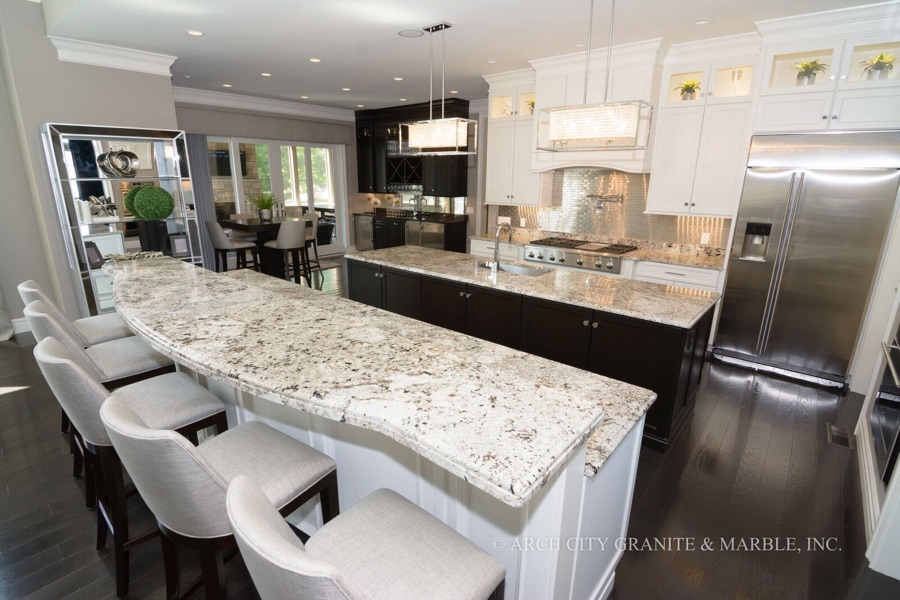
Credit: www.archcitygranite.com
Matching Granite And Cabinets By Kitchen Style
Different kitchen styles call for different combinations.
Traditional Kitchen
- Use warm woods and classic granite like Giallo Ornamental or Santa Cecilia.
- Raised panel cabinets in cherry or oak.
- Brass or bronze hardware.
Modern Kitchen
- Choose slab or Shaker cabinets.
- Cool-toned granite like Steel Gray or Absolute Black.
- Sleek hardware, minimal details.
Farmhouse Kitchen
- White or light cabinets, open shelves.
- Granite with subtle patterns, like River White.
- Matte finishes, vintage-style hardware.
Transitional Kitchen
- Mix of classic and modern.
- Neutral cabinets, versatile granite like Bianco Antico.
- Simple lines, mixed metals.
Budget Considerations
Matching granite and cabinets doesn’t have to be expensive. Here’s how to stretch your budget:
- Choose common granite: Stones like Ubatuba or Santa Cecilia are affordable and look good with many cabinet colors.
- Use laminate cabinets: They mimic wood or paint and cost less.
- Mix materials: Use granite for the island, but cheaper countertops elsewhere.
- Paint existing cabinets: Instead of replacing, paint them to match your new granite.
- Buy remnant granite: Leftover pieces cost less and work for small kitchens.
Cost Comparison Table
Here’s a look at average costs for granite and cabinet options:
| Material | Average Price per Sq. Ft. | Durability | Maintenance |
|---|---|---|---|
| Granite (common) | $40–$60 | High | Sealing needed |
| Granite (rare) | $100–$200 | High | Sealing needed |
| Solid Wood Cabinets | $150–$400 | High | Cleaning, refinishing |
| MDF Cabinets | $50–$120 | Medium | Wipe clean |
| Laminated Cabinets | $30–$60 | Low–Medium | Wipe clean |
Steps To Match Granite Countertops With Cabinets
Follow these steps for a successful match:
- Identify your kitchen style
- Decide if you want traditional, modern, farmhouse, or transitional.
- Choose cabinet color
- Pick a color that suits your style and lighting.
- Select cabinet material and finish
- Decide between wood, MDF, or laminate.
- Choose paint, stain, or glaze.
- Pick granite color and pattern
- Choose a granite that fits your cabinet color and style.
- Test samples in your kitchen
- Bring samples home and see them in your lighting.
- Consider hardware and backsplash
- These add extra color or contrast.
- Think about maintenance
- Choose materials you can maintain easily.
- Get feedback
- Ask friends or a designer for opinions.
- Make your final choice
- Balance style, budget, and practicality.
Sample Matching Table
Here’s a quick guide to help with common pairings:
| Cabinet Color | Best Granite Colors | Style Suitability |
|---|---|---|
| White | Black, Gray, White, Blue | Modern, Traditional, Farmhouse |
| Gray | Steel Gray, Silver Cloud, White | Modern, Transitional |
| Espresso/Dark Brown | White, Cream, Gold | Contemporary, Classic |
| Natural Wood | Beige, Brown, Green | Traditional, Rustic |
| Blue | White Spring, Gray Mist | Modern, Trendy |
Common Mistakes To Avoid
Many people make these errors when matching granite and cabinets:
- Ignoring undertones
- Not all whites are the same. Some have yellow, others blue undertones. Match undertones for harmony.
- Choosing busy patterns for both
- Too much detail can make the kitchen feel crowded.
- Forgetting about lighting
- Samples look different in your home than in the store.
- Focusing only on trends
- Trends change. Choose what you love and what lasts.
- Skipping samples
- Always test samples in your kitchen.
- Neglecting hardware
- Handles and pulls affect the overall look.
- Not considering maintenance
- Some materials stain easily or need special care.
Advanced Tips And Non-obvious Insights
Now let’s look at insights many beginners miss:
- Look for granite with cabinet color specks: If your granite has flecks of your cabinet color, the room feels unified. For example, River White granite often has gray specks that match gray cabinets.
- Use two-tone cabinets: Combine upper and lower cabinets in different colors. For example, white uppers and navy lowers with gray granite.
- Consider edge profiles: Granite edges come in many shapes—bullnose, beveled, ogee. The edge style affects the look. Ornate edges suit traditional kitchens, simple edges suit modern.
- Plan for resale value: Neutral combinations appeal to buyers. If you plan to sell, avoid very bold colors.
- Balance cool and warm tones: Mixing cool granite with warm cabinets can work if you add a neutral element like a gray backsplash.
- Think about flooring: Your floor color also affects the overall look. Make sure it doesn’t clash with cabinets or granite.
Real-world Examples
Here are three kitchens that show different ways to match granite and cabinets:
- Classic White and Black
- White Shaker cabinets with Absolute Black granite. Stainless steel appliances, gray tile backsplash. The room feels crisp and modern.
- Homeowner used brushed nickel hardware for subtle shine.
- Warm Wood and Beige
- Cherry cabinets with Giallo Ornamental granite. Cream tile floor, bronze hardware. The kitchen feels cozy and inviting.
- The granite has both brown and cream tones, tying in the cabinets and floor.
- Bold Blue and White
- Navy blue cabinets with White Spring granite. Gold handles, white subway tile backsplash. Trendy but balanced.
- The granite has blue-gray veins, matching the cabinets.
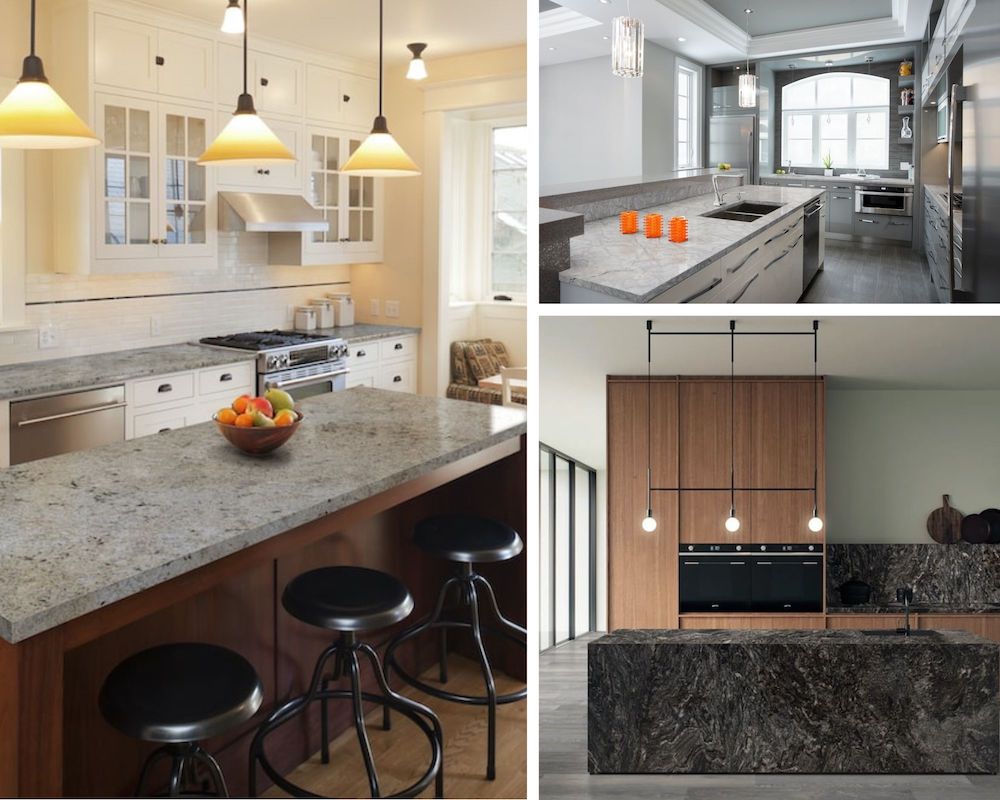
Credit: www.msisurfaces.com
The Role Of Backsplash And Hardware
Don’t overlook the backsplash and hardware. They add color and texture, helping tie granite and cabinets together.
- Backsplash: Choose a color or pattern that connects the countertop and cabinets. For example, a mosaic with hints of both colors.
- Hardware: Handles and pulls in metal, glass, or ceramic. Match or contrast with cabinet color.
These elements often make the difference between a good kitchen and a great one.
Maintenance And Longevity
Granite is durable, but needs care:
- Seal regularly: Protects from stains.
- Wipe spills quickly: Especially oils and acids.
- Use mild cleaners: Avoid harsh chemicals.
Cabinets need their own care:
- Clean gently: Don’t scratch paint or stain.
- Check for wear: Hinges, handles, and finishes may need attention.
If you maintain both, your kitchen will look good for years.
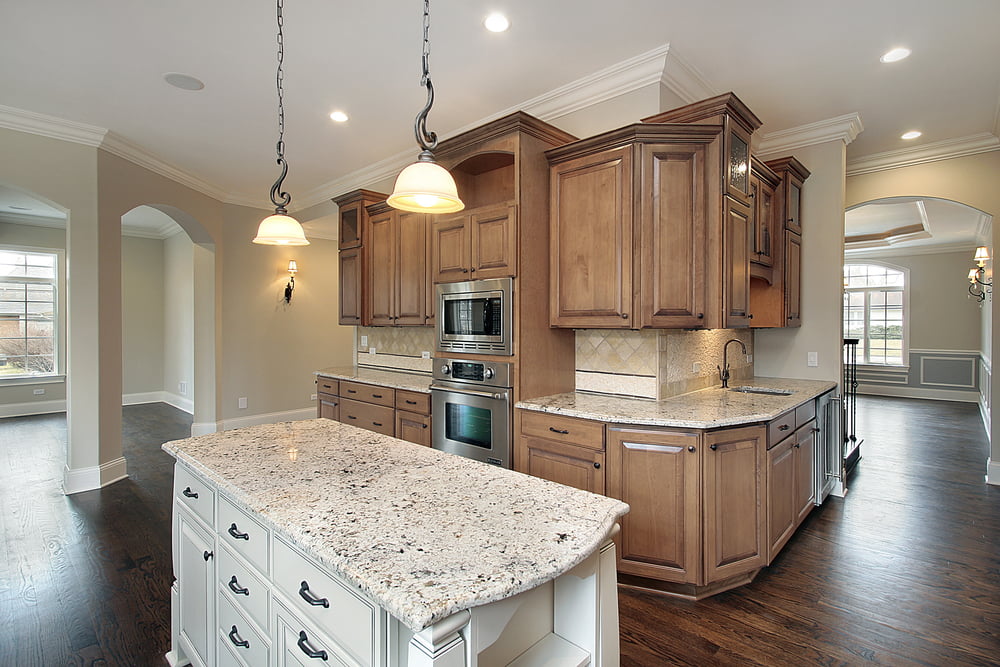
Credit: www.creativegranite.com
Trends And Future-proofing
Trends change, but some combinations stay popular:
- Neutral colors: Whites, grays, beiges
- Simple cabinet styles: Shaker, slab
- Granite with subtle patterns
If you want to future-proof your kitchen, stick with neutrals and classic styles. Add trendier elements with hardware or backsplash, which are easier to change later.
Frequently Asked Questions
How Do I Choose The Right Granite Color For My Cabinets?
Look for granite with undertones that match your cabinet color. If your cabinets are warm (like cherry), pick granite with gold or brown tones. For cool cabinets (like gray or blue), choose granite with gray or blue veins. Always test samples in your kitchen’s lighting before deciding.
Is It Better To Have High Or Low Contrast Between Granite And Cabinets?
High contrast (like dark granite with light cabinets) creates a bold, dramatic look. Low contrast (similar colors) feels calm and spacious. Choose based on your kitchen size and style. Small kitchens often benefit from low contrast, while large kitchens can handle high contrast.
Can I Use Two Different Granite Colors In The Same Kitchen?
Yes, many people use one granite for the island and another for the main counters. Make sure both stones share at least one color or undertone for unity. This approach adds visual interest but needs careful planning.
What Cabinet Styles Work Best With Patterned Granite?
Simple cabinet styles like Shaker or slab work well with busy granite. Ornate cabinets can clash with strong patterns. Balance is key: if your granite is dramatic, keep your cabinets plain.
How Often Should I Seal Granite Countertops?
Most granite needs sealing every 1–3 years, depending on the color and finish. Lighter granite stains more easily and may need more frequent sealing. Always check with your installer or supplier for specific advice.
Matching granite countertops with cabinets is more than just picking colors. It’s about creating a space that feels right for you. If you take time to understand materials, styles, and color theory, you’ll avoid common mistakes and achieve a kitchen you love. For more detailed information on granite varieties and care, visit Wikipedia.
Remember: test samples, balance patterns, and plan for maintenance. With these steps, your kitchen will shine—both today and for years to come.