
Mixing knobs and pulls in your kitchen or bathroom is a fantastic way to add personality, style, and a designer touch to your space. But for many homeowners, this process can feel confusing or even intimidating. What if the hardware looks mismatched?
How do you know which combinations work well together? In reality, mixing knobs and pulls is much less about strict rules and more about finding a cohesive look that matches your taste and needs.
This guide will walk you through everything you need to know about how to mix knobs and pulls with confidence. You’ll discover practical tips, common mistakes to avoid, and creative ideas backed by real-life examples. Whether you’re starting a new renovation or updating an existing space, you’ll learn how to make your cabinets stand out while still feeling harmonious. Let’s explore the art of mixing knobs and pulls, so you can create a space that’s both functional and beautiful.
Why Mix Knobs And Pulls?
Choosing all knobs or all pulls may seem easier, but mixing the two offers many benefits for your home. The main advantage is customization. With mixed hardware, you can highlight certain features, improve ergonomics, and add visual interest. For example, you might use knobs for upper cabinets and pulls for drawers, making each easier to open.
Another reason is design balance. Mixing knobs and pulls breaks up large banks of cabinets or drawers, so your eye travels around the room. Instead of a flat or uniform look, you create movement and depth.
Also, mixed hardware lets you blend styles. Combining different shapes and finishes can modernize a traditional kitchen or add warmth to a minimalist space. It’s also a smart way to update your cabinets without a full remodel, giving your kitchen or bathroom a fresh, high-end feel.
Understanding Knobs And Pulls
Before you mix, it’s important to understand what makes knobs and pulls different.
Knobs are small, single-screw pieces you grip to open a door or drawer. They come in many shapes—round, square, oval, or novelty designs. Knobs are often used on cabinet doors or small drawers.
Pulls (sometimes called handles or bars) are longer and use two screws. They offer more grip, making them better for heavy drawers or wide cabinet doors. Pulls can be modern or traditional, depending on their shape and finish.
Mixing both types gives you the best of each world: the simplicity of knobs for light use and the strength of pulls for daily tasks.
Basic Rules For Mixing Knobs And Pulls
While there’s plenty of room for creativity, a few simple guidelines can help your choices look intentional rather than random.
- Function First: Use knobs on doors and pulls on drawers. Knobs are easy to grab for swinging doors, while pulls offer leverage for heavy drawers. However, you can switch this if you prefer the look or have small drawers that suit knobs.
- Stay Consistent with Finish: Mixing metals can work, but for beginners, stick with one finish (like brushed nickel or matte black) to avoid a cluttered look.
- Match Style, Not Shape: Even if you choose different shapes, keep the overall style consistent. For example, combine modern bar pulls with simple round knobs, or vintage cup pulls with classic glass knobs.
- Balance the Placement: Don’t cluster all knobs in one area and all pulls in another. Spread them throughout to create a balanced look.
- Proportions Matter: Use larger pulls for wide drawers, and smaller knobs for petite doors or drawers. This keeps everything in scale.
Choosing The Right Placement
Placement can make a big difference in both appearance and function. Here’s a practical way to approach it:
- Upper Cabinets: Knobs are classic for upper cabinet doors. They’re small, easy to install, and don’t dominate visually.
- Lower Cabinets: Pulls are often chosen for lower cabinets, especially if the doors are larger or heavier.
- Drawers: Pulls usually work best for drawers, especially wide ones. They allow you to open drawers smoothly.
- Small Drawers: For narrow drawers (9 inches or less), knobs may look and work better.
But these are not hard rules. For example, some modern kitchens use only pulls, placed vertically on doors and horizontally on drawers. What matters most is that the hardware fits your habits and feels comfortable.
Finding Your Style: Modern, Traditional, Or Transitional
Your cabinet hardware should match your home’s overall style. Let’s look at how knobs and pulls work in different design settings.
Modern Spaces
Modern kitchens often feature sleek, long bar pulls in stainless steel or matte black. Knobs are usually simple: think minimal round or square designs. To keep things cohesive, choose knobs and pulls with clean lines and no extra decoration.
Traditional Settings
Traditional styles favor classic shapes and warm finishes. Try oil-rubbed bronze, antique brass, or glass knobs. Pair these with cup pulls or ornate handles for a classic look.
Transitional Styles
Transitional designs mix old and new. You might pair modern pulls with vintage knobs, or use a single finish but vary the shapes. This style is flexible and can work with many cabinet colors.
When choosing, look at your countertop, lighting, and faucet finish, so the hardware blends seamlessly with the rest of the room.
Mixing Finishes: Advanced Tips
While beginners should stick with one finish, mixing metals can create a rich, layered look if done carefully. Here’s how:
- Limit your palette to two finishes (for example, brushed nickel and matte black).
- Use one finish as the main color and the other for accents.
- Place similar finishes across from each other to create balance.
For example, you might use brass knobs on upper cabinets and black pulls on drawers. Or, choose stainless steel for most hardware but add a few glass knobs on a pantry door for interest.
Mixing finishes requires a designer’s eye. When in doubt, try your combinations with inexpensive samples before committing.
Sizing Knobs And Pulls
The size of your hardware affects both look and function. Here are some guidelines:
- Knobs: Common sizes range from 1″ to 1.5″ in diameter. Larger knobs can look dramatic on big doors, while small knobs suit delicate cabinets.
- Pulls: The length should be about one-third the width of the drawer. For example, a 21″ drawer looks balanced with a 7″ pull.
- For oversized drawers (30″ or wider), consider using two pulls or a very long pull.
If you choose pulls of different sizes (for example, longer ones for wide drawers, shorter for small ones), keep the style the same to maintain unity.
Practical Examples For Every Room
Let’s look at how mixing knobs and pulls can work in different spaces.
Kitchen
A classic kitchen might use round knobs for all doors and cup pulls for drawers. The look is timeless and easy to live with. In a modern kitchen, you might see sleek bar pulls on drawers and matching square knobs on doors.
Bathroom
Bathrooms often have fewer cabinets, so you can be bold with your hardware. Try pairing glass knobs with chrome pulls for a vintage look, or matte black hardware for a spa-like feel.
Laundry Room
This is a space where you can experiment. Use playful ceramic knobs with stainless pulls, or try color-coordinated hardware that matches your appliances.
Home Office
Cabinet hardware in an office can reflect your style. Go for leather pulls and brass knobs for a sophisticated look, or minimalist hardware for a clean, modern space.
Visual Examples: Before And After
Seeing real-life combinations can help you imagine the possibilities. Here’s a comparison to show how hardware choices affect the look.
| Cabinet Type | All Knobs | Mixed Knobs and Pulls |
|---|---|---|
| White Shaker Kitchen | Simple, traditional | Knobs on doors, bar pulls on drawers: modern and balanced |
| Modern Flat Panel | Basic and clean | Square knobs on uppers, long pulls on lowers: sleek, designer look |
| Classic Bathroom Vanity | Uniform but plain | Glass knobs on doors, cup pulls on drawers: elegant and vintage |
These examples show that small changes can have a big impact.
Matching Hardware With Cabinet Colors
The color of your cabinets plays a big role in how your hardware will look. Here are some popular combinations:
- White Cabinets: Almost any finish works. Try matte black or brushed nickel for contrast.
- Dark Cabinets: Bright finishes, like polished chrome or brass, stand out and add elegance.
- Gray Cabinets: Experiment with black, pewter, or gold for a trendy, upscale look.
- Wood Cabinets: Warm metals like bronze or copper bring out the natural tones.
Make sure the hardware finish doesn’t clash with your faucet, appliances, or lighting. If you’re unsure, bring samples home to test in your lighting.
Mistakes To Avoid When Mixing Knobs And Pulls
Even small details can change the feel of your space. Here are common mistakes—and how to avoid them:
- Choosing Random Styles: Mixing ornate vintage pulls with ultra-modern knobs can look chaotic. Pick hardware with a shared style element (like a similar finish or shape).
- Ignoring Scale: Large pulls on tiny drawers, or tiny knobs on big doors, feel out of place. Match the size to the cabinet.
- Overmixing Finishes: Using three or more finishes can make a space feel cluttered. Stick to one or two.
- Not Testing Placement: Before drilling, use painter’s tape to test hardware placement. This saves you from permanent mistakes.
- Skipping Function: If a pull is too small for your hand or a knob is hard to grip, it will frustrate you every day. Always try samples first.
- Neglecting Quality: Cheap hardware can break or tarnish quickly. Invest in solid, well-made pieces, especially for high-use areas.
Practical Step-by-step Guide: How To Mix Knobs And Pulls
Ready to start? Here’s a clear process to follow.
1. Assess Your Cabinets
Count how many cabinet doors and drawers you have. Note their sizes—are some extra wide? This helps you plan how many knobs and pulls you’ll need.
2. Decide On Placement
- Knobs for doors, pulls for drawers is a safe bet.
- For a modern look, use pulls everywhere, but change the orientation (vertical for doors, horizontal for drawers).
- For a unique touch, use knobs on upper cabinets and specialty pulls on a focal point, like a kitchen island.
3. Pick A Finish
Choose a finish that works with your appliances and fixtures. If you want to mix metals, choose one main finish and one accent.
4. Choose Styles
Select hardware that shares a design element—like a similar base shape or detailing—so they look related.
5. Test With Samples
Order a few samples and try them on your cabinets. See how they look in your room’s light.
6. Measure Carefully
Use a template or measuring tape to ensure each knob or pull is centered and level.
7. Install Slowly
Drill pilot holes before installing to avoid splitting wood. Install hardware loosely first, then tighten after checking alignment.
8. Step Back And Review
Look at your cabinets from different angles. Make sure the hardware feels balanced and comfortable to use.
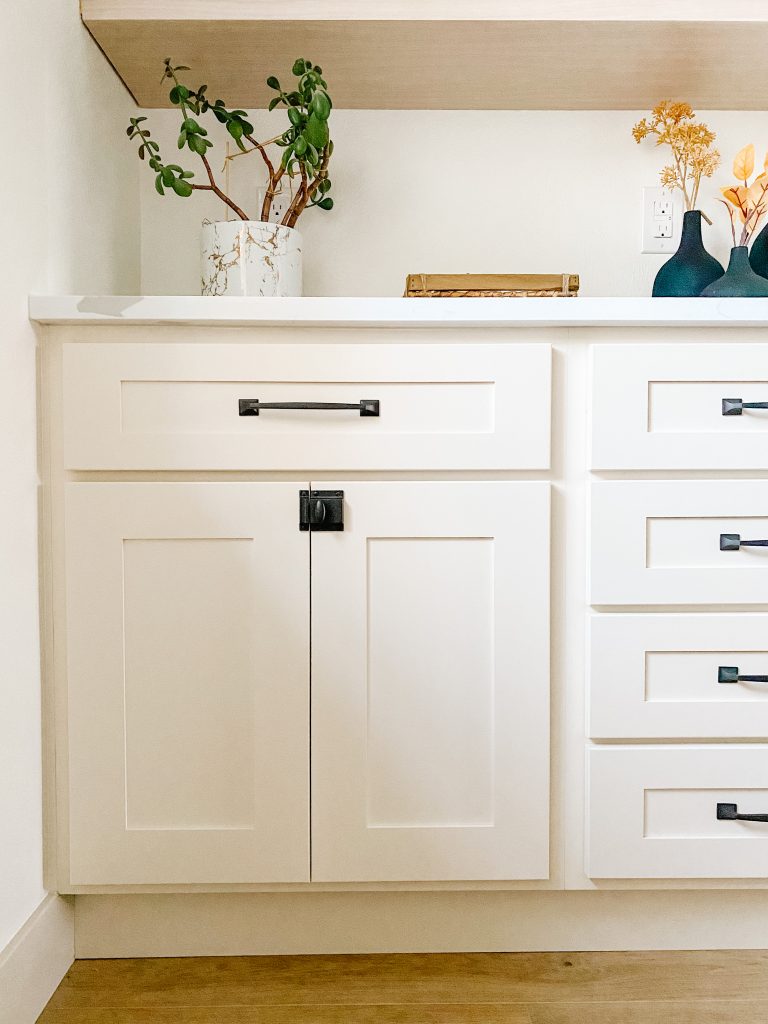
Credit: sprucingupmamahood.com
Designer Tips For Advanced Mixing
If you want your space to look like it was styled by a pro, try these advanced ideas:
- Use statement pulls on a focal point, like a pantry or island, and simpler hardware elsewhere.
- Combine different materials, such as leather pulls with brass knobs.
- For a cohesive but not boring look, mix round knobs with square pulls in the same finish.
- Add a third “special” knob or pull on a feature cabinet, like a glass display or spice drawer.
These touches show personality without sacrificing harmony.
Cost Considerations
Hardware costs can add up quickly. Here’s a rough breakdown:
- Basic knobs: $2–$8 each
- Designer knobs: $10–$40 each
- Basic pulls: $3–$15 each
- Designer pulls: $20–$60 each
On average, a kitchen with 30 pieces of hardware will cost $90–$300 for basic hardware, but $400–$1500 for high-end brands. Set your budget before shopping, and remember that a few statement pieces can elevate the look without breaking the bank.
:max_bytes(150000):strip_icc()/Screenshot2023-07-31at2.21.03PM-618b5e98974b407f88809fa718071c55-1a0c2c4e3cbe49ed861b4b7bb2a184a1.png)
Credit: www.thespruce.com
Durability And Maintenance
Different finishes require different care. For example, polished brass needs regular cleaning to avoid tarnish, while stainless steel is almost maintenance-free. If your kitchen is high-traffic, choose hardware that resists fingerprints and scratches.
Also, think about how the hardware feels to the touch. Some finishes, like matte black, can show fingerprints, while others hide them well. Always check the manufacturer’s care instructions before buying.
Sustainability And Eco-friendly Choices
If you want to make eco-conscious choices, consider these tips:
- Look for hardware made from recycled metals.
- Choose durable finishes that last longer, reducing the need for replacements.
- Buy from brands with sustainable practices.
Some companies even offer hardware made from reclaimed wood or glass, adding both style and sustainability to your space.
Real-world Examples: What Designers Do
Top interior designers often mix hardware for a custom look. For example, Studio McGee often uses simple round knobs on upper cabinets and bold, long pulls on lower drawers, all in the same finish. In luxury kitchens, you’ll see brass pulls on drawers and glass knobs on pantry doors for a touch of glamour.
Here’s a quick designer-inspired comparison:
| Style | Knobs | Pulls | Finish |
|---|---|---|---|
| Modern Farmhouse | Matte black round | Matte black bar | Matte black |
| Classic White | Glass | Brushed nickel cup | Mixed: glass and brushed nickel |
| Industrial Loft | None | Oversized stainless bar | Stainless steel |
You can find more real-life inspiration from interior design websites like Houzz.
How To Shop For Knobs And Pulls
When you’re ready to buy, keep these tips in mind:
- Buy all hardware at once to avoid finish mismatches between batches.
- Measure carefully and use the same center-to-center spacing for all pulls.
- Read reviews—some hardware looks great but feels cheap or is hard to install.
- Check return policies in case the hardware doesn’t match your cabinets.
- Don’t forget the screws: Some cabinets need longer or shorter screws, depending on thickness.
If you have custom cabinets, talk to your cabinet maker before drilling new holes.
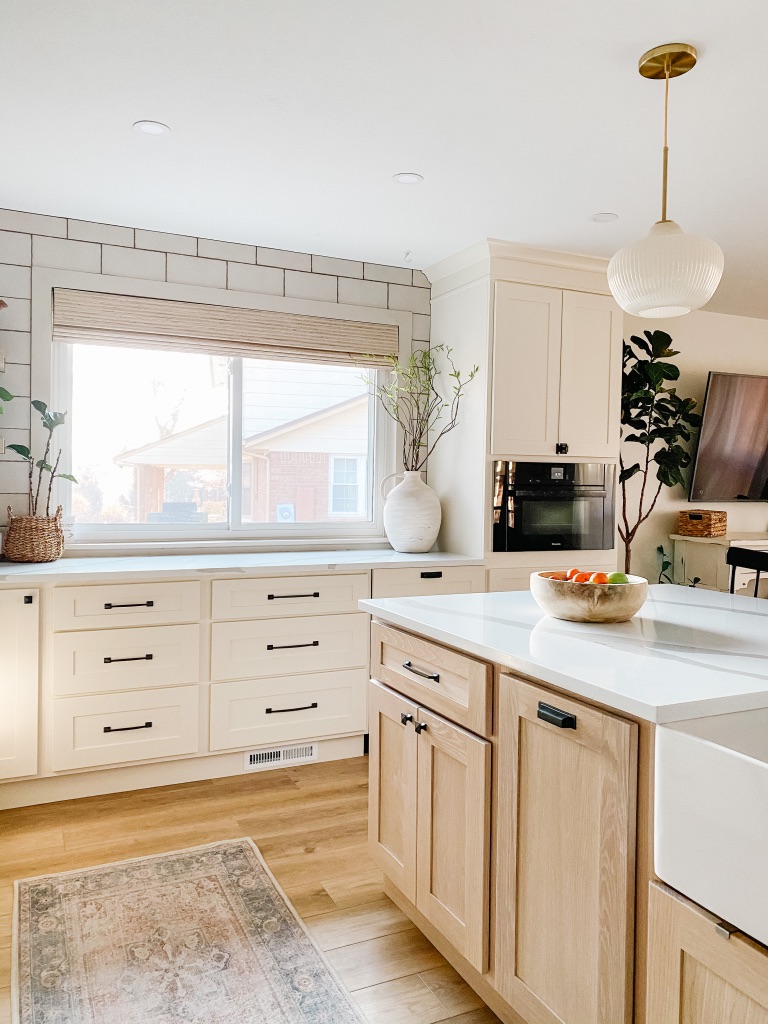
Credit: sprucingupmamahood.com
Frequently Asked Questions
How Many Knobs And Pulls Should I Use In My Kitchen?
Count each cabinet door and drawer separately. Most kitchens use a mix: knobs on doors, pulls on drawers. For example, if you have 15 cabinet doors and 10 drawers, you’ll need 15 knobs and 10 pulls (or more if using two pulls per wide drawer).
Is It Okay To Mix Different Hardware Finishes In The Same Kitchen?
Yes, but limit to two finishes for a balanced look. Place one finish as the main color and use the other for accent. Too many finishes can look cluttered.
What Is The Standard Size For Cabinet Pulls And Knobs?
Common knob sizes are 1″ to 1. 5″ in diameter. Pulls typically range from 3″ to 8″ center-to-center (the distance between screw holes). For drawers, pulls should be about one-third the drawer’s width.
Can I Change Hardware Without Drilling New Holes?
If the new hardware matches the existing hole spacing, you can swap easily. If not, you may need to fill and drill new holes, especially when switching between knobs (one screw) and pulls (two screws).
Where Can I Find More Inspiration For Mixing Knobs And Pulls?
Design sites like Houzz have many photos and ideas. You can also visit showrooms to see hardware in person.
Mixing knobs and pulls is both an art and a science. With the right approach, you can transform your kitchen or bathroom into a space that’s stylish, functional, and truly yours. Take your time, experiment with samples, and let your personality shine through your choices.