
If you’re living in a home or apartment with a small kitchen and no pantry, you know how quickly things can get messy. Food, dishes, and tools pile up. Cabinets overflow. Countertops get crowded. Cooking feels stressful. But a small kitchen doesn’t have to mean chaos or frustration. With smart planning and a few clever tricks, you can create a space that feels tidy, spacious, and easy to use—without needing a pantry at all.
Let’s explore practical strategies, creative solutions, and expert tips to help you organize your small kitchen for maximum efficiency and comfort. Whether you’re a busy parent, a single professional, or a passionate home cook, you’ll find ideas here that work for your space, your budget, and your lifestyle.
Understand Your Kitchen’s Limits And Possibilities
Before you start moving things around, spend some time looking at your kitchen. Notice what works and what doesn’t. Every kitchen is different, and the way you use yours matters.
Ask yourself:
- What items do I use most often?
- Which cabinets or drawers are hard to reach?
- Where do things pile up?
- What feels tight or crowded?
Take measurements of your cabinets, drawers, and open wall space. This helps when buying organizers or storage products later. Even a few centimeters can make a big difference in a small space.
One insight many people miss: vertical space is often wasted. Look at your walls, the sides of cabinets, and even the inside of cupboard doors. All of these are opportunities for extra storage.
Declutter First—what Should Stay?
Organizing a small kitchen starts with decluttering. You can’t organize what you don’t need. Many people keep broken utensils, expired food, or gadgets they never use. These things take up valuable space.
Follow these steps:
- Empty cabinets and drawers, one at a time.
- Group similar items together (plates with plates, spices with spices, etc. ).
- Check expiry dates on food and toss anything old.
- Donate, recycle, or toss anything you haven’t used in the past year.
Be honest. If you have three can openers or a rice cooker you never use, give them away. The less you have, the easier your kitchen will be to organize and keep clean.
A surprising insight: multipurpose tools can replace several single-use gadgets. For example, a good chef’s knife often does the job of a garlic press, herb scissors, or even a mandoline.
Maximize Cabinet And Drawer Space
In a kitchen without a pantry, your cabinets and drawers do double duty. Making the most of this space is key.
Use Adjustable Shelves
Many kitchen cabinets come with fixed shelves. Adjustable or extra shelves let you fit more dishes, cans, or containers in the same space.
- Add extra shelves or stacking organizers to double your storage.
- Use under-shelf baskets for items like wraps, foil, or snack bags.
Organize Drawers With Dividers
Drawers get messy fast. Drawer dividers keep utensils, tools, and kitchen gadgets sorted and easy to reach.
- Use expandable bamboo or plastic dividers for cutlery.
- Try small containers or trays for measuring spoons, peelers, or clips.
Make Use Of Deep Cabinets
Deep cabinets can feel like a black hole. Items disappear in the back, and it’s hard to reach what you need.
- Install pull-out shelves or baskets so you can slide items out.
- Store lesser-used items in the back and daily-use items in the front.
Here’s a quick comparison of common cabinet organizers:
| Organizer Type | Best For | Pros | Cons |
|---|---|---|---|
| Pull-Out Shelves | Pots, pans, food containers | Easy access, maximizes depth | More expensive, may need installation |
| Stacking Shelves | Dishes, canned food | Affordable, increases surface area | Less stable for heavy items |
| Under-Shelf Baskets | Wraps, snacks, utensils | No tools needed, uses unused space | Limited weight capacity |
Use Wall Space Creatively
Walls are often ignored in small kitchens. But with a little creativity, they become some of your best storage spots.
Install Open Shelves
Open shelves are perfect for dishes, glasses, or pretty storage jars. They make your kitchen feel bigger and keep essentials within reach.
- Keep shelves neat—don’t overload them.
- Use matching containers for a clean look.
Add Hooks And Rails
Hooks and rails make it easy to hang mugs, utensils, or even pots and pans.
- Install a rail under a cabinet or on an empty wall.
- Use S-hooks for spatulas, ladles, or measuring cups.
Use Magnetic Strips
A magnetic strip on the wall is perfect for knives or metal tools. It saves drawer space and keeps sharp items safe.
A clever tip: attach a small magnetic strip inside a cabinet door for spice tins or bag clips.
Make The Most Of Counter Space
Countertops are precious in a small kitchen. Keeping them clear makes cooking more enjoyable and cleaning faster.
Store Small Appliances Wisely
Only keep daily-use appliances on the counter. Store blenders, toasters, or mixers that you use once a week in cabinets or on shelves. If you can, choose appliances that do more than one job.
Use Vertical Organizers
A two-tiered tray or shelf can double your counter space for spices, tea, or oil bottles. Use corner shelves to turn awkward spaces into useful storage.
Add A Fold-down Table Or Cutting Board
If you need extra workspace, consider a fold-down table or attach a cutting board over your sink. These solutions add prep space when you need it, but fold away when you don’t.
Organize Food Without A Pantry
A missing pantry means you must be smart about food storage.
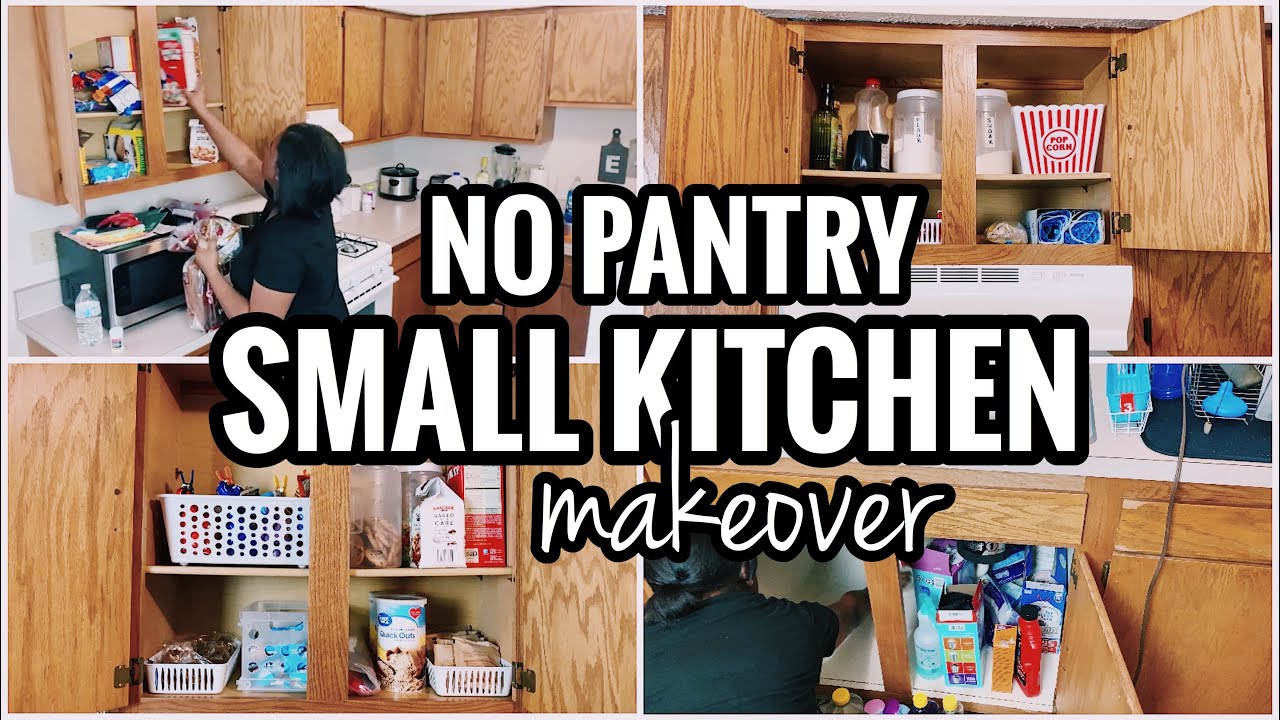
Use Clear Containers
Store dry goods like pasta, rice, or flour in clear, airtight containers. This keeps food fresh and lets you see what you have. Stackable containers use vertical space and look tidy.
Store Food By Category
Group similar foods together, even if you have to use more than one spot. For example:
- Cans and jars in one cabinet
- Baking supplies in a box on a shelf
- Snacks in a basket
This keeps you from hunting for ingredients and helps prevent buying duplicates.
Try Over-the-door Storage
The inside of a cabinet door can hold a small rack for spices, packets, or snacks. Over-the-door organizers also work for cleaning supplies or wraps.
Here’s a look at space-efficient food storage solutions:
| Solution | Where to Use | Best For | Drawback |
|---|---|---|---|
| Stackable Containers | Cabinets, open shelves | Dry goods | Requires buying sets |
| Over-Door Racks | Cabinet doors | Spices, packets | Limited by door width |
| Lazy Susan Turntable | Deep corners | Canned food, oils | Needs circular space |
Rethink The Refrigerator
Your fridge plays a bigger role when you don’t have a pantry. Keep it organized to avoid waste and frustration.
- Use clear bins to group similar foods (snacks, deli, veggies).
- Label shelves so everyone in the house knows where things go.
- Place soon-to-expire items at the front.
A tip that many people miss: store leftovers or meal prep in stackable, uniform containers. This uses space efficiently and helps you see what you need to eat soon.
Make The Most Of Awkward Spaces
Even odd corners or slim gaps can be useful in a small kitchen.
Slim Rolling Carts
A rolling cart that fits between your fridge and wall or stove and cabinet can store cans, jars, or cleaning supplies. These carts are slim but hold a surprising amount.
Toe-kick Drawers
The space under lower cabinets (the “toe-kick”) can be turned into shallow drawers for baking sheets or trays. If you own your home, this is a smart upgrade.
Above-the-fridge Storage
The top of your fridge is valuable real estate. Use a basket or bin to store less-used items like baking pans or small appliances.
:strip_icc()/at_lucys_house_123573907_185982149702143_5515199224127652633_n-e9fc7eb3c1094c039733449d7b609530.jpg)
Credit: www.mydomaine.com
Make It Pretty And Practical
A small kitchen can look beautiful as well as organized. Choose containers, bins, and shelves that match your style. Label everything clearly for a clean, unified look.
- Use baskets for open shelves.
- Choose glass or ceramic jars for dry goods.
- Add a small plant for color and freshness.
A well-organized kitchen feels more welcoming and makes you want to cook.
Create Kitchen Zones
Zoning your kitchen means grouping items by how you use them. This saves time and keeps things where you need them.
- Cooking zone: Pots, pans, spatulas near the stove.
- Prep zone: Knives, cutting boards, mixing bowls near the counter.
- Coffee/tea zone: Mugs, coffee, tea, sugar together near the kettle or coffee maker.
Zoning is a simple idea, but many people skip it. Yet, it makes a big difference in how smooth your kitchen feels.
Go Digital With Recipes
Bulky cookbooks or recipe cards take up space. Try keeping your favorite recipes on your phone, tablet, or computer. If you love paper, put recipes in a single binder or hang a clipboard inside a cabinet door.
Set Up A Cleaning Station
Cleaning supplies are essential, but they often clutter under the sink or in random drawers.
- Use a caddy or bin for sponges, sprays, and brushes.
- Hang gloves or towels on hooks inside the cabinet door.
- Keep only what you really use—no need for 10 different cleaners.

Credit: askannamoseley.com
Organize For Your Lifestyle
Your kitchen should work for the way you cook and live. If you love baking, give baking tools and ingredients prime space. If you mostly order takeout, keep just the basics.
Ask yourself:
- What do I cook most often?
- Who uses the kitchen—just me, or the whole family?
- Do I need kid-friendly or pet-safe storage?
Customizing your organization makes your kitchen feel bigger and more comfortable.
Keep Up The System
Staying organized is an ongoing process. Once a week, take five minutes to tidy shelves, toss expired food, and return items to their “zone. ” A little maintenance keeps your kitchen working well, no matter its size.
Common Mistakes To Avoid
- Overbuying storage products: Don’t buy bins or racks before decluttering and measuring your space.
- Ignoring vertical space: Walls and cabinet doors are valuable.
- Forgetting what you own: Label containers and check supplies often to avoid buying duplicates.
- Letting countertops get crowded: Keep out only what you use daily.
- Trying to fit too much: Sometimes less is more—quality over quantity.
Real-life Example: Sarah’s Small Kitchen Makeover
Sarah lives in a small city apartment with no pantry and a galley-style kitchen. Before organizing, her cabinets were stuffed, and her counter was crowded with appliances and mail.
Here’s how she transformed her kitchen:
- Decluttered and donated extra mugs, unused gadgets, and old food.
- Added a hanging rail for utensils and a magnetic strip for knives.
- Used matching clear containers for dry food.
- Installed a shelf above her stove for oils and spices.
- Used a slim rolling cart beside the fridge for canned goods.
- Labeled every bin and shelf.
Now, Sarah’s kitchen feels twice as big. Cooking is easier, and she wastes less food.
Product Recommendations For Small Kitchen Organization
Not every product fits every kitchen, but these are favorites among small-space dwellers:
- Stackable glass containers: For dry goods and leftovers.
- Adjustable shelf risers: Double cabinet storage.
- Magnetic knife strips: Free up drawers.
- Over-cabinet-door baskets: Use hidden spaces.
- Slim rolling carts: Fit in tight gaps.
- Wall-mounted rails with hooks: Hang utensils, mugs, or pots.
Always measure your space and choose products that fit your kitchen’s style and needs.
How To Organize A Small Kitchen For Families
If you have kids or a partner, organizing gets trickier. Try these tips:
- Store kids’ snacks and dishes on a low shelf they can reach.
- Keep cleaning products out of reach—high shelves or locked cabinets.
- Use labels with pictures for young children.
- Assign each family member a shelf or basket for their favorite items.
Credit: www.youtube.com
Seasonal And Special-occasion Items
Where do you put holiday cookie cutters, big roasting pans, or party platters? Don’t let these items crowd your everyday cabinets.
- Store them in a labeled bin on a high shelf, in a closet, or even under the bed.
- Rotate items by season—swap out as needed.
Small Kitchen Organization And Sustainability
A well-organized kitchen helps reduce food waste. You can see what you have, plan meals, and use up items before they expire. Store food properly in airtight containers and keep a running list of what needs to be used soon.
If you want to learn more about sustainable kitchen practices, check out this resource from the U.S. Environmental Protection Agency.
When To Call In A Pro
Sometimes, a kitchen is just too small or awkward to organize alone. If you’ve tried everything and still struggle, consider hiring a professional organizer. They can suggest custom solutions and help you make the most of every centimeter.
Frequently Asked Questions
How Can I Store Bulk Food In A Small Kitchen Without A Pantry?
Divide bulk food into smaller, airtight containers that fit your cabinets or shelves. Store the rest in a closet, under the bed, or give away what you won’t use soon. Clear bins help you see what you have and prevent waste.
What’s The Best Way To Organize Spices In A Small Kitchen?
Use a tiered spice rack in a cabinet, a magnetic strip on the wall, or an over-the-door rack. Group spices by how often you use them. Label jars for easy identification.
How Do I Keep Countertops Clear When I Have Little Storage?
Limit what stays on the counter to daily-use items. Store appliances and tools elsewhere. Use wall-mounted shelves or hooks to free up space. Clean up as you cook to keep counters tidy.
Are There Affordable Storage Solutions For Small Kitchens?
Yes. Dollar stores and online shops offer stackable bins, shelf risers, and hooks at low prices. Repurpose shoe organizers, baskets, or even sturdy boxes to maximize space without spending much.
Is It Possible To Have A Stylish Kitchen Without A Pantry?
Absolutely. Choose matching containers, labels, and a few decorative touches like a plant or colorful towel. Keep things neat and uncluttered for a stylish, welcoming look.
A small kitchen without a pantry can be highly organized, efficient, and beautiful. With a bit of creativity, you can create a space where cooking is a joy and every inch works for you. Remember: declutter first, use every bit of space, and keep your system simple. Your kitchen will feel bigger—and your life a little easier.