
Granite countertops and surfaces bring natural beauty and strength to homes. But even the toughest stone can develop ugly rust stains if exposed to metal or water for too long. These orange or brown spots can seem impossible to remove. Many people worry about damaging their granite when trying to clean them. The good news? With the right approach, you can remove rust from granite safely and restore its original look.
This guide explains every step in detail. You’ll learn why granite gets rust stains, how to identify them, and the safest methods to clean them away. We’ll also cover which tools and products work best, and what to avoid. Whether you’re dealing with a small spot or a larger problem, you’ll find practical advice here.
Let’s get your granite looking like new again—without any guesswork or risk.
Why Does Granite Get Rust Stains?
Granite is a natural stone made from minerals like quartz, feldspar, and mica. It’s tough, but not immune to stains. Rust forms when iron reacts with water and oxygen. On granite, this usually happens in one of two ways:
- Metal objects left on granite: If you leave a can, razor, or metal utensil on a wet countertop, it can leave a rust ring or spot.
- Water with high iron content: In some areas, tap water contains a lot of iron. Over time, this can leave faint brownish stains.
- Granite’s natural iron: Some granite contains tiny iron particles. If exposed to water often, these can rust from the inside out.
- Improper sealing: Granite needs to be sealed. If the seal is old or missing, stains are more likely.
It’s not always obvious what caused the stain. But understanding the cause helps you choose the right cleaning method.
How To Identify A Rust Stain On Granite
Not every spot is rust. Some stains are from food, oil, or cleaning chemicals. Rust stains have unique signs:
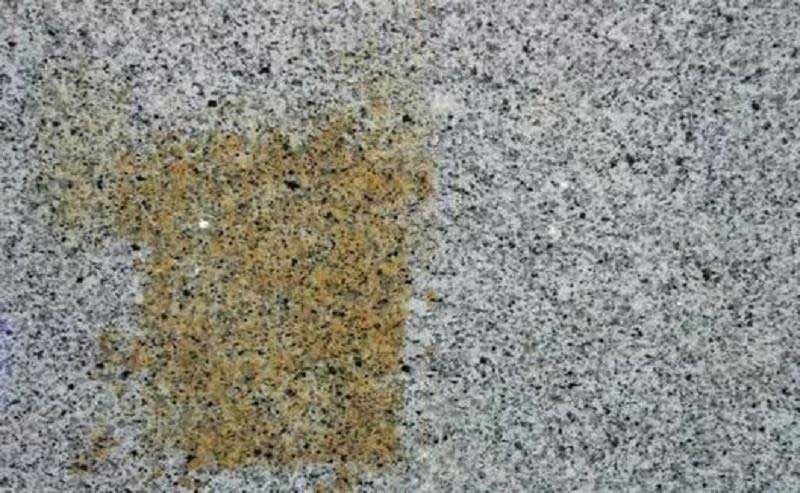
- Color: Rust is usually orange, reddish-brown, or yellow-brown. The shade can vary depending on the source.
- Shape: Rust from a metal can or tool often matches the object’s outline. Water-based rust can appear as smears or streaks.
- Texture: Rust stains are usually smooth, not raised. If you scratch gently with your nail, nothing flakes off.
- Reaction to cleaning: Rust doesn’t go away with soap and water alone. If the stain stays after normal cleaning, it’s likely rust.
If you’re not sure, try dabbing a cotton swab dipped in lemon juice on a small area. If the spot brightens or changes color, it’s probably rust (but don’t clean the whole stain with lemon—acid can damage granite).
Credit: rskmarbleandgranite.com
Tools And Materials You’ll Need
Removing rust from granite is easier with the right tools. Here’s what to prepare:
- Soft microfiber cloths: For wiping and drying
- Plastic or wooden scraper: To gently remove debris (never metal)
- Gloves: To protect your skin
- Distilled water: Tap water can contain minerals; distilled is safer
- PH-neutral cleaner: For granite-safe cleaning before and after
- Plastic wrap: To cover poultices
- Painter’s tape: To hold wraps in place
Depending on your cleaning method, you may also need:
- Baking soda
- Hydrogen peroxide (3%, household strength)
- Poultice powder (sold as “stain remover” for stone)
- Acetone (for tough stains—test first)
- Rust remover for stone (make sure it’s granite-safe)
- Small bowl and spoon (for mixing poultices)
Don’t use vinegar, lemon, bleach, or harsh chemicals. These can etch or discolor granite.
Step-by-step Guide: Removing Rust From Granite
1. Clean The Surface First
Before tackling the rust, wash the area with a pH-neutral cleaner and water. This removes dirt and oils that could block your cleaning efforts. Dry with a microfiber cloth.
2. Assess The Stain
How deep is the rust? Light stains often sit on the surface. Deep stains may have soaked into the stone. Surface stains are easier to remove, but both can usually be treated at home.
3. Try A Baking Soda And Water Poultice
For most rust stains, a homemade baking soda poultice is the safest start. Here’s how:
- Mix 3 parts baking soda with 1 part distilled water. Stir until you get a thick paste.
- Spread the paste over the stain, about 1/4 inch thick.
- Cover with plastic wrap. Seal the edges with painter’s tape.
- Leave for 24 hours. The paste will draw the rust out of the granite.
- Remove the plastic and let the paste dry completely (another 12-24 hours).
- Scrape off the dried paste gently with a plastic scraper. Wipe with a damp cloth.
Check the stain. If it’s lighter or gone, clean with a pH-neutral cleaner. If it remains, repeat the process up to three times.
4. Use Baking Soda And Hydrogen Peroxide For Tougher Stains
If water alone doesn’t work, try hydrogen peroxide. It’s a mild oxidizer that can break down rust. Mix baking soda and hydrogen peroxide (3%) to make a paste, following the same steps as above.
Tip: Test in a hidden spot first—peroxide can lighten dark granite if overused.
5. Try A Commercial Poultice Powder
If home remedies aren’t enough, buy a granite poultice powder from a hardware or stone care store. These products are designed for stone and often contain absorbent clay. Follow the directions on the package. Usually, you’ll:
- Mix the powder with water or hydrogen peroxide
- Apply and cover as with homemade poultice
- Wait 24-48 hours
Commercial products can be stronger but are still safe for granite.
6. Use A Granite-safe Rust Remover
Some stains are stubborn. For these, choose a rust remover designed for stone. Make sure the product is labeled for “granite” or “natural stone.” Follow the instructions carefully.
- Wear gloves and ventilate the area.
- Apply only to the stain—not the whole surface.
- Rinse thoroughly with distilled water after use.
Do not use hardware store rust removers unless they say “stone safe. ” Many contain acids that will damage your granite.
7. For Deep Or Old Stains: Try Acetone
Acetone is a strong solvent often used by professionals. It works on some deep stains, especially if other methods fail.
- Pour a small amount on a cloth and place over the stain.
- Cover with plastic wrap and tape down the edges.
- Wait a few hours, then check.
- Repeat if needed, but do not soak the stone.
Test acetone on a hidden area first. It’s usually safe but can dull the finish if overused.
8. Rinse And Dry The Surface
After removing the stain, rinse the area with distilled water. Wipe dry with a soft cloth. This prevents any leftover cleaner from affecting the stone.
9. Reseal The Granite (if Needed)
Rust removal can strip away the protective sealer on granite. Test the area: sprinkle a few drops of water. If it darkens quickly, the seal is weak. Reseal with a stone sealer according to the product’s instructions.
Comparing Rust Removal Methods For Granite
It’s helpful to compare the main methods side-by-side to choose what’s best for your situation.
| Method | Best For | Risk Level | Average Cost |
|---|---|---|---|
| Baking Soda & Water | Light, new stains | Very low | Low (household items) |
| Baking Soda & Peroxide | Moderate stains | Low (may lighten stone) | Low |
| Commercial Poultice | Deep/old stains | Low (follow label) | Medium ($10–$25) |
| Granite Rust Remover | Stubborn stains | Medium (check compatibility) | Medium ($15–$30) |
| Acetone | Professional use | Medium (test first) | Low ($5–$10) |
What To Avoid When Removing Rust From Granite
Many people make mistakes that cause permanent damage. Here’s what not to do:
- No vinegar, lemon, or acid: These etch granite and make it dull or rough.
- No bleach or ammonia: These can discolor granite and break down the seal.
- Don’t scrub with steel wool or wire brushes: They scratch the surface.
- Don’t use unknown chemicals: Only use products labeled safe for granite.
- Don’t leave poultices on too long: This can dry out or lighten the stone.
If in doubt, always test your cleaning method on a hidden area first.
How To Prevent Rust Stains On Granite
Prevention is better than cure. These tips will help keep your granite rust-free:
- Wipe up water spills quickly, especially around sinks and faucets.
- Don’t leave metal objects (cans, razors, utensils) on wet granite.
- Use coasters and trays under metal items.
- Seal your granite every 1–2 years, or as recommended.
- Clean regularly with a pH-neutral stone cleaner.
- Check your water: If you have high-iron water, use a water softener.
- Fix leaks fast: Dripping faucets can cause rust over time.
These simple habits greatly reduce the chance of stains.
Professional Help: When To Call An Expert
Sometimes, home remedies aren’t enough. Call a stone care professional if:
- The stain won’t budge after several attempts.
- The granite is expensive or rare.
- The stain is very large or deep.
- You see pitting, flaking, or other damage.
Professionals have access to special poultices, machines, and sealers. They can often save a stone that looks ruined.

Credit: www.reddit.com
Real-world Examples: Granite Rust Removal In Action
Many homeowners have faced rust stains. Here are two real examples:
Case 1: Kitchen Countertop Rust Ring
A homeowner left a cast iron pan on a wet granite countertop overnight. In the morning, there was a clear orange ring. They made a baking soda and water poultice, covered the stain, and waited 24 hours. After removing the paste and repeating the process once, the ring was gone.
The stone looked new again.
Case 2: Old Bathroom Sink Stain
A bathroom sink with iron-rich water developed a yellow-brown stain around the faucet. The owner tried soap and water, but nothing changed. A poultice with baking soda and hydrogen peroxide was applied for 48 hours. The stain lightened but didn’t disappear.
A commercial granite rust remover finished the job. The area was resealed, and the stain has not returned.
Special Cases: What If The Rust Is Under The Surface?
Sometimes, granite develops rust from within. This happens if the stone contains natural iron minerals. You might see stains that return even after cleaning. In these cases:
- Surface cleaning won’t work alone.
- You may need a professional to grind or hone the stone.
- Replacement may be needed for severe internal rust.
If the stain keeps coming back, get expert advice before trying more chemicals.
Cost Comparison: Diy Vs Professional Rust Removal
Let’s look at the costs involved in removing rust from granite yourself versus hiring a pro.
| Method | Estimated Cost | Time Required | Success Rate |
|---|---|---|---|
| DIY Baking Soda Poultice | $1–$3 | 1–2 days | High (for new stains) |
| DIY Commercial Poultice | $10–$25 | 1–2 days | Medium–high |
| DIY Rust Remover (Stone Safe) | $15–$30 | 1–2 days | High (for most stains) |
| Professional Service | $100–$300+ | Few hours | Very high (includes resealing, repairs) |
Insight: If your granite is valuable, large, or the stain is deep, professional help can protect your investment.
Common Myths About Rust And Granite
Myth 1: Granite can’t stain.
Reality: Granite is more stain-resistant than marble, but it’s not stain-proof. Rust, oil, and wine can all cause marks if left too long.
Myth 2: Any cleaner is safe on granite.
Reality: Only pH-neutral, granite-safe products should be used. Acids and bleaches can ruin the surface.
Myth 3: Rust means the granite is ruined.
Reality: Most rust stains can be removed with patience and the right method. Only deep internal rust is very hard to fix.
Myth 4: All granite needs to be sealed every year.
Reality: Some types of granite are more porous than others. Test your surface with water drops—if they bead up, sealing is still good.
Understanding the facts helps you care for your stone better.
Non-obvious Insights For Beginners
- Always use distilled water for mixing poultices and rinsing. Tap water sometimes contains minerals that can leave new stains or interact with cleaning products.
- Rust stains can return if the source isn’t removed. For example, if a metal soap dish keeps leaking, you’ll get new stains even after cleaning.
- Be patient. Poultices work slowly. Rushing the process or scrubbing can make things worse.
- Granite colors matter. Light stones show rust more clearly, but dark granite can get “ghost” stains that are hard to see until they’re large.
When Should You Reseal Granite After Rust Removal?
It’s smart to check the seal after any deep cleaning. Here’s how:
- Drop a few drops of water on the area.
- Wait five minutes.
- If the water beads up, the seal is fine.
- If the water soaks in and darkens the stone, reseal that spot.
Sealing is easy with spray-on or wipe-on products from hardware stores.
Extra Tips For Long-lasting Results
- Clean spills right away, especially juices, wine, or oil.
- Use trivets or mats under hot pots and pans.
- Avoid using rough sponges or pads on granite.
- Keep granite dry when not in use, especially around sinks.
- Schedule a yearly “stone health check”—inspect for stains and reseal if needed.
Frequently Asked Questions
What Causes Rust Stains On Granite Countertops?
Rust stains appear when iron comes into contact with water and oxygen on granite. This can be from metal objects, iron-rich water, or even iron within the stone itself. Keeping granite dry and using coasters or trays under metal items helps prevent rust.
Can I Use Vinegar Or Lemon To Clean Rust On Granite?
No. Vinegar and lemon are acidic. They can etch or dull granite, leaving permanent damage. Always use pH-neutral or granite-safe cleaners.
How Long Does It Take To Remove Rust From Granite?
Most rust stains need 24–48 hours for poultices to work. Some deep stains may require several applications over a few days. Patience is important for safe, complete removal.
Is Hydrogen Peroxide Safe For All Granite Colors?
Hydrogen peroxide is generally safe for light-colored granite. On dark granite, it may lighten the color if overused. Always test in a hidden spot first and rinse thoroughly.
Where Can I Find More Information About Granite Care?
For in-depth guidance, check out the National Park Service’s stone care recommendations, which cover cleaning, sealing, and repairing granite and other stones.
Granite is a beautiful investment for any home. With careful cleaning and regular maintenance, you can keep it looking great for decades—free of rust and other stains. If you ever feel uncertain, don’t hesitate to reach out to a stone care professional for advice.

Credit: www.amazon.com