
Seasoning your grill grate is more than a simple cleaning step—it’s a secret to better grilling. Whether you use charcoal, gas, or even a pellet grill, seasoning creates a non-stick surface, prevents rust, and adds flavor to your food. Many people skip this step, but if you want your grill to last longer and your steaks to taste better, learning how to season a grill grate is essential.
Seasoning may sound complicated, but it’s actually quite easy. The process involves applying a thin layer of oil and heating the grate so the oil bonds with the metal. This forms a protective layer that keeps food from sticking and makes cleaning easier.
Even if you bought a brand-new grill, or you’re pulling out last year’s barbecue from storage, seasoning is necessary. Some new grills come with a factory coating, but it’s not enough for real cooking.
Let’s explore the right way to season your grill grate, the oils to use, how often to repeat the process, and what mistakes to avoid. You’ll also find practical tips and answers to common questions, so you can grill with confidence.
Why Seasoning Your Grill Grate Matters
Seasoning isn’t just about taste—there are several important reasons to do it.
First, seasoning makes the grate non-stick. When you grill meat, vegetables, or fish, nothing’s more frustrating than food tearing and sticking to the bars. A well-seasoned grate solves this problem. Second, seasoning protects the metal from rust and corrosion. Grills are often exposed to moisture, so a protective layer keeps rust away. Third, seasoning adds flavor over time. Each layer builds up and improves the taste of grilled food, giving you that classic barbecue flavor.
One insight that beginners often miss is that seasoning is not a one-time task. You need to repeat the process regularly, especially if you clean the grates with strong chemicals or after heavy use. Also, many people think only cast iron grates need seasoning, but steel and even some coated grates can benefit from it.
Types Of Grill Grates And Their Seasoning Needs
Not all grates are the same. Understanding your grill’s material helps you care for it properly.
| Grate Material | Seasoning Required? | Special Notes |
|---|---|---|
| Cast Iron | Yes | Needs regular seasoning; very prone to rust |
| Stainless Steel | Yes | Seasoning helps prevent sticking and rust |
| Porcelain-Coated | Sometimes | Light seasoning only if coating is damaged |
| Chrome-Plated | Yes | Seasoning prevents rust, but avoid harsh scrubbing |
Cast iron grates are the most demanding—they rust quickly but reward you with the best heat and flavor. Stainless steel is durable but can still stick and rust without seasoning. Porcelain-coated grates are easier to clean, but if the coating cracks, rust can sneak in, so light seasoning can help. Chrome-plated grates are common in budget grills and also need protection.
If your grate is new, always read the manual. Sometimes, a factory coating needs to be burned off before seasoning. If your grate is old, check for rust or damage first.
What You Need Before Seasoning
Getting ready is half the job. Here’s what you should have on hand:
- High-heat oil (like canola, grapeseed, or peanut oil)
- Paper towels or a clean cloth
- Tongs
- Gloves (heat-resistant is best)
- A grill brush or scraper
- Aluminum foil (optional, for cleaning)
- A clean, dry grill grate
Never use butter or olive oil—they smoke and burn at lower temperatures. The right oil is key because it forms a stable, long-lasting layer.
Choosing The Best Oil For Seasoning
Not all oils are equal. The smoke point is the most important factor—it’s the temperature where oil starts to smoke and break down. For seasoning, you want an oil with a high smoke point.
| Oil Type | Smoke Point (°F) | Recommended? |
|---|---|---|
| Canola Oil | 400 | Yes |
| Grapeseed Oil | 420 | Yes |
| Peanut Oil | 450 | Yes |
| Sunflower Oil | 440 | Yes |
| Olive Oil | 375 | No |
| Butter | 350 | No |
Canola and grapeseed oil are popular choices. They’re affordable and easy to find. Peanut oil is also excellent, but avoid it if anyone is allergic. Avoid oils with low smoke points like extra virgin olive oil, which can create a sticky residue.
A non-obvious tip: Don’t over-apply oil. A thin, even layer is best. Too much oil can get gummy and attract dust and debris.
Step-by-step: How To Season A Grill Grate
Ready to start? Here’s a proven method to season your grill grate, whether it’s new or old.
1. Clean The Grate
Start with a clean, dry grill grate. If your grate is new, wash it with warm, soapy water and dry thoroughly. For old grates, use a grill brush or scraper to remove old food and rust. For tough spots, ball up some aluminum foil, hold it with tongs, and scrub.
Never season over stuck-on food or rust. The oil will seal in the debris, making it harder to clean later.
2. Preheat The Grill
Place the clean grate back on the grill. Preheat it for 10-15 minutes on high. This burns off any leftover moisture and opens the metal’s pores so oil can bond better.
If using charcoal, wait until the coals are glowing and covered with white ash. For gas grills, turn burners on high with the lid closed.
3. Apply Oil
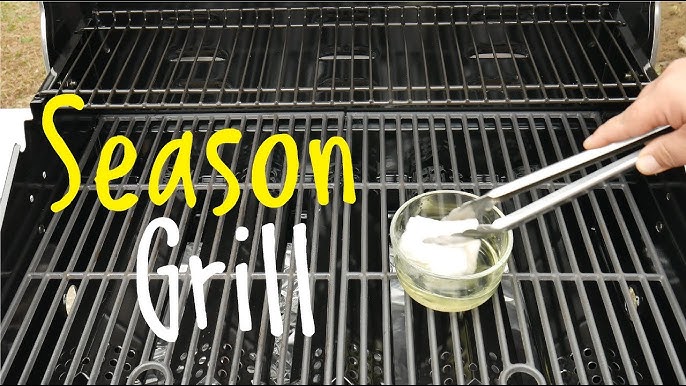
Let the grate cool slightly—just until it’s safe to handle with gloves. Dip a folded paper towel or clean cloth in your chosen oil. Using tongs, rub the oil over every bar and corner of the grate. Cover both the top and bottom if possible.
Don’t pour oil directly on the grate. This can cause flare-ups and uneven coating.
4. Heat The Grill Again
After oiling, fire up the grill to high heat for 30-40 minutes. The oil will smoke—that’s normal. This is the oil bonding with the metal, forming a hard, blackened layer.
Repeat the process: For new cast iron grates, it’s smart to oil and heat them two or three times before first use. This builds up a strong non-stick coating. For stainless steel, one or two times is usually enough.
5. Cool And Store
Turn off the grill and let the grate cool. Your grill is now seasoned and ready for cooking. If you won’t use it right away, store the grill with the lid closed to keep dust and moisture out.
How Often Should You Season A Grill Grate?
Seasoning isn’t just for new grills. Here’s how to know when it’s time to re-season:
- After every deep cleaning: If you scrub with soap or use strong cleaners, you remove the seasoning layer.
- After heavy grilling: Frequent use can wear away the coating.
- If food starts sticking: This is a sign your seasoning is wearing off.
- If you see rust spots: Remove rust, then re-season immediately.
For cast iron, a quick oiling after each use helps keep the surface perfect. For stainless steel or chrome, deep seasoning every few months is enough, but oiling occasionally boosts performance.
A tip many miss: Always check your grate before cooking. A well-seasoned grate should look shiny and slightly black, not rusty or dull.

Credit: www.youtube.com
The Science Behind Seasoning
Seasoning is more than just oil on metal. When you heat oil past its smoke point, its molecules break down and bond with the grate—a process called polymerization. This creates a smooth, hard layer that resists water, oxygen, and food.
This is why using high-heat oil is critical. Oils with low smoke points just burn, leaving a sticky mess.
The more you season and cook on your grill, the better the surface becomes. Over time, it turns dark and glossy, like a well-used cast iron skillet.
Common Mistakes To Avoid
Even experienced grillers make mistakes with seasoning. Avoid these for the best results:
- Using the wrong oil: Low smoke point oils lead to sticky, burnt coatings.
- Too much oil: Thick layers don’t bond properly and can become gooey or flake off.
- Not cleaning first: Seasoning over dirt traps debris and causes bad flavors.
- Skipping regular seasoning: The protective layer wears off over time; repeat as needed.
- Ignoring rust: Rust spreads quickly—remove it and re-season right away.
- Pouring oil directly: This can cause dangerous flare-ups.
A practical insight: Never use non-stick sprays directly on a hot grill—they can leave a chemical residue.
Credit: www.youtube.com
How To Remove Rust Before Seasoning
Rust is the enemy of good grilling. If you see orange or brown spots, remove them before seasoning.
- Light rust: Scrub with a grill brush or aluminum foil.
- Heavy rust: Soak the grate in a mix of vinegar and baking soda for 1-2 hours, then scrub.
- After cleaning: Rinse with water, dry completely, and then season as described above.
Don’t let rust sit. It can eat through your grate and ruin your grill.
Maintaining Your Seasoned Grill Grate
Seasoning isn’t a one-time job. Here’s how to keep your grate in top shape:
- Oil lightly after every cook: While the grate is still warm, brush off food bits and wipe with a light layer of oil.
- Deep clean only when needed: Too much cleaning can strip the seasoning.
- Store with the lid closed: Keeps out moisture and debris.
- Inspect regularly: Look for rust, flaking, or sticky spots. Touch up with oil if needed.
If you live in a humid area, consider storing the grate indoors during winter or long breaks.

Credit: www.reddit.com
Seasoning A Grill Grate: Gas Vs Charcoal
Does the type of grill change the process? Slightly—here’s what to know.
| Grill Type | Seasoning Differences | Tips |
|---|---|---|
| Gas Grill | Even, controlled heat; easy to repeat cycles | Preheat with lid closed for better results |
| Charcoal Grill | Hotter, less even heat; more flavor buildup | Let coals ash over before starting |
| Pellet Grill | Gentle, steady heat; seasoning lasts longer | Follow manufacturer’s cleaning advice |
For gas grills, the process is simple and repeatable. For charcoal, you get higher heat, which helps polymerization, but watch for flare-ups. Pellet grills are gentle but may need more frequent seasoning if cleaned often.
How To Season A Grill Grate In An Oven
If the weather is bad or you want extra control, you can season smaller grates in a home oven.
- Clean and dry the grate.
- Coat with a thin layer of oil.
- Place on a baking sheet (line with foil for easy cleanup).
- Bake at 450°F (230°C) for one hour.
- Let cool in the oven before handling.
This method works best for cast iron and stainless steel grates. Never use this for grates with plastic or wooden handles.
Seasoning New Vs Old Grill Grates
New grates often come with a protective coating. Wash this off with soap and water, dry, then season as described. For old grates, focus on removing rust and old seasoning first.
A non-obvious tip: If your old grate has a sticky, uneven coating, it may be time to strip it. Use a wire brush, sandpaper, or even a grill cleaner, then re-season.
Seasoning Grill Grates With Onion Or Potato
You may have seen videos where people rub an onion or potato on the grill. Does this work?
- Onion: The moisture and sulfur compounds in onion can help clean and lightly coat the grate. It adds a bit of flavor, but it’s not a true seasoning.
- Potato: The starch in potato creates a short-lived non-stick layer. It’s helpful before grilling fish, but not a replacement for real seasoning.
So, these tricks are fine for quick fixes, but not for long-term protection.
How Long Does Seasoning Last?
With regular use, a good seasoning layer lasts several grilling sessions. However, factors like frequent cleaning, harsh weather, or acidic foods can strip the coating faster.
- Heavy use: Re-season every few weeks.
- Occasional use: Re-season every couple of months.
- After deep cleaning: Always re-season.
A seasoned grate should look black and shiny, not rusty or dull.
What To Do If Food Still Sticks
If your food still sticks even after seasoning, check these points:
- Is your grate clean? Old bits of food can cause sticking.
- Is your grill hot enough? Food sticks more on cool grates.
- Did you use enough oil? Apply a thin layer before and after grilling.
- Are you patient? Give food time to develop grill marks before flipping.
A practical trick: Oil the food as well as the grate. This doubles the non-stick effect.
Can You Over-season A Grill Grate?
Yes, you can. Too many thick layers of oil can build up into a sticky, uneven surface. If you notice flaking, stickiness, or off smells, it’s time to strip the grate and start fresh.
To fix, scrub thoroughly, wash, dry, and re-season with just a thin layer of oil.
Environmental Impact And Safety
Seasoning is safe, but here are some tips:
- Use natural oils—no chemicals needed.
- Don’t pour oil onto flames.
- Dispose of used paper towels safely.
- If you use your oven, turn on a vent or open windows to handle smoke.
Remember, well-seasoned grates require less harsh cleaning products, which is better for the environment.
The Hidden Benefit: Flavor Memory
Here’s an advanced tip: The more you season and cook on your grill, the more flavor builds up. This is called flavor memory. Each grilling session adds layers of taste that make future food better. This is why old, well-kept grills create legendary barbecue.
Don’t clean off this “flavor patina” unless you have to. It’s part of what makes grilling special.
Final Thoughts
Seasoning your grill grate is a simple, powerful way to make grilling easier, tastier, and safer. With a little oil, heat, and care, your grill will stay rust-free and create amazing food for years. Always use the right oil, apply thin layers, and repeat as needed.
Don’t be afraid to check and re-season often—your grill will reward you every time you cook.
For more detailed guides on grill care, check expert resources like Serious Eats.
Now you’re ready to season any grill grate like a pro. Happy grilling!
Frequently Asked Questions
How Often Should I Season My Grill Grate?
It depends on how much you use your grill. For cast iron, season lightly after each use. For stainless steel, deep seasoning every few months is enough. Always re-season after heavy cleaning or if food starts sticking.
Can I Use Olive Oil To Season My Grill Grate?
No, extra virgin olive oil has a low smoke point and can create a sticky, burnt coating. Use high-smoke-point oils like canola, grapeseed, or peanut oil.
What Do I Do If My Grate Is Very Rusty?
Remove as much rust as possible with a grill brush or a soak in vinegar and baking soda. Rinse, dry, and then season as you would with a new grate. Prevent future rust by seasoning regularly.
Is Seasoning Necessary For Porcelain-coated Grates?
Light seasoning is only needed if the coating is damaged. Otherwise, just clean and dry these grates—too much oil can cause buildup.
Can I Season A Grill Grate In My Kitchen Oven?
Yes, for small grates without plastic or wooden parts, use your oven at 450°F (230°C) for one hour. This method is especially helpful if you can’t use your grill due to weather or space.
With the right care, your grill grate will deliver years of great meals. Enjoy your next barbecue!