
Damascus knives are famous for their striking patterns, toughness, and razor-sharp edges. If you own one, you already know that it’s more than just a tool—it’s a piece of art and craftsmanship. But even the best knife loses its edge with use. Sharpening a Damascus knife is different from sharpening a simple steel blade. The layered steel, the unique hardness, and the desire to keep those patterns beautiful all matter. Many owners worry about damaging the blade or ruining its look. But with the right approach, you can keep your Damascus knife sharp, safe, and stunning for years.
This guide will walk you through every step: from understanding your knife’s steel, choosing the right sharpening tools, setting the perfect angle, and caring for your blade after sharpening. Whether you’re a complete beginner or have some experience, you’ll learn how to sharpen your Damascus knife with confidence—and avoid common mistakes that can shorten its life or spoil its appearance.
Why Damascus Steel Needs Special Care
Damascus knives are made by forging multiple layers of steel together. This process creates the iconic wavy patterns that make each knife unique. But it also means the steel is both hard and flexible, making it more resistant to breaking and chipping. However, the layered construction also means the blade can be sensitive to incorrect sharpening methods.
What sets Damascus apart is the mix of hard and soft steel layers. The hard layers give it a sharp edge, while the softer layers add toughness. If you sharpen a Damascus knife the wrong way, you risk removing too much steel or damaging the pattern. That’s why it’s important to use gentle, controlled methods.
Understanding The Blade’s Structure And Angle
Before you start, it’s important to know your knife’s edge angle. Most Damascus kitchen knives have an edge between 15° to 20° per side. Outdoor or hunting Damascus knives might be a bit wider for strength, sometimes up to 25° per side.
Why does this matter? The angle affects sharpness and durability. A smaller angle is sharper but more delicate. A wider angle is tougher but not as razor-sharp. Always check the manufacturer’s recommendations if you’re unsure. If you can’t find them, 17°–20° per side is a safe bet for most Damascus kitchen knives.

Credit: www.youtube.com
Choosing The Right Sharpening Tools
Picking the right tool is as important as technique. Here’s a breakdown of the most common options for sharpening a Damascus knife:
| Tool | Pros | Cons | Best For |
|---|---|---|---|
| Whetstone (Water Stone) | Gentle on steel, precise control, preserves pattern | Requires practice, slow process | Most Damascus knives |
| Ceramic Rod | Good for quick touch-ups, easy to use | Not for major reshaping, can’t fix chips | Maintenance between sharpening |
| Manual Sharpening System | Consistent angle, safer for beginners | Can be expensive, less traditional | Beginners, expensive knives |
| Electric Sharpener | Fast, easy | Can remove too much steel, risk of pattern damage | Not recommended for Damascus |
| Leather Strop | Polishes edge, removes burrs | Doesn’t sharpen dull blade | Final step, maintenance |
For most Damascus knives, a whetstone is the safest and most effective choice. Electric sharpeners can be too aggressive and may ruin the pattern. A ceramic rod or leather strop is great for daily maintenance.
Step-by-step: How To Sharpen A Damascus Knife With A Whetstone
Let’s walk through the process that protects your knife and brings back its sharpness.
1. Gather Your Tools
You will need:
- Two-sided whetstone (1000/6000 grit is a common choice)
- Clean water (for soaking and rinsing)
- Towel (to keep your area tidy)
- Leather strop (optional, for finishing)
- Angle guide (optional, for beginners)
2. Prepare The Whetstone
Soak your whetstone in water for at least 10-15 minutes. Some stones need longer—check the instructions. When bubbles stop rising, it’s ready. Place the stone on a non-slip surface or a damp towel.
3. Find The Right Sharpening Angle
Hold the knife so the blade edge meets the stone at your chosen angle. A simple trick: a matchstick or coin placed under the blade can help you get to about 15–20°. Some whetstones come with an angle guide that clips onto the blade—these are helpful for beginners.
4. Start With The Coarse Side
Begin with the coarser side (usually 1000 grit). Place the heel of the blade on the stone and draw the knife along the stone, moving from heel to tip, keeping the angle steady. Apply gentle, even pressure—don’t press hard. Repeat this 10–15 times on one side, then switch to the other.
Pro tip: Many beginners sharpen in only one direction. For best results, use a sweeping motion that covers the entire edge. This helps keep the blade even and prevents hollow spots.
5. Check For Burrs
A burr is a tiny, raised edge of metal that forms as you sharpen. It’s a sign you’ve reached the edge. Gently feel the edge with your finger (move sideways, never along the edge to avoid cuts). When you feel a burr on one side, it’s time to switch to the other.
6. Move To The Fine Side
Flip the stone to the finer grit (6000 or higher). This polishes the edge and removes scratches left by the coarse side. Repeat the same sharpening motion, 10–15 strokes per side. Use lighter pressure now.
7. Alternate Sides
Once the edge is sharp and smooth, do a few alternating strokes—one on each side, back and forth. This balances the edge and removes any last burrs.
8. Finish With A Leather Strop
If you have a leather strop, run the blade along it 5–10 times on each side. This step polishes the edge and makes it razor-sharp. Use very light pressure, and always move the knife away from the edge (to avoid cutting into the leather).
9. Clean And Dry The Knife
Rinse the blade under water to remove any metal dust or stone residue. Dry it carefully with a towel. Never leave a Damascus blade wet—moisture can stain or rust the steel, even if it looks shiny.
10. Oil The Blade (optional, But Recommended)
A light coat of food-safe mineral oil helps protect the blade from rust and keeps the pattern looking fresh. This is especially important if you live in a humid area or store your knife for long periods.
Using A Ceramic Rod For Touch-ups
For daily or weekly maintenance, a ceramic honing rod can keep your Damascus knife sharp between full sharpening sessions. Unlike sharpening, honing realigns the edge rather than removing steel. Hold the rod vertically, and swipe the blade down at the correct angle (usually 15–20°), alternating sides. Do this 5–10 times per side.
Ceramic rods are gentle and safe for Damascus steel. However, if your knife is very dull or has chips, you’ll need to go back to the whetstone.
Alternative Sharpening Methods: Pros And Cons
Some people use guided sharpening systems or even diamond stones. These tools can work well, but there are trade-offs.
- Guided systems: Good for beginners, as they keep the angle steady. But they can be expensive and slower to set up. Some systems don’t fit wider or curved blades.
- Diamond stones: Extremely fast at removing steel, but they can be too harsh for fine Damascus patterns. Use only if you have experience, and always finish with a fine grit.
- Electric sharpeners: Fast but risky. They can overheat the blade, remove too much metal, and damage the appearance.
Insight: Many knife owners rush to sharpen with the hardest tool available, thinking it will save time. In reality, gentler methods like water stones and ceramic rods protect both the edge and the pattern. With Damascus, patience is more important than speed.
Common Mistakes To Avoid
Even with good tools, it’s easy to make mistakes. Here are some pitfalls to watch for:
- Using too much pressure: Pressing hard doesn’t make the knife sharper. It wears down the blade faster and can chip the steel.
- Sharpening at the wrong angle: Too steep or too shallow an angle changes the edge geometry, making the blade either too weak or too blunt.
- Skipping grits: Jumping from a coarse to a super-fine stone can leave the edge rough and less sharp.
- Ignoring burrs: If you don’t remove the burr, your knife won’t feel sharp, even after lots of sharpening.
- Not cleaning the blade: Metal dust and water can stain Damascus steel. Always clean and dry the knife immediately after sharpening.
- Using oil stones: Oil stones are not ideal for Damascus—oil can stain the blade and make cleaning harder.
- Sharpening too often: Over-sharpening wears out the blade faster. Touch up with a rod or strop, and only sharpen when needed.
How Often Should You Sharpen A Damascus Knife?
The right frequency depends on how much you use your knife and what you cut. For home cooks using a Damascus chef’s knife daily, sharpening with a whetstone every 3–6 months is usually enough. Use a ceramic rod or strop every week or so for maintenance.
If you use your knife for tougher jobs (like cutting bone or hard vegetables), you may need to sharpen more often. The key is to watch for signs like the knife struggling to slice tomatoes or paper.
Pro insight: Don’t wait until your knife is dull. Regular, light touch-ups keep the edge longer and make full sharpening easier.
Caring For Your Damascus Knife After Sharpening
Sharpening is only part of keeping your knife in top shape. Proper care before and after sharpening makes a big difference.
- Hand wash only: Never put a Damascus knife in the dishwasher. The heat and detergents can damage both the steel and the pattern.
- Dry immediately: Water causes rust and stains. Dry your knife fully after washing or sharpening.
- Store safely: Use a knife block, magnetic strip, or blade guard. Avoid tossing it in a drawer where it can get scratched or chipped.
- Oil occasionally: A light coat of mineral oil protects the blade and brings out the patterns.
- Avoid hard surfaces: Don’t use your Damascus knife on glass, stone, or metal cutting boards. Stick to wood or plastic.
These habits help preserve both the sharpness and the unique beauty of your knife.
How To Tell When Your Damascus Knife Needs Sharpening
It’s not always easy to know when to sharpen. Here are some practical tests:
- Paper test: Hold a sheet of paper and try to slice through it. If the knife snags or tears, it’s time to sharpen.
- Tomato test: A sharp blade will cut through a tomato’s skin with almost no pressure.
- Visual inspection: Look closely at the edge under good light. If you see shiny spots or nicks, it’s dull.
- Feeling for a burr: After maintenance, run your finger gently across the edge. If there’s a rough spot or burr, more work is needed.

Credit: www.reddit.com
Preserving The Damascus Pattern While Sharpening
One worry many owners have is losing the beautiful Damascus pattern. While sharpening removes a tiny bit of metal, using a fine-grit stone and gentle pressure keeps the pattern intact.
- Always use water, not oil, on your stones. Oil can darken or stain the steel.
- Use only as much pressure as needed to get the edge sharp.
- Finish with a strop or fine stone to polish the surface—this enhances the pattern.
- If the pattern fades over time, a light etching with diluted vinegar (and immediate rinsing) can help bring it back. But do this rarely, and only if you’re experienced.
Non-obvious insight: Many people think the pattern is just on the surface. In true Damascus steel, the pattern runs through the blade. However, aggressive sharpening or repeated polishing can make it less visible. That’s why gentle, regular maintenance is better than rough, infrequent sharpening.
Comparing Damascus Sharpening To Other Knife Types
How does sharpening a Damascus knife compare to a standard stainless steel or carbon steel blade? Here’s a quick side-by-side look:
| Feature | Damascus Steel | Stainless Steel | Carbon Steel |
|---|---|---|---|
| Sharpening Frequency | Less often, holds edge well | Moderate | More often, can dull faster |
| Sharpening Difficulty | Moderate, needs care | Easy to moderate | Easy, but rusts quickly |
| Risk of Pattern Loss | High if over-sharpened | None | None |
| Corrosion Resistance | Good, but not as stainless | Excellent | Poor, needs oiling |
| Best Tool | Whetstone | Ceramic or whetstone | Whetstone, strop |
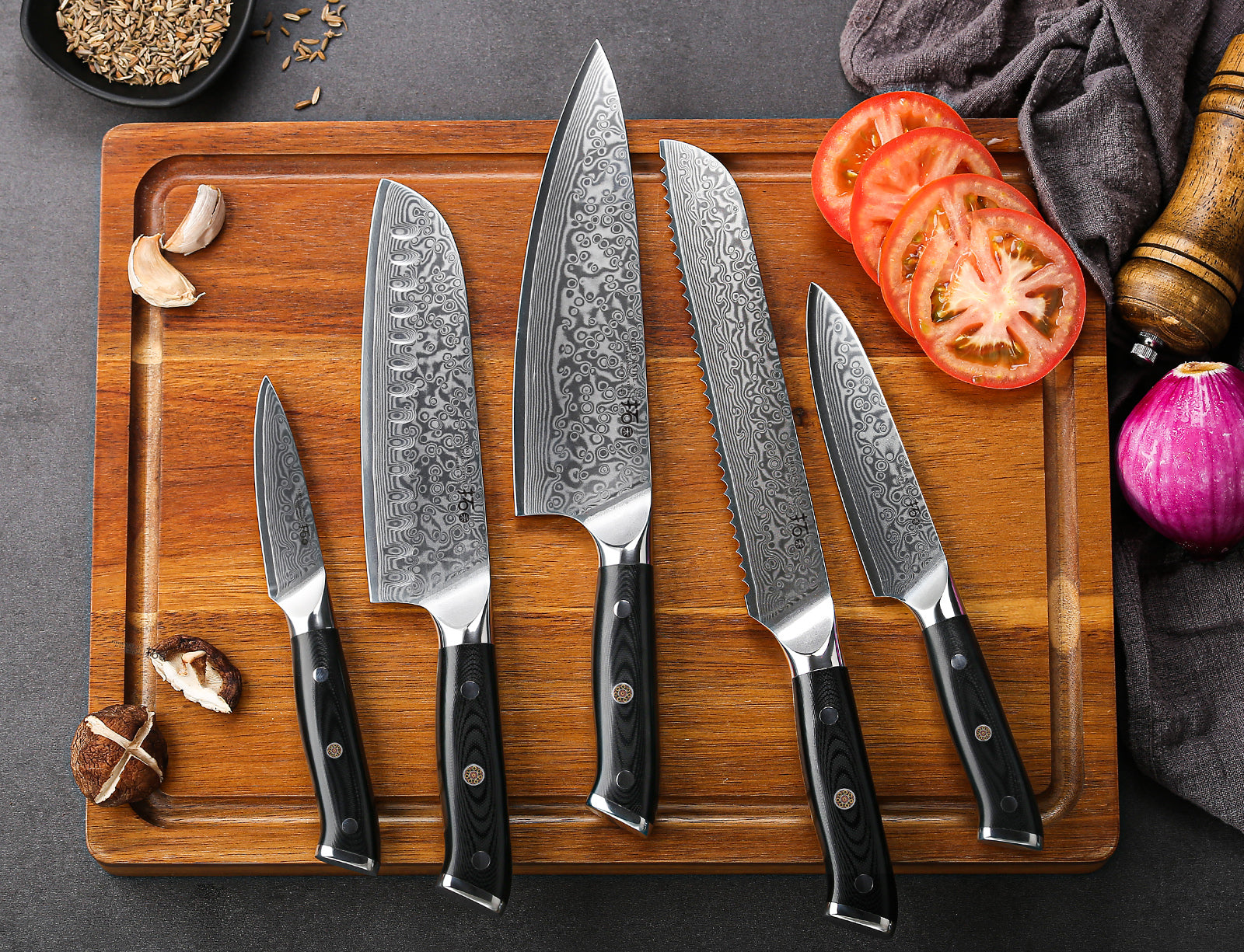
Credit: turwho.com
When To Seek A Professional Sharpening Service
There are times when it’s better to let an expert handle your Damascus knife:
- Large chips or bends: If the blade is damaged, a pro can reshape it without ruining the pattern.
- Re-etching the pattern: Some professionals offer services to restore faded patterns.
- Valuable knives: If your knife is very expensive or has sentimental value, a professional sharpening gives peace of mind.
Look for a service experienced with Damascus steel. Not every knife shop is familiar with layered blades.
Safety Tips When Sharpening Damascus Knives
A sharp knife is safer than a dull one, but sharpening can be risky if you’re not careful:
- Always move the blade away from your fingers.
- Use a stable, non-slip surface for your stone.
- Don’t rush—take your time to avoid slips.
- Keep children and pets away from your work area.
- Wear cut-resistant gloves if you’re new or nervous.
Recommended Whetstone Grits For Damascus Knives
Choosing the right grit makes a big difference. Here’s a simple guide:
- 400–800 grit: For repairing chips or very dull edges (use rarely).
- 1000–2000 grit: For regular sharpening.
- 3000–6000 grit: For polishing and refining the edge.
- 8000+ grit: For ultra-fine finishing (not always necessary).
Most home users will be fine with a 1000/6000 grit combination stone.
Myths About Sharpening Damascus Knives
There’s a lot of bad advice out there. Let’s clear up some common myths:
- Myth: You must use oil when sharpening Damascus knives.
- Fact: Water stones are better. Oil can stain the blade.
- Myth: Sharpening ruins the Damascus pattern.
- Fact: Gentle sharpening with fine stones preserves the pattern.
- Myth: Electric sharpeners are safe for all knives.
- Fact: They can damage layered steel and patterns.
- Myth: You need to sharpen every month.
- Fact: Only sharpen when needed. Over-sharpening shortens blade life.
- Myth: Any angle will do.
- Fact: The angle is crucial for sharpness and durability.
Real-world Example: Bringing A Damascus Knife Back To Life
Imagine you’ve inherited a beautiful Damascus chef’s knife from a family member. The blade is dull, and the pattern looks faded. Here’s how you’d restore it:
- Soak a 1000/6000 whetstone for 15 minutes.
- Sharpen at a 17° angle on the coarse side, using even strokes. Work each side until you feel a burr.
- Switch to the fine side and repeat, using lighter pressure.
- Finish with a strop to polish the edge.
- Clean and dry the knife.
- Apply a little mineral oil to bring out the pattern.
- If the pattern is still faint, a quick wipe with diluted vinegar can help—but rinse and dry immediately.
This process brings back both sharpness and visual beauty, giving the knife a new life.
Frequently Asked Questions
What Is The Best Angle To Sharpen A Damascus Knife?
Most Damascus kitchen knives are sharpened at 15–20 degrees per side. Outdoor knives may use 20–25 degrees for more durability. Keeping a consistent angle is more important than the exact number.
Can I Use An Electric Sharpener On My Damascus Knife?
Electric sharpeners are not recommended for Damascus knives. They can remove too much steel quickly and may damage the blade’s pattern. Stick to water stones or ceramic rods for best results.
How Do I Maintain The Damascus Pattern After Sharpening?
Use fine-grit stones and gentle pressure. Always clean and dry the blade after sharpening, and occasionally apply mineral oil. Avoid aggressive polishing or rough abrasives that can fade the pattern.
How Often Should I Sharpen My Damascus Knife?
For most home cooks, sharpening every 3–6 months is enough, with weekly touch-ups using a ceramic rod or strop. Only sharpen more often if you notice the blade becoming dull or struggling with soft foods.
Where Can I Find More Information About Damascus Steel?
For in-depth history and technical details, visit the Wikipedia page on Damascus steel.
A Damascus knife, when cared for and sharpened properly, is a joy to use and a treasure to own. With patience, the right tools, and gentle hands, you can keep your blade as sharp and beautiful as the day you got it.
Take your time, respect the craft, and your Damascus knife will reward you for years to come.