
When a cabinet door keeps hitting the wall, it’s more than a small annoyance. Over time, repeated impacts can leave ugly dents, scratches, or even holes in your wall and damage the cabinet door itself. If you rent your home, this can mean losing your deposit.
For homeowners, it means extra repair work and costs. The good news is, you don’t have to live with this problem. There are practical ways to stop cabinet doors from hitting the wall—many are simple, affordable, and require only basic tools.
This guide will walk you through clear, step-by-step methods to protect your walls and your cabinets. We’ll explain why the problem happens, what solutions work best, and how you can fix it for good, even if you’re not a DIY expert.
You’ll also find some smart tips and insights that most beginners miss. By the end, you’ll know exactly how to keep your kitchen or bathroom looking great—and your walls free from damage.
Why Do Cabinet Doors Hit Walls?
Cabinet doors aren’t supposed to hit walls, but it’s a common problem. Understanding why it happens can help you choose the best fix.
- Poor Installation: Sometimes, cabinets are installed too close to a wall or in a spot where the door swings freely into it.
- Loose or Worn Hinges: Hinges may loosen over time or wear down, causing the door to open wider than it should.
- No Door Stops: Many cabinets come without built-in stops, so the door can swing open as far as the hinge allows.
- Heavy or Large Doors: Bigger doors have more momentum, making it harder to control their swing.
- Sloped or Uneven Floors: If your floor isn’t level, doors may naturally fall open wider than you expect.
Key insight: Many people overlook the role of the hinge type and the floor angle. Even a small tilt in your floor can cause a door to swing farther and hit the wall.
Assessing The Problem: What To Check First
Before you start fixing, take a few minutes to look closely at your cabinet setup. This step will save you time and prevent mistakes.
- Open and watch: Slowly open the door. Notice how far it swings and where it hits.
- Look at the hinges: Are they tight or loose? Do they look bent or worn?
- Check the cabinet position: Is the cabinet flush with the wall, or is there a gap?
- Inspect the wall: Any marks, dents, or paint damage?
- Notice the floor: Is it level right under the cabinet?
Non-obvious tip: Use a small level to check the cabinet’s alignment. Even a slight tilt can affect how the door swings.
Quick Fixes: Easy Solutions For Immediate Results
If you want a fast solution, these quick fixes can help. They’re also useful while you plan a more permanent repair.
1. Stick-on Bumpers
Soft stick-on bumpers are one of the easiest ways to protect your wall. These are small rubber or felt pads you attach to the cabinet door.
How to use:
- Clean the spot on the door where it touches the wall.
- Peel off the bumper’s backing and stick it on.
- Close the door gently to check placement.
Pros: Cheap, easy to install, protects both wall and door.
Cons: Doesn’t stop the door from swinging, just cushions the impact.
Example: Many kitchen supply stores sell packs of 20-40 bumpers for under $5.
2. Adhesive Wall Guards
Wall guards are thicker, soft pads that stick directly to the wall at the impact spot.
How to use:
- Clean the wall.
- Stick the guard where the door hits.
- Press firmly for a few seconds.
Pros: Simple, fast, prevents wall dents.
Cons: Visible on your wall, may peel off over time.
3. Magnetic Door Catches
A magnetic catch helps hold the cabinet door closed, stopping it from swinging open too far.
How to use:
- Screw one piece to the cabinet frame and the matching piece to the door.
- The magnet holds the door in place when closed.
Pros: Keeps door shut, easy for beginners.
Cons: Doesn’t limit swing, just helps keep closed position.
4. Rubber Door Stops
Rubber door stops are small, soft blocks you attach to the wall or cabinet.
How to use:
- Screw or stick the stop where the door edge meets the wall.
- Test the door to make sure it’s protected.
Pros: Durable, absorbs impact well.
Cons: Visible, may need tools to install.
Permanent Solutions: How To Stop The Door Swing
If you want a long-term fix that actually limits how far the door opens, these methods are best.
1. Install A Cabinet Door Restraint
A door restraint is a special device that attaches inside the cabinet and limits how far the door can swing.
How to use:
- Open the door.
- Mark where you want the door to stop (usually 90°).
- Attach the restraint to the inside of the cabinet and the back of the door.
Pros: Invisible from outside, adjustable, professional look.
Cons: Takes a few tools and 10-20 minutes to install.
Non-obvious insight: Some restraints use a soft cord, others use a stiff arm. Both work, but cords are quieter.
2. Replace Or Adjust Hinges
Some hinges, called restrictor hinges or soft-close hinges, can be set to stop the door at a certain angle.
How to use:
- Remove the old hinges (you’ll need a screwdriver).
- Install the new hinges, following the angle you want.
- Test and adjust as needed.
Pros: Clean look, no extra parts on your wall.
Cons: More expensive, may need to drill new holes.
Tip: Restrictor hinges often stop at 86°, 100°, or 110°. Choose the right angle for your space.
3. Install A Cabinet Door Damper
A door damper slows down the door as it closes, preventing slamming and reducing impact.
How to use:
- Attach the damper to the inside of the cabinet or the hinge.
- Adjust the tension as needed.
Pros: Quiet, protects both door and wall.
Cons: More expensive, needs careful installation.
4. Add A Physical Door Stop
A cabinet door stop is a small piece of plastic or metal that physically blocks the door’s path.
How to use:
- Screw or stick the stop to the floor, wall, or cabinet itself.
- Make sure the door stops before hitting the wall.
Pros: Simple, very effective.
Cons: Visible, may need to be cleaned often.
5. Adjust Cabinet Position
If the cabinet was installed too close to the wall, moving it a few millimeters can make a big difference.
How to do it:
- Loosen the screws attaching the cabinet to the wall.
- Gently slide the cabinet away from the wall.
- Tighten the screws again.
Pros: Permanent solution.
Cons: Harder if the cabinet is heavy or has plumbing/electric behind it.
Practical example: In older kitchens, cabinets are sometimes installed right against the wall. Shifting them 1-2 cm can stop the door from hitting.
6. Limit The Opening Angle With A Restrictor Clip
Many European-style hinges can accept a restrictor clip. This small plastic part snaps into the hinge and limits how far the door opens.
How to use:
- Open the door.
- Snap the clip into the hinge.
- Test the door swing.
Pros: Invisible, works well, no tools needed.
Cons: Only works with compatible hinges.
Non-obvious tip: Restrictor clips are cheap and often overlooked. Check if your hinges support them before buying.
Comparing Solutions: Which Method Is Best?
Choosing the right solution depends on your budget, skills, and how much you want to change your kitchen’s look. Here’s a comparison of the most popular methods.
| Method | Difficulty | Cost | Visibility | Effectiveness |
|---|---|---|---|---|
| Stick-on Bumpers | Very Easy | Low | Low | Good (for cushioning) |
| Wall Guards | Very Easy | Low | Medium | Good (for protection) |
| Restrictor Hinges | Medium | Medium | None | Very Good |
| Cabinet Door Restraint | Medium | Medium | None | Excellent |
| Physical Door Stop | Easy | Low | Medium | Excellent |
Key insight: Stick-on bumpers and wall guards are best for renters or quick fixes. Restrictors and restraints are better for long-term results.
Step-by-step: How To Install A Cabinet Door Restrictor
Here’s how to install a restrictor that stops your door at the right angle.
What You’ll Need
- Restrictor arm or cord kit (buy from hardware store or online)
- Drill or screwdriver
- Measuring tape
- Pencil
Steps
- Open the Cabinet Door: Swing it open until it just before it would hit the wall.
- Mark the Stop Point: Use the pencil to mark where you want the door to stop.
- Position the Restrictor: Hold the restrictor arm or cord inside the cabinet, with one end on the cabinet wall and the other on the door.
- Mark Screw Holes: Use your pencil to mark where the screws will go.
- Drill Pilot Holes: Use a small drill bit to make holes for the screws.
- Attach the Restrictor: Screw the restrictor into place.
- Test the Door: Open and close the door to make sure it stops where you want.
Pro tip: Always start with a lower stop angle—you can adjust for a wider swing later if needed.
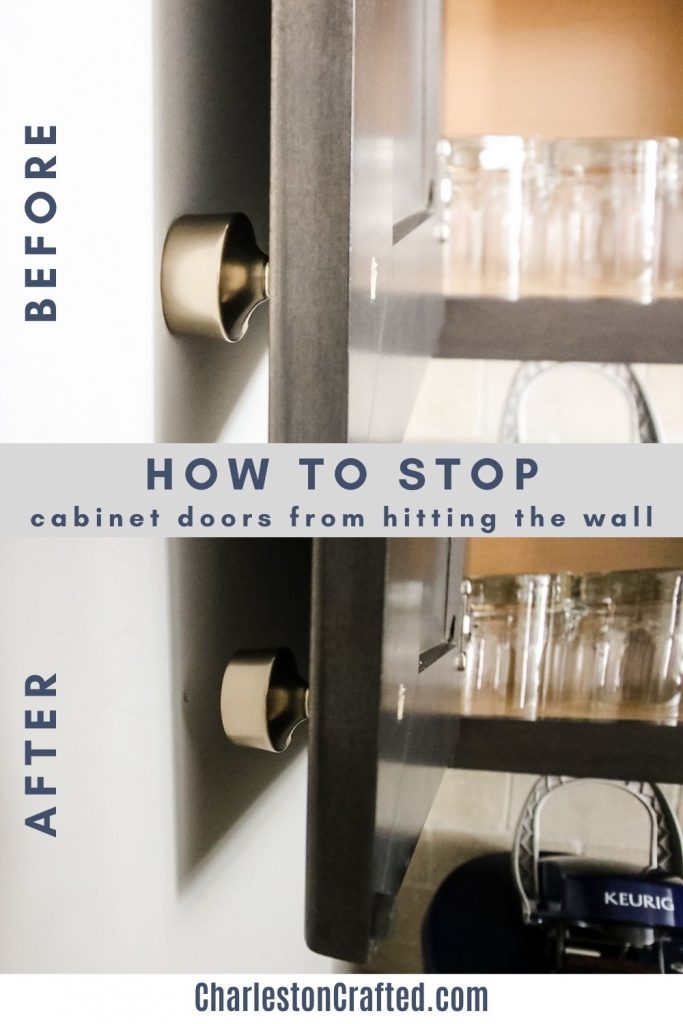
Credit: www.charlestoncrafted.com
Adjusting Or Replacing Cabinet Hinges
Hinges are often the hidden reason doors swing too far. Here’s how to adjust or upgrade them.
Adjusting Existing Hinges
- Locate the Screws: Most cabinet hinges have two or three small screws.
- Tighten or Loosen: Use a screwdriver to tighten the screws that control side-to-side and depth adjustment.
- Test the Door: Open and close to see if the swing improves.
Replacing With Restrictor Hinges
- Remove Old Hinges: Unscrew the existing hinges from the door and frame.
- Install New Hinges: Place the new restrictor hinges in the same position and screw them in.
- Adjust the Angle: Many restrictor hinges have a built-in limiter. Set this to the desired stop angle.
- Test the Door: Check that the door opens only as far as you want.
Non-obvious tip: When buying restrictor hinges, match the brand and size to your cabinet for the best fit.
Using Door Stops And Bumpers: Placement Matters
It’s not just about using a door stop or bumper—it’s where you put it that counts.
- For wall guards: Place directly at the spot where the door corner touches the wall.
- For cabinet stops: Mount at the point where the door edge meets the cabinet frame.
- For bumpers: Place on the door’s inside surface, not the edge, for better shock absorption.
Extra tip: Don’t use too many bumpers; one or two in the right spot is enough.

Credit: www.youtube.com
Preventing Damage: What Most People Miss
Many people add a bumper or stop and think the job is done. But there are a few extra steps to make sure your fix lasts.
- Check every few months: Stick-on products can slide or fall off, especially in humid kitchens or bathrooms.
- Clean surfaces before installing: Oil and dust make adhesives weak.
- Tighten hinges regularly: Loose hinges can cause doors to swing unpredictably.
- Test after cleaning: Sometimes cleaning products make surfaces slippery, which can affect stops and bumpers.
Non-obvious insight: In high-use kitchens, the cabinet door may move slightly over time. Watch for subtle changes.
Advanced Fixes: When Simple Solutions Aren’t Enough
If your cabinet door is heavy, oddly shaped, or you want a more elegant look, consider these advanced options.
1. Soft-close Hinges
Soft-close hinges have built-in dampers that slow the door’s movement.
- Pros: Quiet, gentle, looks high-end.
- Cons: Expensive, needs careful installation.
2. Custom Cabinet Adjustments
Hire a carpenter to trim the cabinet or door, or add a permanent block inside the cabinet.
- Pros: Perfect fit, invisible solution.
- Cons: Costly, requires a pro.
3. Invisible Magnetic Stops
Install a small magnet inside the wall and a metal plate in the door. The magnetic pull gently stops the door without visible hardware.
- Pros: Sleek, modern, no visible parts.
- Cons: Requires drilling and careful placement.
Practical insight: These advanced options are best for high-end kitchens or if you want a designer look.
Real-life Examples: How Others Fixed It
- Rental apartment: Used stick-on bumpers and wall guards for a quick, removable solution.
- Family home: Installed restrictor hinges on all lower kitchen cabinets to stop kids from slamming doors into the wall.
- Luxury condo: Added soft-close restrictor hinges for a quiet, seamless look and feel.
Data point: According to a survey by the National Kitchen & Bath Association, over 60% of homeowners choose soft-close or restrictor hinges during kitchen remodels.
Cost Comparison Of Popular Solutions
How much will it cost to stop a cabinet door from hitting the wall? Here’s a price guide.
| Solution | Typical Cost (USD) | Skill Level | Durability |
|---|---|---|---|
| Stick-on Bumpers | $2-5 | Beginner | 6-12 months |
| Wall Guards | $3-8 | Beginner | 1-2 years |
| Restrictor Hinges | $10-30 | Intermediate | 5+ years |
| Cabinet Door Restraint | $8-20 | Intermediate | 5+ years |
| Soft-close Hinges | $15-40 | Advanced | 5+ years |
Tip: For renters, stick with bumpers and wall guards. For homeowners, invest in restrictor or soft-close hinges for a lasting solution.

Credit: www.reddit.com
How To Choose The Right Solution For Your Situation
The best fix depends on your needs. Here’s how to decide:
- Renters: Use stick-on bumpers or wall guards for a no-damage, removable fix.
- Homeowners: Go for restrictor hinges, cabinet restraints, or door stops for a permanent result.
- Busy kitchens: Soft-close or restrictor hinges prevent both noise and wall damage.
- Bathrooms: Use water-resistant bumpers or guards, as humidity can weaken adhesives.
Common mistake: Choosing the cheapest fix without thinking about how often the cabinet is used. High-traffic areas need more durable solutions.
Maintenance Tips: Keep Your Fix Working
- Check stops and bumpers every 6 months.
- Replace worn or missing pieces right away.
- Keep hinges tight and lubricated.
- Clean surfaces regularly to keep adhesives strong.
- Re-test door swing after heavy use or repairs.
Expert advice: If the door starts hitting again, check for loose hinges before replacing bumpers.
When To Call A Professional
Most fixes are DIY-friendly, but call a pro if:
- The cabinet is very heavy or hard to move.
- You need to drill into tile, glass, or stone.
- Custom or luxury cabinets require a perfect finish.
- Previous repairs didn’t work.
Resource: For more on DIY cabinet repairs, check guides from the National Kitchen & Bath Association.
Frequently Asked Questions
What Is The Easiest Way To Stop A Cabinet Door From Hitting The Wall?
The easiest way is to use stick-on bumpers or wall guards. They cushion the impact and are easy to apply without tools. Just clean the area, stick them on, and you’re done.
Can I Fix This Problem Without Drilling Holes?
Yes. Stick-on bumpers, wall guards, and some magnetic catches require no drilling. For a more permanent fix, you’ll need to use screws or clips.
Will Adjusting The Hinges Help?
Often, yes. Tightening or adjusting the hinges can stop the door from swinging too wide. For a lasting solution, consider restrictor hinges that limit the door’s opening angle.
How Long Do Stick-on Bumpers Last?
Most stick-on bumpers last 6-12 months, depending on use and humidity. Check them regularly and replace as needed to keep your wall protected.
What If My Cabinet Door Is Very Heavy?
For heavy doors, use restrictor hinges, a cabinet door restraint, or a physical door stop. These solutions are strong enough to handle extra weight and won’t wear out quickly.
Keeping your cabinets and walls safe doesn’t have to be complicated. With the right tools and a little care, you can stop that cabinet door from hitting the wall and enjoy a more beautiful, damage-free home.