
Storing water bottles in the kitchen may seem simple, but for many households, it quickly becomes a challenge. Bottles roll around, take up valuable counter space, and sometimes even hide at the back of cabinets. With people drinking more water for health, reusable water bottles have become a kitchen staple—but they need a home. If your kitchen feels crowded or messy because of bottles, you’re not alone. The good news is: with smart strategies, you can keep every water bottle organized, easy to reach, and ready for use. This guide will walk you through the best ways to store water bottles in any kitchen, whether you have a small apartment or a large family home.
Why Organizing Water Bottles Matters
Some may wonder, “Why spend time organizing bottles?” The answer is simple. Cluttered bottles take up more space, waste your time, and sometimes lead to forgotten or unused bottles. Here are a few reasons why a good storage system helps:
- Saves space: Organized bottles take up less room.
- Saves time: You find what you need quickly.
- Reduces waste: You use all your bottles, not just the ones in front.
- Keeps bottles clean: Bottles stored properly stay cleaner and last longer.
- Improves safety: No more bottles falling out of cabinets or rolling on the floor.
A survey by the National Kitchen and Bath Association found that 65% of people feel their kitchen is too crowded. Water bottles are one of the top items that contribute to this feeling. By organizing them, you make your kitchen a calmer, safer, and more efficient place.
Understanding Your Water Bottle Collection
Before you find the best storage solution, you need to know what you have. Most people collect more bottles than they realize. Take all the bottles out from every corner of your kitchen. Put them on the counter or table. Sort them by type:
- Reusable plastic bottles
- Stainless steel bottles
- Glass bottles
- Insulated bottles
- Sports bottles
- Kids’ bottles
- Disposable bottles (if any)
Ask yourself these questions:
- How many bottles do you use daily or weekly?
- Which bottles are for special occasions (like hiking or sports)?
- Are there any bottles you never use or are broken?
- Do you need to keep all of them?
This step is important. It is common to find bottles that have missing lids or ones you have not used in a year. Donate, recycle, or throw away bottles that do not serve you anymore. A lean collection is much easier to organize.
Key Factors For Choosing A Storage Solution
Not every kitchen or family has the same needs. When selecting a way to store your water bottles, consider the following:
- Available space: Do you have more cabinet, counter, or pantry space?
- Kitchen layout: Are your cabinets deep, narrow, tall, or short?
- Bottle sizes: Some bottles are tall, wide, or shaped differently.
- Family size: More people often means more bottles.
- Frequency of use: Daily-use bottles need to be easy to reach.
- Accessibility: Can kids or elderly family members reach the bottles?
- Aesthetics: Do you want the bottles hidden or on display?
- Budget: Some solutions are free; others cost money.
Making a quick list of your needs helps you avoid buying the wrong organizer or making a system that does not work for your household.
Popular Ways To Store Water Bottles In The Kitchen
There are many creative ways to store water bottles. Below are the most effective and popular options, with pros, cons, and tips for each.
1. Cabinet Shelf Organizers
These simple racks slide into your cabinet shelves and hold bottles horizontally or vertically. Some are adjustable and can fit different bottle shapes.
- Pros: Uses existing space, keeps bottles together, easy to install.
- Cons: Bottles may roll if not secured, may not fit very large bottles.
- Tip: Choose racks with a non-slip base for stability.
2. Pull-out Drawers
Installing pull-out drawers in lower cabinets makes it easy to access bottles, especially for kids.
- Pros: Maximizes deep cabinet space, keeps bottles visible, easy to clean.
- Cons: Requires installation, can be expensive.
- Tip: Use dividers in the drawer to keep bottles from shifting.
3. Vertical Bottle Holders
These are stackable organizers (often made of plastic or metal) where bottles rest on their sides in rows.
- Pros: Saves vertical space, bottles are easy to grab, good for similar-sized bottles.
- Cons: Not ideal for very tall bottles, may tip if overloaded.
- Tip: Place the holder near the dishwasher for easy unloading.
4. Door-mounted Racks
Install racks or pockets on the inside of cabinet or pantry doors.
- Pros: Uses hidden space, keeps bottles out of sight, easy to install.
- Cons: May not fit heavy bottles, can make doors heavy.
- Tip: Test the door’s weight before adding many bottles.
5. Countertop Bottle Trees
Bottle trees are stands with “branches” for hanging bottles upside down.
- Pros: Good for drying and storing bottles, bottles stay clean and dry.
- Cons: Takes up counter space, not ideal for large collections.
- Tip: Look for collapsible or foldable models to save space when not in use.
6. Lazy Susans (turntables)
A Lazy Susan is a rotating tray placed on a shelf or counter.
- Pros: Easy access to all bottles, fits many shapes and sizes.
- Cons: Bottles can fall if the tray spins too fast, takes up a round footprint.
- Tip: Choose one with a raised edge to prevent bottles from sliding off.
7. Stackable Bins
Clear plastic bins can be stacked in cabinets or pantries.
- Pros: Keeps bottles contained, bins are easy to clean, see-through for quick identification.
- Cons: Tall bottles may not fit, bins can become heavy.
- Tip: Label bins by family member or bottle type for extra organization.
8. Over-the-fridge Storage
The space above the refrigerator is often wasted. Use baskets or bins here for less-used bottles.
- Pros: Uses high-up space, keeps counters clear.
- Cons: Hard to reach for kids or short adults, not for daily-use bottles.
- Tip: Store seasonal or backup bottles here.
9. Hanging Mesh Organizers
These fabric organizers, similar to shoe holders, can hang in a pantry or on a wall.
- Pros: Lightweight, flexible, holds many bottles.
- Cons: Not as durable for heavy bottles, may sag over time.
- Tip: Use for plastic or kids’ bottles.
10. Custom Cabinet Inserts
If you are remodeling, consider custom inserts designed for bottles.
- Pros: Perfect fit, maximizes space, looks built-in.
- Cons: Expensive, not flexible if your needs change.
- Tip: Plan for a little extra space in case your collection grows.
Comparison Of Storage Solutions
To help you see which method suits your kitchen, here’s a quick comparison.
| Storage Solution | Best For | Ease of Access | Space Efficiency |
|---|---|---|---|
| Cabinet Shelf Organizers | Standard kitchens | Medium | High |
| Pull-Out Drawers | Large families | High | Medium |
| Vertical Holders | Uniform bottles | High | High |
| Door-Mounted Racks | Small kitchens | Medium | Medium |
| Countertop Bottle Trees | Small collections | High | Low |
| Lazy Susans | Mixed bottles | High | Medium |
| Stackable Bins | Bulk storage | Medium | High |
| Over-the-Fridge Storage | Backup bottles | Low | High |
| Hanging Mesh Organizers | Plastic bottles | Medium | Medium |
| Custom Inserts | Remodels | High | High |
Step-by-step Guide: Setting Up Your Water Bottle Storage
Now that you know your options, it’s time to set up a storage system that works for your kitchen. Follow these steps for a smooth process.
Step 1: Declutter And Clean
Remove all water bottles from their current spots. Check for bottles that are broken, missing lids, or never used. Give the keepers a good wash. Clean the shelf, drawer, or area where you plan to store them.
Step 2: Measure Your Space
Use a tape measure to check the height, width, and depth of your chosen storage area. Don’t forget to measure the tallest and widest bottles, too. This helps you avoid buying an organizer that doesn’t fit.
Step 3: Pick The Best Solution
Match your space and needs to one of the storage options above. If you have a deep cabinet, a pull-out drawer or stackable bins may work best. For a small kitchen, try door-mounted racks or a Lazy Susan.
Step 4: Install Organizers
Set up your chosen organizer according to the instructions. Test with a few bottles first to make sure they fit and are easy to grab.
Step 5: Arrange Bottles By Use
Place most-used bottles at the front or in the easiest-to-reach spot. Bottles for sports, hiking, or guests can go toward the back or higher up.
Step 6: Label (optional)
Label bins, drawers, or shelves by person, activity, or bottle type. This is especially helpful in big families.
Step 7: Maintain The System
Every month or two, check the area for extra bottles, spills, or lost lids. Wipe down the organizer and reorganize if needed. This step is often forgotten, but it keeps your system working well.

Credit: www.youtube.com
Creative Storage Hacks For Small Kitchens
Not every kitchen has lots of space. Here are some clever tricks for tight spaces:
- Use tension rods: Place a small rod in a cabinet to stand bottles upright.
- Try a magazine holder: Store bottles on their side in a cheap magazine file.
- Command hooks: Hang bottles with loops on the inside of cabinet doors.
- Stack lids in a small basket: Keep all bottle lids together to avoid searching.
- Use a wine rack: Many wine racks fit water bottles perfectly.
These simple ideas use items you may already have at home and require little to no installation.
How Many Bottles Should You Keep?
It’s tempting to hold onto every bottle, but most families only need:
- 1-2 bottles per person for daily use
- 1-2 extra for guests or backup
- 1 or 2 special-purpose bottles (like insulated or sports bottles)
If you have more than this, consider donating or recycling the extras. Too many bottles make any storage system harder to maintain.
Keeping Water Bottles Clean And Safe
Even the best storage system won’t help if bottles are dirty or unsafe. Here are some important tips:
- Wash bottles after each use to avoid germs and odors.
- Dry bottles completely before putting them away, especially in closed bins.
- Check for mold in lids, straws, and spouts.
- Inspect bottles regularly for cracks or wear.
- Store bottles with lids off if possible, to allow airflow.
A 2022 study by NSF International found that 60% of reusable water bottles carried some bacteria, often from poor cleaning or storage. Keeping bottles clean is just as important as organizing them.
Storing Bottles For Kids
If you have children, make their bottles easy to reach. Use a low drawer or a small bin on a lower shelf. Brightly colored bins or labels help kids find their own bottle quickly. For safety, avoid glass bottles in kids’ areas.
Encourage kids to return their bottle to its spot after every use. This simple habit can save you from daily searches and spills.
Traveling Or Taking Bottles On The Go
If your family often takes bottles to school, work, or sports, create a “grab-and-go” zone. Use a basket by the door or a bin in the pantry for clean, ready-to-use bottles. Refill and place bottles here each night for a smooth morning routine.
Mistakes To Avoid When Storing Water Bottles
Many people make the same mistakes when trying to organize water bottles. Here are some to watch out for:
- Overcrowding: Trying to fit too many bottles in one space leads to mess.
- Ignoring lid storage: Loose lids get lost easily. Keep them together.
- Storing wet bottles: Traps moisture and causes mold or smell.
- Forgetting about tall bottles: Some organizers do not fit tall or wide bottles.
- Not cleaning the storage area: Dust and crumbs can collect over time.
Learning from these mistakes will save you time and frustration.
Data Table: Average Kitchen Storage Needs
To give you a sense of what most families need, here’s some typical data.
| Family Size | Recommended Daily-Use Bottles | Extra Bottles for Guests | Suggested Storage Type |
|---|---|---|---|
| 1-2 people | 2-4 | 1-2 | Cabinet shelf or bin |
| 3-4 people | 6-8 | 2-3 | Pull-out drawer or vertical holder |
| 5+ people | 10+ | 3-5 | Stackable bins or custom insert |
This data is based on average water usage and kitchen setups. Adjust as needed for your home.
Example: Real-life Storage Solution
Let’s look at a family of four. They have:
- 4 daily-use bottles
- 2 insulated bottles for hiking
- 2 kids’ bottles
- 2 extra for guests
They chose a pull-out drawer in a lower cabinet, with a divider for each person. Kids’ bottles go in the front, adult bottles in the back, and hiking bottles are stored in a bin above the fridge. All lids are kept in a small basket inside the drawer.
The result? No more searching, fewer spills, and a much neater kitchen.
Storage For Special Bottle Types
Not all bottles are the same. Here’s how to store some special types:
- Glass bottles: Store upright in a secure spot to prevent breaking.
- Insulated bottles: Keep away from heat sources like the stove.
- Large jugs: Use the floor of a pantry or a bottom cabinet.
- Filtered bottles: Keep filters dry when not in use.
Eco-friendly Tips For Water Bottle Storage
If you care about the environment, here are some extra ideas:
- Use recycled bins or organizers made from bamboo or metal.
- Donate extra bottles to shelters or community centers.
- Choose long-lasting storage to avoid waste.
- Recycle old plastic bottles responsibly.
For more on sustainable kitchen organization, visit EPA’s recycling tips.
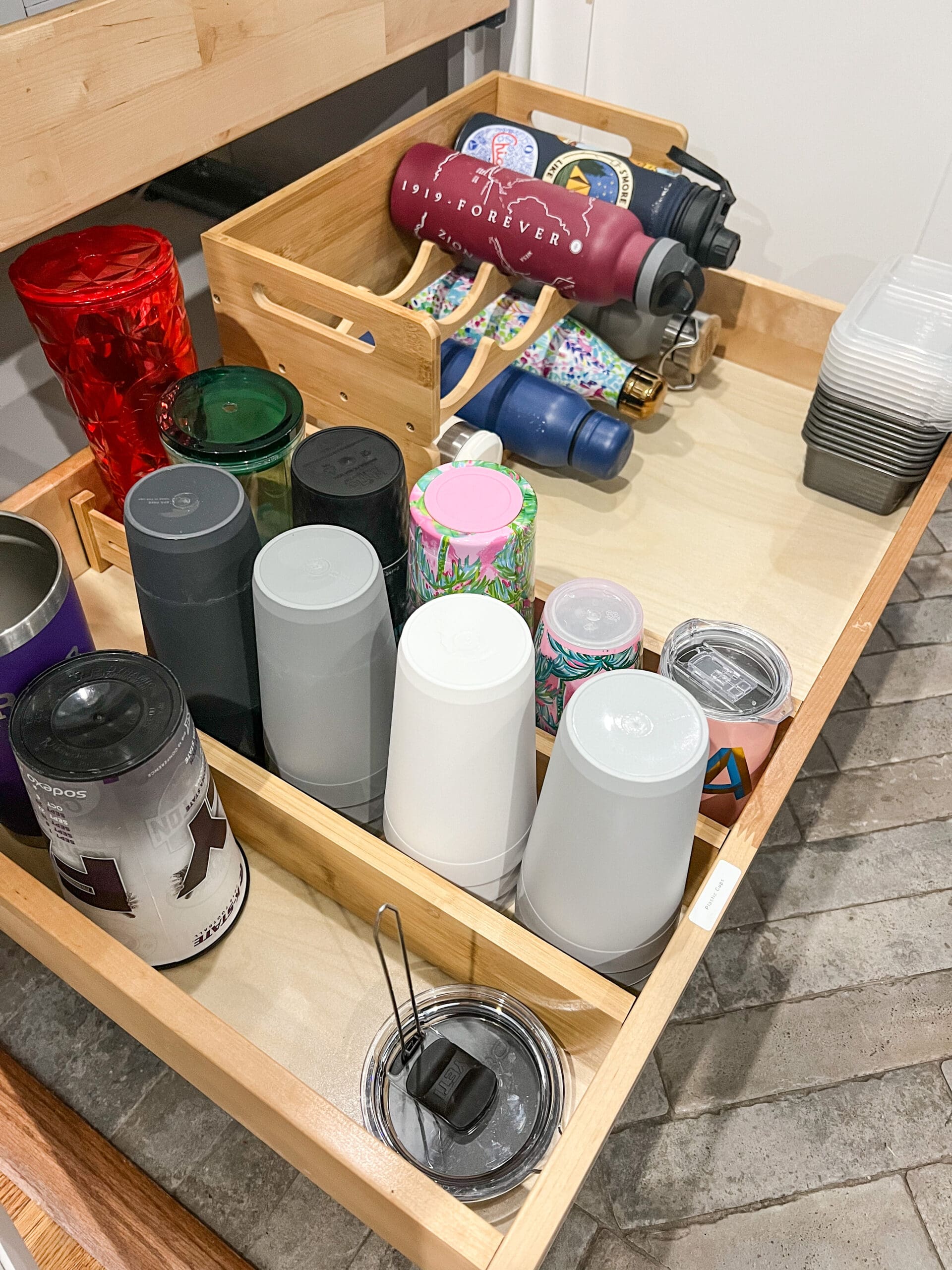
Credit: robynsfrenchnest.com
When To Change Your Storage System
Sometimes, your needs change. Maybe your kids grow up, you move, or your bottle collection grows. Signs that it’s time to update your system:
- Bottles no longer fit or keep falling out.
- You regularly lose lids or bottles.
- The area is always messy.
- You buy new types of bottles.
Review your setup once or twice a year to make sure it still works for you.
Frequently Asked Questions
How Can I Keep Water Bottles From Falling Over In Cabinets?
Use vertical holders or bins with dividers. These keep bottles upright and separated so they don’t roll or tip. Non-slip mats under bottles also help.
What Is The Best Way To Store Bottle Lids?
A small basket or bin works well. Some people use a separate compartment or a section in a drawer organizer. Always store lids close to their matching bottles.
Can I Store Water Bottles In The Fridge?
Yes, but only if you have space. Use a fridge bin or lay bottles on their sides. Make sure lids are tight to prevent leaks.
How Do I Store Large Water Jugs Or Gallon Bottles?
Store these on the floor of a pantry or in a bottom cabinet. Use a heavy-duty bin to contain any leaks or drips.
How Often Should I Clean My Water Bottle Storage Area?
Wipe down the area every month. Clean more often if you see crumbs, spills, or mold. Regular cleaning helps keep bottles and your kitchen safe.
Storing water bottles in the kitchen does not have to be a headache. With the right system, you save space, reduce stress, and keep your family healthier. Think about your space, habits, and needs. Choose a method that fits your life, not just a pretty picture online.
With a little planning and some smart products—or even just a few bins—you can enjoy a neat, organized kitchen, every day.
:max_bytes(150000):strip_icc()/aull-1ee55de8eb82411ca83cd49b8a2606d4.png)
Credit: www.thespruce.com