
Many people enjoy swimming, but not everyone knows what type of pool they are actually swimming in. Is it a saltwater pool or a chlorine pool? The differences are not always obvious, especially if you are not a pool expert. If you own, maintain, or simply use pools, understanding the difference is important for your health, comfort, and even for your swimwear. The type of pool affects water feel, maintenance needs, and long-term costs. This guide will help you confidently tell if a pool is saltwater or chlorine, no matter if you are at a hotel, a friend’s house, or your own backyard.
Why It Matters To Know The Pool Type
The chemicals in a pool have a big effect on your experience. Saltwater pools and chlorine pools both keep water clean, but they do it in different ways. The type you swim in can change how your skin feels, how your eyes react, and even how your pool ages. If you have sensitive skin or allergies, knowing the difference can help you avoid irritation. Some people even choose where to swim based on the pool type.
Another reason to know: maintenance and safety. If you’re responsible for a pool, you need to use the right products. Using the wrong ones can damage the pool or even make the water unsafe.
How Pool Sanitization Works
Before looking at the signs, it’s important to understand how each system works. Chlorine pools use chlorine added directly to the water in forms like liquid, tablets, or powder. This chemical kills bacteria and keeps the water clear.
Saltwater pools use salt, but not in the way you might think. They have a device called a salt chlorine generator. This device uses electricity to break down salt (sodium chloride) into chlorine, which then sanitizes the pool. So, both pool types use chlorine—the main difference is how it gets there.
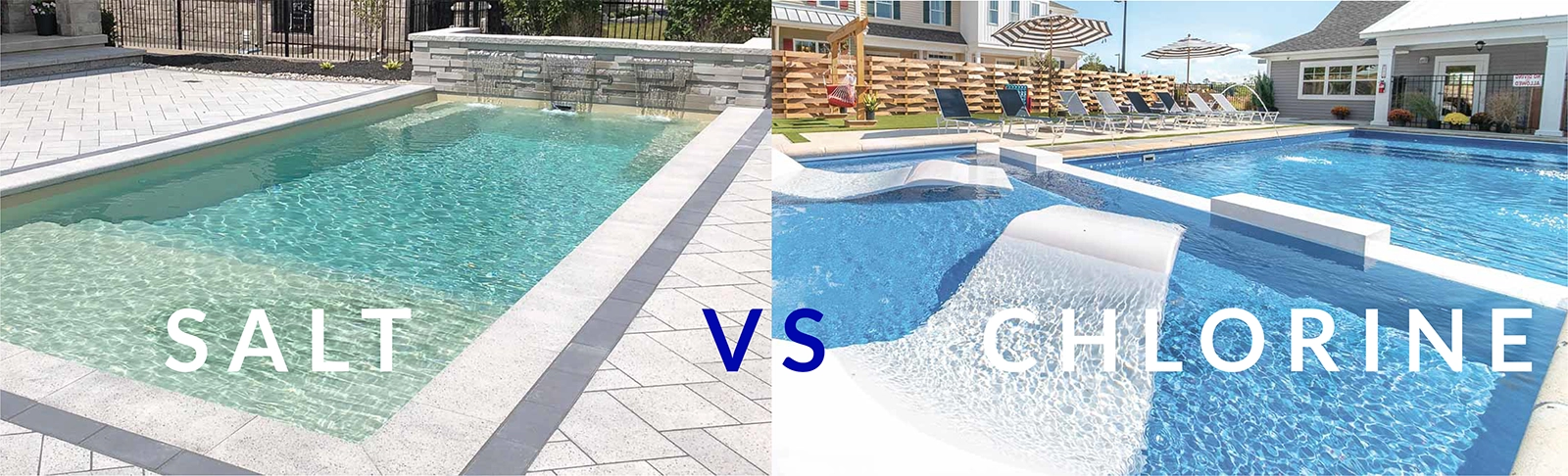
Credit: exploreindustries.com
Physical Signs: What You See And Feel
Some clues are right in front of you if you know what to look for.
1. Taste And Smell
- Saltwater pool: The water will taste mildly salty, similar to tears or sweat. It will not taste as salty as the ocean. The smell is usually much less strong. The classic “chlorine smell” is faint or missing.
- Chlorine pool: The water usually has no taste, but you will often notice a sharp, chemical smell. This smell comes from chloramines, which are formed when chlorine reacts with contaminants.
Insight: Many beginners think a strong chlorine smell means a clean pool. In fact, it often means the pool needs more cleaning or fresh chlorine.
2. Water Feel
- Saltwater pool: The water feels smoother and silkier on your skin. Swimmers often notice less dryness and less irritation after swimming.
- Chlorine pool: The water can feel harsher or “harder.” Some people notice dry skin, itchy eyes, or faded swimwear after swimming.
Pro tip: If you’re not sure, rub your fingers together after getting wet. Saltwater pools often leave a slight slippery feeling.
3. Pool Equipment
Look at the equipment area, usually near the pool or in a dedicated shed.
- Saltwater pool: There will be a salt chlorine generator. It looks like a cell or a clear tube with wires and may have controls or a display.
- Chlorine pool: You will see containers or feeders for chlorine tablets, liquid chlorine, or powder. No salt cell is present.
4. Surface And Deck Corrosion
Salt can cause corrosion over time.
- Saltwater pool: Metal parts near the pool, like ladders or fixtures, may show signs of rust or corrosion if not properly protected.
- Chlorine pool: Less likely to have metal corrosion from the pool water itself.
5. Waterline Residue
Check for a white, crusty line at the pool’s edge.
- Saltwater pool: May have salt residue building up along the waterline or on pool tiles.
- Chlorine pool: Typically does not have this kind of residue.
Chemical Testing: How To Be Sure
If you want a definite answer, testing the water is the most reliable way.
1. Test For Salt
You can buy salt test strips at pool stores. Dip one into the water and compare the color to the chart. Saltwater pools usually have 2,500–4,000 ppm (parts per million) of salt. Standard chlorine pools have less than 500 ppm.
2. Test For Free Chlorine
Both pool types should have a safe chlorine level. But if you find a high salt level along with chlorine, it’s a saltwater pool.
3. Ask For Water Report
Many public pools keep regular water test records. You can ask the staff to show you the results. Look for “salt” or “salinity” on the report.
4. Use A Digital Salinity Meter
These devices give you an exact reading. Place the meter in the water, and it will show the salt level in ppm.
Extra tip: Some pools use both systems (adding chlorine plus a salt system), but this is rare and usually for special needs.
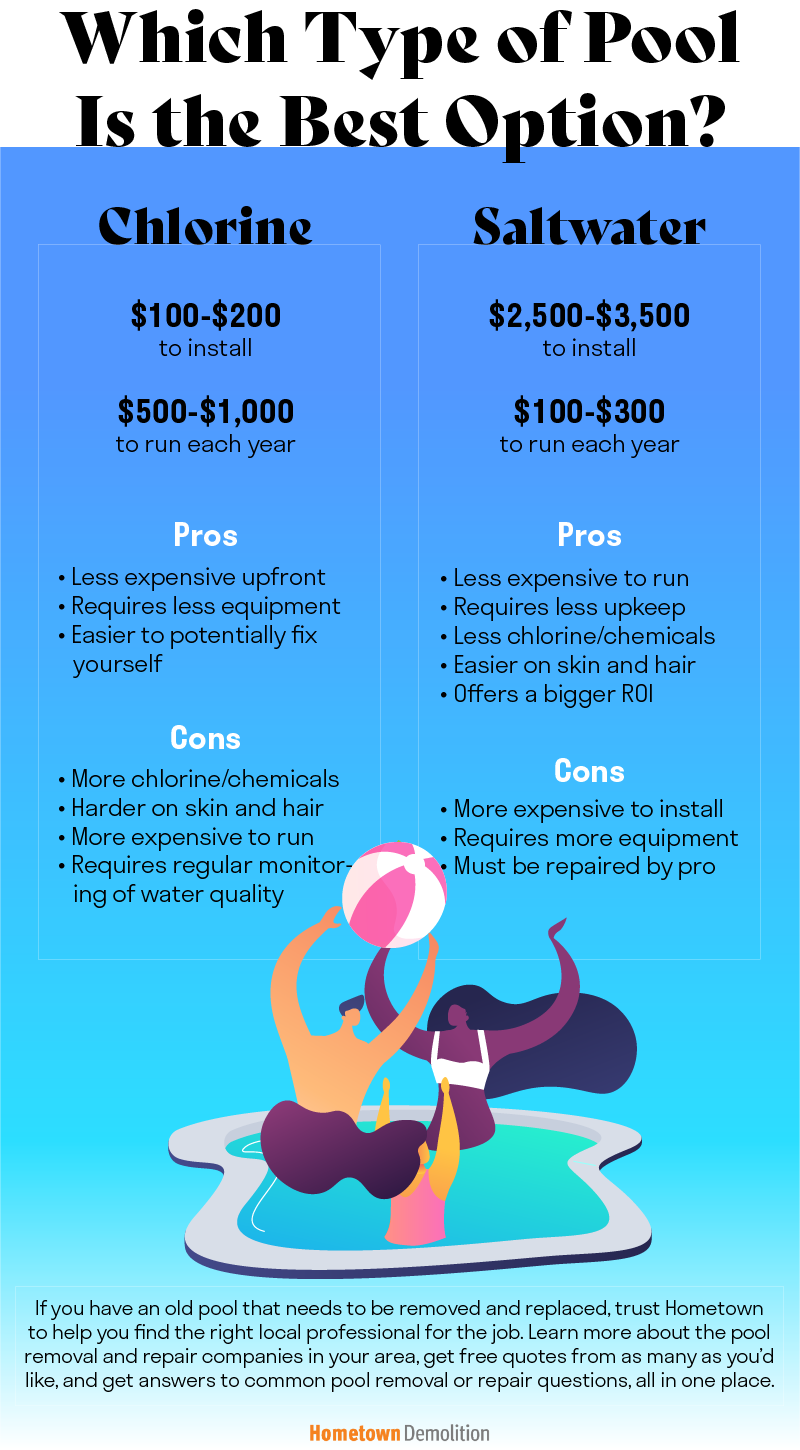
Credit: www.hometowndemolitioncontractors.com
Maintenance Differences: Clues In Pool Care
How the pool is maintained can give you hints.
1. Chemicals Stored Nearby
- Saltwater pool: You’ll often see large bags of pool salt. There may be fewer bottles of chlorine products.
- Chlorine pool: You’ll find chlorine tablets, granules, or big bottles of liquid chlorine.
2. Pool Owner Habits
Saltwater pools need salt added a few times a year, while chlorine pools need regular additions of chlorine—sometimes every week.
3. Pool Service Visits
Saltwater pools need less frequent chemical balancing, while chlorine pools need more checks and adjustments.
Beginner insight: Some people think saltwater pools are “chemical-free.” This is a myth. All pools need chemistry to stay safe.
Visual Signs: Labels, Signs, And Paperwork
If you’re renting a vacation home or using a public pool, look for:
- Manufacturer stickers on the pool equipment. Words like “salt generator,” “chlorinator,” or model numbers can reveal the type.
- Maintenance logs or info signs near the pool. Sometimes, the pool type is listed for guest safety.
- Rental listings or house manuals. Owners often advertise “saltwater pool” as a feature.
Extra tip: If you see “no salt added” on pool instructions, it’s probably a chlorine pool.
Comparing Saltwater And Chlorine Pools
To make things clearer, here’s a direct comparison of the main features of each pool type.
| Feature | Saltwater Pool | Chlorine Pool |
|---|---|---|
| Sanitizer Source | Salt converted to chlorine by generator | Chlorine added directly |
| Water Feel | Softer, silkier | Harsher, can dry skin |
| Smell | Faint or no chlorine odor | Strong “chlorine” smell |
| Equipment | Salt cell/generator present | Chlorine feeder or storage |
| Maintenance | Less frequent chemical adding | Regular chlorine additions |
| Corrosion Risk | Higher for metals near water | Lower risk |
| Salt Level | 2,500–4,000 ppm | Less than 500 ppm |
Health And Comfort: What Swimmers Notice
You might not see the equipment or test the water, but your body can notice the difference.
1. Skin And Eye Irritation
Saltwater pools are usually much gentler on eyes and skin. If you rarely have red eyes or itchy skin after swimming, it may be a saltwater system.
2. Hair And Swimwear
Chlorine pools can cause hair to feel dry or change color (especially for blondes). Saltwater pools are less likely to cause this problem, though some salt can fade fabrics over time.
3. Allergic Reactions
Sensitive swimmers often prefer saltwater pools because the water feels less harsh. However, some people with salt sensitivity may notice mild irritation.
Non-obvious insight: If you swim often and your jewelry (like silver rings) tarnishes or rusts, you might be swimming in a saltwater pool.
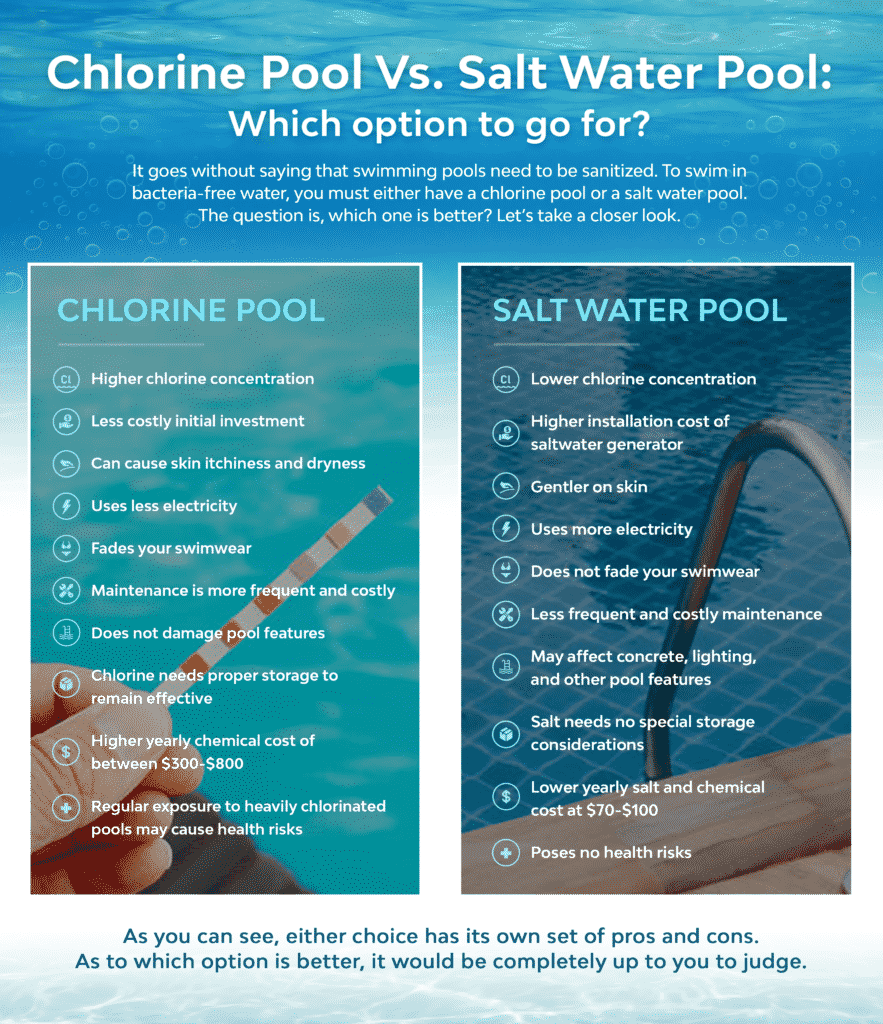
Credit: katchakid.com
The Science Behind Saltwater And Chlorine Pools
Both types aim for the same goal: safe, clean water. But the chemistry is different.
- Saltwater pools use electrolysis to convert salt into chlorine. The process is ongoing, so the chlorine level stays steady.
- Chlorine pools rely on manual dosing, so the level can rise and fall.
Fun fact: The actual chlorine level in both pools can be similar, but the “feel” of the water is often very different.
Common Myths And Misunderstandings
Let’s clear up some confusion.
1. “saltwater Pools Have No Chlorine.”
Not true. They still use chlorine, but it’s made on-site from salt.
2. “saltwater Pools Are Like Swimming In The Ocean.”
Not at all. The ocean has about 35,000 ppm salt, while saltwater pools have only 2,500–4,000 ppm. The taste is much less salty.
3. “chlorine Pools Are Always Harsh.”
With good management, chlorine pools can be comfortable. Problems come from poor maintenance, not just the system type.
4. “saltwater Pools Don’t Need Maintenance.”
False. Saltwater pools need regular cleaning, salt checks, and generator care.
5. “all Hotel Pools Are Chlorine.”
Many hotels now use saltwater systems, especially in luxury properties.
Advanced Ways To Tell The Difference
If you need to be 100% sure, try these advanced methods.
1. Inspect The Pump Room
In public or hotel pools, ask to see the pump area. Most staff will show you if you ask politely.
Look for:
- Salt cell: A clear tube connected to pipes, sometimes with a blue or white housing.
- Chlorine storage: Large barrels or drums marked “sodium hypochlorite” or “calcium hypochlorite.”
2. Check For Control Panels
Saltwater systems often have a control panel near the pump with settings for “output,” “super chlorinate,” or “salinity. ”
3. Ask The Pool Operator
Simply ask the person who maintains the pool. Most will know the answer and might share maintenance details.
4. Look At Pool Supply Orders
If you can see invoices or delivery slips, look for large salt orders (saltwater) or regular chlorine purchases (chlorine pool).
Cost Comparison: What You Might Notice
If you are choosing a pool or want to understand the owner’s decisions, costs play a big role.
| Aspect | Saltwater Pool | Chlorine Pool |
|---|---|---|
| Initial Setup | Higher (salt cell installation) | Lower (basic equipment only) |
| Ongoing Chemical Cost | Lower (mostly salt) | Higher (regular chlorine) |
| Equipment Maintenance | Salt cell replacement every 3–7 years | Chlorinator parts replaced as needed |
| Long-term Cost | Usually lower after 3–5 years | Can add up over time |
Beginner tip: The salt cell is the most expensive part to replace, but it can last several years.
Environmental Impact
Many people today care about their environmental footprint.
- Saltwater pools use fewer chemicals, since chlorine is made from salt.
- Chlorine pools require regular chemical transport and storage.
- Saltwater discharge can harm plants and soil if not managed properly.
Pro tip: If the pool drains into a garden or yard, saltwater can damage plants.
Swimming Experience: What Real Users Say
People often have strong opinions based on their experience.
- Many say saltwater pools are more pleasant, with less chemical smell.
- Some prefer chlorine pools for the “classic pool” feeling and because they believe it’s simpler.
- People with asthma, eczema, or sensitive skin often report fewer problems in saltwater pools.
How To Ask The Right Questions
If you’re not sure, ask these questions:
- Does the pool use a salt system or add chlorine directly?
- Is there a salt cell in the equipment area?
- How often do you add chemicals?
- Do you notice corrosion on metal parts?
- Is the pool advertised as “saltwater” or “chlorine”?
Mistakes To Avoid
- Tasting the water too much. While safe in small amounts, do not drink pool water to check.
- Ignoring labels. Equipment labels often give the answer, so take a minute to look.
- Assuming by smell only. Chlorine smell can be misleading.
- Believing all saltwater pools are “natural.” Both types use chemicals.
- Not checking with the owner or manager. A quick question can save time.
Diy Testing Vs. Professional Help
Most people can figure out the pool type with the steps above. But if you’re still not sure, you can hire a pool professional. They can test the water and inspect the system for you.
If you want to test yourself, here’s how:
| Step | DIY Testing | Professional Help |
|---|---|---|
| Salt Test Strips | Easy, fast, low cost | Not needed |
| Digital Salinity Meter | Accurate, reusable | Used for precise measurement |
| Equipment Inspection | Look for labels, parts | Thorough system check |
| Water Testing Service | Home kits available | Lab analysis possible |
Beginner insight: Many pool stores will test your water for free if you bring in a sample.
A Real-life Example
Maria, a pool owner in Florida, thought her backyard pool was chlorine-based because she added chlorine tablets every month. But her neighbor noticed a salt cell in the pump area and told her it was actually a saltwater pool. Maria checked her water with a salt test strip and found 3,200 ppm salt—definitely a saltwater system. The lesson: equipment and water testing give a more accurate answer than assumptions.
When Pools Use Both Salt And Chlorine
Some large or commercial pools use both systems for special reasons, like heavy use or to deal with water quality problems. This is rare in homes, but if you see both a salt cell and regular chlorine dosing, ask the pool manager why.
Final Thoughts
Knowing whether a pool is saltwater or chlorine is not just a matter of curiosity—it can affect your health, comfort, and the long-term care of the pool. By using your senses, checking the equipment, and testing the water, you can almost always find the answer. If you’re still unsure, don’t be afraid to ask or use a simple test kit. Whether you prefer the silky feel of saltwater or the familiarity of chlorine, understanding the difference helps you swim smarter and safer. For a deeper dive into pool chemistry, check out this Wikipedia guide to saltwater chlorination.
Frequently Asked Questions
How Salty Does A Saltwater Pool Taste?
Saltwater pools taste only mildly salty—similar to tears. They are much less salty than the ocean. Most people barely notice the taste unless they are looking for it.
Can I Tell The Pool Type By Smell Alone?
Not always. Chlorine pools often have a strong chemical smell, but saltwater pools can also have some chlorine odor, especially if water chemistry is not balanced. Smell is a clue, but not a guarantee.
Are Saltwater Pools Safer Than Chlorine Pools?
Both types are safe if maintained properly. Saltwater pools are gentler on skin and eyes, but both use chlorine to keep water clean.
Will Saltwater Pools Damage My Pool Equipment?
Salt can cause more corrosion to metal parts if they are not properly protected. Using high-quality, sealed fixtures minimizes the risk. Regular checks help prevent problems.
Can I Switch My Chlorine Pool To Saltwater?
Yes, most pools can be converted to saltwater by adding a salt chlorine generator and the right amount of salt. It’s important to get professional advice before making the change to ensure compatibility.
With this knowledge, you can confidently identify any pool and make the best choice for your swimming experience.