
Your car’s oil drain plug may look like a simple bolt, but it’s a small part with a big job. This plug holds the oil inside your engine. If it gets damaged or stripped, you risk oil leaks, engine problems, and even costly repairs.
Many car owners miss the early signs of a stripped oil drain plug because they don’t know what to look for. Knowing the warning signs can save you time, money, and frustration.
Learning how to tell if your oil drain plug is stripped isn’t just for mechanics. Anyone who changes their own oil or cares about their car’s health should understand this basic maintenance issue. In this guide, you’ll learn how to spot a stripped oil drain plug, why it happens, what to do if you discover one, and how to prevent problems in the future.
You’ll also get practical tips, real-world examples, and answers to common questions. Let’s make sure you never get stuck with a leaky oil pan or an engine starved of oil.
What Does “stripped Oil Drain Plug” Mean?
A stripped oil drain plug means the threads on the plug, the oil pan, or both are damaged. Threads are the spiral grooves that let the plug screw in and hold tight. If they become worn, flattened, or cross-threaded, the plug may not tighten properly or can even fall out.
This can cause oil leaks or stop you from removing the plug at all.
There are two main parts to focus on:
- Oil drain plug threads: These are found on the bolt itself.
- Oil pan threads: These are inside the hole in your engine’s oil pan where the plug goes.
Damage can happen to either part, but the result is the same — the plug cannot seal correctly.
Why Is A Stripped Oil Drain Plug A Serious Issue?
A stripped oil drain plug is more than just an annoyance. It can lead to several problems:
- Oil leaks: If the plug cannot seal, oil drips out. Even small leaks can lower oil levels, causing engine wear.
- Engine damage: Losing oil can starve your engine of lubrication, leading to overheating, friction, and expensive repairs.
- Plug falls out: In rare cases, a plug with badly stripped threads can fall out while driving, causing sudden oil loss.
- Difficult oil changes: A stripped plug can be impossible to remove or reinstall, making routine oil changes a struggle.
This is not an issue to ignore. Acting early can prevent bigger problems.
Common Causes Of A Stripped Oil Drain Plug
Understanding why oil drain plugs get stripped helps you avoid making the same mistakes.
Overtightening
Many people think tighter is better, but using too much force can crush or flatten the threads on the plug or pan. Always use a torque wrench and follow your car manufacturer’s specifications.
Cross-threading
If the plug is not lined up straight when you screw it in, the threads can cut across each other instead of fitting together. This quickly ruins both sets of threads.
Using The Wrong Plug
Sometimes, the wrong size or type of plug is used during a repair. Even a small difference can damage the threads.
Old Age And Rust
Over time, repeated oil changes can wear down the threads. Corrosion from water, road salt, or old oil can also weaken them.
Poor Quality Parts
Cheap aftermarket drain plugs may have softer metal or poor thread design. They wear out faster than original parts.
How To Tell If Your Oil Drain Plug Is Stripped
Spotting a stripped oil drain plug early can save you a lot of trouble. Here’s how to check, step by step.
1. Visual Inspection
Start by looking at the plug and the oil pan threads.
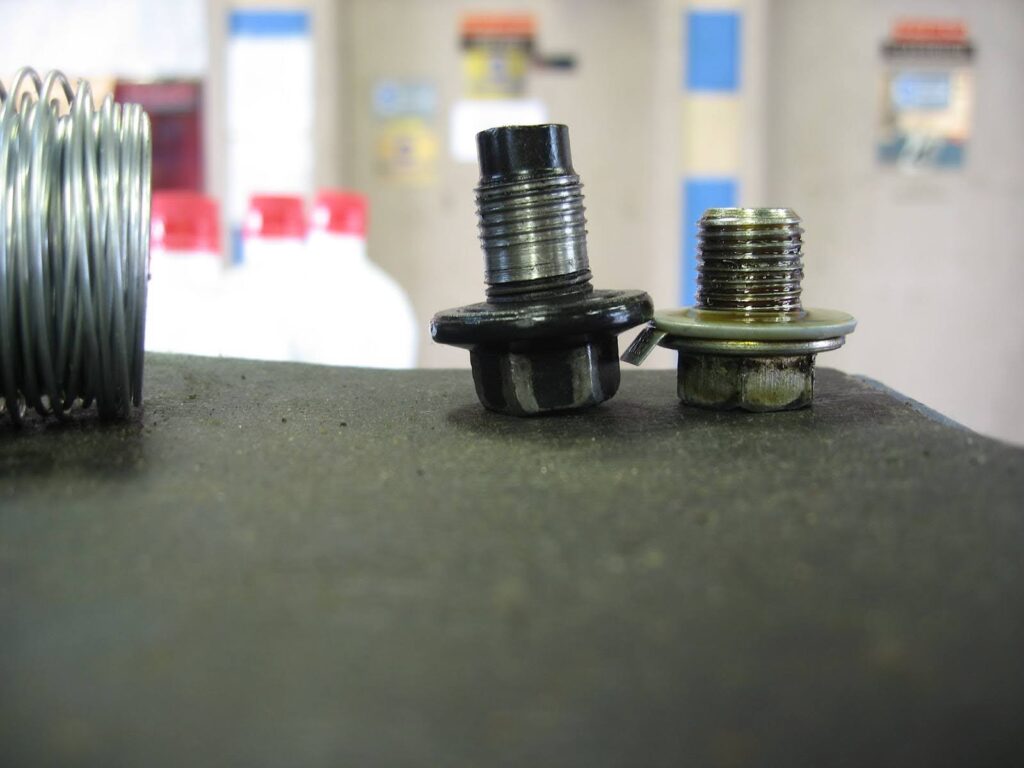
- Remove the plug and look for flattened, missing, or shiny threads.
- Check for metal shavings on the plug or in the oil.
- Look at the oil pan hole for worn or damaged grooves.
If the threads look smooth instead of sharp, or if pieces are missing, stripping has likely happened.
2. Plug Feels Loose Or Won’t Tighten
A healthy oil drain plug should get snug as you tighten it by hand, then stop firmly with a wrench. If you notice any of these signs, you may have stripped threads:
- The plug keeps spinning without getting tight.
- The plug never feels secure, even when “tightened.”
- You can wiggle the plug side to side when installed.
3. Plug Is Hard To Remove Or Install
If you struggle to unscrew the plug, or it resists going in smoothly, the threads may be damaged or cross-threaded.
- You feel sudden resistance or grinding.
- The plug requires much more force than usual.
- The plug “jumps” or slips as you turn it.
4. Oil Leaks Around The Plug
After an oil change, check for oil spots under your car. A stripped plug often leaks, especially right after you drive. Look for:
- Drops or puddles of oil near the drain plug.
- Oil stains that get worse over time.
- Oil seeping around the plug, even when it’s “tight.”
5. Metal Shavings In Oil
When changing oil, notice if you see metal particles in the used oil or on the plug. This can mean the threads are breaking down.
6. Plug Or Pan Threads Look Rounded
Healthy threads have a sharp, defined edge. If they look rounded, flat, or incomplete, they are likely stripped.
7. Plug Pops Out Under Pressure
Rarely, a plug with badly stripped threads may “pop” out, especially under pressure from hot oil. If this happens, stop driving and repair the problem immediately.
Real-world Example: Comparing Good And Stripped Plugs
To better understand, here’s a side-by-side comparison.
| Feature | Good Plug & Pan | Stripped Plug & Pan |
|---|---|---|
| Thread Appearance | Sharp, even grooves | Flat, shiny, or missing threads |
| Tightening Feel | Gets snug, then stops | Keeps spinning, never tightens |
| Oil Leaks | None when tight | Leaks even when “tight” |
| Plug Movement | Solid, no wiggle | Loose, can wiggle |
Step-by-step: How To Check For A Stripped Oil Drain Plug
Checking for a stripped drain plug is simple and takes just a few tools.
- Park your car on a level surface and let the engine cool.
- Put on gloves and gather a wrench, a flashlight, and a drain pan.
- Remove the oil drain plug carefully.
- Inspect the plug’s threads under good light.
- Look inside the oil pan hole for damaged threads.
- Try threading the plug in by hand; it should turn smoothly and get snug.
- If the plug spins or never tightens, you likely have stripped threads.
Pro tip: Always start the plug by hand to avoid cross-threading. Never force it.

Credit: www.youtube.com
What To Do If Your Oil Drain Plug Is Stripped
If you discover a stripped drain plug, don’t panic. There are several options, depending on how bad the damage is.
Option 1: Replace The Drain Plug
If only the plug’s threads are damaged, buy a new plug of the correct size and thread type. This is the simplest fix.
- Take the old plug to the auto parts store to match it.
- Choose a high-quality replacement, not the cheapest.
Option 2: Use An Oversized Plug
Some auto stores sell oversized repair plugs. These are slightly larger and can cut new threads into minor damage.
- Remove all metal shavings after installation.
- This is a short-term fix, not a permanent solution.
Option 3: Re-tap The Oil Pan Threads
If the oil pan threads are stripped, you can re-tap them with a special tool called a tap.
- Buy a thread repair kit for your car’s oil pan size.
- Carefully follow the instructions to avoid more damage.
- Clean the area well after re-tapping.
Option 4: Install A Thread Insert (heli-coil)
For serious damage, install a thread insert (like a Heli-Coil). This creates new threads inside the pan.
- Drill out the damaged hole.
- Screw in the insert using the tool provided.
- Install a new drain plug into the insert.
This is a permanent fix, but may require more skill or a mechanic’s help.
Option 5: Replace The Oil Pan
If nothing works and the pan is badly damaged, you may need to replace the entire oil pan. This is rare, but sometimes necessary.
| Repair Option | Difficulty | Cost | Longevity |
|---|---|---|---|
| New Plug | Easy | Low | Permanent (if pan threads are good) |
| Oversized Plug | Easy | Low | Temporary |
| Re-tap Threads | Medium | Medium | Permanent if done well |
| Thread Insert | Medium-Hard | Medium | Permanent |
| New Oil Pan | Hard | High | Permanent |
Common Mistakes When Dealing With A Stripped Drain Plug
Many DIYers make errors that make the problem worse. Here’s what to avoid:
- Overtightening: Using too much force can strip good threads or ruin a repair.
- Using Teflon tape or sealants: These might stop leaks briefly, but they don’t fix the threads.
- Ignoring leaks: Driving with a leaking plug can destroy your engine.
- Improper repair kits: Using the wrong size or poor-quality inserts can cause more damage.
- Not cleaning metal shavings: Leftover shavings can get into your oil and harm your engine.
How To Prevent Stripped Oil Drain Plugs
Prevention is always better than repair. Here’s how to protect your oil pan:
- Use a torque wrench to tighten the plug to the manufacturer’s specification (usually 20-30 ft-lbs for most cars).
- Start by hand: Always thread the plug in by hand first to avoid cross-threading.
- Use quality parts: Buy OEM or high-quality aftermarket drain plugs.
- Replace crush washers: Many plugs use a soft washer that should be replaced each oil change.
- Avoid over-tightening: More force does not mean a better seal.
- Check for leaks after every oil change, even if you used a mechanic.
Signs It’s Time To Call A Mechanic
Some oil drain plug problems are best left to professionals. Ask for help if:
- The plug spins freely and won’t tighten at all.
- You see a large amount of metal shavings in the oil.
- The oil pan is cracked or leaking badly.
- You don’t have the tools or confidence to repair threads.
A good mechanic can fix the issue before it becomes an emergency.
Non-obvious Insights Most People Miss
Insight 1: Not all leaks are due to stripped plugs. Sometimes a worn crush washer or gasket is the true cause. Always inspect both before assuming the threads are at fault.
Insight 2: Even a small amount of cross-threading (just a few turns) can weaken the threads enough to cause leaks later. If you ever feel resistance when starting the plug, stop and back it out—don’t force it.
The Risk Of Ignoring The Problem
Driving with a stripped oil drain plug is like rolling the dice with your engine’s health. Even slow leaks can lower oil levels, and a sudden failure can cause total engine seizure. Repairing an oil pan or even an engine costs much more than fixing a drain plug early.
Protect your investment by acting quickly.

Credit: www.reddit.com
How To Choose The Right Replacement Plug
When you need a new oil drain plug, keep these points in mind:
- Match the size and thread pitch exactly to your car’s specifications.
- Choose a plug made from high-quality steel or brass.
- Look for a plug with a new crush washer included.
- Avoid universal “fit-all” plugs—they rarely seal as well as the correct part.
Check your car’s owner manual or ask for help at the auto parts store.
Cost Of Repairing A Stripped Oil Drain Plug
Prices vary based on the repair needed.
- New drain plug: $3–$15
- Oversized repair plug: $5–$20
- Thread repair kit (Heli-Coil): $20–$50
- Professional thread repair at a shop: $50–$150
- New oil pan (parts and labor): $200–$500 or more
Doing the job right the first time is always cheaper than fixing a mistake.
Credit: www.carparts.com
When To Replace The Whole Oil Pan
If repairs fail or the pan is thin, cracked, or corroded, replacement is best. Oil pans are made of steel or aluminum. Repeated repairs can weaken the metal. If you see large cracks, stripped threads in more than one spot, or constant leaks, it’s time for a new pan.
Comparing Oil Pan Materials: Steel Vs. Aluminum
| Material | Strength | Repair Difficulty | Corrosion Resistance |
|---|---|---|---|
| Steel | Very strong | Easy to repair | Can rust |
| Aluminum | Lighter, but softer | Harder to repair | Does not rust, but can corrode |
Tip: Aluminum pans are common on newer cars and more likely to strip if overtightened. Use extra caution.
Can You Drive With A Stripped Oil Drain Plug?
It depends on how bad the damage is. If the plug is holding oil with no leaks, you may be safe for a short time. If you see any oil leak, do not drive until it’s fixed. Even a few drops per day add up quickly. Engine repairs are always more expensive than fixing a drain plug.
Practical Tips For Every Oil Change
- Always check the plug and threads during every oil change.
- Replace the crush washer or gasket each time.
- Clean the area around the plug so dirt doesn’t get inside.
- If you’re unsure, ask a mechanic to check for you.
Key Takeaways
- A stripped oil drain plug means damaged threads, causing oil leaks or the plug falling out.
- Early signs include loose plug, leaks, hard removal, or visible thread damage.
- Fixes range from a new plug to full oil pan replacement, depending on the damage.
- Prevention: Use a torque wrench, quality parts, and don’t overtighten.
- If in doubt, see a professional before risking engine damage.
Frequently Asked Questions
How Can I Avoid Stripping My Oil Drain Plug In The Future?
Always start threading the plug by hand and use a torque wrench to tighten only to the specified setting. Replace the crush washer each oil change and never overtighten.
Can I Fix A Stripped Oil Drain Plug Myself?
Yes, minor damage can be fixed with a new plug or oversized plug. For damaged oil pan threads, you may need a tap or a thread insert kit. If you are not comfortable, a mechanic can help.
How Do I Know If The Oil Pan Needs To Be Replaced?
Replace the oil pan if it is cracked, corroded, leaking badly, or cannot hold a thread insert. If repeated repairs fail, a new pan is the safest choice.
Are All Drain Plugs The Same Size?
No. Each car model uses a specific size and thread pitch. Always check your owner’s manual or ask for help to get the correct part.
Where Can I Find More Information On Oil Pan Repair?
A good resource for more technical details is the Wikipedia page on oil pans.
Taking care of your oil drain plug is a small but important part of car maintenance. With the right knowledge and a careful approach, you can avoid leaks, engine damage, and unexpected repair bills. Stay alert for the signs, and your car will thank you with every mile.