
Turning on the shower seems like a simple daily activity, but for many people, especially those using a new bathroom or dealing with different plumbing designs, the shower diverter can be confusing. Maybe you’ve found yourself standing under the showerhead, water only coming from the tub faucet, or struggling to figure out which lever to pull. This guide is your complete, step-by-step resource to confidently operate any shower diverter, avoid common mistakes, and understand the mechanics behind this small but important part of your bathroom.
You’ll discover the different types of diverters, what each part does, practical troubleshooting tips, and safety advice. Whether you’re a first-time renter, a hotel guest, or just want to understand your own plumbing better, you’ll gain the knowledge to handle any shower diverter with ease.
Let’s begin by exploring what a shower diverter actually is, and why it matters.
What Is A Shower Diverter?
A shower diverter is a valve or mechanism that directs the flow of water between the bathtub faucet and the showerhead. When you turn on the water, it usually comes out of the tub spout by default. The diverter lets you switch the flow so water goes up to the showerhead instead.
Without this device, you would only have one option for water delivery—either a bath or a shower, but not both from the same controls. Diverters are common in homes, apartments, hotels, and even RVs. Their main goal is to make your bathroom more versatile.
How A Diverter Works
Water enters your bath/shower system through a single pipe. The diverter acts like a traffic cop, telling the water which path to take:
- Tub spout: Water flows straight out for filling the bathtub.
- Showerhead: The diverter blocks the spout, forcing water upward to the shower.
Most diverters use a simple pull, push, or turn mechanism. However, newer models may use a button or even a digital control.
Why Understanding Matters
Knowing how to use a diverter correctly protects your plumbing and ensures you get the water flow you want. Incorrect operation can cause leaks, wasted water, or damage over time.
Types Of Shower Diverters
Not every shower diverter looks or works the same. The way you turn on your shower depends on the diverter design. Here are the most common types you’ll find:
1. Tub Spout Pull-up Diverter
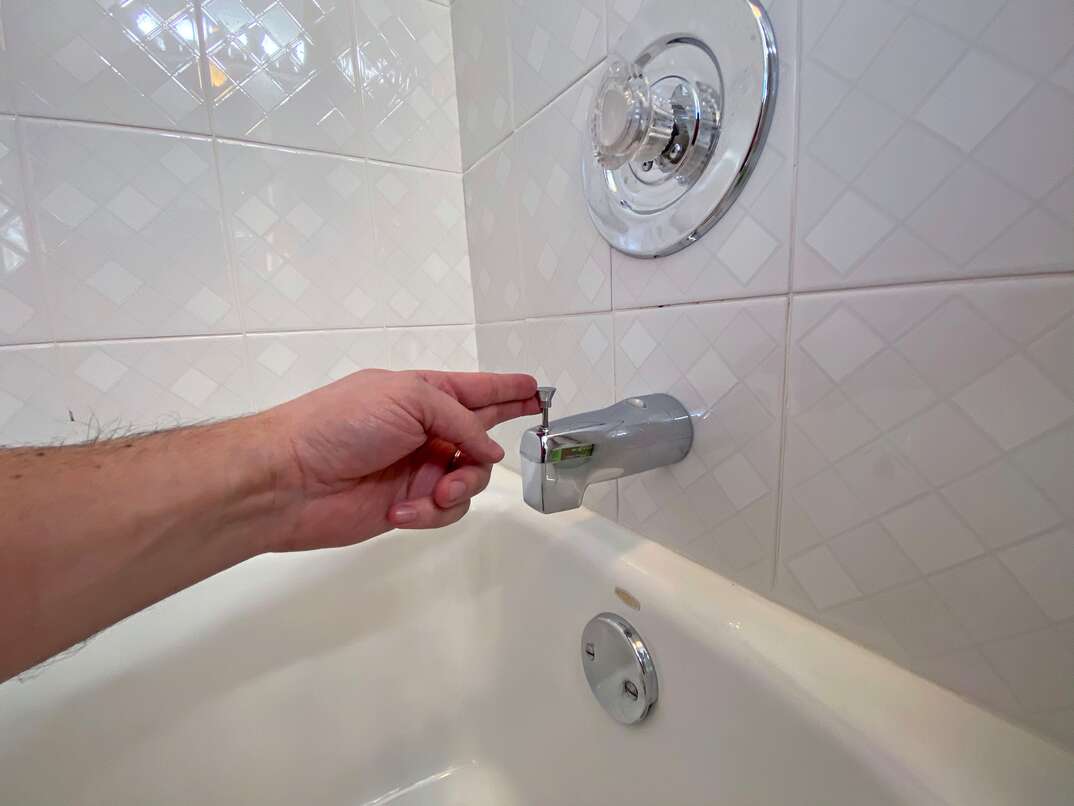
This is the most widespread type in homes. You’ll see a small lever or knob on the tub faucet itself.
- How to use: Pull up the lever (sometimes push down) after turning on the water. Water should switch from the tub to the showerhead.
2. Three-valve Diverter
Often found in older homes or vintage bathrooms.
- How to use: There are three handles—hot, cold, and a middle diverter. Turn the middle handle (usually clockwise) after adjusting your water temperature. This directs water to the showerhead.
3. Two-valve Diverter
Common in more modern homes or renovations.
- How to use: You’ll find two handles—one for water mix, one for the diverter. Turn the diverter handle (often up or sideways) to send water to the shower.
4. Push-button Diverter
Increasingly popular in hotels and newer homes.
- How to use: After starting the water, press the button (usually on the faucet or wall) to switch water flow to the showerhead.
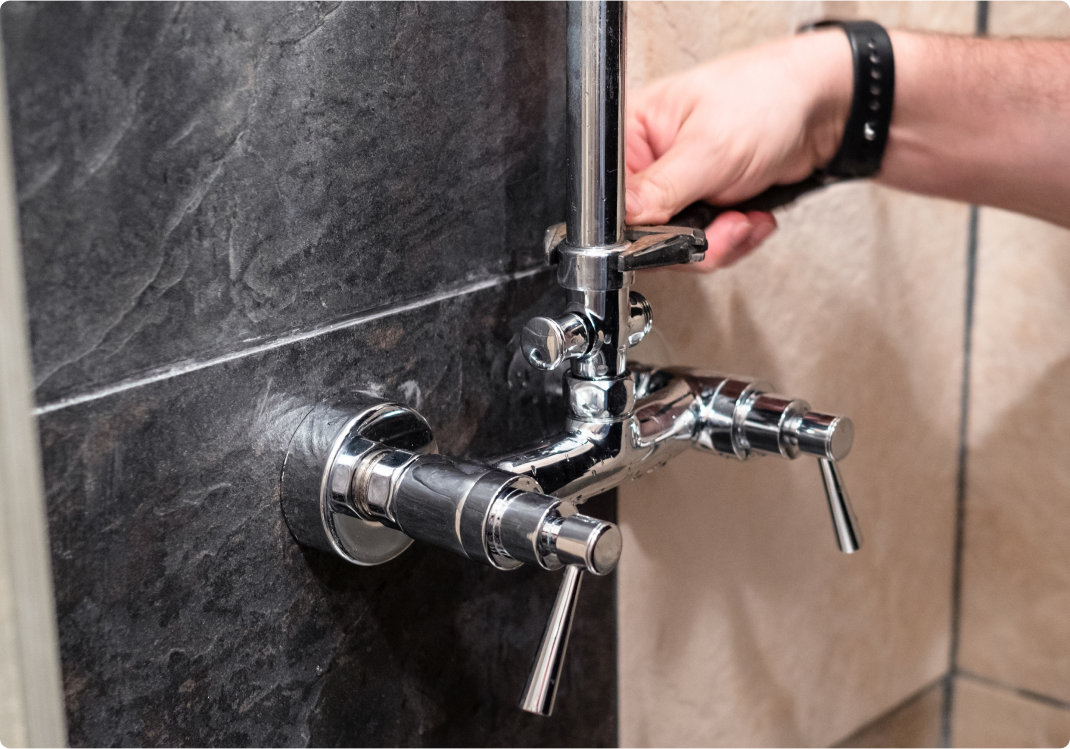
5. Transfer Valve (built-in Diverter)
Found in luxury showers or those with handheld sprayers.
- How to use: A separate control or lever, often labeled, lets you direct water to the main shower, handheld, or tub.
6. Digital Or Touch Diverters
High-end, smart showers use electronic controls.
- How to use: Follow the on-screen instructions or press the digital button to direct water flow.
Why Types Matter
If you’re in a new place or helping a guest, knowing the diverter type saves time and prevents frustration. For example, hotels often have push-button or transfer valves, while apartments may use the classic pull-up spout.
Here is a comparison of common diverter types, their usual locations, and operation style:
| Diverter Type | Common Location | How to Operate |
|---|---|---|
| Tub Spout Pull-Up | Homes, apartments | Pull/push knob on faucet |
| Three-Valve | Older homes | Turn middle handle |
| Two-Valve | Modern homes | Turn diverter handle |
| Push-Button | Hotels, new builds | Press button |
| Transfer Valve | Luxury, custom showers | Turn or flip lever |
| Digital/Touch | Smart bathrooms | Digital controls |
Step-by-step: How To Turn On A Shower Diverter
Now, let’s walk through the exact steps for each main diverter type. This section will help you feel confident no matter which system you face.
For Tub Spout Pull-up Diverter
- Turn on the water: Use the main faucet handle(s) to start water flow. Adjust temperature as needed.
- Wait for steady flow: Let water run from the tub spout for a few seconds.
- Pull the diverter knob up: Grip the small lever on top or behind the tub spout. Pull it up firmly. Sometimes you push down instead—check for arrows or instructions.
- Water redirects to showerhead: Water flow should stop at the tub and start at the showerhead.
- Adjust as needed: Step under the shower. If water isn’t flowing, check the diverter lever is fully engaged.
Pro tip: If the diverter is hard to move, avoid forcing it. Mineral buildup or age can make it stiff.
For Three-valve Diverter
- Open hot and cold taps: Turn both handles to start water. Adjust to your preferred temperature.
- Turn the diverter handle: Usually the middle handle, turn clockwise (or as marked) to send water to the shower.
- Shower activates: Water should now come from the showerhead.
- Return to tub: To go back, turn the diverter handle the opposite way.
Non-obvious insight: In older systems, if you turn the diverter before water is hot, you may get a cold shower blast. Always adjust temperature first.
For Two-valve Diverter
- Start water flow: Turn the main handle for water and set your temperature.
- Engage diverter: Turn or lift the second handle (often labeled) to switch water to the showerhead.
- Fine-tune flow: Some models let you adjust between tub and shower or share flow between both.
For Push-button Diverter
- Start the water: Use the main handle or knob.
- Press the diverter button: Located on the faucet, wall, or spout.
- Showerhead activates: The water should now spray from above.
Practical tip: In some hotels, push-buttons need a firm, quick press. Don’t tap lightly.
For Transfer Valves
- Start the water: Usually by a main lever or handle.
- Select output: Use the transfer valve’s labeled lever or dial to choose “shower,” “handheld,” or “tub.”
- Adjust pressure if needed: Some allow you to split flow.
For Digital Or Touch Diverters
- Power on the system: Press the main power or start button.
- Select function: Use the touchscreen or buttons to choose “shower,” “tub,” or “handheld.”
- Adjust temperature electronically: Many systems let you control temperature and pressure digitally.
Universal Steps For All Diverters
- Check for leaks: After switching, look at the tub spout. If water still drips, the diverter may be partially engaged or worn out.
- Turn off in reverse order: Always return the diverter to “tub” before shutting off the water. This helps prevent pressure issues and extends diverter life.
What To Do If The Diverter Doesn’t Work
Sometimes, pulling or turning the diverter does nothing. Here’s how to troubleshoot common issues:
Water Still Comes Out Of The Tub
- Partially engaged diverter: Pull or turn again, more firmly.
- Worn diverter seal: Rubber seals inside may be worn. Replacement may be needed.
- Low water pressure: If pressure is too low, water won’t reach the showerhead.
Stuck Or Hard-to-move Diverter
- Mineral buildup: Hard water can cause the mechanism to stick. Try gently moving it back and forth to loosen.
- Old diverter: If it doesn’t move at all, it may need replacing.
Weak Shower Flow
- Clogged showerhead: Mineral deposits block water. Remove and clean the showerhead.
- Partially blocked diverter: Debris inside can block flow. Try flushing the system.
Dripping Water From Tub Spout
- Worn diverter valve: Internal parts may no longer seal. Replacement is often the best fix.
Here’s a quick comparison of diverter problems and solutions:
| Problem | Likely Cause | Solution |
|---|---|---|
| Water stays at tub | Diverter not fully engaged | Pull/turn again or replace parts |
| Diverter is stuck | Mineral buildup or age | Loosen gently or replace |
| Weak shower flow | Clogged head or diverter | Clean head, flush diverter |
| Leaking at tub spout | Worn seals | Replace diverter valve |
Safety And Maintenance Tips
Using your shower diverter safely and keeping it in good shape is important for your health, comfort, and your home’s plumbing.
Prevent Scalding
- Always test water temperature before engaging the diverter. Sudden shifts can cause burns.
- Don’t let children operate the diverter alone until they understand the controls.
Avoiding Water Damage
- Check for leaks regularly at the tub spout and around the diverter.
- Replace old diverters if they drip or are hard to move.
Cleaning And Care
- Remove mineral deposits: Soak the diverter spout in vinegar to break down hard water buildup.
- Operate gently: Forcing stiff diverters can break internal parts.
Pro tip: Lubricate moving parts with plumber’s grease (not household oil) if the diverter is hard to operate.
When To Call A Plumber
If the diverter doesn’t respond after cleaning, or water leaks behind the wall, call a professional. Hidden leaks can cause mold or structural damage.
Why Some Diverters Seem Confusing
Many people find diverters confusing because there’s no universal design. Hotels, apartments, and even neighboring homes can have different setups. Labels may be missing or worn, and some diverters need a specific sequence to work.
Non-obvious insight: Some diverters are designed to “reset” to tub mode when you shut off the water, while others stay in the last position. If you turn on the water and it goes straight to the shower, your diverter stays engaged. If not, you’ll have to set it each time.
Credit: www.ahs.com
How To Identify Your Diverter Type
If you’re not sure what kind of diverter you have, look for these clues:
- Is there a lever on the tub spout? Pull-up type.
- Are there three handles on the wall? Three-valve type.
- Is there a separate button or dial? Push-button or transfer.
- Are the controls digital? Electronic diverter.
If you’re still unsure, search for the faucet or shower brand and model online, or ask your building manager.
Upgrading Or Replacing A Shower Diverter
If your diverter is old, leaks, or is hard to use, upgrading can improve your shower experience. Here’s what to consider:
Choosing A New Diverter
- Check compatibility: Not all diverters fit every plumbing setup.
- Choose by use: If you want a handheld sprayer, choose a transfer valve.
- Think about accessibility: Lever or push-button types are easier for children or older adults.
Installation
Most tub spout diverters are easy to replace yourself with basic tools. Wall-mounted or in-wall types usually require a plumber.
Cost
- Tub spout diverter: $15–$50 (DIY possible)
- Three/two-valve diverters: $50–$200 (often needs a plumber)
- Digital systems: $500+ (professional install needed)
For detailed instructions on replacing a diverter, see Family Handyman’s guide.
Common Mistakes When Using A Shower Diverter
Avoid these errors for a safe and easy shower:
- Forcing the diverter: This can break the mechanism. If it’s stuck, stop and check for mineral buildup.
- Turning the diverter before water is hot: You’ll get a blast of cold water.
- Leaving the diverter engaged after showering: For some models, this causes pressure to build or seals to wear out.
- Ignoring leaks: Even a slow drip wastes water and increases bills.
- Confusing diverter with main water controls: This can lead to sudden temperature changes.
Shower Diverter Vs. Shower Valve: The Difference
Many people confuse the diverter with the main shower valve. Here’s a quick comparison to help:
| Feature | Shower Diverter | Shower Valve |
|---|---|---|
| Function | Switches water between tub and shower | Controls water temperature and flow |
| Location | On spout, wall, or separate handle | Main handle(s) on wall |
| Common Problems | Sticking, leaking, weak flow | Dripping, temperature issues |
| DIY Replacement | Often possible | More complex |
Adapting To Different Bathrooms: Hotels, Rentals, And Abroad
You might face a new diverter design when traveling. Here’s how to adapt quickly:
- Look for instructions: Many hotels have a small sign or diagram. If not, ask at the front desk.
- Test gently: Don’t force any lever or button. Try all obvious controls before calling for help.
- Observe others: If you’re in a gym or shared bathroom, watch how others operate the system.
Saving Water With Proper Diverter Use
A leaking diverter can waste hundreds of gallons per year. According to the EPA, a dripping faucet can waste over 3,000 gallons annually. Fixing or properly using your diverter saves water and money.
Tip: Always check that water stops flowing from the tub spout when using the shower. Even a small drip adds up.
When To Replace A Shower Diverter
Replace your diverter if you notice:
- Continuous leaks: Water comes out of both shower and tub at the same time.
- Stiff or stuck operation: Handle is hard to move or doesn’t stay in place.
- Visible corrosion: Rust or mineral buildup that doesn’t clean off.
- Low shower pressure: After ruling out showerhead clogs.
Most diverters last 5–10 years with normal use. In areas with hard water, replacement may be needed more often.
Tips For Renters And Guests
If you don’t own your home, follow these guidelines:
- Ask the landlord: If you’re unsure how the shower works, ask before trying to force anything.
- Don’t disassemble: Never remove handles or parts unless you have permission.
- Report leaks: Let your building manager know about any drips or problems.
Shower Diverter Myths
Let’s clear up some common myths:
- Myth: You can turn the diverter any time, even with the water off.
- Fact: Most diverters only work with water running.
- Myth: All diverters work the same way.
- Fact: There are many designs. Always check your specific model.
- Myth: A leaking tub spout is normal.
- Fact: Any leak means a worn or damaged part.
Frequently Asked Questions
What Is The Purpose Of A Shower Diverter?
A shower diverter lets you choose whether water flows from the tub spout or the showerhead. It makes your bath more flexible, allowing you to take a shower or fill a tub using the same faucet controls.
How Do I Know If My Shower Diverter Is Broken?
Common signs include water coming out of both the tub and showerhead at the same time, a handle that’s hard to move, or a lever that won’t stay in position. If water pressure is very low at the showerhead but normal at the tub, the diverter may be failing.
Credit: www.homeserve.com
Can I Fix A Shower Diverter Myself?
You can often fix simple problems like a stuck or stiff diverter by cleaning it and removing mineral buildup. For replacing a tub spout diverter, basic tools usually do the job. In-wall or complex systems are best left to a plumber.
Why Does My Tub Spout Leak When Using The Shower?
This usually means the diverter’s internal seals are worn out, so water can’t fully switch to the showerhead. Replacing the diverter is often the solution.

Credit: www.wikihow.com
Where Can I Find More Information About Different Shower Diverter Types?
You can learn more about the various types and how they work on the Wikipedia page about showers.
Having the right knowledge and approach makes using any shower diverter simple. Next time you step into a new bathroom, you’ll know exactly how to get the water where you want it—saving time, water, and avoiding frustration. With these insights, even the most confusing diverter will be no match for you.