
Updating your laminate kitchen cabinets can completely change how your kitchen looks and feels. Many people believe that only solid wood cabinets can be updated or refinished, but this is a myth. Laminate cabinets, with the right approach, can also be transformed to look stylish, modern, and much more expensive than they are. If your cabinets are old, scratched, or just don’t match your style anymore, you have several options—painting, refacing, changing hardware, or even adding decorative elements. This article will guide you through every step, explain the best techniques, highlight common mistakes, and provide tips to help you achieve a professional look.
Why update laminate cabinets instead of replacing them? The answer is cost and convenience. Replacing kitchen cabinets is one of the most expensive updates you can do. Updating what you already have is a fraction of the cost and causes less mess and disruption.
Plus, updating is a great way to personalize your kitchen without major construction.
Let’s explore how to update laminate kitchen cabinets, from simple changes to complete makeovers.
Understanding Laminate Cabinets
Laminate cabinets are built with a thin layer of plastic laminate bonded to a base material, usually particleboard or MDF. This layer gives the cabinet its color and finish, making it smooth, easy to clean, and very resistant to stains. However, laminate can chip, scratch, or peel over time, especially in busy kitchens.
One important thing to know: laminate is not wood. Paint and adhesives do not stick to it the same way. This means you need special preparation and products for a long-lasting update.
Key Features Of Laminate Cabinets
- Durable surface: Resists stains and spills but can scratch or peel.
- Variety of styles: Comes in many colors and finishes.
- Non-porous: Paint and glue need the right preparation to adhere.
Understanding these features helps you choose the right update method and avoid common mistakes.
Planning Your Update
Before you start, take time to plan. Good planning saves money, time, and frustration.
Assessing Cabinet Condition
Check your cabinets closely. Are they structurally sound? Is the laminate loose, peeling, or badly damaged? If cabinets are falling apart, no amount of paint will fix them. But if they are just outdated or lightly scratched, updating works well.
- Solid structure: Doors open and close smoothly, no water damage.
- Laminate intact: No large areas of peeling or bubbling.
If you find damage, you may need to repair or replace sections before updating.
Setting A Budget
Laminate cabinet updates can cost as little as $50 for hardware and paint, or up to $2,000 for full refacing. Decide what you want to change and how much you can spend. Painting and hardware changes are the cheapest. Refacing (adding new doors or veneers) costs more but still much less than new cabinets.
Gathering Tools And Materials
Common supplies include:
- Screwdriver or drill
- Painter’s tape
- Degreaser/cleaner
- Sandpaper (120–220 grit)
- Deglosser or liquid sandpaper
- Primer (bonding or laminate-specific)
- Paint (acrylic, latex, or cabinet enamel)
- Paint brushes and foam rollers
- New knobs, pulls, or hinges (optional)
- Wood filler (for minor repairs)
For refacing:
- Veneer sheets or new laminate panels
- Contact cement or adhesive
- Utility knife or trimmer
Check you have everything before you begin.
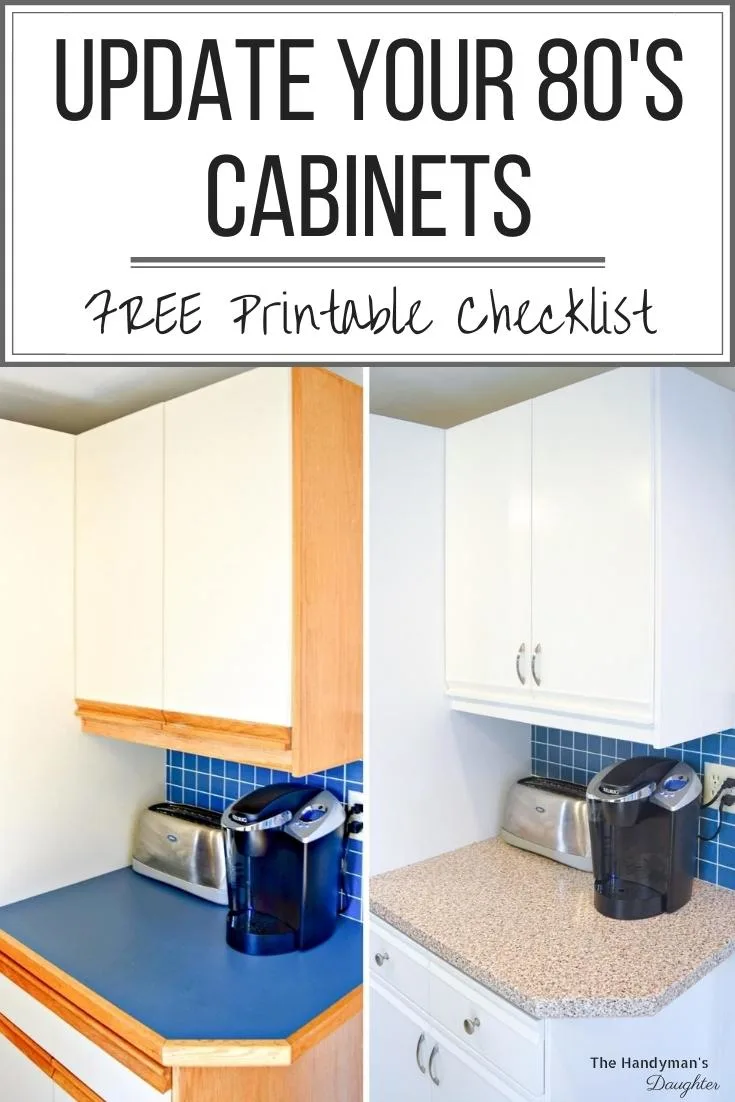
Credit: www.thehandymansdaughter.com
Cleaning And Prepping Laminate Cabinets
Preparation is the most important step. Many beginner mistakes happen here. Paint and adhesives will not stick to greasy, glossy, or dirty laminate.
How To Clean Cabinets
- Remove all doors, drawers, and hardware. Label them so you know where everything goes.
- Wash all surfaces with a degreaser (like TSP or a mild cleaner). Kitchen cabinets collect grease even if they look clean.
- Dry fully with a clean cloth.
Surface Preparation
- Lightly sand all surfaces. Use 120–220 grit sandpaper. This roughens the glossy surface so primer and paint can bond.
- Wipe off dust with a tack cloth.
- For extra adhesion, wipe with a deglosser or liquid sandpaper. This step is easy to skip, but it makes a big difference.
Repairing Damage
- Fill chips and cracks with wood filler.
- Sand smooth when dry.
- For peeling laminate, use a strong wood glue. Clamp until set.
Skipping these steps leads to peeling paint or veneer later. Take your time here.
Painting Laminate Cabinets
Painting is the most popular way to update laminate cabinets. It’s affordable and gives you endless color choices.
Choosing The Right Paint
Not all paints work on laminate. The best options:
- Acrylic latex paint: Durable and flexible.
- Cabinet enamel: Self-levels for a smoother finish.
- Chalk paint: Sticks well but needs a topcoat for durability.
Never use regular wall paint by itself. It won’t last.
Priming Is Essential
Use a bonding primer made for slick surfaces. This is a critical step—skip it and your paint will scratch off.
Step-by-step Painting Process
- Remove doors and hardware. Lay flat for painting.
- Clean and sand as described above.
- Apply primer. Use a small foam roller for flat sections and a brush for edges. Let dry completely.
- Sand lightly between coats for a smooth finish.
- Apply paint. Two thin coats are better than one thick coat. Let dry between coats.
- Seal with topcoat (optional but recommended for durability). Use water-based polyurethane for a non-yellowing finish.
- Reattach doors and hardware after paint is fully cured (usually 2–3 days).
Practical Painting Tips
- Always paint in a dust-free, well-ventilated area.
- Label hinges and doors so they go back in the right place.
- Don’t rush drying time. Paint needs to cure for best durability.
Common Painting Mistakes
- Not cleaning thoroughly (leads to peeling).
- Skipping primer.
- Using thick paint layers (causes drips and uneven finish).
- Reattaching hardware before paint cures.
Refacing Laminate Cabinets
Refacing means applying a new veneer or laminate to doors and drawer fronts. This gives the look of brand-new cabinets for less than half the price.
When To Reface
- Your cabinet boxes are strong, but doors look dated or damaged.
- You want a completely different style or wood grain look.
- Painting won’t cover damage or deep scratches.
Choosing Veneer Or Laminate
Cabinet refacing uses two main materials:
- Wood veneer: Thin sheets of real wood. Looks natural, can be stained.
- Plastic laminate: More durable, available in many colors and patterns.
Wood veneer is more delicate but gives a classic look. Plastic laminate is tougher for busy kitchens.
Refacing Steps
- Remove doors and drawer fronts.
- Measure surfaces and cut veneer or laminate sheets to fit.
- Sand cabinet box faces so adhesive sticks.
- Apply contact cement to both surfaces. Let dry to the touch.
- Press veneer or laminate firmly onto cabinet. Use a roller to remove air bubbles.
- Trim edges with a sharp utility knife or trimmer.
- Replace old doors with new veneered or laminate doors (optional).
- Install new hardware for a modern finish.
Refacing Data Comparison
Here’s a look at how painting and refacing compare for updating laminate cabinets:
| Update Method | Durability | Cost Range (USD) | Style Options | Time Required |
|---|---|---|---|---|
| Painting | Good (with proper prep) | $50 – $250 | Unlimited colors | 2-5 days |
| Refacing (Laminate) | Excellent | $800 – $2,000 | Many textures/patterns | 3-7 days |
| Full Replacement | Best | $3,000 – $8,000+ | Custom | 1-3 weeks |
Non-obvious Insights
- Most people forget to wrap the veneer around edges. This small step gives a “factory-made” look.
- Using a J-roller (a small tool) to press veneer ensures no bubbles or peeling.
Updating Hardware And Accessories
Changing cabinet hardware—knobs, pulls, and hinges—can make a dramatic difference for little money.
Choosing New Hardware
Pick a style that matches your kitchen. Brushed nickel, matte black, and gold are popular. For a modern look, choose bar pulls. For a classic look, round knobs work well.
How To Replace Hardware
- Measure existing holes. Most handles are 3 or 5 inches apart.
- If using new hardware with different holes, fill the old holes with wood filler and drill new ones.
- Tighten new hardware firmly but don’t overtighten (which can crack laminate).
- Upgrade hinges if doors sag or don’t close well.
Hardware Cost And Impact
| Hardware Type | Average Cost per Piece (USD) | Durability | Style Impact |
|---|---|---|---|
| Standard Knob | $2 – $6 | High | Subtle |
| Bar Pull | $4 – $12 | High | Modern |
| Decorative Handle | $8 – $20 | Medium | Statement |
Pro Tip
Always buy a few extra knobs or pulls in case one breaks or is damaged later. Styles can be discontinued.

Credit: littleterracedhouse.com
Adding Decorative Touches
You can add personality to laminate cabinets with simple, creative changes.
Open Shelving
Remove one or two cabinet doors to create open shelves. Paint the inside a contrasting color for a designer look. Store dishes or cookbooks here for easy access.
Crown Molding
Add crown molding to the top of cabinets for a built-in look. Use lightweight molding and strong adhesive or finishing nails.
Glass Inserts
Replace the center panel of some doors with glass. This lightens the look and lets you show off pretty dishes. Frosted or textured glass hides clutter.
Under-cabinet Lighting
Stick-on LED strips under cabinets add modern style and improve workspace lighting. Easy to install and low cost.
Peel-and-stick Wallpaper
Apply peel-and-stick wallpaper to cabinet ends or inside doors for a fun, changeable accent.
Mistakes To Avoid When Updating Laminate Cabinets
Many DIY projects fail because of avoidable errors. Here’s what to watch out for:
- Skipping cleaning or sanding. Paint and adhesives will not stick well.
- Using the wrong primer. Only use a bonding primer made for slick surfaces.
- Applying thick paint coats. Thin, even coats look more professional and last longer.
- Rushing to reattach hardware. Wait for paint or adhesive to cure fully.
- Ignoring cabinet box sides. Update visible sides for a complete look.
- Using cheap brushes or rollers. Quality tools prevent brush marks and streaks.
- Not protecting floors and counters. Use drop cloths and painter’s tape for a clean job.
- Forgetting ventilation. Strong odors from paint and adhesives can linger.
If you follow each step carefully, your update will look great and last for years.
How To Maintain Updated Laminate Cabinets
Once your cabinets are updated, simple maintenance keeps them looking new.
Cleaning
- Wipe with a damp, soft cloth regularly.
- Use mild soap for tough spots. Avoid harsh chemicals that can dull paint or loosen veneer.
Handling Moisture
Laminate can peel if exposed to water for long periods. Fix leaks, wipe spills, and don’t hang wet towels over cabinet doors.
Touch-ups
Keep a small amount of leftover paint or veneer for touch-ups. Minor chips are easy to fix if you act quickly.
Avoiding Scratches
Don’t bang pots, pans, or utensils against cabinet doors. Add rubber bumpers to doors to prevent slamming.
When To Call A Professional
Some jobs are better left to experts:
- If cabinets are warped, water-damaged, or falling apart, replacing may be smarter.
- If you want a high-gloss, factory-smooth finish, a professional sprayer gives the best results.
- For complex refacing, pros have tools to cut perfect edges and handle tricky corners.
Professionals charge more, but the results can be worth it for a showpiece kitchen.
Cost Breakdown And Value
How Much Does It Cost To Update Laminate Kitchen Cabinets?
- Painting: $50–$250 (DIY), $600–$1,200 (pro)
- Refacing: $800–$2,000 (DIY), $2,500–$6,000 (pro)
- Hardware: $50–$400 depending on style and kitchen size
- Decorative upgrades: $100–$500 for molding, lighting, or glass inserts
Updating instead of replacing saves thousands. According to the Remodeling Cost vs. Value Report, minor kitchen remodels (including cabinet updates) recoup up to 72% of their cost in home value.
Real-life Examples
- Sarah’s Kitchen, Ohio: Painted 20-year-old laminate cabinets with bonding primer and cabinet enamel for $120. Added bar pulls and under-cabinet lights. “Feels like a new kitchen for a fraction of the cost.”
- Luis, Texas: Cabinet boxes were good but doors damaged. Refaced with wood veneer and new hardware for $1,800. “No one believes they’re not solid wood.”
- Priya, California: Removed two doors for open shelving, added peel-and-stick wallpaper inside. “Easy weekend project that makes the kitchen unique.”

Credit: www.youtube.com
Time And Effort Required
How long will your project take? Here’s a general guide:
| Update Type | DIY Time (hours) | Skill Level |
|---|---|---|
| Painting | 15–24 | Beginner–Intermediate |
| Refacing | 18–40 | Intermediate–Advanced |
| Hardware + Accessories | 2–6 | Beginner |
Plan for extra time if you need to repair damage or wait for paint to cure.
Environmentally Friendly Updates
Updating, instead of replacing, keeps old cabinets out of landfills. If you use water-based paints and adhesives, your update is even greener. Donate old hardware to reuse centers or sell it online.
Frequently Asked Questions
How Long Does Paint Last On Laminate Cabinets?
With proper prep and quality materials, paint can last 5–10 years or more. The key is good cleaning, sanding, and using the right primer. Avoid harsh cleaners and moisture for best results.
Can I Use Chalk Paint On Laminate Cabinets?
Yes, chalk paint sticks to laminate, but you must clean and lightly sand first. Always seal chalk paint with a clear topcoat to protect against stains and scratches.
Is It Cheaper To Paint Or Reface Laminate Cabinets?
Painting is usually much cheaper. Most DIY paint jobs cost under $250. Refacing costs more but gives a brand-new look. Choose based on your cabinet condition and the look you want.
What Is The Best Primer For Laminate Cabinets?
A bonding primer made for slick surfaces is best. Brands like Zinsser BIN or INSL-X Stix are popular. These create a strong base for paint to stick.
Do I Need To Remove Cabinet Doors To Paint Them?
You will get a more professional result if you remove the doors and paint them flat. This prevents drips and allows you to reach all edges. Label doors and hardware so reinstallation is easy.
Updating laminate kitchen cabinets takes effort, but the results are worth it. With careful preparation, the right materials, and attention to detail, your kitchen can look fresh and stylish for years. Whether you paint, reface, or just swap hardware, you can transform your space on almost any budget. Good luck with your project!