
Using an electric grill can change the way you cook, making grilling possible all year round—even inside your kitchen. These grills are easy to use, safer than charcoal or gas grills, and ideal for apartments or small spaces. But to get the best results, you need to know more than just how to turn it on.
You need to understand how electric grills work, how to prepare your food, and how to avoid common mistakes. This article will guide you step by step, from setting up your electric grill to cleaning it after use. Whether you’re a beginner or you want to upgrade your grilling skills, you’ll find practical tips, clear instructions, and expert advice here.
Understanding Electric Grills
Electric grills use electricity to heat up a cooking surface, usually a metal plate or grill grate. They come in different shapes and sizes, including open grills, contact grills, and outdoor electric grills. Most models are compact, making them perfect for indoor use or balconies where gas or charcoal is not allowed.
Unlike traditional grills, electric grills don’t need fuel like gas or charcoal. You simply plug them into an outlet. The heating element inside warms up quickly, and you can control the temperature with a dial or buttons. This makes it easy to cook different foods, from steak to vegetables, with good results.
Key Features Of Electric Grills
- Adjustable temperature control lets you grill delicate foods or sear meat at high heat.
- Non-stick grill plates make cooking and cleaning easier.
- Drip trays collect excess fat and juices, reducing smoke and making the grill healthier.
- Compact design allows for easy storage and use in small kitchens.
Types Of Electric Grills
Here’s a comparison of the main types of electric grills:
| Type | Best For | Main Advantage | Main Limitation |
|---|---|---|---|
| Open Grill | BBQ-style grilling | More grilling space | Can produce more smoke |
| Contact Grill | Panini, burgers | Cooks both sides at once | Limited space for large items |
| Outdoor Electric Grill | Balcony, patio grilling | Feels like traditional grilling | Usually less portable |
Knowing your grill type helps you get better results. For example, contact grills are great for quick sandwiches, while open grills are better for steaks and skewers.
Setting Up Your Electric Grill
Before you start cooking, you need to set up your electric grill properly. This helps avoid safety issues and ensures your food cooks evenly.
- Choose a good location. Place the grill on a flat, heat-resistant surface. Keep it away from flammable materials like curtains or paper towels. If you’re grilling outside, pick a sheltered spot in case of wind or rain.
- Check the power supply. Electric grills usually need a standard outlet. Avoid extension cords if possible, as they can overheat or cause power drops. If you must use an extension, pick one rated for high-wattage appliances.
- Assemble the grill. Follow the manufacturer’s instructions. Most grills need simple assembly, like attaching legs or handles and inserting the drip tray.
- Clean before first use. Wipe down the grill plates and drip tray with a damp cloth. Some grills have removable plates you can wash in the sink.
- Preheat the grill. Most electric grills work best when preheated. Turn the grill on and set it to the desired temperature. Wait until the indicator light signals it’s ready—usually 5–10 minutes.
Safety Reminders
- Never use an indoor electric grill near water or outdoors in rain.
- Don’t use metal utensils, which can scratch non-stick surfaces.
- Always unplug the grill before cleaning.
Choosing The Right Food For Electric Grilling
Electric grills work well for many foods, but some choices give better results. Here are foods that grill especially well on an electric grill:
- Chicken breasts, thighs, and wings
- Beef steaks and burgers
- Pork chops and sausages
- Fish fillets (like salmon or tilapia)
- Vegetables (peppers, zucchini, mushrooms, asparagus)
- Paninis and sandwiches
- Shrimp or skewered seafood
Thicker cuts of meat may need longer cooking times. For best results, choose foods that are no more than 1–2 inches thick. Very fatty meats can produce smoke, so trim excess fat before grilling.
Foods To Avoid
Some foods do not work well on electric grills:
- Large whole chickens or roasts (they won’t cook evenly)
- Foods with very wet marinades (may drip and create mess)
- Doughy items (except in sandwich presses)
Preparing Food For The Electric Grill
Preparation is key to tasty grilled food. Here’s how to get ready before you grill.
Marinating And Seasoning
Marinating adds flavor and makes meat tender. Dry rubs (spices without liquid) are also popular. If you use a marinade, pat food dry with paper towels before grilling to avoid excess smoke.
- Chicken: Marinate for 30 minutes to 2 hours.
- Beef: Marinate 1–8 hours for best flavor.
- Vegetables: Toss with oil and spices just before grilling.
Cutting And Portioning
Cut food into even pieces for uniform cooking. For example, slice vegetables into ½-inch strips. Pound chicken breasts to even thickness, so they cook at the same rate.
Pre-cooking Tips
- Let meat come to room temperature before grilling—about 15–20 minutes.
- Pre-cook tough vegetables (like potatoes) in the microwave for 2–3 minutes to soften them.
Grilling Step By Step
Now it’s time to cook. Here’s a step-by-step guide to using your electric grill.
1. Preheat The Grill
Always preheat your grill. This helps food cook evenly and gives better grill marks. Most electric grills need 5–10 minutes to heat up.
2. Oil The Grill Plates
Even if your grill has a non-stick surface, use a little oil. Dip a folded paper towel in vegetable oil, then rub it over the grill plates with tongs. This prevents sticking and makes cleanup easier.
3. Arrange The Food
Place food in a single layer on the grill. Don’t overcrowd—leave space between items. This lets heat circulate and cooks food evenly.
4. Set The Temperature
- For steaks, burgers, or chicken: Use a high setting (375–450°F or 190–230°C).
- For fish or vegetables: Use medium heat (325–375°F or 160–190°C).
- For sandwiches or paninis: Medium to high heat works best.
Some electric grills have preset buttons for common foods. Use them if you’re unsure.
5. Monitor Cooking
Stay nearby while grilling. Flip or rotate food halfway through cooking. Use a spatula or tongs—never a fork, which can let juices escape.
6. Check For Doneness
Use a meat thermometer for accuracy. Here are recommended minimum safe temperatures:
| Food | Internal Temperature |
|---|---|
| Chicken | 165°F (74°C) |
| Beef (medium) | 145°F (63°C) |
| Pork | 145°F (63°C) |
| Fish | 145°F (63°C) |
| Ground meats | 160°F (71°C) |
A thermometer helps prevent undercooking and overcooking. Many beginners skip this step and end up with dry or unsafe food.
7. Rest The Food
Let grilled meat sit for 3–5 minutes before serving. This helps juices redistribute and keeps the food moist.
Common Mistakes And How To Avoid Them
Grilling is simple, but small mistakes can spoil your meal. Here are errors to watch out for:
- Not preheating the grill. Cold grill plates can cause sticking and uneven cooking.
- Cooking too much at once. Overcrowding reduces heat and leaves food soggy.
- Forgetting to oil the grill. Even “non-stick” grills need a light oiling.
- Not checking doneness. Guessing can lead to overcooked or undercooked food.
- Using metal tools. These damage the non-stick coating, making the grill harder to clean.
- Ignoring the drip tray. Always check and empty the tray before grilling.
- Not cleaning right away. Food residue hardens and becomes tough to remove if left too long.
Non-obvious insight: On electric grills, turning food too often actually slows cooking. Try to flip only once for best results.
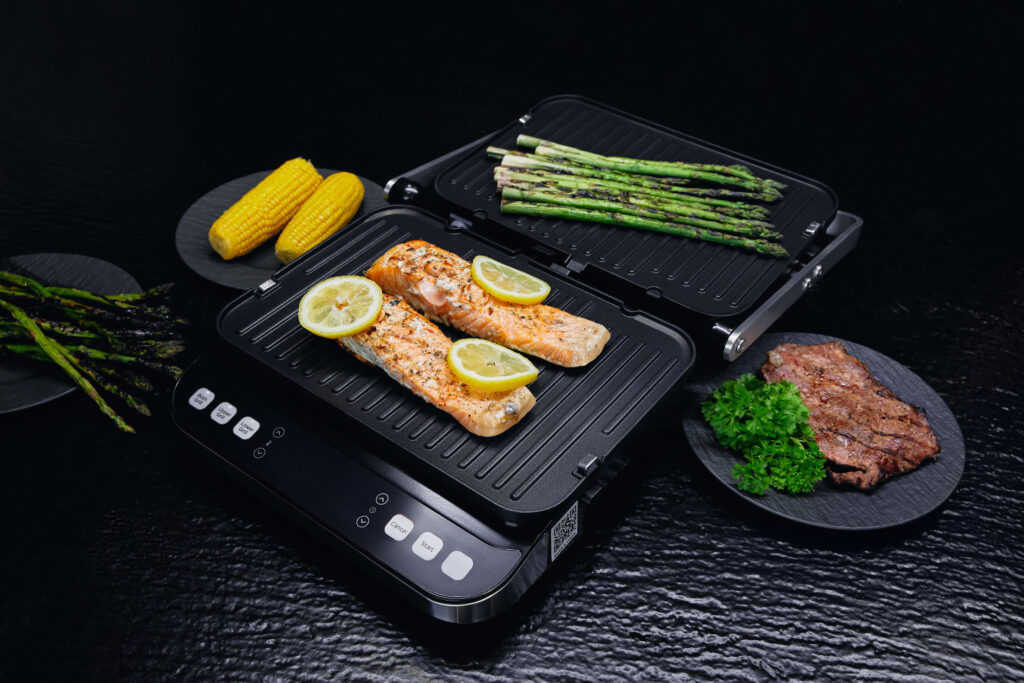
Credit: aeno.com
Cleaning And Maintenance
A clean grill lasts longer and makes your next meal taste better. Here’s how to care for your electric grill:
After Each Use
- Unplug and cool. Always disconnect the grill and let it cool down before cleaning.
- Remove plates and trays. If your grill has removable parts, take them out and wash in warm, soapy water.
- Wipe surfaces. Use a damp cloth or sponge for non-removable parts. Avoid soaking electrical components.
- Empty the drip tray. Dispose of fat and juices, then wash the tray.
Deep Cleaning
- Non-stick plates: Use a soft brush or nylon scrubber—never steel wool.
- Heating element: Wipe carefully with a damp cloth, avoiding water on electrical parts.
- Exterior: Clean with a mild cleaner or damp towel.
Maintenance Tips
- Check the power cord for damage regularly.
- Store the grill in a dry place.
- Replace non-stick plates if they become scratched or worn.
Tips For Better Electric Grilling
- Preheat fully. Waiting until the grill is hot gives better searing and flavor.
- Use a thermometer. This small tool can save many meals.
- Don’t press down on food. Pressing burgers or sandwiches squeezes out juices and dries them out.
- Experiment with flavor. Try adding smoked paprika or liquid smoke to marinades for a classic BBQ taste.
- Let food rest. This makes meats juicier and more tender.
- Try grilling fruit. Pineapple, peaches, and watermelon taste amazing when grilled.
- Alternate skewers. For kabobs, alternate meat and veggies for even cooking.
- Use parchment paper. For delicate fish, place a piece under the fillet to prevent sticking.
- Watch for smoke. If you see smoke, reduce heat or check the drip tray.
A useful but overlooked tip: Rotate your grill plates or flip removable ones halfway through cleaning to spot hidden residue.
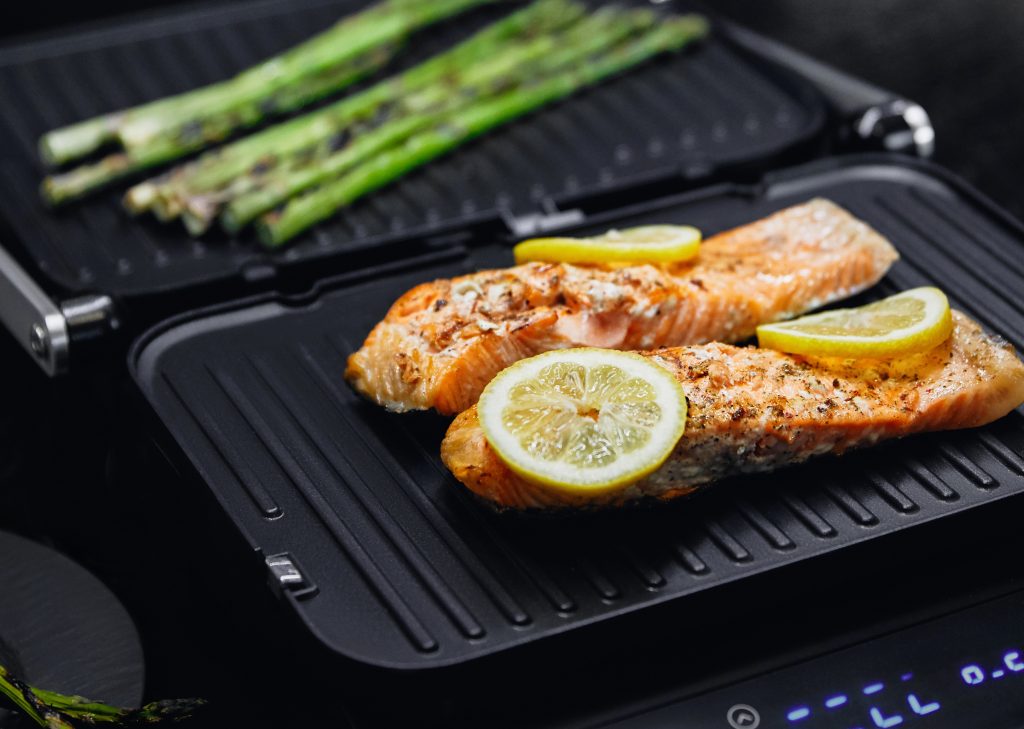
Credit: aeno.com
Recipes To Try On Your Electric Grill
Grilled Chicken Breast
- Ingredients: 2 chicken breasts, 2 tbsp olive oil, 1 tsp salt, 1 tsp paprika, ½ tsp garlic powder
- Instructions:
- Pound chicken to even thickness.
- Mix oil and spices, coat chicken, and let sit 30 minutes.
- Preheat grill to high, oil plates.
- Grill chicken 5–6 minutes per side, until 165°F (74°C).
- Rest 5 minutes before slicing.
Grilled Vegetable Skewers
- Ingredients: 1 zucchini, 1 bell pepper, 8 mushrooms, 1 red onion, 2 tbsp olive oil, salt, pepper
- Instructions:
- Cut vegetables into 1-inch pieces.
- Toss with oil, salt, and pepper.
- Thread onto skewers.
- Preheat grill to medium-high, oil plates.
- Grill skewers 8–10 minutes, turning occasionally.
Classic Panini
- Ingredients: 2 slices Italian bread, 2 slices mozzarella, 2 slices tomato, 2 basil leaves, 1 tbsp pesto
- Instructions:
- Spread pesto on bread.
- Layer cheese, tomato, and basil.
- Grill sandwich in a contact grill 3–4 minutes, until golden.
Comparing Electric Grills To Other Grill Types
If you’re considering an electric grill, it helps to see how they compare to gas and charcoal grills.
| Feature | Electric Grill | Gas Grill | Charcoal Grill |
|---|---|---|---|
| Setup Time | 5–10 minutes | 10–15 minutes | 15–20 minutes |
| Ease of Use | Very easy | Moderate | More complex |
| Indoor Use | Yes | No | No |
| Flavor | Good, but less smoky | Very good | Classic smoky |
| Cleanup | Easy | Moderate | Messy |
| Cost to Run | Low | Medium | Low |
Electric grills are the best choice if you want speed, safety, and indoor cooking. For strong smoky flavor, charcoal is still king, but requires more time and skill.

Credit: www.youtube.com
Troubleshooting Common Electric Grill Problems
Even good grills have problems sometimes. Here’s how to solve common issues:
Grill Won’t Heat Up
- Check if it’s plugged in.
- Try a different outlet.
- Make sure the temperature dial is set correctly.
- If it still doesn’t work, the heating element may need replacement.
Food Sticks To Grill
- Always oil the plates before cooking.
- Don’t move the food too soon—let it sear and release.
- Use a silicone spatula instead of metal.
Uneven Cooking
- Preheat fully before adding food.
- Don’t overcrowd the grill.
- For thick items, flip halfway and move to different spots on the grill.
Too Much Smoke
- Trim excess fat from meat.
- Clean the drip tray and grill plates before starting.
- Use lower heat for fatty foods.
Grill Smells Bad
- Clean after each use.
- For deep odors, wipe with a solution of baking soda and water.
Electric Grill Safety Tips
Safety is important with any kitchen appliance. Here’s how to grill safely:
- Keep children and pets away from the hot grill.
- Never leave the grill unattended while in use.
- Don’t pour water on a hot grill—it can damage the heating element.
- Unplug the grill before cleaning or moving.
- Only use the grill on stable, heat-resistant surfaces.
- Store the grill out of reach when not in use.
It’s also wise to read your grill’s manual—some features or warnings are unique to each model.
Frequently Asked Questions
How Long Does It Take To Preheat An Electric Grill?
Most electric grills need about 5 to 10 minutes to preheat. Wait for the indicator light to show it’s ready before adding food. Preheating helps food cook evenly and gives better grill marks.
Can I Use An Electric Grill Indoors?
Yes, most electric grills are designed for indoor use. They produce less smoke than other grills and are safe for kitchens, apartments, or dorms. Just make sure the area is well-ventilated, especially for fatty foods.
How Do I Prevent Food From Sticking To The Grill?
To keep food from sticking, always lightly oil the grill plates before cooking. Let food sear for a minute before trying to move it. Use silicone or wooden tools instead of metal to protect the non-stick surface.
Is The Food As Flavorful As On A Charcoal Grill?
Electric grills give good flavor, especially with marinades and rubs. However, they don’t have the smoky taste of charcoal. For extra flavor, try adding smoked spices or a drop of liquid smoke to your food. Learn more about grilling flavors at Britannica.
How Do I Clean An Electric Grill Safely?
First, unplug the grill and let it cool. Remove plates and trays to wash with warm soapy water. Wipe non-removable parts with a damp cloth. Never put electrical parts in water. Clean after every use to prevent buildup and odors.
Using an electric grill is simple, safe, and opens up new ways to enjoy grilled food all year round. With the right setup, preparation, and a few expert tips, you can make delicious meals quickly and easily. Remember to care for your grill, try new recipes, and enjoy the convenience of electric grilling at home.