
Using kitchen shears can change the way you cook. Many people think of them as just heavy scissors, but they are much more than that. Kitchen shears are built for tough jobs. They can cut meat, snip herbs, open packages, trim fat, and even crack nuts.
If you have never used them, you might not know how helpful they really are. With the right technique, kitchen shears can make your time in the kitchen easier, faster, and safer.
Most home cooks use knives for almost every cutting task. But knives are not always the best tool. Sometimes, using a knife is less safe or less efficient than using kitchen shears. For example, cutting chicken bones or spatchcocking a chicken with a knife can be dangerous.
Shears make these jobs simple. They are also easier to use for small hands, people with arthritis, or anyone who struggles with knife skills.
This guide will show you how to use kitchen shears for many jobs. You’ll learn how to choose the right pair, the best ways to use them, and how to keep them sharp and clean. Whether you are a beginner or an experienced cook, you will find helpful tips and new ideas here.
What Are Kitchen Shears?
Kitchen shears look like large, strong scissors. They are made for food, not for paper or fabric. The blades are thick and sharp. The handles are often larger, sometimes with soft grips or loops for comfort. Some shears have extra features, like a built-in bottle opener or nutcracker.
The main difference between kitchen shears and regular scissors is the blade design and strength. Kitchen shears can cut through bones, shells, and tough meat. Most pairs come apart for cleaning. This helps prevent bacteria from building up.
Common Types Of Kitchen Shears
There are a few main types of kitchen shears:
- All-purpose shears: These are the most common and can handle most kitchen tasks.
- Poultry shears: Designed for cutting chicken, duck, or turkey. They are strong and sometimes have a curved blade.
- Herb scissors: These have multiple blades for snipping herbs quickly.
- Seafood shears: Made for cutting through shells, like crab or lobster.
Most home cooks will get the most use from all-purpose or poultry shears.
Why Use Kitchen Shears Instead Of A Knife?
Many cooks ask why they should use shears when they have a good knife. Here are some reasons:
- Safety: Shears are often safer, especially for cutting slippery or tough foods.
- Control: You can guide shears more easily, making precision work simpler.
- Speed: For many tasks, shears are faster than a knife.
- Versatility: Shears can open packages, trim herbs, and crack nuts—jobs that knives can’t do.
For example, spatchcocking a chicken (removing the backbone so it cooks flat) is much simpler with shears than with a knife. Cutting pizza, chopping dried fruit, or slicing bacon are all quicker and neater with shears.
Credit: www.cnet.com
Key Features To Look For In Kitchen Shears
Choosing the right pair of shears makes a big difference. Here are the most important features:
| Feature | Why It Matters | What to Look For |
|---|---|---|
| Blade Material | Stronger blades stay sharp longer and resist rust. | Stainless steel or high-carbon steel |
| Handle Comfort | Comfortable handles prevent hand fatigue and slipping. | Soft grips, large loops, ergonomic shape |
| Take-apart Design | Allows for easy cleaning and prevents bacteria buildup. | Blades that separate easily |
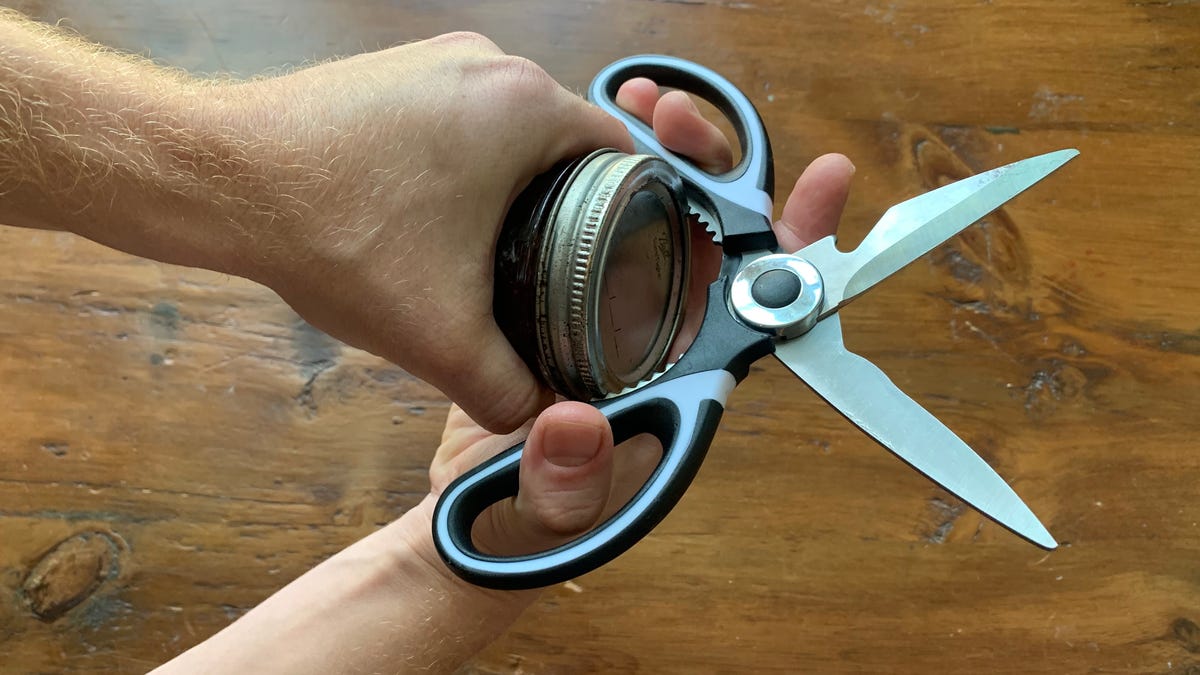
| Extra Features | Added tools increase versatility. | Bottle opener, nutcracker, jar opener in handle |
Blade Material
Most good shears are made from stainless steel. This metal resists rust and stays sharp. Some high-end shears use high-carbon steel, which is even stronger but can rust if not dried carefully. Avoid plastic blades or cheap metals—they dull quickly and can break.
Handle Comfort
If you use shears often, comfort is important. Look for soft grips or handles that fit your hand well. Some handles have a non-slip coating. If you have small hands or arthritis, test the shears before buying. The handles should open and close smoothly.
Take-apart Design
Food can get trapped between the blades. Take-apart shears let you separate the blades and wash each part. This keeps your shears clean and safe.
Extra Features
Some shears have tools built into the handle, like a nutcracker or bottle opener. These are nice, but not necessary. Only buy shears with extra features if you will use them.
How To Hold And Use Kitchen Shears Safely
Using kitchen shears is simple, but a few tips make them even safer and easier.
Proper Grip
Hold the shears as you would scissors. Your thumb goes in the smaller loop, and your fingers in the larger loop. If the handles are the same size, use the grip that feels most comfortable and gives you the best control.
Basic Cutting Technique
Open the blades wide. Place the food between the blades, close to the pivot (the screw that holds the blades together). This gives you more cutting power. Squeeze the handles together to cut through the food. For tough items, use a rocking motion.
Two-handed Use
For very tough jobs, like cutting poultry bones, you can use both hands on the handles for extra strength. Always keep your fingers away from the blades.
Keep Blades Straight
Cut straight, not at an angle. Cutting at an angle can slip and cause injury.
Common Kitchen Tasks For Shears
Kitchen shears are useful for many jobs. Here are some of the most common:
- Cutting herbs: Snip fresh herbs like parsley or chives directly into a bowl or over food.
- Trimming meat: Remove fat, skin, or gristle from beef, pork, or chicken.
- Spatchcocking poultry: Remove the backbone from chicken or turkey for faster, even roasting.
- Cutting bacon: Slice bacon strips into small pieces quickly.
- Chopping dried fruit: Cut sticky fruits like dates or apricots without a knife.
- Opening packages: Snip open bags of pasta, rice, or frozen vegetables.
- Slicing pizza: Cut pizza into slices without crushing the crust.
- Cracking nuts: Use the built-in nutcracker in the handle.
- Cleaning shrimp: Cut shells and devein shrimp easily.
- Preparing vegetables: Cut green beans, asparagus, or broccoli into bite-size pieces.
Uncommon Uses Beginners Miss
- Cutting parchment paper: Shears make it easy to fit parchment into baking pans.
- Dividing dough: Snip cookie or bread dough into equal pieces.
- Making garnishes: Shape vegetables into flowers or other designs.
These extra uses make shears even more valuable in the kitchen.
Step-by-step: How To Use Kitchen Shears For Poultry
One of the best uses for kitchen shears is breaking down poultry. Here’s how to spatchcock a chicken:
- Place the chicken breast-side down on a cutting board.
- Find the backbone. Start at the tail and cut up one side of the backbone, as close to the bone as possible.
- Repeat on the other side to remove the backbone completely.
- Open the chicken and press down to flatten it.
- Trim any extra fat or skin with the shears.
This method is much safer and faster than using a knife. You can use the same method for turkey, duck, or game birds.
Tips For Success
- Use a sturdy, non-slip cutting board.
- Wipe the blades clean as you cut to avoid slipping.
- If the bones are very thick, cut in small steps, not all at once.
:max_bytes(150000):strip_icc()/ms-kitchen-shears-getty-26565340768d438baf50b9f881045001.jpg)
Credit: www.marthastewart.com
Step-by-step: Snipping Herbs And Greens
Using shears for herbs is quick and neat:
- Wash and dry the herbs.
- Gather the leaves into a small bunch.
- Hold the bunch over the bowl or plate.
- Snip with the shears, making even cuts.
Shears are also good for cutting green onions or even leafy greens for salads.
Pro Tip
If you use shears often for herbs, look for multi-blade herb scissors. They cut several strips at once, saving time.
Cleaning And Caring For Kitchen Shears
Shears touch raw meat, sticky foods, and more. Keeping them clean is important for safety and performance.
How To Clean
- Take the shears apart if possible.
- Wash both blades with hot, soapy water.
- Scrub around the pivot and handle.
- Dry fully before putting back together.
Never leave shears soaking in water. This can cause rust and loosen the pivot.
Can You Put Kitchen Shears In The Dishwasher?
Some shears say they are dishwasher safe. However, hand washing is always best. The dishwasher can dull the blades and damage the handle over time.
Sharpening Kitchen Shears
Dull shears are dangerous and hard to use. Here’s how to keep them sharp:
- Use a sharpening stone or a special scissor sharpener.
- Some shears have built-in sharpeners.
- Sharpen both blades, following the original angle.
If you are unsure, take your shears to a professional sharpener. Many kitchen stores offer this service.
Storing Kitchen Shears
Store shears in a safe place, away from children. Some shears come with a blade cover. You can also keep them in a knife block or on a magnetic strip.
Kitchen Shears Vs. Other Kitchen Tools
How do shears compare with knives or other cutting tools? Here’s a quick look:
| Task | Best Tool | Why |
|---|---|---|
| Cutting bones | Kitchen shears | Safer, more control than a knife |
| Slicing bread | Bread knife | Long serrated blade makes clean cuts |
| Snipping herbs | Kitchen shears | Quick, no board needed |
| Dicing vegetables | Chef’s knife | Faster for large batches |
| Opening packages | Kitchen shears | Easy, no risk of cutting yourself |
As you can see, shears are best for many jobs where a knife is less safe or less efficient.
Mistakes To Avoid When Using Kitchen Shears
Even a simple tool like kitchen shears can be misused. Here are common mistakes:
- Using the wrong shears: Never use paper or craft scissors for food. Only use kitchen shears designed for cooking.
- Cutting hard bones: Even kitchen shears have limits. Don’t try to cut very thick bones (like turkey drumsticks) unless the shears are rated for it.
- Forgetting to clean: Food stuck in the pivot or between blades can cause bacteria or dullness.
- Not sharpening: Dull blades are dangerous and hard to use.
- Using shears for everything: Shears are great, but not perfect for every task. Use knives when they are better suited.
If you avoid these errors, your kitchen shears will last longer and work better.
How To Choose The Best Kitchen Shears For You
With so many options, it can be hard to choose. Think about these questions:
- What will you use them for most? If you cook a lot of chicken, choose strong poultry shears. If you snip a lot of herbs, herb scissors may help.
- Do you need extra features? Some people like built-in nutcrackers or bottle openers.
- How easy are they to clean? Take-apart shears are safer and more hygienic.
- What is your budget? Good shears cost between $15 and $50. Very cheap shears often break or dull quickly.
Popular Kitchen Shear Brands
Some trusted brands include Wüsthof, OXO, KitchenAid, and Zwilling J.A. Henckels. These brands are known for quality and durability.
Professional Tips For Getting The Most From Your Shears
- Oil the pivot: A drop of cooking oil keeps the pivot smooth.
- Use for small tasks: Snip open bags, cut string, and trim parchment paper.
- Keep a backup: If you use shears often, keep a second pair for non-food jobs (like opening boxes).
- Mark your shears: If you use more than one pair, label them for meat, herbs, or general use.
- Practice control: For precision, use the tip of the blades for small cuts and the base for strong cuts.
Many home cooks forget to oil the pivot. This small step makes shears last longer and work more smoothly.
Real-world Examples: How Chefs Use Kitchen Shears
Many professional chefs use kitchen shears daily. Here are some examples:
- Chef Jacques Pépin often uses shears to trim poultry, snip herbs, and even cut small vegetables.
- In busy restaurant kitchens, shears are used for speed—cutting parchment paper, dividing dough, and opening packages.
- Sushi chefs use shears to cut seaweed or trim fish quickly and neatly.
Chefs know that shears save time and reduce the risk of injury. They also help with tasks that are hard to do with a knife.
Cleaning, Sharpening, And Maintenance Schedule
To keep your kitchen shears in top shape, follow this maintenance schedule:
| Task | Frequency | Notes |
|---|---|---|
| Wash after every use | Every time | Hand wash and dry fully |
| Sharpen blades | Every 2-3 months | Or when blades feel dull |
| Oil pivot | Monthly | Use a drop of food-safe oil |
| Check for rust or damage | Monthly | Replace if damaged |
Following this routine will keep your shears sharp, clean, and safe to use.
:max_bytes(150000):strip_icc()/__opt__aboutcom__coeus__resources__content_migration__serious_eats__seriouseats.com__images__2014__12__20141201-kitchen-shears-uses-vicky-wasik-8-b92f08b42b4f473f8f09410698bf75e2.jpg)
Credit: www.seriouseats.com
Are Kitchen Shears Worth The Investment?
Many people wonder if they really need kitchen shears. The answer is yes—if you cook often, they are worth it. They save time, improve safety, and make many jobs easier. Even if you have a good set of knives, shears fill a different role.
Once you start using them, you may wonder how you ever cooked without them.
According to a survey by the International Housewares Association, over 70% of home cooks who own kitchen shears use them at least once a week. Professional chefs use them even more. This shows how useful and versatile they are.
For more on the value of kitchen shears and expert picks, you can check this NY Times Wirecutter review.
Frequently Asked Questions
How Do I Sharpen Kitchen Shears At Home?
You can use a sharpening stone or a special scissor sharpener. Separate the blades if possible. Hold the blade at the original angle and slide it along the stone. Repeat for both blades. Some shears have a built-in sharpener in the handle. If you are unsure, take them to a professional sharpener.
Can Kitchen Shears Go In The Dishwasher?
Some kitchen shears are labeled as dishwasher safe, but hand washing is better. The dishwasher can dull the blades and damage the handle over time. Always dry the shears fully to prevent rust.
What Foods Should I Not Cut With Kitchen Shears?
Avoid cutting very hard bones, frozen foods, or items that are thicker than the blades can handle. Using shears for these jobs can damage the blades. Also, do not use kitchen shears for non-food items, as this will dull them.
How Do I Clean Kitchen Shears After Cutting Raw Meat?
Take the shears apart if possible. Wash both blades with hot, soapy water. Scrub around the pivot and handle. Rinse and dry fully. You can also sanitize the blades with a bit of white vinegar or a food-safe disinfectant.
Are Kitchen Shears The Same As Scissors?
No, kitchen shears are stronger and made for food. Regular scissors are for paper or fabric and can’t handle tough food jobs. Never use regular scissors for cutting food, as they may not be safe or clean enough.
Using kitchen shears is a simple way to improve your cooking. With the right pair and good care, they will last for years and help you tackle many kitchen tasks. Whether you are snipping herbs or breaking down a chicken, you will find that kitchen shears are a smart, practical tool for every home cook.