
Maintaining a swimming pool is not just about keeping the water clean and clear. It’s also about balancing chemicals that are invisible to the eye but crucial for safety, comfort, and the long-term health of your pool. If you’re dealing with high pH and low alkalinity, you’re not alone. Many pool owners find themselves facing this tricky combination, unsure what it means or how to fix it. Understanding this challenge is key to preventing green water, damaged surfaces, and uncomfortable swims.
Let’s dive deep into what happens when your pool has high pH but low alkalinity, why it’s a problem, and how you can confidently restore balance. This guide offers practical steps, non-obvious tips, and expert insights to help you get your pool back on track—without costly trial and error.
Understanding Ph And Alkalinity
Before fixing any problem, you need to know what you’re dealing with. pH and alkalinity are related but separate parts of your pool’s water chemistry.
pH measures how acidic or basic your water is on a scale from 0 to 14. Neutral water is 7.0. Lower is more acidic; higher is more basic (alkaline). Most pools should stay between 7.2 and 7.6 for safe, comfortable swimming.
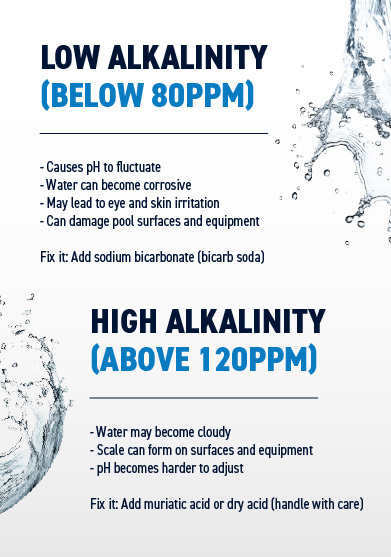
Alkalinity (often called total alkalinity) is a measure of the water’s ability to resist changes in pH. It acts like a buffer, helping keep pH stable. The ideal range for pool alkalinity is 80–120 parts per million (ppm).
High pH means the water is too alkaline, but if alkalinity is low at the same time, your water lacks the buffering power to keep pH stable. This can make your pool unpredictable and lead to a range of issues.
Why High Ph With Low Alkalinity Is A Problem
Most people think that if the pH is high, alkalinity must be high too. But that’s not always true. High pH and low alkalinity can occur together, especially if you’ve recently added certain chemicals, used aeration, or tried to fix other water problems.
This situation causes several challenges:
- Unstable pH: With low alkalinity, pH can swing up and down quickly, making it hard to control.
- Scale Formation: High pH encourages calcium and other minerals to settle on surfaces, causing rough, white scale.
- Cloudy Water: Imbalanced water chemistry can make your pool look milky or dull.
- Irritation: Swimmers may experience itchy skin and burning eyes.
- Equipment Damage: Corrosive water can damage heaters, pumps, and pool liners.
- Reduced Sanitizer Effectiveness: High pH makes chlorine less effective, so germs and algae can multiply.
Many pool owners try to fix high pH by adding acid, but if alkalinity is already low, this can make things worse. The real solution is a careful, step-by-step approach.
Common Causes Of High Ph And Low Alkalinity
Understanding how you got here can help you avoid the same mistake in the future. Here are some of the most common causes:
- Overuse of pH Increaser: Adding too much soda ash or pH Up raises pH quickly but doesn’t boost alkalinity much.
- Adding Calcium Hypochlorite: This common chlorine type increases pH but only slightly raises alkalinity.
- Excessive Aeration: Running waterfalls, fountains, or spa jets for long periods can push pH higher while driving off carbon dioxide, which can lower alkalinity.
- Acid Treatments: Using muriatic acid or dry acid to lower pH can also lower alkalinity if overdone.
- Source Water: Sometimes, tap or well water used to fill the pool has an unusual pH and alkalinity balance.
- Rain and Storms: Acid rain can lower alkalinity, but if you add chemicals to fix the pH afterward, you might accidentally create high pH/low alkalinity.
How To Test And Confirm Your Pool’s Ph And Alkalinity
Guesswork has no place in pool care. Always rely on accurate testing. Here’s how to confirm your water’s true condition:
- Use a Reliable Test Kit: Drop kits are more accurate than test strips, but strips are fine for a quick check.
- Test at the Same Time Each Day: Water chemistry can change with sunlight and temperature.
- Take Water from 18 Inches Below the Surface: Avoid surface water, which can give false readings.
- Rinse Testing Equipment Before Use: Leftover chemicals can affect the results.
- Write Down Results: Track changes over days to spot trends.
Typical test results for this problem:
- PH: 7.8 or higher
- Alkalinity: Below 80 ppm (sometimes as low as 40 ppm or less)
Effects Of High Ph And Low Alkalinity On Pool Water
When pH climbs above 7. 8 and alkalinity drops below 80 ppm, you may notice several problems—even if you haven’t tested the water yet.
Water Appearance
- Cloudy or Dull Water: Not as sparkling as usual.
- White Flakes or Rough Surfaces: Signs of scaling on tiles, ladders, or lights.
Swimmer Comfort
- Itchy Skin: High pH can dry and irritate skin.
- Red Eyes: Many blame chlorine, but high pH is often the cause.
- Dry Hair: Water feels “harder” and less gentle.
Pool Equipment And Surfaces
- Scaling: White, crusty deposits form on pipes, heaters, and pool walls.
- Corrosion: Low alkalinity can make water corrosive, damaging metal parts and pool liners.
- Pump and Filter Stress: Scale buildup reduces flow and efficiency.
Sanitizer Performance
- Chlorine Loses Power: At pH 8.0, chlorine is only about 20% as effective as at pH 7.4.
- Algae Growth: Poor chlorine performance means more risk of green, slimy water.
These effects may appear slowly, but once they start, they can be hard to reverse. Prevention is always easier than repair.
Step-by-step Solution: Balancing High Ph And Low Alkalinity
Fixing this issue requires a specific approach. Adding acid will lower both pH and alkalinity, but you want to fix alkalinity without making pH drop too much. Here’s a proven step-by-step plan:
Step 1: Lower Ph To The Correct Range
Start by bringing pH down to the ideal range (7.2–7.6). Use muriatic acid or dry acid (sodium bisulfate).
- Calculate how much acid you need using a pool calculator (many are available online).
- Add acid slowly to the deep end, with the pump running.
- Wait at least 2–4 hours, then retest.
Tip: If pH is only slightly high, use less acid. It’s easier to add more than to fix an overdose.
Step 2: Raise Alkalinity Without Raising Ph Too Much
Now you need to increase alkalinity. The best product is sodium bicarbonate (baking soda). It raises alkalinity with only a small effect on pH.
- Add baking soda according to label directions (usually 1.5 pounds per 10,000 gallons raises alkalinity by 10 ppm).
- Broadcast it slowly across the pool, not dumping in one spot.
- Let the pump run for several hours.
- Test alkalinity after 6–8 hours.
If you need to add a lot, do it in smaller doses over several days to avoid cloudy water.
Step 3: Check Ph Again
After raising alkalinity, pH may creep up. If it’s above 7. 6, add a small amount of acid to bring it down.
- Always adjust alkalinity first, then fine-tune pH.
Step 4: Repeat As Needed
Sometimes, you’ll need to go through this process more than once to get both numbers in the right range. Be patient and make small changes.
Step 5: Test Other Water Factors
Once pH and alkalinity are balanced, check calcium hardness and cyanuric acid (stabilizer) to keep your water fully in balance.
Credit: barrierreefpools.com
How Much Acid And Baking Soda Do You Need?
Here’s a quick reference for common pool sizes. These are rough estimates—always check your own water and use a calculator for precision.
| Pool Size (Gallons) | To Lower pH (1.0 unit) Muriatic Acid (oz) | To Raise Alkalinity (10 ppm) Baking Soda (lbs) |
|---|---|---|
| 10,000 | 12 | 1.5 |
| 15,000 | 18 | 2.25 |
| 20,000 | 24 | 3 |
| 25,000 | 30 | 3.75 |
These numbers assume average pool conditions. If your pool is saltwater or has unusual features, adjust carefully.
The Chemistry Behind The Problem
Many pool owners are surprised that pH and alkalinity can move in different directions. Here’s why it happens:
- PH is a snapshot of how acidic/basic your water is right now.
- Alkalinity measures the water’s ability to “buffer” or resist pH change.
When you add soda ash (sodium carbonate), you raise pH a lot but alkalinity only a bit. When you add baking soda (sodium bicarbonate), you increase alkalinity much more than pH. Muriatic acid or dry acid lower both, but the effect on alkalinity is stronger per amount used.
Aeration (like running spa jets) removes carbon dioxide, which causes pH to rise even if alkalinity doesn’t. That’s how you can end up with high pH and low alkalinity—a surprising combination if you’re not watching closely.
Advanced Tips And Non-obvious Insights
Most pool guides stop at the basics. Here are expert tips that beginners often miss:
- Aeration Can Help Fine-Tune pH: If you need to raise pH slightly without affecting alkalinity, run a fountain or spa jets. This slowly increases pH by releasing carbon dioxide.
- Alkalinity Increaser vs. Baking Soda: Many “alkalinity increaser” products are just repackaged baking soda. Check the label and save money by buying plain sodium bicarbonate.
- Test After 24 Hours: Chemical changes don’t always show up immediately. For the most accurate results, test again the next day.
- Don’t Mix Chemicals: Never add acid and baking soda at the same time—they’ll neutralize each other and create a lot of fizz.
- Watch Out for Rain: Heavy rain can dilute your pool water, lowering alkalinity and affecting pH. Test after storms.
- Adjust in Small Steps: It’s tempting to add a lot of chemicals at once, but small adjustments are safer and more effective.
How To Prevent Future High Ph/low Alkalinity Problems
Once you’ve fixed your pool, you want to keep it balanced. Prevention is less work than constant correction.
- Test Weekly: Regular testing is the best defense. Don’t wait for problems to appear.
- Use Chemicals Carefully: Add only the recommended amounts. If unsure, use less and retest.
- Balance First: Always adjust alkalinity first, then pH. This makes it easier to control both.
- Limit Aeration: If you love fountains or spa jets, use them in moderation, especially if your pool is prone to rising pH.
- Choose the Right Chlorine: Some chlorine types (like trichlor tablets) are acidic and can lower pH, while others (like cal-hypo) raise it. Pick what suits your pool’s needs.
- Keep Records: Write down what you add and your test results. Over time, you’ll spot patterns and prevent mistakes.
Comparing The Effects: High Ph Vs. Low Alkalinity
It helps to see how each problem affects your pool. Here’s a direct comparison:
| Issue | Common Effects | How to Fix |
|---|---|---|
| High pH | Cloudy water, scaling, poor chlorine action, skin/eye irritation | Add acid to lower pH |
| Low Alkalinity | Unstable pH, corrosion, rapid pH swings, metal stains | Add baking soda to raise alkalinity |
| Both Together | All of the above, plus hard-to-control water | Follow the step-by-step plan above |
Mistakes To Avoid When Balancing Ph And Alkalinity
Even experienced pool owners sometimes trip up. Here are common mistakes and how to avoid them:
- Adding Too Much Acid or Baking Soda at Once: Overcorrecting can swing your water from one extreme to another.
- Testing Too Soon: Give chemicals time to circulate. Wait several hours before retesting.
- Ignoring Source Water: If your fill water has unusual chemistry, it can undo your hard work. Test tap water before adding large amounts.
- Using the Wrong Product: Don’t confuse pH increaser (soda ash) with alkalinity increaser (baking soda). They act differently.
- Not Running the Pump: Always circulate water when adding chemicals so they mix evenly.
- Forgetting About Calcium: High calcium levels can cause scaling when pH is high, even if alkalinity is normal.

Credit: waterguru.com
Real-life Example: Fixing A Pool With High Ph And Low Alkalinity
Let’s say you have a 15,000-gallon pool. You test and find:
- PH: 8.0
- Alkalinity: 50 ppm
Here’s what you’d do:
- Lower pH: Add about 18 ounces of muriatic acid. Pour slowly with the pump running.
- Wait and Test: After 4 hours, pH is 7.5, alkalinity is 45 ppm (acid lowers both).
- Raise Alkalinity: Add 6.75 pounds of baking soda over two days (3.375 pounds each day).
- Test Again: Now alkalinity is 100 ppm, pH is 7.7.
- Fine-Tune: Add a small amount of acid (about 4 ounces) to bring pH back to 7.5.
Result: Balanced water, safe for swimmers, and no more scaling or irritation.
How Different Pool Types Affect Ph And Alkalinity
Not all pools are the same. Your approach may vary depending on the type:
Saltwater Pools
Saltwater systems tend to raise pH slowly over time. Regular acid addition is often needed. Test weekly.
Vinyl Liner Pools
Low alkalinity is especially risky—it can make water corrosive and damage the liner. Always keep alkalinity above 80 ppm.
Plaster Or Concrete Pools
High pH and low alkalinity can cause scaling, which is hard to remove from rough surfaces. Balance chemicals carefully.
Fiberglass Pools
These are less affected by scaling but still need balanced water for comfort and equipment protection.
What If Balancing Doesn’t Work?
If you’ve tried the steps above and your pH or alkalinity still won’t stay in range, consider these possibilities:
- Hidden Algae or Organic Debris: Organic matter can consume chemicals and make balance difficult.
- Malfunctioning Equipment: A broken pump or filter can leave chemicals unevenly mixed.
- High TDS (Total Dissolved Solids): Very old pool water may be saturated with minerals, making it hard to balance. In this case, partial draining and refilling may help.
- Wrong Test Results: Old or expired test kits can give false readings. Replace them yearly for accuracy.
If all else fails, consult a pool professional or your local pool store for a detailed water analysis.
Frequently Asked Questions
Why Does My Pool Keep Getting High Ph And Low Alkalinity Even After Balancing?
Usually, this happens because of ongoing factors like overuse of fountains or certain types of chlorine. Saltwater pools, for example, naturally drift toward higher pH. Also, if you’re topping off with fill water that has low alkalinity, the problem can return quickly.
Regular testing and small, frequent adjustments are the best solution.
Can I Swim In My Pool If The Ph Is High But Alkalinity Is Low?
It’s not recommended. High pH can irritate skin and eyes, while low alkalinity means the water is unstable and can become unsafe quickly. It’s best to wait until both are in the safe range before swimming.
How Often Should I Test Ph And Alkalinity In My Pool?
Test at least once a week, or more often during heavy use or after storms. If you’re making chemical adjustments, test daily until the water is stable. Keeping a routine helps prevent surprises.
What’s The Difference Between Baking Soda And Soda Ash In Pool Care?
Baking soda (sodium bicarbonate) mainly raises alkalinity, with little effect on pH. Soda ash (sodium carbonate) raises pH much more and only slightly boosts alkalinity. Use baking soda for low alkalinity, soda ash for low pH.
Where Can I Learn More About Pool Chemistry And Water Balance?
A reliable source for pool water chemistry is the Swimming Pool Sanitation page on Wikipedia. It offers a thorough overview of concepts, chemicals, and safety tips.
Keeping your pool healthy is a blend of science and patience. By understanding the relationship between pH and alkalinity, using the right products, and testing regularly, you’ll enjoy crystal-clear water and a safer swimming experience all season long. Don’t let chemical imbalances ruin your fun—master them, and your pool will reward you for years to come.

Credit: www.youtube.com