
If you have ever worked on plumbing in your home, you might have wondered if you can use a vent pipe as a drain. At first glance, both pipes look similar. They’re often made from the same material and run through your walls or floors. But are they really interchangeable? Using pipes incorrectly can lead to expensive damage, health risks, and code violations. Let’s explore this topic in detail and clear up common misunderstandings.
What Is A Vent Pipe?
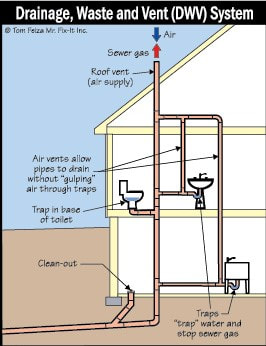
A vent pipe is a pipe in your plumbing system that helps air move in and out. Its main job is to equalize air pressure in the drain system. When water moves through the drain pipes, it can create a vacuum. The vent pipe lets air in, so water and waste can flow smoothly. Without vent pipes, you might hear gurgling sounds or smell unpleasant odors from your drains.
In most homes, vent pipes stick up through the roof. They connect to the drain lines somewhere below. This setup ensures that sewer gases do not build up inside your house. The vent pipe does not carry waste water under normal conditions.
What Is A Drain Pipe?
A drain pipe carries waste water from sinks, toilets, showers, and appliances out of the house. All dirty water eventually moves to the main drain pipe, which connects to the city sewer or a septic tank. Drain pipes must have a slight downward slope so gravity can do its work.
Drain pipes are designed to handle solids, liquids, and the pressure from moving water. They are usually larger in diameter than vent pipes to prevent clogs.

Credit: www.youtube.com
The Key Differences Between Vent And Drain Pipes
At first, vent and drain pipes might seem similar. Both are important for your plumbing to work well. But their functions and requirements are quite different.
| Feature | Vent Pipe | Drain Pipe |
|---|---|---|
| Main Function | Equalizes air pressure; releases sewer gases | Removes waste water and solids |
| Typical Contents | Air, sewer gases (rarely water) | Water, waste, solids |
| Pipe Size | Usually 1.5 to 2 inches | 2 to 4 inches (or more for main drains) |
| Placement | Vertical, through roof | Horizontal and vertical, under floors/walls |
| Building Code | Strict limits on use as drain | Must handle waste, specific slope required |
Why People Consider Using A Vent Pipe As A Drain
You may wonder: why do some homeowners or even contractors try to use a vent pipe as a drain? Here are the most common reasons:
- Convenience: The vent pipe is already in the wall, so it seems easier than installing a new drain.
- Saving money: Less labor and fewer materials mean a cheaper project.
- Lack of knowledge: Some people do not understand the differences or building code rules.
- Space limitations: In small homes or remodels, adding a new drain may be hard.
- DIY shortcuts: Homeowners sometimes try to “make it work” without professional help.
While these reasons are understandable, they can lead to serious problems. The next sections explain why.
What Plumbing Codes Say
Plumbing codes are rules set by local, state, or national governments. They exist to keep plumbing systems safe, healthy, and functional. Most places in the US use the International Plumbing Code (IPC) or the Uniform Plumbing Code (UPC).
Both codes are clear: vent pipes and drain pipes have different jobs. Using a vent as a drain is not allowed except in very limited cases. Here’s what the code says:
- A vent pipe cannot be used as a drain unless it is sized and installed to serve both functions and is approved as a “wet vent.”
- Most vent pipes are too small for waste water flow.
- Vents connect above the highest flood level rim of fixtures (like sinks or tubs), not below.
- Drain pipes must have proper slope, cleanouts, and size.
If you use a vent pipe as a drain without following code, you risk fines, failed inspections, and having to redo the work. If your home has an illegal plumbing connection, it can also cause trouble when selling or insuring the property.
What Is A Wet Vent?
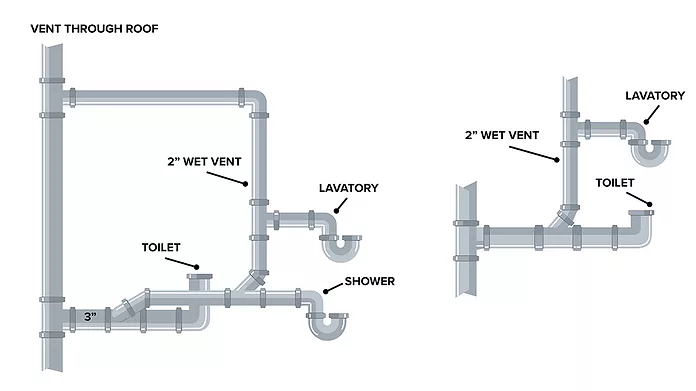
A wet vent is a special type of pipe allowed by plumbing code. It serves as both a vent and a drain for certain fixtures. Wet vents are common in bathrooms, where space is tight and several fixtures are close together.
But there are strict rules:
- Only certain fixtures (like sinks and showers) can connect to a wet vent.
- The wet vent must be big enough (usually at least 2 inches in diameter).
- Only one bathroom group is allowed per wet vent (in most codes).
- Toilets can sometimes use a wet vent, but only with the right pipe size and layout.
Here is a simple example: In a bathroom, the sink drain pipe may also serve as the vent for the shower. The water from the sink and shower both travel in the same pipe for a short distance before joining the main drain. The pipe must be installed correctly for this to work.
When Can A Vent Pipe Be Used As A Drain?
You cannot use a standard vent pipe as a drain. However, a vent can sometimes serve as a drain if:
- It is a properly sized wet vent (allowed by code)
- It is installed by a qualified plumber
- The fixtures connected are allowed by code
- The pipe slope and layout meet all requirements
If you are not sure, ask a licensed plumber or your local building department. Do not guess or copy what you see in other homes. Codes change over time, and “what worked before” may not be safe today.
What Happens If You Use A Vent Pipe As A Drain (illegally)?
Trying to use a vent as a drain without following code can cause a range of problems. Some issues appear right away; others develop slowly over months or years.
1. Frequent Clogs
Vent pipes are usually smaller than drains. A standard vent is often just 1. 5 inches. A drain should be at least 2 inches for sinks or 3–4 inches for toilets. If you send water through a small vent, hair, grease, or soap can clog it fast.
2. Slow Draining Or Backups
Because vent pipes are not sloped for drainage, water may move slowly or even back up. This can cause standing water in sinks, showers, or tubs.
3. Sewer Gas Leaks
If you block a vent by using it as a drain, sewer gases cannot escape. These gases can leak into your home. They smell bad and can be dangerous to your health.
4. Siphoning Of Traps
Traps under your sinks or tubs hold water to block sewer gases. If the vent is missing or blocked, water can be sucked out (“siphoned”), letting gases in.
5. Water Damage
Improperly used vent pipes may leak or burst, especially if overloaded with water. You may not notice leaks inside walls until there is major damage.
6. Mold And Structural Problems
Moisture from leaking or slow drains can encourage mold. Over time, wet wood or drywall can rot, causing expensive repairs.
7. Code Violations And Legal Trouble
If you do unpermitted plumbing, you may fail inspection, face fines, or be forced to remove walls to fix the problem. Insurance may not cover damage from illegal plumbing.
Case Study: Homeowner Mistake
Consider the case of a homeowner who turned a basement vent pipe into a drain for a laundry sink. The vent was only 1. 5 inches wide and not sloped. At first, the sink worked. Within months, the line clogged with lint and soap.
Water backed up onto the floor. Sewer smells filled the basement. Repairs required opening the wall, replacing pipes, and patching drywall—costing over $2,000.
Common Myths About Vent And Drain Pipes
Many people have heard stories or advice about plumbing that are simply not true. Here are some of the most common myths:
- “All pipes are the same, just use what’s available.”
- Drain and vent pipes have different roles, sizes, and requirements.
- “If it fits, it works.”
- Size is only part of the story. Slope, layout, and air flow all matter.
- “I can always fix problems later.”
- Hidden plumbing issues can cause big damage before you notice.
- “Inspectors won’t check behind walls.”
- During home sales or renovations, inspectors often spot illegal plumbing.
- “My neighbor did it and had no problems.”
- What works for one home may fail in another, and problems may not show up right away.
How To Tell If A Pipe Is A Vent Or A Drain
If you are not sure what kind of pipe you are looking at, here are some ways to tell:
- Location: Vent pipes usually go vertical and exit through the roof. Drains are often horizontal and under floors.
- Size: Vents are typically narrower (1.5–2 inches). Drains are larger (2–4 inches or more).
- Connection: Drains connect directly to fixtures. Vents connect higher up and rarely have water coming from them.
- Slope: Drain pipes always slope downward. Vents may be nearly vertical.
If you’re still unsure, consult the building plans or call a plumber.
The Right Way To Add A New Drain
If you need a new drain for a sink, shower, or appliance, here’s what you should do:
- Check local plumbing code: Find out what is allowed in your area.
- Plan the route: Map out where the new drain will go, avoiding other pipes and wires.
- Use the right pipe size: For most sinks, use at least a 2-inch pipe.
- Install proper slope: Drains should slope at least 1/4 inch per foot.
- Connect to a vent: Every drain needs a vent to work properly.
- Get permits and inspections: Most areas require a permit for new drains.
- Hire a pro if unsure: Plumbing mistakes are costly—get help if you have doubts.
Alternatives To Using A Vent Pipe As A Drain
If you cannot easily add a drain and want to avoid using a vent, consider these options:
- Add a new drain line: This may require opening walls or floors but is the safest, most reliable choice.
- Use a wet vent (if allowed): Only for some bathroom groups; check code.
- Install a macerating or upflush system: These grind waste and pump it to a drain, useful in basements.
- Use a condensate pump: For appliances like air conditioners or dehumidifiers, which produce only water, a pump can send water up to the main drain.
- Consult a professional: A licensed plumber can suggest creative but code-legal solutions.
Practical Tips For Homeowners
If you are working on your own plumbing, these practical tips will help avoid mistakes:
- Never guess about what a pipe does—verify with plans or a plumber.
- Label pipes during renovations so you do not mix up vents and drains later.
- Avoid DIY shortcuts that break code, even if they seem to work at first.
- Use the right materials: Not all pipes are safe for drain use (for example, some vents use thin-wall pipe that cannot handle waste water).
- Know when to call for help: If you smell sewer gas, see slow drains, or hear gurgling, get help quickly.
Credit: www.ameliashomeinspection.com
How To Fix An Existing Mistake
If you discover that a vent pipe is being used as a drain in your home, take action immediately. Here’s what to do:
- Stop using the fixture: Avoid making the problem worse by adding more water.
- Inspect the system: Try to find where the vent connects and where the issue starts.
- Call a licensed plumber: They can assess the risks and suggest repairs.
- Replace or reroute pipes: The best solution is to install a proper drain and restore the vent.
- Get permits and inspections: Make sure repairs are done to code to avoid future problems.
Real-world Examples
Example 1: Kitchen Remodel
During a kitchen remodel, a homeowner used an existing vent stack as a drain for a new dishwasher. The pipe clogged within weeks, and water backed up into the sink. The fix involved tearing out cabinets and rerouting the drain—costing extra time and money.
Example 2: Basement Bathroom Addition
A contractor tried to save money by connecting a new shower drain to an old vent pipe. The shower drained slowly, and sewer gas leaked into the room. After inspection, the contractor had to redo the plumbing, install a new vent, and add a proper drain line.
Example 3: Laundry Room Conversion
When adding a new washing machine, a family connected the drain hose to a nearby vent. The vent pipe could not handle the high volume of water. The laundry room flooded, damaging floors and walls. Insurance refused to pay for repairs because the work was not to code.
The Role Of Inspections
Building inspections protect homeowners and future buyers. During renovations, inspectors check that all plumbing meets code. They look for signs of:
- Incorrect pipe sizes
- Improper slope
- Missing or blocked vents
- Unapproved use of vent pipes as drains
If you fail inspection, you must fix the problem before continuing. This process may seem strict, but it prevents bigger problems later on.
The Hidden Dangers: Health And Safety Risks
Using a vent pipe as a drain is not just a technical mistake—it can put your health at risk. Sewer gases contain harmful chemicals like methane and hydrogen sulfide. Breathing these gases can cause headaches, nausea, or worse.
Water leaks hidden in walls create perfect conditions for mold. Mold spores can trigger allergies, asthma, and other health issues. Over time, water damage can weaken the structure of your home.
Cost Comparison: Doing It Right Vs. Doing It Wrong
Let’s compare the costs of a proper drain installation versus the risks of using a vent as a drain.
| Option | Upfront Cost | Risk of Future Costs | Code Compliance |
|---|---|---|---|
| Proper drain installation | $500–$2,500 (depends on project) | Low (if done correctly) | Yes |
| Using vent pipe as drain | $0–$200 (DIY shortcut) | High (clogs, leaks, fines, repairs) | No |
As you can see, shortcuts are rarely worth the risk. The cost of repairs, code violations, and health problems can far outweigh any savings.
Non-obvious Insights For Diyers
Even experienced DIYers sometimes miss these important details:
- Pipe material matters: Vent pipes are sometimes made of lighter materials (like thin-wall PVC) that cannot handle waste water. Drains require stronger, thicker pipes.
- Airflow is critical: Drains need vents to work. If you convert a vent to a drain, you may accidentally cut off airflow to other fixtures, causing slow drains or sewer smells elsewhere in the house.
- Hidden connections: In older homes, pipes may have been rerouted or repurposed over the years. What looks like a vent may actually be part of a wet vent or combined system.
Credit: www.pmmag.com
Simple Rules To Remember
- Never use a vent pipe as a drain unless you know it is a legal wet vent and sized for the job.
- Always check the code before making changes.
- When in doubt, call a pro—plumbing mistakes are expensive to fix.
For more technical details, you can review the full plumbing code on the International Code Council website.
Frequently Asked Questions
What Is The Main Job Of A Vent Pipe?
A vent pipe’s main job is to let air into the plumbing system and release sewer gases safely outside. This keeps water and waste moving smoothly and prevents bad smells.
Can A Vent Pipe Ever Carry Waste Water?
A vent pipe can only carry waste water if it is installed as a “wet vent,” following code rules. Most vent pipes are not sized or sloped to handle waste water.
What Happens If I Use A Vent Pipe As A Drain?
You risk clogs, slow drains, sewer gas leaks, water damage, and code violations. These problems can be expensive and dangerous.
How Do I Know If I Have A Wet Vent?
A wet vent is usually found in bathrooms where several fixtures share one pipe. It must be the right size and installed according to code. If you are not sure, ask a plumber or check your building plans.
Do I Need A Permit To Add A New Drain?
Yes, in most places you need a permit to add or change drain pipes. Permits ensure the work is safe and passes inspection.
Upgrading your plumbing takes careful planning and respect for the rules. Taking shortcuts with vent pipes can create headaches that last for years. If you have questions or face a tricky situation, always check the code and talk to a professional.
Your home—and your health—are worth doing it right.