
When you install a pool liner, you expect it to fit tightly against every part of the wall. A smooth liner is not just about looks—it’s about protecting your pool, preventing leaks, and making maintenance easier. But what if you notice that your pool liner is not against the wall? Maybe there are wrinkles, air pockets, or even large gaps. This problem can be confusing and stressful, especially if you’re new to pool ownership. Understanding why this happens and how to fix it is critical if you want your pool to last for years.
Let’s dive deep into why pool liners pull away, what it means for your pool, and what you can do about it—step by step. This guide is built for real pool owners who want clear answers, not technical jargon.
What It Means When The Pool Liner Is Not Against The Wall
Most above-ground and in-ground pools use a vinyl liner to hold water and cover the pool shell. The liner should be pressed tightly against every surface—floor and walls. When it’s not, you might see:
- Wrinkles or folds
- Air or water pockets
- Sections where the liner hangs away from the wall
This isn’t just a cosmetic issue. Gaps between the liner and wall can lead to:
- Faster liner wear and tears
- Algae growth in hidden spaces
- Leaks and water loss
- Structural problems if left untreated
You might first notice the problem when cleaning, during a pool opening, or when swimming. The liner might look “ballooned” in areas or feel loose when you touch it. Sometimes, the problem gets worse over time.
Common Causes Of Pool Liner Not Against The Wall
Many pool owners wonder if they did something wrong. The truth is, several factors can cause the liner to pull away. Here are the main reasons, explained simply:
1. Groundwater Pressure
Hydrostatic pressure is one of the most common causes, especially for in-ground pools. When water builds up around the outside of the pool, it pushes inward. The liner can “float” or bubble out, making it look loose.
How It Happens:
- Heavy rain or a high water table increases groundwater.
- Poor drainage around the pool keeps water trapped.
- The pressure from outside water is stronger than the water inside the pool.
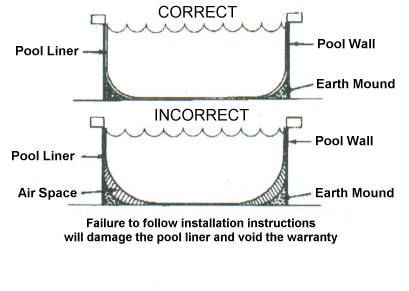
2. Poor Liner Installation
A pool liner must be installed with care. If not, you’ll see problems almost immediately.
Installation mistakes include:
- Not stretching the liner properly
- Failing to remove all air under the liner
- Not securing the liner bead or coping
Even small errors can lead to wrinkles, folds, or areas where the liner never sits flat.
3. Water Loss Or Low Water Level
If your pool loses water (from leaks or evaporation) and the water level drops too low, the liner can loosen and separate from the wall.
This happens when:
- The pool is drained for repairs or cleaning
- There’s a slow leak the owner doesn’t notice
- Evaporation is faster than refill
A liner needs the weight of water pressing outward to keep it snug.
4. Age And Liner Stretch
Over time, vinyl liners lose elasticity. After years in the sun and chemicals, they stretch, shrink, and sometimes “creep” away from the wall. Even a high-quality liner will eventually age out.
Signs of old liner issues:
- Wrinkles that don’t smooth out
- Sections that sag or separate, especially near corners
- Faded or brittle vinyl
5. Poor Pool Base Or Wall Preparation
If the pool floor or walls are uneven, dirty, or have sharp debris, the liner cannot sit flat. Air pockets and bulges form, making the liner pull away from the wall.
6. Chemical Imbalance
Too much chlorine or low pH can damage vinyl, making it stiff or brittle. Over time, this can cause the liner to shrink, wrinkle, or detach.
7. Temperature Changes
Vinyl expands in heat and contracts in cold. Rapid temperature swings—like draining and refilling with cold water—can make the liner pull away.
8. Improper Draining Or Winterization
Draining a vinyl pool fully is almost always a mistake. The liner can shrink, float, or shift, especially during winter.
9. Physical Damage
A sharp object, animal, or even a pool cleaner can puncture or tear the liner, causing it to pull away from the wall.
10. Incorrect Pool Shape Or Size
If the liner was not measured and ordered for your exact pool shape and size, it may never fit tightly.
Why A Tight Pool Liner Matters
You might wonder: is a loose liner really so bad? The answer is yes. Here’s why:
- Leaks and Water Loss: Gaps make it easier for water to escape, even if you can’t see it.
- Algae Growth: Hidden spaces behind the liner are perfect for algae, which is hard to clean and can stain the liner.
- Shorter Liner Life: Wrinkles and folds wear out faster, leading to tears.
- Increased Maintenance: You’ll spend more time and money fixing problems.
- Unsafe Conditions: Loose liners can create trip hazards, especially on the pool floor.
How To Identify Liner Separation Problems
Early detection is key. Some problems are visible, while others need a closer look.
What to check:
- Walk around the pool and look for uneven spots, bulges, or loose sections.
- Feel the liner with your hand—does it move or “give” when pressed?
- Check for new wrinkles, especially near corners or seams.
- Watch for unexplained water loss (a sign of leaks).
- Notice if the liner looks faded, brittle, or shrunken.
If you see any of these signs, it’s time to act.
Step-by-step Solutions For Pool Liner Not Against Wall
Fixing a separated liner depends on the cause and how bad the problem is. Some solutions are DIY, while others need a professional. Let’s break down the best approaches for every situation.
1. Address Groundwater Issues
If the problem is groundwater, you must reduce the outside water pressure.
How to handle it:
- Improve drainage around your pool: Install French drains, gutters, or gravel channels to move water away.
- Lower the local water table: A sump pump pit near the pool can help remove excess groundwater.
- Avoid draining the pool after heavy rain.
In some cases, you may see the liner slowly settle back as groundwater drops. If not, professional help may be needed.
2. Re-stretch Or Reset The Liner
If the liner is new and not stretched correctly, you may be able to reset it.
Steps:
- Warm the liner: Use a pool heater or wait for a hot, sunny day so the vinyl is flexible.
- Release the bead: Carefully remove the liner bead from the track in the problem area.
- Pull and smooth: Gently stretch the liner back into place, smoothing out wrinkles.
- Reinstall the bead: Snap it back into the track, checking for a tight fit.
If the liner is old or brittle, do not force it—this can cause tears.
3. Add Water And Remove Air
If the water level was low, refill the pool to the proper height. As water fills, use a pool vacuum or a shop vac to suck air out from behind the liner. This helps press it back against the wall.
Tip: Place the vacuum hose behind the liner edge (at the skimmer or return), seal it with a towel, and run the vacuum while filling the pool. This trick is often used by pool installers.
4. Repair Or Patch Physical Damage
If you find a tear or hole, patch it immediately. Use a vinyl repair kit—these work underwater and are easy for DIY fixes.
Steps:
- Clean the area around the tear.
- Cut a patch at least 2 inches larger than the hole.
- Apply adhesive, press the patch on, and hold for a minute.
- Smooth out any air bubbles.
5. Replace The Liner If Needed
If the liner is very old, shrunk, or damaged, it may not be fixable. Replacement is the only option.
What to expect:
- Draining the pool (partially or fully, depending on the situation)
- Removing the old liner
- Prepping the pool base and walls
- Measuring and installing a new, properly sized liner
A new liner can last 8–15 years with good care.
6. Fix Pool Base Or Wall Problems
If the floor or walls are uneven or rough, you need to address these before reinstalling a liner.
How to do it:
- Remove debris, rocks, or sharp edges.
- Smooth sand or vermiculite base for in-ground pools.
- Repair wall dents or rust for above-ground pools.
7. Adjust Water Chemistry
Keep your pool water balanced to protect the liner.
Key numbers:
- PH: 7.2–7.6
- Free chlorine: 1–3 ppm
- Calcium hardness: 150–250 ppm
Use a pool test kit at least once a week.
8. Handle Temperature Carefully
Never fill the pool with freezing water, and avoid draining in cold weather. Let the liner warm up before adjusting it.
9. Prevent Problems With Proper Closing And Opening
- Never fully drain a vinyl liner pool for winter.
- Use a safety cover to keep out debris.
- Check the liner for problems during spring opening.
10. Call A Professional When Needed
Some problems are too big for DIY. If you have severe liner float, large tears, or ongoing leaks, a pool specialist can diagnose and fix the issue.
Comparing Causes And Solutions
Understanding which solution fits your situation can be tricky. Here’s a comparison to help you decide:
| Problem Cause | DIY Fix? | Professional Needed? | Repair Difficulty |
|---|---|---|---|
| Groundwater Pressure | Sometimes | Often | High |
| Poor Installation | Sometimes | Yes (if major) | Medium |
| Low Water Level | Yes | No | Low |
| Old Liner | No | Yes | High |
| Physical Damage | Yes (small tears) | Yes (large) | Low–Medium |
Credit: www.poolwarehouse.com
Preventing Liner Separation In The Future
Prevention is always better than repair. With a few smart steps, you can avoid most liner problems.
Choose The Right Liner
- Always buy a liner made for your exact pool size and shape.
- Thicker liners (20–30 mil) last longer and resist stretching.
Professional Installation
A skilled installer will stretch the liner correctly, remove air, and secure the edges. This is one area where it pays to invest.
Maintain Water Level
Never let the pool water drop more than a few inches below the skimmer. Top up after splash-out, evaporation, or heavy use.
Regular Water Testing
Test water weekly and adjust chemicals as needed. This keeps the liner flexible and strong.
Control Groundwater
- Slope landscaping away from the pool.
- Install drainage where needed.
- Watch for standing water after rain.
Careful Cleaning
Use only pool-safe brushes and vacuums. Avoid sharp tools or rough scrubbing.
Smart Pool Use
- No pets with sharp claws in the pool.
- Don’t use pool toys that can puncture the liner.
Winterize Correctly
- Partially drain to the right level (never all the way).
- Use a winter cover.
- Check for liner issues in the spring.
How Long Should A Pool Liner Last?
With good care, a quality vinyl liner lasts 8–12 years in most climates, sometimes longer. Thinner or cheaper liners may only last 5–7 years. Factors that affect lifespan:
- Sun exposure (UV light breaks down vinyl)
- Chemical balance (too much chlorine shortens life)
- Water table (high groundwater increases risk)
- Usage (heavy use means more wear)
If you have frequent liner problems, consider upgrading to a thicker or higher-quality liner next time.

Credit: poolpromag.com
Costs Of Fixing Liner Separation
Pool owners often ask, “How much will it cost to fix a liner that’s not against the wall? ” The answer depends on the cause and the solution.
Here’s an overview:
| Repair Type | DIY Cost | Pro Cost | Typical Time |
|---|---|---|---|
| Patch Small Tear | $20–$50 | $100–$300 | 1 hour |
| Re-stretch Liner | $0–$50 | $200–$500 | 2–4 hours |
| Drainage Fix (Sump Pump) | $100–$400 | $500–$2,000 | 1–2 days |
| Full Liner Replacement | N/A | $1,500–$4,000 | 2–3 days |
Note: DIY is cheaper, but mistakes can be costly. If you’re unsure, call a pro.
Non-obvious Insights Most Pool Owners Miss
Many guides skip some of the less obvious—but important—details about liner separation. Here are two critical things most beginners overlook:
- Water Behind the Liner Is a Warning Sign: If you feel “squishiness” or see water oozing out when you step on the pool floor, you may have water trapped between the liner and wall. This means you have a leak or groundwater problem. Ignoring this can rot the pool base or rust metal walls.
- Liner Warranty Can Be Voided: If you try to repair or stretch a liner yourself and make a mistake, the manufacturer warranty may not cover damage. Always check your warranty terms before doing major work.

Credit: www.troublefreepool.com
Real-world Example
Imagine a pool owner in a rainy climate. After a week of storms, they notice a big bubble on the deep end wall. The liner moves when pressed, and the pool loses water slowly. The cause? Groundwater pressure—and a tiny liner tear.
The fix required draining the pool just below the tear, using a sump pump to lower groundwater, patching the liner, and refilling the pool. If they had ignored the problem, they might have needed a full liner replacement.
When To Replace Versus Repair
Many pool owners struggle with this decision. If your liner is less than 5 years old and the problem is minor (a small wrinkle or tear), a repair is usually best. If the liner is more than 8–10 years old, faded, brittle, or has many wrinkles, replacement is smarter. Remember: a new liner is cheaper than fixing a flooded yard or damaged pool walls later.
Working With Professionals
If you hire a pool service, ask:
- How many liners have you installed or repaired?
- Do you guarantee your work?
- Will you check for leaks and wall damage?
A skilled pro can diagnose hidden problems that DIYers often miss.
Pool Liner Myths To Ignore
Some advice online is outdated or just wrong. Here are myths to avoid:
- “You should drain your pool every year.” Not for vinyl pools—this causes liner shrinkage and float.
- “All wrinkles will smooth out on their own.” Some do, but not if caused by groundwater or stretching.
- “Thicker liners never pull away.” Thicker helps, but poor install or groundwater can still cause problems.
Essential Tools For Liner Maintenance
If you want to keep your liner in top shape, invest in:
- Pool vacuum: For removing air during install and cleaning.
- Water test kit: For weekly checks.
- Vinyl patch kit: For emergency repairs.
- Sump pump: If you live in a wet climate.
For More Information
If you want to learn more about pool liner materials, installation methods, and common issues, the National Plasterers Council offers excellent resources: National Plasterers Council.
Frequently Asked Questions
Why Does My Pool Liner Pull Away From The Wall After Heavy Rain?
Heavy rain raises the groundwater level around your pool. When outside water pressure is higher than the water inside the pool, it can push the liner away from the wall—a problem called liner float. Good drainage helps prevent this.
Can I Fix A Loose Pool Liner Myself, Or Do I Need A Professional?
Small issues like minor wrinkles or a loose bead can often be fixed by a careful DIYer, especially if the liner is new. For large bubbles, groundwater problems, or old liners, it’s best to call a professional.
Will A Loose Pool Liner Cause Leaks?
Yes, a liner not against the wall is at higher risk for leaks. Water can seep behind the liner, causing mold, algae, or even base damage. Fixing the problem early prevents bigger repairs.
How Do I Know If My Liner Needs To Be Replaced?
Replace your liner if it’s over 8–10 years old, faded, brittle, or has many wrinkles and tears. If repairs don’t hold or problems keep coming back, replacement is best.
How Much Does It Cost To Fix A Pool Liner That’s Not Against The Wall?
Costs range from $20 for a DIY patch to $4,000 for full professional liner replacement. Most minor repairs are in the $100–$500 range if you hire help.
A pool liner not against the wall is a real headache, but with the right knowledge, you can fix it and prevent it from happening again. Stay proactive, check your pool often, and don’t be afraid to call a pro when needed.
Your pool—and your peace of mind—will thank you.