
A pool that suddenly stops working as expected can be stressful, especially when you look forward to a refreshing swim. One common frustration for pool owners is when the pool pump loses prime after a few minutes. This means the pump, which is supposed to circulate water through the filter and keep your pool clean, starts working but then quickly loses suction. The water stops moving, and the pump may even make loud, worrying noises. Many people ask, “Why does this happen, and how can I fix it?” Let’s dive deep into the causes, solutions, and practical advice for this problem, so you can get your pool running smoothly again.
What Does “losing Prime” Mean?
When we say a pool pump loses prime, it means the pump has stopped pulling water from the pool and is now filled with air instead. Pumps are designed to move water, not air. When there is air inside, water flow stops, and the system cannot clean or circulate pool water. You might hear gurgling noises or see air bubbles in the pump basket or at the pool returns. If ignored, this can damage the pump and lead to expensive repairs.
Why Does Losing Prime Matter?
Losing prime is more than just a technical problem. When your pump isn’t moving water, the pool quickly gets dirty. Chlorine does not circulate, so algae and bacteria can grow fast. The pool can become cloudy or even green in a few days. Also, running a dry pump can overheat and burn out the motor. Fixing these issues costs much more time and money than dealing with the root cause early.
Credit: www.inyopools.com
How A Pool Pump Works
To understand why a pool pump loses prime, it’s important to know the basics of how it operates. A typical pool pump pulls water from the pool through the skimmer and main drain, sends it through the filter, and then pushes clean water back into the pool.
The pump must always be full of water—this is called being “primed. ” If air gets into the system, the pump can’t move water properly.
Non-obvious insight: Even small amounts of air in the system can eventually cause the pump to lose prime, so even tiny leaks or blockages matter.
Common Signs Your Pool Pump Is Losing Prime
Before you can fix the problem, you need to recognize it. Here are some signs that your pool pump is losing prime:
- Water stops flowing from pool returns after a few minutes
- The pump makes a loud, screeching, or grinding noise
- The pump basket is not full of water; you see air or bubbles
- Pressure on the filter gauge drops suddenly
- You need to manually add water to the pump basket often
If you notice these signs, it’s time to act before the problem gets worse.
Main Causes Of A Pool Pump Losing Prime
There are several reasons why a pool pump might lose prime after running for a few minutes. Let’s break down the most common causes, with practical examples for each.
1. Air Leaks On The Suction Side
The suction side of the pump includes everything between the pool and the pump itself (skimmer, main drain, suction pipes, pump lid, and fittings). If there are any leaks here, air can get in and the pump will lose prime.
Examples:
- Loose or cracked pump lid O-ring
- Unsealed plumbing joints or cracked pipes
- Faulty or loose drain plugs
- Worn-out gaskets
Even a very small air leak can gradually fill the pump with air, causing it to lose prime after a few minutes.
2. Low Water Level In The Pool
The water level in your pool must stay above the skimmer opening. If it drops too low, air can be drawn in instead of water. This is especially common after heavy pool use, evaporation, or a leak.
Example: After a hot week, water evaporates and the level drops just below the skimmer mouth. The pump starts, but soon pulls air instead of water.
3. Clogged Skimmer Or Pump Basket
Debris can collect in the skimmer or pump basket. When these baskets are full, water flow is restricted, and the pump can’t get enough water. Eventually, it pulls air instead.
Example: After a windy day, leaves fill the skimmer basket. The pump runs for a while but then loses prime.
4. Clogged Or Blocked Suction Lines
Sometimes the pipes that bring water from your pool to the pump get blocked. This can be caused by debris, small toys, or even a collapsed pipe. When water can’t flow freely, the pump can suck in air.
Example: A tennis ball gets stuck in the skimmer line, slowly blocking water flow until the pump loses prime.
5. Faulty Pump Lid Or O-ring
The clear lid on the pump basket and the rubber O-ring underneath create a seal. If the lid is cracked or the O-ring is dried out, twisted, or dirty, air will get in.
Non-obvious insight: Many people forget to lubricate the O-ring with pool-safe lubricant. A dry O-ring can let in air, even if it looks fine.
6. Leaking Fittings Or Unions
Any threaded connections or unions on the suction side can develop leaks. If these are not tightened or sealed properly, small air leaks will cause loss of prime.
Example: After replacing a pump, the union near the pump was not tightened enough, letting air in.
7. Pump Drain Plug Issues
Pool pumps have a small drain plug, usually at the bottom, for winterizing. If this plug is loose, cracked, or has a missing O-ring, air can enter.
Example: Someone forgets to replace the O-ring after cleaning the pump for winter, and the pump keeps losing prime.
8. Problems With Pool Valves
Pools with multiple suction lines often have valves to control flow. If these valves are only partially open or have a damaged internal gasket, air can get in.
Example: A diverter valve is only half open, reducing water flow and letting in air.
9. Cracked Or Broken Pump Housing
Physical cracks in the pump housing can be hard to see but will let air in, especially as the pump warms up and the crack widens.
Example: After a freeze, a hairline crack forms in the plastic pump housing. It only opens when the pump is running and warm.
10. Issues With Pool Equipment Placement
If the pool pump is located far above the water level (above grade), it has to work harder to pull water. This increases the risk of losing prime, especially if there are any small leaks.
Example: An above-ground pool has the pump on a raised platform. Even small leaks cause loss of prime.
11. Faulty Check Valve
Some pools have check valves to prevent water from flowing backward. If a check valve is stuck open or broken, water can drain out of the pump when it turns off, making it hard to keep prime.
Example: After turning off the pump overnight, water drains out, and the pump loses prime in the morning.
12. Suction-side Plumbing Too Long Or Too Many Fittings
Long, complicated suction plumbing with many elbows or fittings increases the chance of leaks and makes it harder for the pump to maintain prime.
Example: A pool with a long run from pool to pump has multiple elbows, each a potential leak point.
How To Diagnose The Problem
Knowing the cause is half the battle. Here’s a step-by-step approach to finding out why your pool pump loses prime after a few minutes.
Step 1: Visual Inspection
Start by looking for obvious problems:
- Is the water level above the skimmer?
- Are baskets (skimmer and pump) clean?
- Do you see bubbles in the pump lid or pool returns?
- Any visible water leaks or wet spots near the pump?
Step 2: Listen And Observe
When the pump starts:
- Does it sound normal or make a sucking/gurgling noise?
- Does water flow strongly at first, then slow down?
- Is the pump lid filling with air?
Step 3: Check Fittings And Connections
- Feel around all fittings for air being sucked in or water leaking out.
- Tighten unions and lid by hand—never with a wrench.
Step 4: Test For Suction-side Leaks
A common trick is to slowly pour water over suspected leak points while the pump is running. If the pump suddenly primes, you’ve found an air leak.
Step 5: Examine O-rings And Gaskets
- Remove and inspect the pump lid O-ring. It should be soft, flexible, and free of cracks.
- Clean and lubricate O-rings with pool-safe lubricant.
Step 6: Check For Clogs
- Turn off the pump and remove baskets. Check for debris.
- Use a drain king or plumber’s snake to clear lines if you suspect a clog.
Step 7: Check Valves And Equipment
- Move all pool valves fully open.
- Inspect check valves for debris or damage.
Step 8: Pressure Test (if Needed)
If you still can’t find the problem, a pool professional can pressure test the suction lines for hidden leaks.
Solutions For Each Cause
Once you find the cause, here’s how to fix it:
Fixing Air Leaks
- Tighten pump lid and unions by hand
- Replace worn or dry O-rings and lubricate them
- Use Teflon tape on threaded fittings
- Repair or replace cracked pipes or pump housing
Raising Water Level
- Add water to bring the level at least halfway up the skimmer opening
Cleaning Baskets And Lines
- Empty skimmer and pump baskets regularly
- Remove any visible debris from the pool
- Use a plumbing snake if you suspect a clog
Fixing Pump Lid Or O-ring Problems
- Replace cracked lids or damaged O-rings
- Lubricate O-rings with pool-safe lubricant each time you remove the lid
Repairing Fittings And Unions
- Inspect for cracks and replace damaged fittings
- Hand-tighten unions; over-tightening can cause leaks
Correcting Pump Drain Plug Issues
- Check plug for cracks or missing O-rings
- Hand-tighten only
Adjusting Pool Valves
- Make sure all valves are fully open when priming the pump
- Replace faulty valve gaskets
Repairing Cracked Pump Housing
- Replace the pump housing if you find a crack
- Temporary epoxy repairs can work, but replacement is best
Moving Or Re-leveling Equipment
- If possible, lower the pump to near water level
- Reduce the number of elbows and unnecessary pipe fittings
Replacing Faulty Check Valves
- Replace with a new, pool-grade check valve
How To Prime Your Pool Pump Properly
Priming the pump means filling it with water so it can start pulling more from the pool. Here’s how to do it right:
- Turn off the pump and pool heater (if you have one).
- Remove the pump lid.
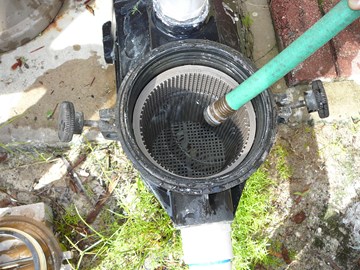
- Fill the pump basket with water using a garden hose.
- Replace the lid, making sure the O-ring is clean and lubricated.
- Open all suction valves fully.
- Turn the pump on and watch the pump basket. Water should fill quickly, and flow should return to the pool.
- If the pump does not prime after 1–2 minutes, turn it off and repeat.
Pro tip: If you have a multiport valve on your filter, set it to “Recirculate” while priming. This bypasses the filter and makes it easier to prime the pump.
Preventing Your Pool Pump From Losing Prime
Prevention is always easier than repairs. Here’s how to keep your pump running smoothly:
- Check and clean skimmer and pump baskets weekly
- Keep the pool water at the proper level
- Inspect and lubricate O-rings monthly
- Look for and fix any small leaks right away
- Make sure all valves are fully open when starting the pump
- Winterize your pump and pool lines if you live in a freezing climate
- Avoid running the pump dry, even for a few minutes
Cost Of Repairs And When To Call A Professional
While some causes of lost prime are easy to fix yourself, others require special tools or experience. Here’s a simple comparison of common repairs:
| Problem | DIY Solution Cost | Professional Repair Cost |
|---|---|---|
| Replace O-ring | $5–$15 | $60–$100 |
| Fix air leak in union | $0–$10 (Teflon tape) | $80–$120 |
| Replace pump lid | $25–$50 | $90–$150 |
| Pressure test/plumbing repair | – | $150–$500+ |
| Replace cracked pump housing | $80–$300 (parts only) | $200–$600+ |
You should call a pool pro if:
- You can’t find the air leak after checking all the basics
- Plumbing repairs require digging or cutting pipes
- You see cracks in the pump housing
- The problem keeps returning despite your efforts
Real-world Example: Diagnosing A Tricky Case
Sarah had a pool where the pump worked fine for 10 minutes, then lost prime each time. She checked everything: baskets were clean, water level was good, and the O-ring was new. Finally, she noticed a tiny crack in the pump lid, only visible when the sun hit it just right. Replacing the lid fixed the problem completely.
Lesson: Sometimes, even the smallest cracks or leaks can cause loss of prime. Be thorough in your inspection.
Data On Pool Pump Problems
A survey of 1,000 pool owners showed how common prime loss is:
| Problem | Percentage Reporting |
|---|---|
| Pump losing prime after a few minutes | 38% |
| Air bubbles in pump lid | 42% |
| Low water flow | 29% |
| Motor noise issues | 21% |
This shows that losing prime is one of the most common pool problems, but also one that can be fixed with careful inspection and maintenance.
Mistakes To Avoid When Fixing Prime Loss
Many pool owners make the same mistakes when trying to fix this problem:
- Over-tightening pump lid or unions: This can damage O-rings and actually cause leaks.
- Using household lubricant on O-rings: Only use pool-safe silicone lubricant. Other lubricants can damage rubber.
- Ignoring small leaks: Even a drip can let in enough air to lose prime.
- Not cleaning baskets regularly: Debris builds up fast, especially after storms.
- Running the pump dry: This can ruin the pump in minutes.
Paying attention to these details can save you time and money.
How To Tell If It’s A Suction Or Pressure Side Air Leak
It’s important to know where the air is getting in. Suction side leaks (before the pump) cause loss of prime. Pressure side leaks (after the pump) usually cause water leaks, not air leaks.
Key differences:
- If the pump basket has bubbles or loses water, it’s a suction side problem.
- If you only see water leaking after the pump, it’s a pressure side problem.
Equipment Upgrades That Can Help
Sometimes, older equipment is more prone to air leaks and prime problems. Here are a few upgrades that can make a difference:
- Clear pump lid with easy-lock system for better inspection and easier maintenance
- High-quality unions and valves with better seals
- Self-priming pumps that can handle small air leaks better than old models
These upgrades are especially helpful if you have an above-ground pool or a long plumbing run.
When Prime Loss Is Normal
After certain events, it’s normal for your pump to lose prime:
- After opening the pool for the season
- After draining the pool or equipment
- After major plumbing repairs
In these cases, priming the pump carefully and checking for leaks will usually fix the problem.
Credit: www.swimmingpoolsteve.com
How Weather Affects Prime
Many people don’t realize that weather can change how well your pump holds prime. Very hot weather can dry out O-rings and make plastic parts expand, opening up tiny leaks. Freezing weather can crack pump housings or pipes.
Tip: Inspect your pump and O-rings at the start of each season.
Comparing Above-ground And In-ground Pool Pumps
The type of pool you have changes how likely you are to lose prime.
| Feature | Above-Ground Pool Pump | In-Ground Pool Pump |
|---|---|---|
| Location vs. Water Level | Usually below water level | Often above water level |
| Prime Loss Risk | Lower (gravity helps) | Higher (suction needed) |
| Ease of Priming | Easier | Harder |
| Self-Priming Needed? | Not always | Usually |
If you have an in-ground pool, you should be especially careful about air leaks.

Credit: pool-pump-keeps-losing-prime.pages.dev
Advanced Troubleshooting For Stubborn Cases
If you’ve checked everything and still lose prime, try these advanced steps:
- Dye test: Use food coloring or leak detection dye around suspected fittings. Watch if the dye is pulled in.
- Smoke test: Blow smoke (using a smoke pencil or incense) near fittings. If the smoke is sucked in, there’s a leak.
- Professional pressure testing: Seals off pool pipes and checks for pressure loss, pinpointing hidden leaks.
These methods can find leaks invisible to the eye.
Helpful Resources For Pool Owners
If you want to learn more about pool pump maintenance, the Pool & Hot Tub Alliance provides trusted advice and guides. Their site is a reliable resource for both beginners and experienced pool owners. Check out their detailed guides at Pool & Hot Tub Alliance.
Final Thoughts
A pool pump that loses prime after a few minutes is a frustrating but common issue. Most of the time, the cause is a small air leak, low water, or clogged baskets. With careful inspection, simple tools, and attention to detail, you can fix most problems yourself. Remember, even tiny leaks matter. Regular maintenance and quick action at the first sign of trouble will keep your pool clean, safe, and enjoyable all season long.
Frequently Asked Questions
Why Does My Pool Pump Lose Prime Only At Certain Times Of Day?
This often happens because heat causes materials to expand, opening leaks that are not there in cooler temperatures. It can also be due to water evaporation lowering the pool level during the day.
Can A Dirty Pool Filter Cause The Pump To Lose Prime?
A dirty filter usually causes low pressure, not loss of prime. However, if the filter is very clogged and water cannot flow, the pump may eventually lose prime. Always clean or backwash your filter as part of troubleshooting.
How Long Should It Take To Prime A Pool Pump?
Most pumps should prime within 1–2 minutes. If it takes longer, there is likely an air leak or blockage.
Is It Safe To Run The Pump If It Keeps Losing Prime?
No. Running a pump without water can damage the seals and motor quickly. Always fix loss of prime before running the pump for long periods.
What Is The Best Way To Find A Small Air Leak?
Pour water slowly over joints, lid, and fittings while the pump is running. If the pump suddenly primes or you see bubbles stop, you’ve found the leak. You can also use a smoke or dye test for harder cases.
With the right approach, you can solve most prime problems and keep your pool in top condition all season.