
A swimming pool is a joy for many homeowners, but when the pool pump works on recirculate but not on filter, it quickly becomes a source of frustration. This issue is surprisingly common, and it often leaves pool owners wondering what’s gone wrong. Understanding the difference between the recirculate and filter settings is key, but solving the problem requires a bit more insight. If your pump runs smoothly on recirculate yet refuses to work on filter, you’re not alone. Let’s look deeper to discover why this happens and what you can do to fix it.
Understanding Pool Pump Settings
To solve the problem, it helps to first know what each setting actually does. Your pool pump and multiport valve work together to keep your water clean and safe. The two most used settings are filter and recirculate, but they operate differently.
What Does The Filter Setting Do?
When the pump is on filter, water is drawn from the pool, pushed through the filter media (usually sand, cartridge, or diatomaceous earth), and returned to the pool. This process removes dirt, debris, and even some bacteria. It’s the main way pools stay clean.
What Does Recirculate Mean?
Recirculate bypasses the filter media entirely. The water is pulled from the pool and sent straight back without passing through the filter. This mode is often used for mixing chemicals or when the filter is being cleaned or repaired.
Why The Difference Matters
If your pool pump works on recirculate but not on filter, it means the pump can move water, but something is stopping it during the filtration process. This is a critical clue for diagnosis.
Common Reasons The Pump Works On Recirculate But Not Filter
Several factors can cause this issue. Here are the main ones:
- Clogged or Dirty Filter
- Broken or Misaligned Multiport Valve
- High Filter Pressure
- Air Leaks in the System
- Clogged Return Lines
- Damaged Filter Media
- Pump Impeller Problems
- Incorrect Valve Position
- Collapsed or Blocked Laterals
- Plumbing Blockages
- Too Small or Weak Pump
- Poor Water Chemistry Causing Scale
- Broken Pressure Gauge
- Malfunctioning Pump Motor
- Worn Out Gaskets or O-Rings
Let’s explore each in detail so you can pinpoint and solve your problem.
Clogged Or Dirty Filter
The most common reason for this issue is a clogged filter. Over time, debris, leaves, algae, and even sunscreen can build up in the filter. When this happens, water can’t pass through easily, causing the pump to struggle or stop working on filter mode.
If the filter is clogged, the pressure gauge will usually read higher than normal. Recirculate works because it bypasses the clogged filter, allowing water to flow freely.
Solution: Backwash your sand or DE filter, or clean/replace the cartridge. If water flow returns, you’ve found your problem. If not, move to the next checks.
Broken Or Misaligned Multiport Valve
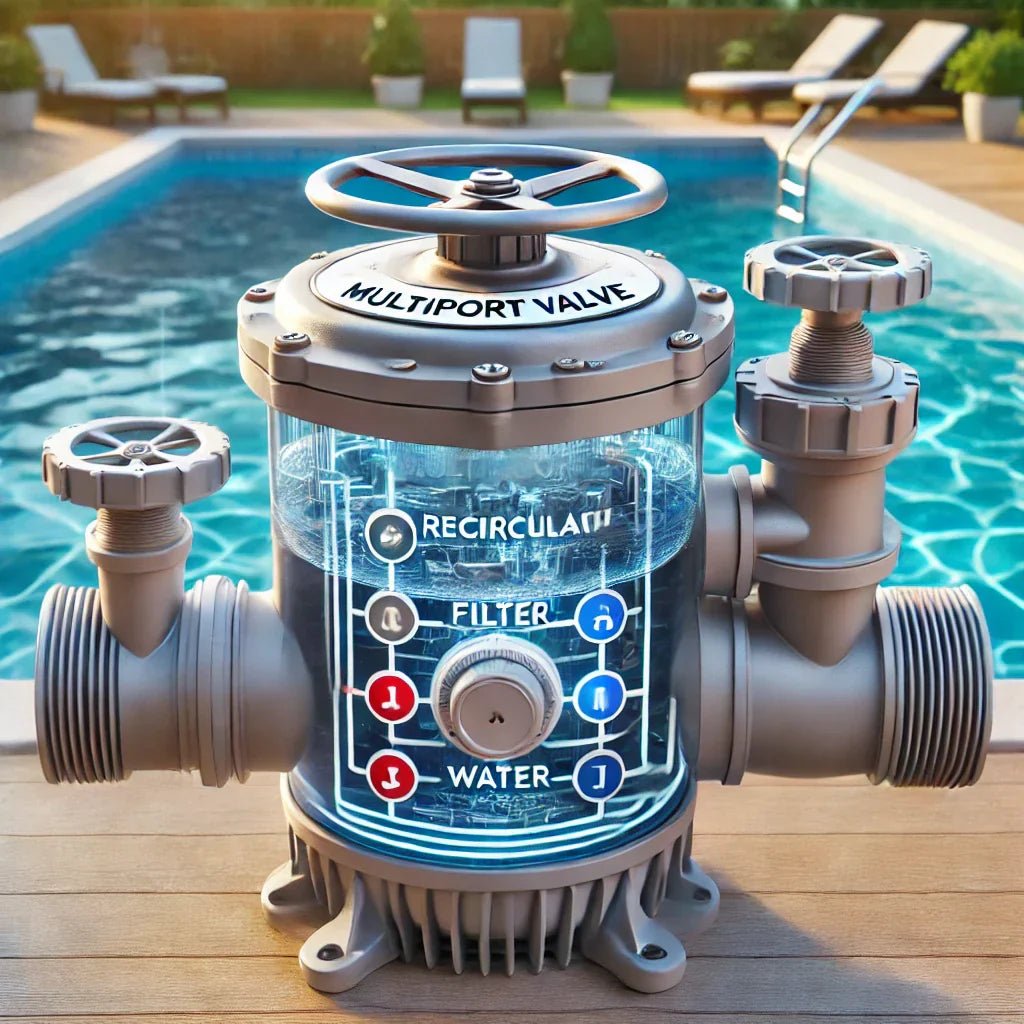
The multiport valve directs water through different paths inside the filter system. If it’s broken, stuck, or not aligned properly, it may block water flow in filter mode but work fine on recirculate. Sometimes the internal spider gasket wears out or shifts, causing water to leak or bypass inside the valve.
Signs: Water leaks around the valve, difficulty turning the handle, or water leaking out the waste line during filtration.
Solution: Inspect the valve for cracks, worn gaskets, or broken parts. Replace as needed and lubricate the gasket with pool lube.
High Filter Pressure
A spike in filter pressure signals a blockage. The pump works harder to push water through, and eventually, it can’t. Recirculate offers less resistance, so the pump runs normally.
What’s normal? Most pool filters run at 10–20 psi, but this varies. Check your manual for the baseline pressure.
Solution: Backwash the filter, check for blockages, and bleed air out of the system.
Air Leaks In The System
Air can enter through loose pump lids, cracked O-rings, or leaky suction-side pipes. When on filter mode, air may collect in the filter and prevent water flow. Recirculate usually doesn’t draw as much air in, so it seems to work better.
Tip: Look for bubbles in the pump basket or at the pool returns.
Solution: Reseal the pump lid, replace O-rings, and check all plumbing joints for leaks.

Credit: www.reddit.com
Clogged Return Lines
Rare but possible, a clogged return line blocks water after it leaves the filter. Some recirculate setups use a different path, which means the pump can work on that setting but not on filter.
Signs: Weak or no flow at pool returns, but normal flow on recirculate.
Solution: Use a plumbing snake, air compressor, or water pressure to clear the line.
Damaged Filter Media
Sand can become solidified, cartridges can collapse, or DE grids can tear. Any of these stop water from passing through in filter mode, but do not affect recirculate, which avoids the filter media.
Solution: Open the filter and inspect the sand, cartridge, or grids. Replace or clean as needed.
Pump Impeller Problems
The impeller is the spinning part inside the pump that moves water. If it’s blocked by debris or broken, it can’t generate enough pressure to force water through a dirty filter. However, it might be strong enough for recirculate.
Symptoms: Weak flow, loud noises, or the pump shutting off.
Solution: Turn off power, open the pump, and check the impeller for blockages.
Incorrect Valve Position
Sometimes the valve between the pump and filter isn’t fully in the right position. This can restrict flow in filter mode but not in recirculate.
Solution: Turn off the pump before moving the valve. Make sure the handle clicks fully into the filter position.
Collapsed Or Blocked Laterals
Sand filters have laterals (small arms at the bottom) that can break or clog. This prevents water from moving through the filter bed.
Solution: Remove the sand and check the laterals. Replace or clean them if needed.
Plumbing Blockages
Debris can get stuck anywhere in the plumbing—skimmer, pipes, pump basket. This sometimes affects only filter mode if the blockage is near the filter inlet or outlet.
Solution: Inspect all baskets and use a plumbing snake to clear lines.
Too Small Or Weak Pump
If your pump is underpowered for your pool size or filter type, it might only manage recirculate, not filter. This is common after a filter upgrade or pool renovation.
Tip: Check the pump’s horsepower and compare it to your pool’s needs.
Solution: Upgrade to a properly sized pump.
Poor Water Chemistry Causing Scale
If your pool water is high in calcium or other minerals, hard scale can build up inside the filter or plumbing. This restricts flow and increases pressure in filter mode.
Solution: Test water hardness and adjust. Use a descaling agent if needed.
Broken Pressure Gauge
Sometimes, the issue is just a faulty pressure gauge giving a false reading. The pump may actually be working, but you think there’s a problem due to incorrect information.
Solution: Replace the gauge and confirm actual water flow.
Malfunctioning Pump Motor
A worn or failing motor might run weakly. It could be just strong enough for recirculate, but not for the extra resistance of filter mode.
Symptoms: Humming, overheating, or random shut-offs.
Solution: Have a technician test or replace the motor.
Worn Out Gaskets Or O-rings
Over time, rubber seals dry out or crack. This lets air in or water out, reducing pressure and flow only in certain modes.
Solution: Inspect and replace all rubber parts as part of regular maintenance.
Diagnosing The Problem: Step-by-step
If your pump works on recirculate but not on filter, a systematic approach can save time and money. Follow these steps to narrow down the cause.
1. Check Filter Pressure
Read the gauge while on filter mode. Compare to your normal baseline.
- High pressure: Likely a clog or blockage.
- Low pressure: Could be an air leak or pump problem.
2. Inspect Water Flow At Returns
Is water weak or not flowing at all? Try recirculate mode and compare the flow. This will help identify if the problem is before or after the filter.
3. Examine The Filter
Backwash or clean the filter thoroughly. If performance improves, the filter was dirty. If not, open the filter and check for damaged parts.
4. Look For Air Leaks
Inspect all seals, O-rings, and plumbing for bubbles or leaks. Use pool lube on O-rings and tighten connections.
5. Test The Multiport Valve
Move the valve through all positions (with the pump off) and ensure it clicks fully into place. Look for leaks or resistance.
6. Evaluate The Pump
Listen for strange noises. Check for overheating. Remove the pump basket and look for blockages near the impeller.
7. Inspect Return Lines
If possible, force water or air through the lines to clear blockages.
8. Assess Pump And Filter Compatibility
Check that your pump is strong enough for your filter’s flow rate. Use the manufacturer’s charts to compare.
How Pool Filters Work (and Why Problems Arise)
Understanding how your pool filter works can help you spot issues faster.
Sand Filters
Water enters the tank, passes through sand, and exits through the laterals. Sand filters trap particles down to about 20–40 microns.
Common Problems: Channeling (water creates paths around sand), solidification, broken laterals.
Cartridge Filters
Water passes through a pleated polyester cartridge. These catch particles as small as 10 microns.
Common Problems: Clogged or collapsed cartridges, worn end caps.
De (diatomaceous Earth) Filters
Water passes through grids coated with fine DE powder, trapping very small particles (2–5 microns).
Common Problems: Torn grids, lost DE powder, clogged manifolds.
Comparing Filter Modes: Recirculate Vs Filter
Here’s a side-by-side look at how these modes differ:
| Setting | Water Path | Main Use | Common Issues |
|---|---|---|---|
| Filter | Through filter media | Regular cleaning | Clogging, high pressure |
| Recirculate | Bypasses filter media | Chemical mixing | Valve leaks, low filtration |
Credit: lesliespool.com
Preventing Future Problems
Once you’ve fixed the immediate issue, you’ll want to avoid it happening again. Regular maintenance is your best defense.
Backwash Or Clean Regularly
Follow the manufacturer’s schedule for backwashing or cleaning your filter. This prevents most clogs.
Monitor Water Chemistry
Balanced water reduces scale and organic buildup in the filter and pipes.
- PH: 7.2–7.8
- Calcium hardness: 200–400 ppm
- Chlorine: 1–3 ppm
Inspect Seals And O-rings
Replace these every season or when they look worn.
Lubricate Moving Parts
Use pool lube on O-rings, gaskets, and multiport valve seals.
Use A Skimmer Sock
A fine mesh sock in your skimmer basket catches extra debris before it reaches the filter.
When To Call A Professional
Not all problems are DIY. If you’ve checked all the basics but the pump still won’t work on filter, it may be time for expert help.
Signs you need a pro:
- Cracked filter tanks
- Major leaks
- Electrical or motor issues
- Internal valve failures
A professional can pressure test the plumbing, replace filter internals, and diagnose motor problems faster than most homeowners.
Real-world Example: Diagnosing A Stubborn Filter Issue
Consider a pool owner whose pump worked perfectly on recirculate but lost flow on filter. After checking the pressure gauge (which was reading very high), they backwashed the sand filter. The problem continued. When they opened the filter, they found the sand had “channeled”—hard clumps let water bypass, not filter.
They replaced the sand, and flow returned to normal.
Key insight: Sometimes, even after backwashing, old or compacted sand can block proper filtration. If your sand filter is over five years old, replacing the sand can make a big difference.
Data: Common Filter Problems And Fix Rates
Here’s what pool service reports show about the frequency of common filter issues:
| Problem | Percentage of Cases | DIY Fix Rate |
|---|---|---|
| Dirty/Clogged Filter | 52% | 85% |
| Valve Malfunction | 18% | 60% |
| Pump Impeller Blockage | 12% | 70% |
| Plumbing/Return Blockage | 8% | 40% |
| Pump Too Weak | 6% | 10% |
| Other | 4% | Varies |
Troubleshooting Tips For Beginners
Many new pool owners miss a few simple steps that can save hours of frustration:
- Always turn off the pump before changing valve positions.
- Mark your pressure gauge’s “clean” baseline with a permanent marker.
- Keep a maintenance logbook for backwashing, cleaning, and repairs.
- If you lose flow suddenly, check for obvious blockages (leaves, toys) before opening the filter.
- Don’t forget to bleed air from the filter after cleaning or backwashing.
Upgrades That Can Help
If you’re tired of ongoing filter troubles, consider these upgrades:
- Variable speed pump: Uses less energy and can be adjusted for optimal flow.
- High-capacity cartridge filter: Requires less frequent cleaning and handles debris better.
- Automation systems: Monitor pressure, flow, and even water chemistry automatically.
Comparison: Sand Vs Cartridge Vs De Filters
Here’s a quick comparison for those considering a filter upgrade:
| Type | Micron Rating | Maintenance | Lifespan | Common Issues |
|---|---|---|---|---|
| Sand | 20–40 | Backwash every 1–2 weeks | 5–7 years (sand) | Channeling, hardening |
| Cartridge | 10–20 | Clean every 2–4 weeks | 2–3 years (cartridge) | Clogging, collapse |
| DE | 2–5 | Backwash/clean every 1–2 months | 7–10 years (grids) | Grid tears, DE loss |
Unique Insights Most Beginners Miss
- Multiport Valve Gasket Failure: Most pool owners don’t realize that the spider gasket inside the multiport valve wears out every few years. If recirculate works but filter does not, a leaking gasket can be the hidden cause. You may see water coming out the waste line even when set to filter.
- Partial Blockages: Not all clogs are total. Even a partial blockage can let enough water through for recirculate but not enough for filter mode, where the pressure is higher. Always check for gradual flow loss, not just total stoppage.
Safety Reminders
- Never open the filter tank or multiport valve while the pump is running.
- Always bleed pressure before opening any part of the filter system.
- Use gloves and eye protection when handling chemicals or DE powder.
Frequently Asked Questions
What Does It Mean If My Pool Pump Only Works On Recirculate?
This usually means the pump is strong enough to move water but can’t push it through the filter. The filter may be clogged, the valve may be broken, or there’s a blockage in the system. Recirculate bypasses the filter media, so water can flow more easily.
How Do I Know If My Filter Is Clogged?
Check the pressure gauge. If it’s higher than normal, the filter is likely dirty. Weak water flow from the pool returns and difficulty keeping the pool clean are other signs.
Can I Run My Pool On Recirculate All The Time?
No, recirculate does not filter out dirt and debris. It just moves water around. Running on recirculate for too long can lead to cloudy, dirty water and unsafe swimming conditions.
How Often Should I Backwash My Pool Filter?
Backwash when the pressure gauge rises 8–10 psi above the clean baseline or once every 1–2 weeks during heavy use. Too much backwashing can waste water and reduce filter efficiency.
Credit: www.mavaquadoc.com
When Should I Replace The Sand Or Cartridge In My Filter?
Replace sand every 5–7 years and cartridges every 2–3 years, or sooner if you notice collapse, tears, or poor filtration even after cleaning. DE grids last 7–10 years with good care.
If you follow these steps and understand the difference between recirculate and filter, you’ll be better equipped to solve pump problems and keep your pool sparkling clean. For more details on multiport valves and pool plumbing, visit the official SwimmingPool.com filter guide.
A well-maintained pool system rewards you with clear water, safe swimming, and fewer headaches all season long. Don’t be discouraged if the pump doesn’t work on filter—now you know what to check, what to fix, and when to call for help.