
A quiet, smoothly running pool is a joy. But when your pool skimmer starts making a loud suction noise, that peace disappears. This noise is not just annoying—it can signal a problem in your pool’s system. Many pool owners face this issue, but not everyone knows what it means or how to fix it. If you hear gurgling, slurping, or sucking sounds from your skimmer, don’t ignore them. These sounds often point to trouble in the water flow, air leaks, or equipment issues that, if left unchecked, can cause expensive damage.
This article explains everything you need to know about pool skimmer suction noise. You’ll learn why it happens, what it means, and step-by-step solutions to fix it. We’ll also cover prevention, common mistakes, and when to call a professional. Whether you’re a new pool owner or have years of experience, you’ll find clear, practical advice to keep your pool quiet and healthy.
What Is A Pool Skimmer And How Does It Work?
The pool skimmer is a key part of your swimming pool’s filtration system. It sits at the side of your pool, just below the water surface. Its main job is to pull in floating debris—like leaves, bugs, and dirt—before they sink to the bottom.
Here’s how it works:
- Water enters the skimmer opening at the pool’s edge.
- A skimmer basket catches large debris.
- Water flows through a weir door (the flap at the skimmer’s mouth), which helps control water movement and prevents debris from floating back into the pool.
- The pool pump pulls water through the skimmer, sending it to the filter.
- Clean water returns to the pool.
A skimmer keeps your pool cleaner, protects your pump and filter from clogging, and helps your entire system run smoothly.
Why Is Your Pool Skimmer Making Suction Noise?
A noisy skimmer is a sign of something wrong. The suction noise is usually a gurgling, slurping, or sucking sound. Here are the main reasons you might hear it:
- Low water level in the pool.
- Clogged skimmer basket or pipes.
- Air leaks in the suction line.
- Blocked or dirty pool filter.
- Pump problems (like a failing pump or incorrect speed).
- Weir door stuck or missing.
- Incorrect valve settings.
Each of these problems affects how water moves through the skimmer and pump. When water flow is blocked or air gets sucked into the system, noise happens.
Let’s look at each cause in detail.

Credit: us.air-robo.com
Common Causes Of Pool Skimmer Suction Noise
1. Low Water Level
If the water in your pool falls below the middle of the skimmer opening, air can get sucked into the system. This causes loud gurgling or slurping sounds.
- Why it happens: Water evaporates, splashes out, or leaks.
- Result: Air is pulled in with the water, causing noise and possible pump damage.
Tip: Keep your water level at least halfway up the skimmer for proper flow.
2. Clogged Skimmer Basket Or Pipes
The skimmer basket collects debris, but if it gets too full, water can’t flow smoothly.
- What you’ll hear: A straining or sucking noise as the pump works harder to pull water.
- What happens next: If left uncleaned, debris can get pulled into pipes, causing deeper clogs.
Tip: Empty the basket at least once a week—or more often during heavy leaf or pollen season.
3. Air Leaks In The Suction Line
Air leaks are a major cause of suction noise. Tiny cracks or loose fittings in the pipes before the pump can let air in.
- Signs: Bubbles in the pool’s return jets, pump losing prime, or a noisy skimmer.
- Common leak points: Pump lid, pipe joints, valves, or even the skimmer throat itself.
Tip: Check all fittings and seals, and listen for a change in noise when you press on pipes or fittings.
4. Blocked Or Dirty Pool Filter
When your pool filter is dirty, it slows water movement. Low flow can cause the skimmer to suck harder, pulling air and making noise.
- Symptoms: Increased skimmer noise, weak return flow, and high pressure on the filter gauge.
Tip: Clean or backwash your filter regularly, following your filter manufacturer’s instructions.
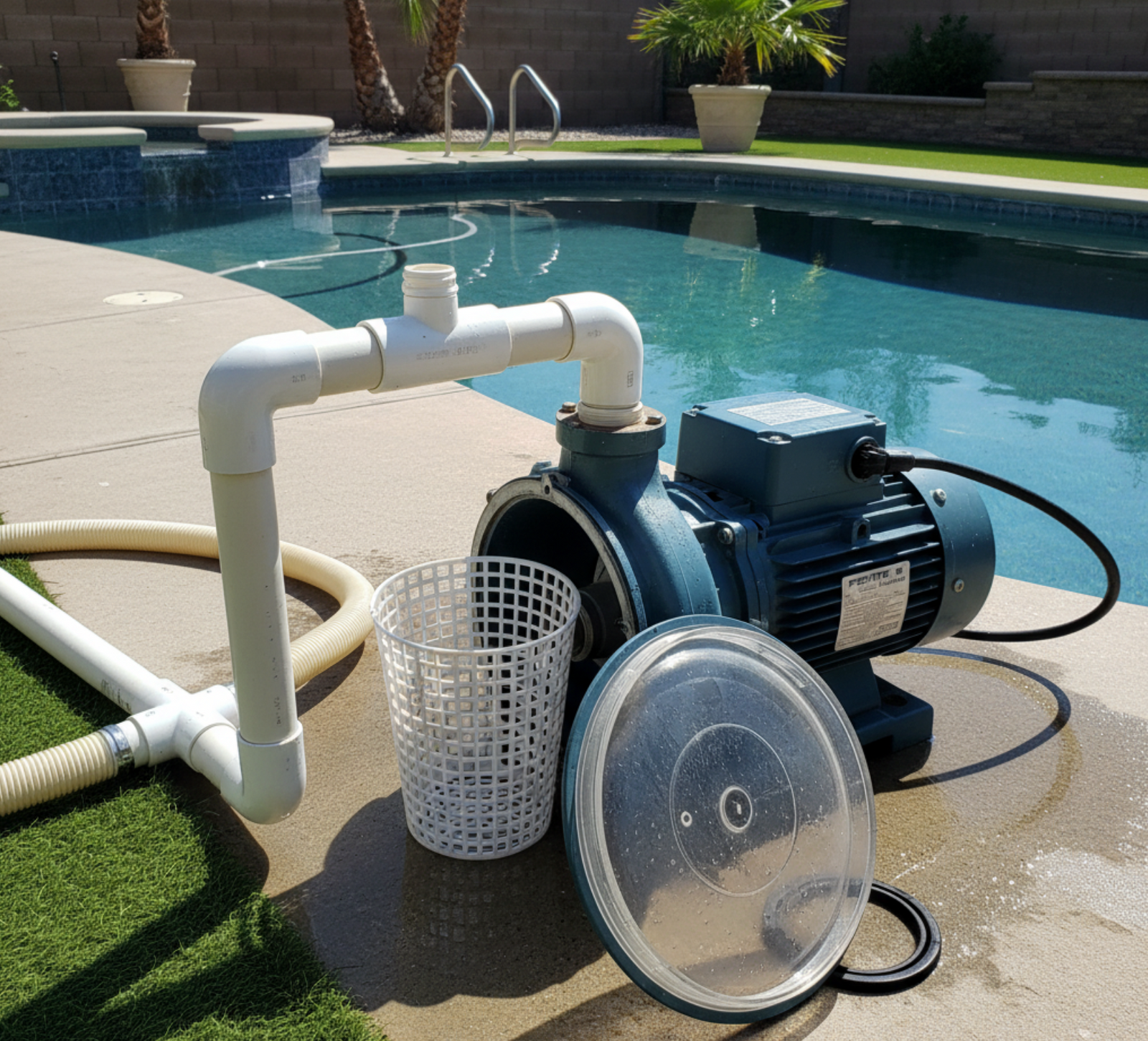
5. Pump Problems
Your pool pump is the heart of the system. If it has a problem, you may hear extra noise at the skimmer.
- Possible issues: Pump running at too high/low speed, worn-out pump parts, or incorrect pump size.
- Result: Poor water flow and noisy operation.
Tip: Make sure your pump matches your pool’s size and is in good repair.
6. Weir Door Issues
The weir door is the swinging flap at the skimmer’s opening. If it’s stuck, missing, or broken, water flow is disrupted.
- What you’ll notice: A slapping or slurping sound, and floating debris may escape back into the pool.
Tip: Make sure the weir swings freely and is not jammed or missing.
7. Incorrect Valve Settings
If you have multiple skimmers or a main drain, valves control where suction comes from. Incorrect settings can make one skimmer pull too hard.
- Result: One skimmer gets too much suction, making noise and possibly sucking in air.
Tip: Adjust valves for balanced flow.
How To Diagnose The Source Of Suction Noise
Diagnosing the exact cause can save you time and money. Here’s a step-by-step guide:
- Listen closely: Pinpoint where the noise is loudest—at the skimmer, pump, or filter.
- Check water level: Is it at least halfway up the skimmer opening?
- Inspect the skimmer basket: Is it full of debris?
- Look for bubbles: Are there bubbles in the pump basket or return jets?
- Feel for vibrations: Press gently on pipes and fittings. Does the noise change?
- Check the weir door: Is it moving freely?
- Monitor the filter pressure: Is it higher or lower than normal?
If you follow these steps, you’ll quickly narrow down the cause.
Credit: pooldepo.com
Step-by-step Solutions To Silence A Noisy Pool Skimmer
1. Restore Proper Water Level
- Use a garden hose to add water until the level sits halfway up the skimmer opening.
- Re-check after a day to see if the water drops quickly (which may signal a leak).
2. Clean The Skimmer Basket And Line
- Turn off the pool pump.
- Remove and empty the skimmer basket.
- Check for stuck debris in the skimmer throat.
- For deeper clogs, use a plumber’s snake or garden hose to flush out the line.
3. Find And Fix Air Leaks
- With the pump running, pour water slowly over pipe joints, pump lid, and valves. If noise changes or bubbles stop, you’ve found a leak.
- Replace worn O-rings on the pump lid.
- Tighten pipe fittings.
- Use Teflon tape or pool-safe sealant on threaded connections.
4. Clean Or Backwash Your Filter
- For sand or DE filters: Backwash as instructed by your manufacturer.
- For cartridge filters: Remove and hose off the cartridge, or soak if very dirty.
- Check filter pressure before and after cleaning.
5. Check And Adjust Pump Settings
- For variable-speed pumps: Try a slightly higher speed.
- For single-speed pumps: Check that the pump basket is clean and the impeller is not clogged.
- Listen for unusual pump noises, which may mean worn bearings or cavitation.
6. Inspect The Weir Door
- Lift the weir gently to see if it moves freely.
- Replace if it’s broken or missing.
7. Adjust Valves For Balanced Flow
- With the pump running, slowly adjust suction valves until noise decreases.
- Aim for even suction from all skimmers and the main drain.
- Mark the valve handles once you find the best setting.
Table: Common Pool Skimmer Noise Causes And Fixes
To compare the main causes and solutions at a glance, see the following:
| Cause | Noise Type | Quick Fix | Prevention |
|---|---|---|---|
| Low water level | Gurgling, slurping | Add water to correct level | Check weekly, refill as needed |
| Clogged skimmer basket | Sucking, straining | Clean basket | Empty basket regularly |
| Air leak in suction line | Bubbling, loud suction | Seal leaks, tighten fittings | Check seals each season |
| Dirty filter | Weak suction, noise | Clean/backwash filter | Follow filter schedule |
| Weir door problem | Slapping, slurping | Fix or replace weir | Inspect monthly |
When To Call A Pool Professional
Some skimmer noises are easy to fix, but not all problems are simple. Call a professional if:
- You can’t find the source of the noise after basic checks.
- You suspect an underground leak.
- The pump loses prime (fills with air and stops moving water).
- There’s a sudden drop in water level.
- You see cracks in the skimmer or pipes.
Professionals have special tools to test for leaks, pressure problems, or hidden clogs that homeowners can’t easily diagnose.
How To Prevent Pool Skimmer Suction Noise
Preventing noise is easier than fixing it. Here’s what you can do:
- Keep water levels stable: Check and refill as needed, especially after parties or hot weather.
- Clean baskets and filters often: Set a weekly reminder on your phone.
- Inspect equipment regularly: Check for loose fittings, worn seals, or broken parts each month.
- Balance valve settings: Learn your pool’s system and adjust for even flow.
- Service your pump: Have a pro check the pump yearly for wear and tear.
- Watch for early signs: Fix noise or bubbles early—don’t wait for bigger problems.
Pro tip: If you add a pool autofill device, it can keep water at the perfect level, reducing the risk of suction noise from low water.
Table: Pool Skimmer Maintenance Schedule
A regular schedule keeps your skimmer and pool quiet and efficient.
| Task | Frequency | What to Do |
|---|---|---|
| Check water level | Weekly | Top up with hose if low |
| Clean skimmer basket | Weekly or after storms | Remove, empty, and replace basket |
| Inspect weir door | Monthly | Check for smooth movement |
| Check for leaks | Seasonally | Tighten and inspect fittings, seals |
| Clean/backwash filter | As needed (per gauge or schedule) | Follow manufacturer’s steps |
| Professional pump check | Yearly | Have a technician inspect pump and system |
Common Mistakes Pool Owners Make
Many pool owners unintentionally make problems worse. Here are mistakes to avoid:
- Ignoring small noises: Small gurgles can turn into big repairs if not checked early.
- Running the pump with low water: This can burn out your pump quickly.
- Using wrong size pump: An oversized pump can create too much suction, leading to noise and equipment damage.
- Skipping regular cleaning: Clogged baskets or filters stress the system and cause noise.
- DIY repairs without knowledge: Guessing at repairs can cause leaks or more damage.
Non-obvious insight: Sometimes noise only happens when the pool’s solar heater or water features are running. Always test the skimmer with all equipment on and off to find the real cause.
Credit: us.air-robo.com
Pool Skimmer Noise And Your Pool’s Health
A noisy skimmer is not just an annoyance. It can be a warning sign. Here’s why it matters:
- Air in the system reduces pump efficiency and can cause the pump to overheat.
- Low water flow means less filtration, leading to cloudy or dirty water.
- Cavitation (when air bubbles collapse inside the pump) can break pump parts.
- Ignoring problems can lead to expensive repairs—sometimes thousands of dollars.
Taking action early protects your pool, saves money, and gives you more swim time.
Advanced Troubleshooting For Persistent Skimmer Noise
If you’ve tried all the basic steps and still hear noise, consider these advanced checks:
- Check for underground suction leaks: Professionals can use pressure testing or dye tests to find hidden leaks.
- Inspect for collapsed pipes: Sometimes underground pipes flatten or break, reducing water flow and causing noise.
- Check for pump cavitation: If the pump sounds like it’s grinding or rattling, it may be pulling in air. This can destroy the pump.
- Replace old pipes or fittings: Very old pools may have brittle pipes that need updating.
- Consider adding a secondary skimmer: If one skimmer handles too much flow, a second can balance suction and reduce noise.
These issues are best handled by a pool technician, but knowing about them helps you ask the right questions.
Table: Signs Of Serious Skimmer Or Pool System Problems
Here’s a comparison of minor versus major warning signs:
| Minor Issue | Major Warning Sign | Action Needed |
|---|---|---|
| Occasional gurgle | Constant loud noise, pump losing prime | Call a professional |
| Small air bubbles in return | Large bubbles, cloudy or foamy water | Inspect for leaks, repair quickly |
| Dirty skimmer basket | Sudden water loss or visible cracks | Shut off system, consult expert |
| Weir door stuck | Broken skimmer throat or pipe | Replace damaged parts immediately |
Real-world Example: Fixing Skimmer Noise
Let’s say you hear a loud slurping from your pool skimmer every afternoon. You check and see the water is just below the skimmer opening. You add water, and the noise stops. The next day, it’s back. This tells you water is being lost—maybe a leak.
You check for wet spots around the pool, but find none. You fill the pool above the skimmer, turn off the pump, and watch. The water stays level—no leak. You turn on the pump, and the water drops quickly. This suggests a leak in the skimmer suction line, not the pool shell.
A pro uses pressure testing, finds a cracked pipe, and replaces it. The noise is gone, and your pool is healthy.
Insight: Many leaks only show when the pump is running, so test with the system both on and off.
Cost Of Ignoring Pool Skimmer Suction Noise
Small noises can lead to big bills. Here’s what might happen if you wait too long:
- Burnt-out pump: $300–$800 for a new pump.
- Major pipe repair: $500–$2,000, depending on location.
- Water loss: Higher bills and chemical costs.
- Dirty, unsafe water: Health risk for swimmers.
Fixing a noisy skimmer early can save hundreds—or even thousands—of dollars.
How Pool Skimmer Noise Differs By Pool Type
Noise issues can be different for in-ground and above-ground pools.
- In-ground pools: More likely to have underground pipe leaks, which are harder to spot.
- Above-ground pools: Skimmers are usually easier to access and fix, but may have cheaper parts that break more often.
Saltwater pools and chlorine pools don’t differ much in skimmer noise causes, but saltwater can corrode metal parts, leading to leaks if not maintained.
Pool Skimmer Noise And Energy Efficiency
A quiet, efficient pool uses less energy and costs less to run. If your skimmer is noisy, your pump may be working harder than it needs to.
- Air in the lines makes the pump less efficient.
- Blocked flow forces the pump to run longer.
- Proper maintenance can save 10–20% on energy use.
For more energy-saving tips, see the U.S. Department of Energy’s pool pump guide.
Frequently Asked Questions
Why Does My Pool Skimmer Make A Gurgling Noise?
A gurgling noise usually means air is being sucked into the system. This happens when the water level is too low, there’s a leak in the suction line, or the skimmer basket is clogged. Check these areas first to solve the problem.
Is It Dangerous To Run My Pool With A Noisy Skimmer?
Yes, it can be. A noisy skimmer means something is wrong—air in the system can cause the pump to overheat or break, and poor water flow can let debris build up. Fix the problem as soon as possible.
Can A Faulty Pool Skimmer Cause Cloudy Water?
Absolutely. If your skimmer isn’t working properly, debris and dirt stay in the pool. Low water flow means the filter can’t clean the water well, leading to cloudy or dirty water.
How Often Should I Check My Skimmer For Problems?
Check your skimmer basket weekly, the water level every few days, and inspect for leaks or broken parts at least once a month. After storms or heavy use, check more often.
What’s The Best Way To Prevent Skimmer Suction Noise?
Keep the water at the right level, clean the basket and filter regularly, and inspect all equipment for leaks or wear. Early maintenance is the key to a quiet, healthy pool.
A noisy pool skimmer is a sign you shouldn’t ignore. By understanding the causes, using smart troubleshooting, and keeping up with regular maintenance, you can enjoy a peaceful, clean, and energy-efficient pool all season long. If the noise won’t go away or you see signs of bigger problems, don’t wait—ask a pro for help.
Your pool, your equipment, and your swimmers will thank you.