
If you want your flagstone patio, walkway, or floor to last for decades, choosing the right grout is just as important as picking the perfect stone. Many homeowners and builders overlook this part, only to face cracking, weeds, or stains a few years later. The truth is, grout for flagstone isn’t a “one size fits all” choice. The best grout depends on your stone type, climate, where you install it (indoors or outdoors), and how you want it to look.
Let’s dive deep into the world of flagstone grouting. You’ll learn the different types, what makes each one special, and how to avoid common mistakes. Whether you’re restoring a historic patio or building a brand-new garden path, this guide will help you select and use the best grout for your flagstone project.
Understanding Flagstone And Its Unique Needs
Flagstone is a natural stone, often sandstone, slate, or limestone, split into thin, flat pieces. It’s prized for its irregular shapes and earthy colors, which give patios and paths a timeless look. But these same qualities create challenges for grouting.
Unlike uniform tiles, flagstone joints are often uneven and wide. Some joints may be as narrow as 1/4 inch, while others are 2 inches or more. The stone’s natural texture can also make cleaning and maintenance tricky. Because flagstone is usually laid outdoors, grout must resist water, freeze-thaw cycles, and even plant growth.
Many beginners think they can use regular tile grout, but this is a common mistake. Standard tile grout is too brittle and not designed for wide, irregular gaps. It can crack, wash away, or stain the stone. That’s why flagstone needs specialized grouting solutions.
Main Types Of Grout For Flagstone
There are several main types of grout used for flagstone. Each has unique pros, cons, and best uses.
1. Cement-based Mortar
Cement-based mortar is the classic choice for grouting flagstone, especially in patios and walkways. It’s made from Portland cement, sand, and water. Sometimes, a little lime is added for flexibility.
Advantages:
- Strong and durable
- Widely available and affordable
- Works well for wide joints
Disadvantages:
- Can crack in freezing weather if not mixed right
- Needs careful sealing to resist stains
- Hard to repair without visible seams
Best for: Outdoor patios, garden paths, and high-traffic areas.
Tip: Use a mortar mix with a higher sand ratio (Type S or Type N) for best results. Make sure the joint depth is at least 1 inch for strength.
2. Polymeric Sand
Polymeric sand is a modern product that looks like regular sand but contains special polymers. When you wet it, the polymers bond together and harden.
Advantages:
- Easy to apply (sweep into joints, then water)
- Resists weed growth and insects
- Flexible, less likely to crack
- Good for joints 1/4 to 1.5 inches wide
Disadvantages:
- Not as strong as mortar for very wide joints
- Can break down over time in heavy rain or freeze-thaw cycles
- Some brands may leave a haze on stone if not cleaned well
Best for: Dry-laid flagstone paths, patios with narrow to medium joints.
Tip: Sweep off all dust before wetting. Any residue left on the stone can harden and become very hard to remove.
3. Traditional Sand
Washed sand is sometimes used as a simple filler between flagstones, especially in informal garden paths.
Advantages:
- Very affordable
- Easy to replace or top up
- Natural look
Disadvantages:
- Not stable—washes away easily
- Allows weeds and ants
- Not suitable for driveways or high-traffic patios
Best for: Garden paths or stepping stones with very wide, informal joints.
Tip: Use only coarse, washed sand. Fine sand or “play sand” washes out faster.
4. Epoxy Grout
Epoxy grout is a high-performance product made from epoxy resins and fillers. It’s extremely strong, waterproof, and stain-resistant.
Advantages:
- Highly durable
- Resists stains and chemicals
- Excellent for wet or freeze-thaw climates
Disadvantages:
- Expensive
- Harder to apply (sets quickly)
- Can darken or stain porous flagstone if not applied carefully
Best for: Pool decks, indoor flagstone, kitchens, or commercial spaces.
Tip: Always seal the flagstone before applying epoxy grout, or use a grout release product to prevent staining.
5. Gator Dust And Similar Products
Gator Dust and similar “polymeric stone dust” products are designed for wide joints (up to 4 inches) between irregular flagstones. They combine polymers and fine stone dust.
Advantages:
- Flexible and strong
- Works in wider joints than regular polymeric sand
- Resists erosion and weeds
Disadvantages:
- Needs careful compaction and watering
- Can leave residue if not cleaned immediately
- Not as hard as mortar
Best for: Dry-laid patios and walkways with extra-wide joints.
Tip: Use a leaf blower at low power to remove all dust before activating with water.
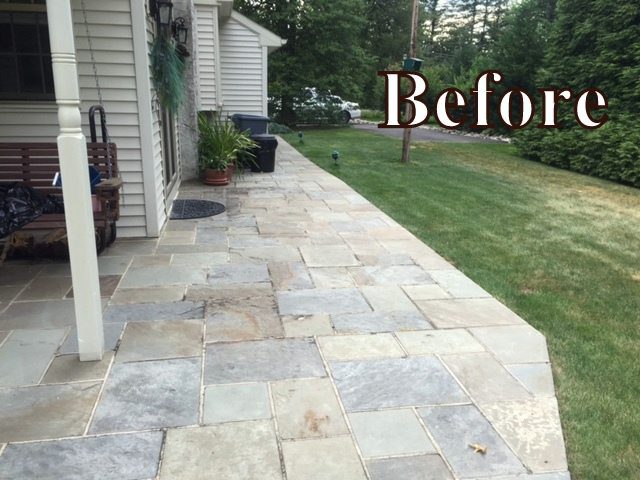
Credit: www.devineescapes.com
Comparing Flagstone Grout Types
Here’s a side-by-side look at how these grout options stack up for key factors:
| Grout Type | Joint Width | Durability | Weed Resistance | Ease of Application | Best Use |
|---|---|---|---|---|---|
| Cement Mortar | 1/2″ – 2″+ | High | Good | Moderate | Patios, Walkways |
| Polymeric Sand | 1/4″ – 1.5″ | Medium | Excellent | Easy | Paths, Light Patios |
| Traditional Sand | 1″ – 3″+ | Low | Poor | Easy | Garden Paths |
| Epoxy Grout | 1/4″ – 1.5″ | Very High | Excellent | Hard | Indoors, Pools |
| Gator Dust | 1″ – 4″ | Medium | Very Good | Moderate | Wide Joints |
How To Choose The Best Grout For Your Flagstone
There’s no universal “best” grout for every flagstone project. The smartest choice depends on your specific needs. Here’s what you should consider:
Location: Indoors Vs. Outdoors
- Indoors: Epoxy or cement-based grout is best. They resist stains and moisture.
- Outdoors: Polymeric sand, Gator Dust, or mortar. Choose based on joint width and climate.
Joint Width
- Narrow joints (under 1/2 inch): Polymeric sand or epoxy grout.
- Medium joints (1/2 to 1.5 inches): Mortar, polymeric sand, or epoxy.
- Wide joints (over 1.5 inches): Mortar, Gator Dust, or traditional sand (for informal paths).
Climate And Weather
- Freeze-thaw zones: Use flexible grout like polymeric sand or Gator Dust. Mortar must be mixed with the right ratio for weather resistance.
- Hot, dry areas: All types work, but mortar and epoxy last longest.
- Wet or pool areas: Epoxy grout is best. Polymeric sand may wash out without good drainage.
Stone Type And Porosity
Some flagstones, like sandstone, are porous and can absorb grout stains. Always seal the stones before grouting, especially when using epoxy or polymeric products. Harder stones like slate are less prone to this problem.
Traffic Load
- High traffic (driveways, busy patios): Mortar or epoxy.
- Light traffic (garden paths): Polymeric sand, Gator Dust, or sand.
Appearance
- Natural look: Sand or Gator Dust blends in.
- Smooth, finished look: Mortar or epoxy.
Maintenance
- Low maintenance: Epoxy or polymeric sand.
- Easy to repair: Sand or Gator Dust.
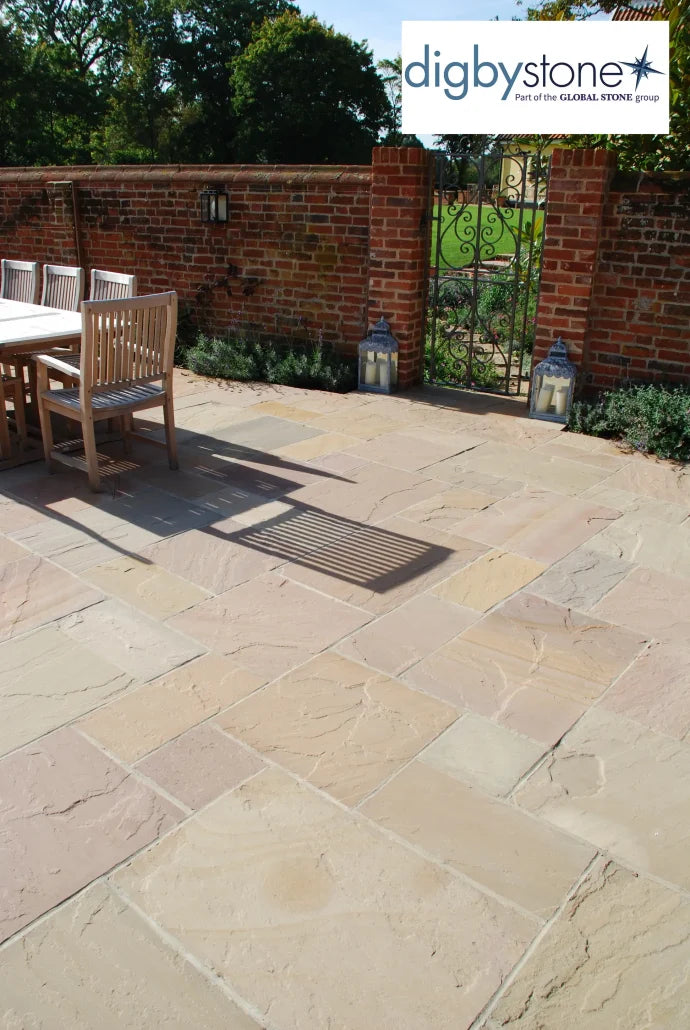
Credit: digbystone.co.uk
Common Mistakes When Grouting Flagstone
Many flagstone projects fail because of avoidable mistakes. Here are the most frequent problems and how to prevent them:
- Using tile grout: Tile grout is too weak and thin for flagstone. Use mortar or polymeric products designed for wide joints.
- Skipping sealing: Porous stones can stain from grout. Always seal before grouting.
- Improper joint depth: Shallow grout cracks and breaks. Joints should be at least as deep as they are wide.
- Not cleaning excess grout: Mortar and polymeric products can leave a permanent haze if not wiped off promptly.
- Wrong grout for climate: Mortar cracks in freeze-thaw areas if not mixed with enough sand or additives. Use flexible grouts where winters are cold.
- Poor compaction: For polymeric sand or Gator Dust, compact carefully or the grout won’t harden evenly.
- Ignoring drainage: Water pooling under stones can wash out sand or cause frost heave. Make sure your base is well-drained.
Step-by-step Guide: Grouting A Flagstone Patio
If you’re ready to grout your flagstone, here’s a detailed process for the two most common materials: cement-based mortar and polymeric sand.
Using Cement-based Mortar
- Clean the joints: Remove all dirt, debris, or loose sand from the gaps.
- Mix the mortar: Use Type S or Type N mortar. Mix until it’s a peanut butter consistency.
- Dampen the joints: Lightly spray with water. This prevents the stone from pulling moisture out of the mortar.
- Pack the mortar: Use a pointing trowel or grout bag to fill the joints. Press firmly so there are no air gaps.
- Strike and smooth: Once the mortar begins to stiffen, use a jointer to smooth the surface for a neat look.
- Clean the stone: Wipe off mortar smears quickly with a damp sponge.
- Cure: Keep the joints damp for 24–48 hours to prevent cracking.
- Seal (optional): Once dry, apply a stone sealer to reduce stains and water damage.
Using Polymeric Sand
- Dry surface: Make sure the stones and joints are completely dry.
- Pour sand: Dump the polymeric sand onto the flagstone.
- Sweep into joints: Use a broom to work the sand into all gaps, filling them fully.
- Compact: Use a plate compactor for large areas, or tap stones gently with a rubber mallet.
- Sweep excess: Remove all sand from the stone surfaces.
- Activate with water: Mist the joints with water until the sand is fully saturated, but don’t flood.
- Let cure: Keep off the surface for 24 hours, or as directed by the manufacturer.
Maintenance Tips For Grouted Flagstone
Even the best grout needs care. Here’s how to keep your flagstone project looking great for years:
- Sweep regularly: Removes dirt, leaves, and prevents weed seeds from settling.
- Inspect yearly: Look for cracks, holes, or washouts. Repair early to avoid big problems.
- Reapply sand: For sand or polymeric joints, top up as needed every few years.
- Seal as needed: Reapply stone or grout sealer every 2–3 years, especially in wet or freeze-thaw climates.
- Remove weeds: Pull weeds by hand or use a safe, non-corrosive weed killer.
Cost Comparison: Flagstone Grout Types
Let’s look at the typical costs for grouting a 100 sq. ft. flagstone patio (excluding labor):
| Grout Type | Material Cost (USD) | Labor Difficulty | Maintenance (per year) |
|---|---|---|---|
| Cement Mortar | $60–$120 | Medium | Low |
| Polymeric Sand | $90–$150 | Easy | Low |
| Traditional Sand | $30–$50 | Easy | Medium |
| Epoxy Grout | $350–$500 | Hard | Very Low |
| Gator Dust | $120–$180 | Medium | Low |
Non-obvious insight: Epoxy grout is often overkill for outdoor patios unless you need chemical or oil resistance. For most homeowners, polymeric sand or Gator Dust provides enough durability at a much lower price.

Credit: www.youtube.com
Practical Tips For Diy Flagstone Grouting
If you’re doing the work yourself, here are some advanced tips that even experienced masons sometimes miss:
- Test a small area: Always test your grout on a hidden corner before doing the whole patio. This prevents surprises like staining or bad color match.
- Work in cool weather: Avoid grouting in direct sun or when temperatures are above 80°F (27°C). Mortar and polymeric sand set too quickly, making cleanup harder.
- Control water: Too much water can weaken mortar or wash out sand. Follow product instructions exactly for misting or wetting.
- Use backer rod for deep joints: For very deep joints, put foam “backer rod” into the bottom before grouting. This saves material and prevents cracking.
- Keep pets away: Dogs and cats can leave prints in fresh grout! Block off the area until it’s fully cured.
Real-world Examples
Let’s look at how these choices play out in actual flagstone projects:
- Historic Home Patio (Northeast US): Owners chose cement-based mortar for a 120-year-old slate patio, using a sand-rich mix for freeze-thaw resistance. They sealed the stone before and after grouting, which stopped mortar stains.
- Modern Garden Walk (California): Polymeric sand was used for a curved walkway with narrow joints. It kept weeds out and matched the natural sand color. Owners reported no washouts after two rainy winters.
- Poolside Flagstone (Florida): Epoxy grout was used around a saltwater pool to resist chlorine and salt stains. The extra cost was worth it for zero maintenance.
- Wide Joint Patio (Arizona): Gator Dust filled 2-inch gaps between large sandstone pieces. The patio survived a monsoon season with only minor touch-ups needed.
These examples show that the best grout is the one that fits your specific needs—not just what the store has on the shelf.
Environmental Impact: Grout And Flagstone
Many homeowners want to make greener choices. Here’s what to know:
- Cement-based mortar has the largest carbon footprint, as cement production is energy-intensive.
- Polymeric sands use synthetic polymers, which are not biodegradable, but they reduce the need for chemical weed killers.
- Epoxy grout contains resins and hardeners that can release VOCs (volatile organic compounds) during installation.
- Traditional sand is the most natural option, but it’s also the least durable, so you may use more over time.
For the lowest impact, use sand or Gator Dust in informal areas, and seal only as needed. For more on green building practices, you can check resources like the EPA Green Building page.
Frequently Asked Questions
What Is The Best Grout For Outdoor Flagstone Patios?
For most outdoor patios, polymeric sand or cement-based mortar works best. Polymeric sand is easier for DIYers and resists weeds, while mortar is stronger for wide joints or high-traffic areas. In freeze-thaw climates, use a flexible grout like Gator Dust or a mortar mix with extra sand for durability.
Can I Use Regular Tile Grout For Flagstone?
No. Regular tile grout is too thin and brittle for the wide, irregular joints of flagstone. It will crack, wash out, and may even stain the stone. Always use products made for flagstone or stone paving.
How Do I Prevent Weeds From Growing In Flagstone Joints?
Use polymeric sand or Gator Dust, which harden in the joints and block most weeds. For mortar joints, make sure they’re packed tightly and sealed. Regular sweeping also helps prevent weed seeds from settling.
How Long Does Flagstone Grout Last?
With proper installation and maintenance, mortar or epoxy grout can last 20–30 years or more. Polymeric sand and Gator Dust typically last 5–10 years before needing touch-ups. Traditional sand may need to be replaced every 1–2 years in wet or windy areas.
Should I Seal Flagstone Before Grouting?
Yes. Always seal porous flagstone before using mortar, epoxy, or polymeric grouts. This prevents staining and makes cleanup easier. Use a breathable stone sealer for best results.
Flagstone is beautiful but demands the right grout for lasting performance. Take your time to choose the right type, follow best practices, and your patio or path will reward you for years to come.