
Living in a small apartment has many benefits: less space to clean, often lower rent, and a cozy atmosphere. But there’s one common problem that can quickly make life uncomfortable—cooking smells that linger long after the meal is finished. In a small space, the scent of onions, fried fish, garlic, or curry can travel fast and stick around. If you love to cook but don’t want your home to smell like yesterday’s dinner, you’re not alone. Many city dwellers and apartment residents face the same challenge.
But here’s the good news: you do not have to stop enjoying your favorite foods. With the right steps, you can control, reduce, and even prevent strong cooking odors in a small apartment. This guide will show you how. From smart kitchen habits to clever home remedies, and practical appliances to easy cleaning routines—you’ll find everything you need to keep your apartment smelling fresh.
Let’s explore the most effective ways to get rid of cooking smells, prevent them from spreading, and maintain a pleasant atmosphere in your living space.
Why Cooking Smells Linger In Small Apartments
Understanding the problem helps you solve it. Cooking smells often linger in small apartments because there’s less air volume to dilute the odor. Walls, curtains, carpets, and even clothes can absorb these smells. Poor ventilation makes it worse. Without enough airflow, strong scents stay trapped and spread from the kitchen to every room.
Oil particles from frying, strong spices, and moist steam from boiling or simmering all add to the problem. Since apartments usually have shared ventilation or no external kitchen window, the usual “open a window” advice is not always enough. That’s why it’s important to use targeted methods to keep your home fresh.
Quick Actions During Cooking
Stopping smells before they spread is much easier than removing them later. Here are practical steps you can take while cooking:
- Close doors: Shut the doors to bedrooms and closets before you start. This stops smells from entering fabrics and bedding.
- Use kitchen fans: Turn on your stove’s exhaust fan if you have one. Even a basic fan helps pull odors out.
- Open windows (if possible): Even a small opening can make a big difference. Create a draft by opening windows on opposite sides if you have them.
- Cover pots and pans: Use lids to keep strong smells from escaping.
- Cook with less oil: Deep frying releases more particles than grilling or steaming.
- Clean as you go: Wipe up spills and wash utensils right away. Hot, fresh spills smell more than dry, cold ones.
These simple steps can reduce the strength of cooking odors and stop them from taking over your apartment.
Ventilation: The First Line Of Defense
Good airflow is key to removing unwanted smells. In small apartments, this can be a challenge, but there are several ways to improve ventilation.
Using Exhaust Fans
If your kitchen has a built-in exhaust fan, use it every time you cook. It helps pull steam, smoke, and odors out of the room. For best results, turn it on before you start cooking and leave it running for 10-15 minutes after you finish.
Window Fans And Air Circulators
If you don’t have an exhaust fan, a window fan can help. Place the fan in the kitchen window, facing out. This pushes air (and smells) outside. Air circulators or box fans can also help move air toward open windows.
Bathroom Fans
Many small apartments have better fans in the bathroom than the kitchen. Turn on the bathroom fan when cooking, especially if it’s close to the kitchen. This creates a path for air to flow out, taking odors with it.
Cross-ventilation
Create cross-ventilation by opening windows on opposite sides of your apartment. Use fans to push air toward the exit. Even a five-minute blast can clear the air.
Air Purifiers
A good air purifier with a carbon filter can capture odor particles. Place it near the kitchen or in the room where smells tend to linger. Some purifiers also include HEPA filters, which trap smoke and grease.
Pro tip: Many beginners forget to run fans after cooking ends. Odors can still escape from pots and pans. Keep fans on for at least 10-15 minutes after finishing your meal.
Cleaning Up: The Secret To Odor Control
Smells linger because food particles and oil stick to surfaces. Deep cleaning stops odors from building up over time.
Wipe Down Surfaces Immediately
After cooking, wipe down the stove, countertops, and backsplash. Oil can splatter and stick, releasing smells for hours. Use a mild cleaner or a mix of vinegar and water.
Clean Kitchen Appliances Regularly
Microwaves, ovens, and toasters can trap food smells. Clean these appliances weekly. Don’t forget the inside of your microwave, as steam can carry strong odors into the vents.
Wash Fabrics Often
Curtains, kitchen towels, and tablecloths soak up cooking smells. Wash them often with a bit of baking soda to neutralize odor.
Empty Trash And Food Bins Quickly
Food scraps and peels can be a hidden source of bad smells. Take out the trash right after cooking, especially if you’ve prepared fish, eggs, or spicy foods.
Mop The Floor
Grease and spills on the floor can spread odors. Mop with soapy water or a vinegar solution at least once a week.
Non-obvious tip: Wash the range hood filter. Many people never clean this filter, but it can hold months of grease and odor. Check your appliance manual for cleaning instructions.
Natural Odor Absorbers And Air Fresheners
Nature offers many safe and effective ways to neutralize cooking smells. These solutions are especially useful for people who want to avoid strong chemicals.
Baking Soda
Place open boxes or bowls of baking soda around the kitchen. Baking soda absorbs odors instead of masking them. Replace every month for best results.
White Vinegar
Simmer a small pot of white vinegar and water on the stove. Vinegar steam helps neutralize strong smells, especially after frying fish or onions.
Activated Charcoal
Activated charcoal is a powerful odor absorber. Place small bags or containers in the kitchen and living area. Charcoal works for several months and is easy to refresh in the sun.
Coffee Grounds
Used coffee grounds can soak up smells. Place them in a bowl on the counter or inside the fridge.
Citrus And Herbs
Simmer lemon or orange peels with herbs like rosemary or mint. This natural air freshener adds a pleasant scent while removing bad ones.
Houseplants
Some houseplants, like peace lilies and spider plants, can help purify the air. They won’t remove strong odors instantly, but they improve overall air quality.
Essential Oil Diffusers
A few drops of essential oil (like lavender, lemon, or eucalyptus) in a diffuser can quickly freshen the air. Choose natural, food-safe oils.
Hidden insight: Many people use air freshener sprays, but these often just cover up smells for a short time. Natural absorbers work by actually removing the odor particles from the air.
Home Remedies For Stubborn Odors
Sometimes, smells hang around even after you’ve cleaned and aired out your space. Here’s how to tackle the most stubborn cooking odors:
Simmer Spices
Simmer a pot of water with cinnamon sticks, cloves, or star anise for 30 minutes. This replaces the bad smell with a warm, inviting scent.
Boil Lemon Water
Slice a lemon and add it to a pot of water. Let it boil gently for 15-30 minutes. The fresh citrus smell neutralizes many cooking odors.
Vinegar Spray
Mix equal parts vinegar and water in a spray bottle. Lightly mist curtains, upholstery, or kitchen air. The vinegar smell fades quickly, taking the bad odor with it.
Baking Soda Carpet Sprinkle
Sprinkle baking soda on carpets or rugs, wait 15-30 minutes, and vacuum. This pulls out trapped odors from fabric.
Salt And Vinegar For Sinks
Pour half a cup of salt and half a cup of vinegar down the kitchen drain, followed by hot water. This removes any smell coming from the pipes.
Open Boxes In The Fridge
If your fridge smells after storing cooked food, place an open box of baking soda inside. This keeps the smell from spreading to the rest of the apartment.
Cooking Techniques That Produce Fewer Odors
How you cook affects how much smell is released. Some methods are naturally less smelly than others.
Steaming And Boiling
These methods produce less odor than frying or roasting. Steaming vegetables or boiling eggs releases fewer particles into the air.
Slow Cooking With A Lid
Using a slow cooker with the lid on traps most smells. If you love stews and curries, this method is ideal.
Grilling On An Electric Grill
Electric grills with drip trays produce less smoke and smell than frying on the stove. Place the grill near a window for even better results.
Baking In A Covered Dish
When baking fish or meat, use a covered dish or foil. This keeps smells inside the oven.
Using A Pressure Cooker
A pressure cooker traps both steam and odor. Quick release will release some smell, but it’s much less than open cooking.
Practical example: If you want to cook fish, bake it in a foil packet with herbs and lemon. This method keeps the smell inside the packet and adds flavor.
Smart Appliances For Odor Control
Modern appliances can make a big difference in small spaces.
Air Purifiers With Carbon Filters
These devices pull air through a filter that traps odor molecules. Not all air purifiers work on smells—choose one with an activated carbon filter.
Portable Ozone Generators
These devices break down odor molecules using ozone. Use with caution and always follow safety instructions, as ozone can be harmful if used incorrectly.
Dehumidifiers
Cooking adds moisture to the air, which helps smells stick around. A dehumidifier reduces humidity, making it harder for odors to linger.
Range Hoods With External Venting
If your apartment allows, install a range hood that vents outside. Recirculating hoods are less effective because they blow air back into the kitchen.
Small Fan Heaters
In winter, a small fan heater can help move air and dry out humidity from cooking, speeding up odor removal.
Key insight: Not all air purifiers remove odors—make sure to pick one with a carbon or charcoal filter. HEPA filters are good for dust and smoke, but not for smells.
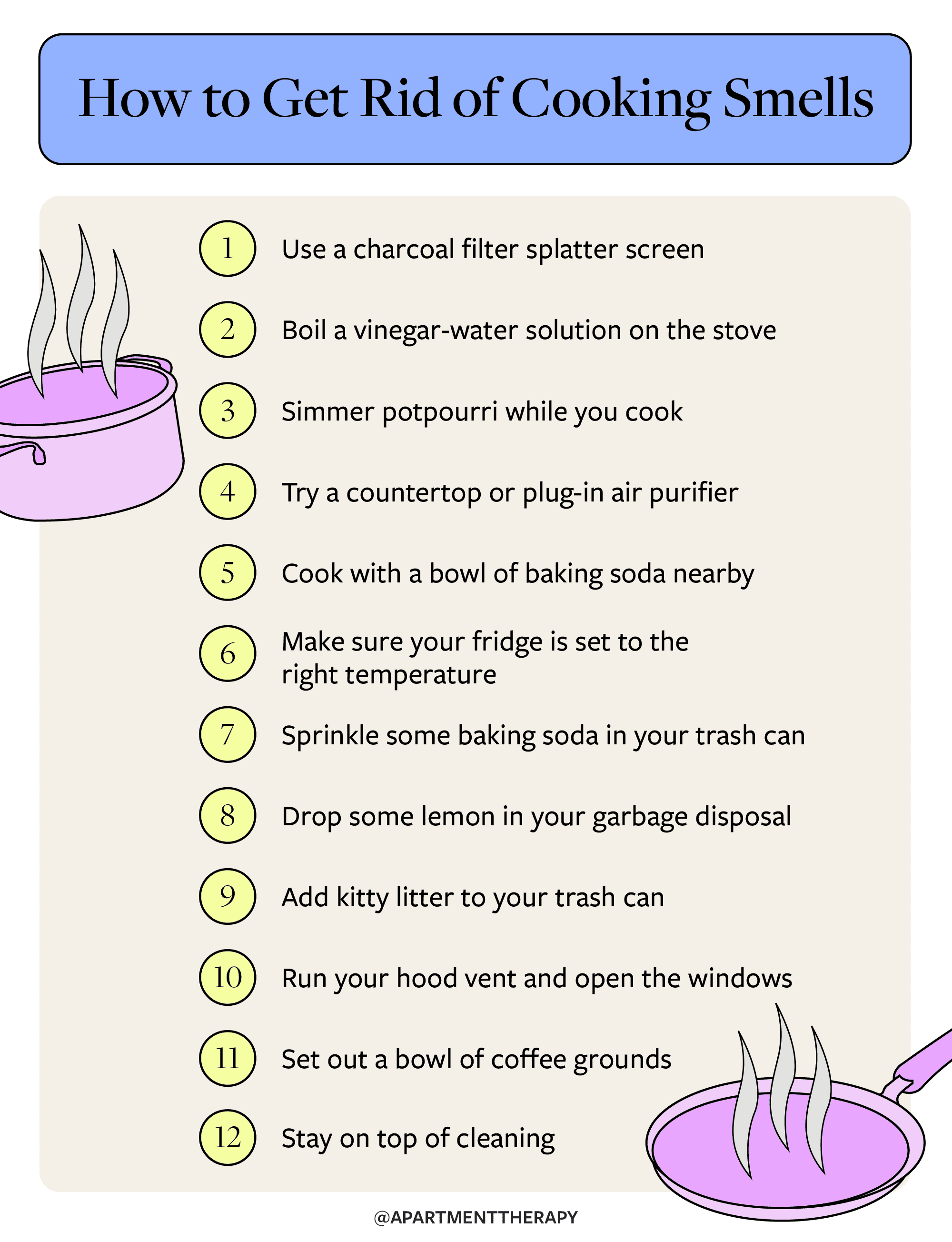
Credit: www.apartmenttherapy.com
Preventing Smells From Spreading
Some smells cannot be avoided, but you can stop them from spreading around your apartment.
Close Bedroom And Closet Doors
Before you start cooking, close all doors to bedrooms and closets. This keeps smells out of fabrics and clothes.
Use Draft Stoppers
Place a draft stopper or rolled towel at the base of doors. This blocks air (and smells) from moving under the door.
Cover Soft Furnishings
If you’re cooking a strong-smelling dish, throw a sheet or blanket over your sofa or bed. Remove and wash it after cooking.
Use Shower Curtain Liners
Some people use a cheap shower curtain as a temporary cover for large furniture during heavy cooking. This prevents fabric from absorbing smells.
Run The Bathroom Fan
If your bathroom is close to the kitchen, turn on the fan to pull air away from the rest of the apartment.
Deep Cleaning: Resetting Your Apartment’s Air
If smells have built up over weeks or months, a deep cleaning session can “reset” your apartment.
Wash Curtains, Linens, And Cushions
Textiles trap and hold onto smells. Wash all removable fabrics in hot water with a cup of white vinegar.
Clean Walls And Ceilings
Wipe down kitchen walls, especially around the stove. Steam and oil can stick to paint and cause persistent odors.
Wash Or Replace Air Filters
AC and heater filters collect dust and smells. Clean or replace them every 2-3 months for better air quality.
Steam Clean Carpets
Rent a steam cleaner or use a professional service. Deep cleaning carpets pulls out old smells that vacuuming can’t reach.
Clean The Fridge And Pantry
Throw out old food, wipe shelves with vinegar solution, and keep an open box of baking soda inside.
Interesting fact: Studies show that kitchen walls and ceilings can hold odors for months. Regular cleaning reduces “background smells” that you may not even notice anymore.
:max_bytes(150000):strip_icc()/GettyImages-1398999726-762db91712374fc2aa8768b369d6b31d.jpg)
Credit: www.thespruce.com
Scented Solutions: Adding Pleasant Aromas
Once you’ve removed bad odors, you can add pleasant scents to your apartment.
Scented Candles
Choose candles with natural ingredients and avoid artificial scents that can mix poorly with cooking smells. Light them after cleaning.
Reed Diffusers
Reed diffusers release scent slowly and evenly. Place them in entryways or living rooms for a gentle aroma.
Potpourri
A bowl of dried flowers, herbs, and spices can add a subtle scent. Refresh with essential oils as needed.
Simmer Pots
Make your own simmer pot with water, citrus slices, and herbs. Simmer for an hour to infuse your apartment with a fresh, natural smell.
Essential Oil Sprays
Mix a few drops of your favorite essential oil with water in a spray bottle. Mist lightly around the apartment, avoiding fabrics.
Beginner mistake to avoid: Don’t use too many strong scents at once. They can combine with cooking odors and create an unpleasant mix. Always remove the source of the bad smell before adding new scents.
Odor Control For Shared Spaces
If you live with roommates or share a kitchen, managing cooking smells can be more difficult. Here’s how to keep peace:
- Set ground rules: Agree on which foods can be cooked at what times.
- Take turns deep cleaning: Share the work so smells don’t build up.
- Use shared appliances: Keep air purifiers and fans running for everyone.
- Respect sensitivities: Some people are more sensitive to smells. Communicate and adjust as needed.
Troubleshooting: When Smells Won’t Go Away
If you’ve tried everything and the smell still lingers, check these often-missed areas:
- Under the stove: Food particles can fall and rot.
- Inside vents: Dust and grease can trap odors.
- Dishwasher filter: Food scraps can build up here.
- Behind the fridge: Spills can collect and smell bad.
Check these places monthly and clean as needed.
Data Comparison: Common Odor Control Methods
Here’s a simple comparison of popular odor control methods and how quickly they work in a small apartment:
| Method | Effectiveness | Time to Notice Results | Cost |
|---|---|---|---|
| Baking Soda | High | 12-24 hours | Low |
| Vinegar Steam | Medium | 1-2 hours | Low |
| Air Purifier (Carbon Filter) | High | 30-60 minutes | Medium-High |
| Open Windows/Fans | Medium | 30-60 minutes | Low |
| Essential Oil Diffuser | Low (for odor removal) | Immediate (for scent) | Medium |

Credit: www.homedit.com
Top Odor Absorbers: Pros And Cons
Choosing the right odor absorber depends on your needs. Here’s a quick look at some popular options:
| Odor Absorber | Pros | Cons |
|---|---|---|
| Baking Soda | Cheap, easy to use, safe | Needs regular replacement |
| Activated Charcoal | Very effective, long-lasting | Can be messy if spilled |
| Coffee Grounds | Readily available, pleasant scent | Less effective for strong odors |
| Vinegar | Strong neutralizer, inexpensive | Some dislike the vinegar smell |
| Air Purifier | Removes particles and odors | Higher upfront cost |
Common Mistakes To Avoid
Many people make the same errors when trying to get rid of cooking smells:
- Waiting too long to clean: Smells set into surfaces quickly.
- Using only air fresheners: These mask smells, they don’t remove them.
- Not cleaning filters: Range hood, AC, and air purifier filters need attention.
- Ignoring soft surfaces: Fabrics hold odors longer than hard surfaces.
- Overusing scented candles: Too many can create a “perfume cloud” that’s just as unpleasant.
When To Call For Help
If your apartment smells persistently bad even after deep cleaning, you might have a hidden issue:
- Plumbing problems: A blocked pipe or leaking drain can cause foul smells.
- Mold or mildew: Damp areas behind walls or under floors can smell musty.
- Building ventilation issues: Shared vents can carry other apartments’ smells into yours.
If you suspect these problems, contact your landlord or property manager.
Living Fresh: Everyday Habits For Odor-free Apartments
Keeping your apartment smelling good is easier if you build simple habits:
- Clean up right after cooking.
- Use fans and open windows daily, even for a short time.
- Wash fabrics and mop floors weekly.
- Store leftovers in sealed containers.
- Use odor absorbers in every room, not just the kitchen.
Over time, these small steps make a big difference.
Frequently Asked Questions
What Is The Fastest Way To Get Rid Of Cooking Smells In A Small Apartment?
Open all available windows, use a fan to push air outside, and simmer vinegar or lemon water on the stove. At the same time, wipe down kitchen surfaces and take out the trash. This combination gives the quickest results.
How Can I Prevent My Clothes From Smelling Like Food After Cooking?
Close all closet and bedroom doors before you start cooking. Use a draft stopper at the base of the doors. Wash clothes and linens regularly with a bit of baking soda for added freshness.
Are Air Purifiers Really Effective For Cooking Odors?
Yes, but only if they have a carbon or charcoal filter. HEPA filters alone are not enough for odors. Place the purifier near the kitchen for best results. For detailed information, see this EPA guide on air filters.
What Foods Are The Worst For Lingering Odors?
Fish, curry, fried foods, garlic, onions, and cabbage are among the worst offenders. Cooking these with a lid on, or using foil packets, helps reduce smells.
Can I Use Essential Oils To Remove Bad Smells?
Essential oils can mask smells and add a pleasant scent, but they do not remove the odor particles. Use them after cleaning and ventilating your apartment for best results.
A small apartment does not have to smell like a restaurant after every meal. With a mix of smart habits, natural solutions, and the right appliances, you can cook what you love—and keep your space smelling fresh every day.