
A glowing pool at night can turn your backyard into a magical place. But if your Hayward pool light turns on then off unexpectedly, it can ruin the atmosphere and leave you confused. Many pool owners face this issue. Sometimes, the light works for a few seconds or minutes, and then suddenly shuts off. This problem can be frustrating, especially if you love evening swims or host poolside parties.
Understanding why your Hayward pool light behaves this way is important for safety and enjoyment. In this article, you will learn all the common causes behind this problem, how to diagnose the issue, and what you can do to fix it. We will also discuss when to call a professional, how to prevent future problems, and answer the most common questions pool owners have.
Why Hayward Pool Light Turns On Then Off
When a Hayward pool light turns on and then off, several things could be causing the problem. Some issues are simple and easy to fix, while others need professional help.
Electrical Problems
The most common reason for a pool light to turn off shortly after turning on is an electrical issue. This can include:
- Loose wiring: If the wires inside the light fixture or the junction box are not tight, the connection can break when the light heats up.
- Faulty breaker: Circuit breakers that are old or weak may trip after a few seconds or minutes.
- Bad GFCI outlet: Pool lights are often connected to a Ground Fault Circuit Interrupter (GFCI). If the GFCI senses a problem, it shuts off the power.
Overheating
Many Hayward pool lights have a thermal protection switch. This safety feature turns off the light if it gets too hot. Overheating can happen when:
- The pool light fixture is not filled with water
- The wrong bulb is used, or the wattage is too high
- The light is left on outside the water
Water Leaks
A leak inside the light fixture can cause a short circuit. Water and electricity do not mix. Even a small leak can make the light turn off for safety.
Bulb Problems
Sometimes the problem is simply a bad bulb. Pool bulbs can develop small cracks or faults that cause them to work for a short time and then fail.
Transformer Issues
Low-voltage pool lights use a transformer to reduce the voltage. If the transformer is faulty, it may not deliver stable power, causing the light to turn off soon after turning on.
Timer Or Automation Errors
If your pool light is connected to a timer or smart control system, programming errors, or a faulty unit can cause the light to switch off unexpectedly.
Common Causes Table
Below is a comparison of the main causes and how they typically affect Hayward pool lights.
| Cause | Typical Symptoms | Difficulty to Fix |
|---|---|---|
| Loose Wiring | Light flickers, turns off after a few seconds/minutes | Medium |
| Overheating | Light turns off after warming up, may work again when cool | Medium |
| Water Leak | Light trips GFCI, water visible inside lens | Hard |
| Bulb Problem | Light works briefly, then burns out | Easy |
| Transformer Fault | Light turns on/off in cycles, buzzing sound | Medium |
| Timer/Automation Error | Light works on manual, not on schedule | Easy |
How To Diagnose The Problem
Finding the exact reason your Hayward pool light turns on then off can save you time and money. Here’s how to do a step-by-step check.
1. Check The Circuit Breaker And Gfci
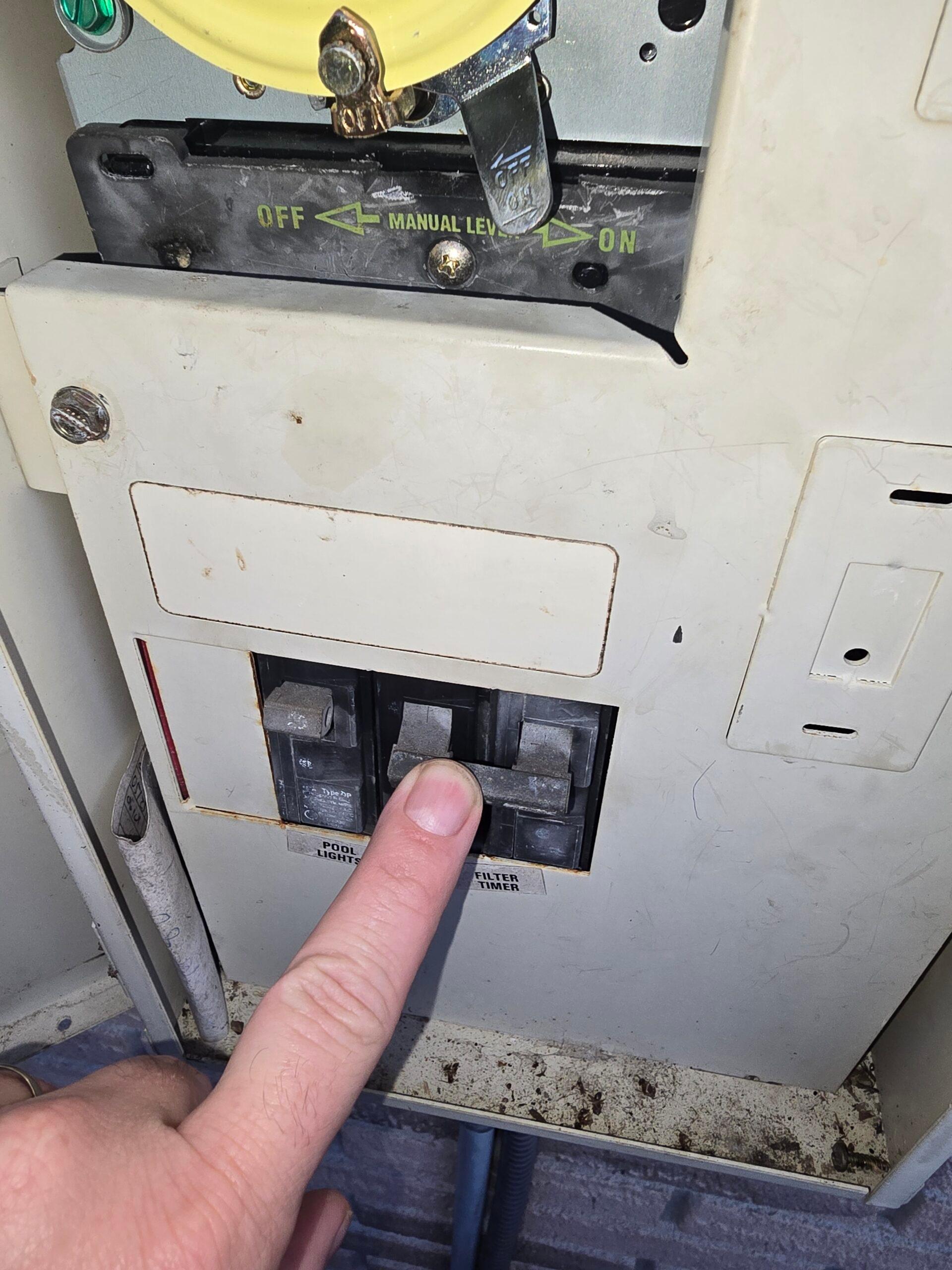
Start at your electrical panel. Flip the breaker for the pool light off, wait ten seconds, and turn it back on. If it trips again, or if the GFCI outlet has popped, this points to an electrical fault.
2. Listen And Look For Signs
- Is the light buzzing, clicking, or making strange noises?
- Is there water inside the lens or visible condensation?
- Does the light flicker before turning off?
These observations are important clues.
3. Test The Bulb
Turn off the power first. Remove the pool light from its niche (read your manual or look up a guide if you are unsure). Check the bulb for black marks, cracks, or loose filaments. If you have a spare, swap bulbs and see if the problem goes away.
4. Inspect Wiring Connections
Wires can become loose over time, especially with vibration and heat. Check all connections at the junction box, transformer, and inside the fixture (if you are comfortable and know safety rules).
5. Check For Water Leaks
Water inside the light fixture means the seal or gasket has failed. Even a small amount can trigger safety shutoff.
6. Review Timer And Automation Settings
Go through your pool automation app or timer settings. Make sure there are no conflicting schedules or errors.
7. Measure Voltage
If you have a multimeter and know how to use it safely, check the voltage at the light socket. Low voltage can mean a transformer or wiring problem.
Common Diagnostic Mistakes
- Forgetting to turn off power before opening fixtures
- Ignoring the GFCI reset button
- Overlooking automation or timer errors
Proper diagnosis often requires patience and careful observation. If you are ever unsure, it is best to call a professional electrician or pool technician.
Fixes For Hayward Pool Light Turning On And Off
Once you know the cause, you can fix the problem. Below are solutions based on the most common reasons.
Replacing A Faulty Bulb
A burned-out bulb is the simplest issue. To replace:
- Switch off all power to the pool light.
- Remove the light fixture from the pool wall.
- Open the fixture and take out the old bulb.
- Replace with a new bulb of the correct wattage and type.
- Reassemble, check the seal, and reinstall.
Always use bulbs recommended by Hayward for your model.
Tightening Or Repairing Wiring
If you find loose connections:
- Turn off power at the breaker.
- Tighten all wire nuts and screws in the junction box.
- Inspect wires for corrosion or damage. Replace if needed.
- For wires inside the fixture, ensure all connections are snug and dry.
If you see damaged wires, especially inside the conduit, it is safer to call an electrician.
Fixing Water Leaks
If there’s water inside the light:
- Remove the fixture from the pool.
- Open the unit and dry all parts.
- Replace the gasket or seal with a new one.
- Inspect for cracks in the lens or housing.
- Reassemble and test outside the pool before reinstalling.
Don’t use silicone sealants as a permanent fix—always use the correct gasket.
Addressing Overheating
If your light shuts off from overheating:
- Make sure you are using the correct bulb wattage.
- Do not run the light outside the water. Pool water cools the fixture.
- Clean any debris from around the light, as it can block water flow.
If overheating continues, the thermal switch or fixture may be defective and need replacement.
Replacing A Faulty Transformer
If the transformer is to blame:
- Test the output voltage with a multimeter. It should match the light’s rating (usually 12V or 120V).
- If voltage is too low or unstable, replace the transformer with a compatible one.
Always turn off power before working on electrical systems.
Correcting Timer Or Automation Errors
- Reset the timer or smart control system.
- Update firmware or software if you use a smart pool controller.
- Remove any conflicting schedules.
Sometimes, a full power cycle (turning the system off and on) can solve programming glitches.
When To Call A Professional
Some problems are not safe for DIY:
- Water leaks inside the conduit or deep wiring issues
- Electrical shocks or burning smells
- Complex automation faults
A licensed pool technician or electrician should handle these for safety.
Real-world Example
Imagine you turn on your pool light, and it shines for about 30 seconds, then goes dark. You reset the breaker, but the same thing happens. Upon checking, you see condensation inside the lens. This points to a failed gasket.
By replacing the gasket and drying the unit, the problem is fixed.
In another case, the light flickers then shuts off, but there’s no water inside. You test the bulb and see black marks. A new bulb solves the issue.
Sometimes, the light works with the manual switch but not with the timer. Resetting the timer fixes the schedule conflict.
How To Prevent Pool Light Problems
Prevention is better than repair. Here are ways to keep your Hayward pool light working well.
Regular Maintenance
- Check the light fixture for leaks every few months.
- Inspect wiring connections at the junction box yearly.
- Replace gaskets every 3-5 years, or sooner if you see wear.
Use The Right Parts
- Only install bulbs, gaskets, and lenses recommended by Hayward.
- Avoid high-wattage bulbs that can cause overheating.
Smart Operation
- Run the pool light only when the fixture is underwater.
- Do not leave the light on for long periods without supervision.
Electrical Safety
- Test the GFCI outlet monthly.
- Make sure your pool’s electrical system is grounded and up to code.
Professional Inspection
- Have a pool professional check all underwater lights every few years.
Common Myths About Pool Lights
Many pool owners believe some myths that can lead to mistakes or unsafe repairs.
Myth 1: You Can Change The Bulb Without Removing The Fixture
Fact: Most Hayward pool lights must be removed from the pool wall to change the bulb and check for leaks.
Myth 2: Any Bulb Will Work
Fact: Always use the correct wattage and type. The wrong bulb can cause overheating and damage.
Myth 3: Silicone Fixes All Leaks
Fact: While silicone can stop a leak for a short time, it is not a safe or permanent solution. Always replace gaskets.
Myth 4: If The Light Works Sometimes, There’s No Problem
Fact: Intermittent shutoff often means a dangerous issue, such as a loose wire or water ingress.
Myth 5: It’s Safe To Work On Pool Lights Without Turning Off Power
Fact: Always turn off power at the breaker. Pool light circuits can be deadly if handled incorrectly.
How Hayward Pool Lights Compare To Other Brands
Hayward is a popular brand for pool equipment, but how do their lights compare when it comes to reliability and common problems like turning on and off?
Below is a comparison with other top brands.
| Brand | Common Problems | Ease of Repair | Warranty |
|---|---|---|---|
| Hayward | Thermal switch, wiring, gasket leaks | Medium | 1-3 years |
| Pentair | Bulb burnouts, transformer failures | Medium | 1-3 years |
| Jandy | Timer/automation glitches | Easy | 1-3 years |
Most issues are similar across brands, but Hayward lights are known for robust build quality. However, all underwater lights need regular checks for safety and performance.
Advanced Troubleshooting Tips
If you have tried the basic steps and the problem still exists, consider these advanced tips.
Check For Voltage Drop
Long cable runs or thin wires can cause a voltage drop, especially on 12V systems. If the voltage at the fixture is much lower than at the transformer, upgrade the wire size or shorten the run.
Inspect The Light Niche
Cracks or poor sealing in the pool wall niche can allow water to reach the wiring. If you suspect a niche leak, call a pool professional.
Replace The Thermal Switch
Some Hayward lights have a thermal cutoff switch inside the fixture. If it fails, the light will shut off too soon. This part is not always easy to find, but a pool supply store can help.
Firmware Updates For Smart Controls
If you use a Hayward OmniLogic or similar system, check for firmware updates. Software bugs can sometimes cause random shutoffs.
Look For Corrosion
Corrosion at the connections, especially in saltwater pools, can interrupt the power. Clean all contacts and apply dielectric grease to prevent future problems.

Credit: us.amazon.com
Safety Warnings
Working with pool lights is not the same as changing a light bulb in your house. Pool light systems combine water and electricity. Even a small mistake can be deadly. Here are key safety tips:
- Always turn off power at the main breaker before opening any pool light fixture.
- Test the wires with a voltage tester before touching.
- If you see water inside the light, do not use the pool until it is fixed.
- Never try to seal a leaking fixture with tape or household glue.
- If you are unsure at any step, call a professional.
Signs You Need A New Pool Light
Sometimes, fixing is not enough. You may need to replace the entire light if:
- The housing is cracked or damaged
- The same problem returns after repairs
- The light is over 10 years old and parts are no longer available
- Upgrading to LED for better energy efficiency
Newer LED pool lights from Hayward last longer, use less power, and are easier to maintain.

Credit: community.smartthings.com
Cost To Repair Vs Replace
How much does it cost to fix a Hayward pool light that turns on then off?
| Repair Type | DIY Cost (USD) | Professional Cost (USD) |
|---|---|---|
| Replace Bulb | $25 – $60 | $100 – $200 |
| Replace Gasket | $10 – $30 | $80 – $150 |
| Replace Transformer | $50 – $120 | $150 – $300 |
| Full Fixture Replacement | $150 – $400 | $300 – $700 |
| Professional Diagnosis | N/A | $75 – $150 |
DIY can save money, but only if you are confident and follow safety steps.
Two Insights Beginners Miss
- Pool water cools the light fixture: Many owners do not realize that running a pool light outside water can cause rapid overheating. The water keeps the light cool and prevents damage.
- GFCI saves lives: The GFCI outlet is not just a breaker—it detects very small faults. If it trips, always find the reason before resetting. Ignoring repeated trips can be dangerous.
External Resource For Further Reading
For more on pool light safety standards, you can visit the Wikipedia Swimming Pool Sanitation page.
Frequently Asked Questions
Why Does My Hayward Pool Light Shut Off After A Few Minutes?
This usually means the fixture is overheating or there is a loose connection. Check if the light is fully underwater, the bulb wattage matches the specifications, and all wiring is tight. Sometimes, a faulty thermal switch is to blame.
Can I Replace A Hayward Pool Light Bulb Myself?
If you are comfortable with basic DIY and follow all safety steps (power off at breaker, check for leaks), you can replace the bulb. Always use the correct bulb type and wattage. If unsure, call a professional.
How Do I Know If My Pool Light Has A Water Leak?
Look for condensation or water droplets inside the lens. A tripped GFCI is another sign. If you suspect a leak, do not use the pool light until it is inspected and fixed.
What Is The Gfci, And Why Does It Keep Tripping With My Pool Light?
The GFCI (Ground Fault Circuit Interrupter) protects you from electrical shock. If it trips, there may be a water leak, loose wire, or faulty equipment. Never ignore repeated trips—find and fix the cause.
Is It Better To Repair Or Replace An Old Hayward Pool Light?
If the fixture is over 10 years old, has repeated problems, or parts are hard to find, replacement is often better. New lights are safer, more energy-efficient, and easier to maintain.
—
A pool light that turns on and then off can be annoying, but it’s usually fixable with careful diagnosis and the right steps. Always put safety first, use quality parts, and do regular checks. This will keep your pool beautiful, safe, and ready for fun—day or night.
Credit: diy.inyopools.com