
Owning a home with a swimming pool offers joy and comfort, but it also brings unique responsibilities and insurance challenges—especially if your pool does not have a fence. Many homeowners do not realize how their insurance coverage can change when a pool is unfenced. Insurers see pools without fences as risky, and that can affect your premiums, coverage limits, and even your eligibility for certain policies. Understanding these details is critical for protecting your property, your finances, and the safety of others.
This article will explain everything you need to know about homeowners insurance and pools with no fence. We will look at how insurance companies view unfenced pools, what risks they see, and how these factors impact your coverage. We will also discuss what you can do to stay protected, how to talk to your insurer, and the legal rules you need to follow. If you are a new homeowner, or thinking about installing a pool, or just want to know if your current insurance is enough, this guide will help you make informed decisions.
How Homeowners Insurance Views Pools With No Fence
Insurance companies evaluate risk when offering coverage. Swimming pools add a higher risk of accidents, and a pool without a fence is seen as even more dangerous. Most insurers call these “attractive nuisances.” That means something on your property that might attract children or trespassers, making it more likely for accidents or injuries to happen.
Why Fences Matter To Insurers
A pool fence is a basic safety feature. It helps prevent unsupervised access, especially by children or pets. Most accidents involving pools happen when nobody is watching. Without a fence, your pool is open to neighbors, kids, or even strangers who may enter your yard. Insurers know that a fence reduces the risk of injuries or drowning.
Impact On Policy Approval
Some insurance companies will not offer coverage at all if you have a pool with no fence. Others may require you to build a fence before the policy begins. A few might insure you but exclude any pool-related claims. This means if someone is hurt in your pool, your policy will not pay for medical bills or legal costs.
It’s important to know your insurer’s rules before you face a problem.
How An Unfenced Pool Affects Your Coverage And Premiums
Having a pool without a fence can change your insurance in several ways. Here is what you need to know:
1. Higher Premiums
You will almost always pay higher premiums if you have an unfenced pool. The extra risk means the insurer expects to pay out more claims. A fence can sometimes lower your premium by 5%–20%, depending on the company and your location.
2. Liability Coverage Changes
Liability coverage is the part of your homeowners policy that pays for injuries or accidents on your property. With a pool, especially one without a fence, you may be required to increase your liability limits. Some insurers set a minimum, like $300,000 or $500,000, when a pool is involved.
3. Exclusions For Pool-related Incidents
In some cases, your insurer might add an exclusion for pool-related claims. This means you could be responsible for all costs if someone is injured or drowns in your pool. Always read your policy carefully for exclusions or special conditions.
4. Possible Policy Cancellation Or Non-renewal
If you add a pool and do not install a fence, your insurer can cancel your policy or refuse to renew it. Sometimes, they will send an inspector to check your property. If they find the pool unfenced, you may get a warning or lose your coverage.
Example Comparison: Premiums With And Without A Fence
Below is a comparison of typical annual homeowners insurance premiums for a $300,000 home with a pool, based on whether the pool has a fence.
| Home Feature | Annual Premium (with fence) | Annual Premium (no fence) |
|---|---|---|
| Standard pool | $1,700 | $2,100 |
| Pool with diving board | $1,900 | $2,400 |
| Pool with slide | $2,000 | $2,600 |
These are average numbers. Actual rates depend on location, insurer, claims history, and other factors.

Credit: guardianpoolfence.com
The Risks Of A Pool Without A Fence
Not having a fence around your pool creates real dangers. Insurance companies know these risks, but it is also important for homeowners to understand them.
Drowning And Accidents
Unfenced pools are a leading cause of accidental drownings, especially among children under 5. The Centers for Disease Control and Prevention (CDC) reports that about 3,900 fatal unintentional drownings happen every year in the United States. Many happen in residential pools. A fence can reduce the risk of a child drowning by 50%–80%.
Legal Responsibility
If someone enters your yard and is hurt in your pool—even if they are trespassing—you could be held legally responsible. This is called premises liability. Some states have “attractive nuisance” laws, which make homeowners responsible for injuries to children who wander onto their property.
Lawsuits And Financial Loss
Injuries or deaths in your pool can lead to lawsuits. If you do not have enough liability coverage, you could lose your home or savings. Medical costs, legal fees, and court awards can be very high. Even if you win in court, legal costs alone can be tens of thousands of dollars.
How Insurers Assess Pool Risks
Insurers look at:
- Whether you have a fence and what type
- The presence of safety features (alarms, covers)
- If the pool is above-ground or in-ground
- Extra risk items (diving boards, slides)
If you lack basic safety measures, your risk is considered much higher.
State And Local Laws About Pool Fencing
Every state—and often each city—has its own rules for pool safety. Many require a fence or barrier around any residential pool. If you ignore these laws, you could face fines, be forced to remove your pool, or be denied insurance.
Common Fencing Laws
Most areas require:
- A fence at least 4 feet high
- Gates that are self-closing and self-latching
- No gaps wider than 4 inches
- The fence must fully surround the pool
In some places, even above-ground pools must have barriers or locked ladders.
Legal And Insurance Consequences
If your pool does not meet legal fencing rules:
- Your insurance claim could be denied after an accident.
- You could be fined by local authorities.
- You may have to pay out-of-pocket for injuries or damage.
- Your policy may be canceled.
Always check your local building codes before building or buying a house with a pool.
What To Do If Your Pool Has No Fence
If you already have a pool with no fence, here are practical steps to protect yourself:
1. Talk To Your Insurance Agent
Tell your agent about your pool and ask how it affects your coverage. Do not hide the fact that your pool is unfenced. Non-disclosure can lead to denied claims or policy cancellation.
2. Consider Installing A Fence
Adding a fence is the single best way to lower your risk and insurance cost. Many safety fences are affordable and easy to install. Some insurers may help pay for part of the cost or give you a premium discount.
3. Add Other Safety Features
If you cannot add a fence immediately, install pool alarms or a safety cover. These do not replace a fence, but they show your insurer you are taking safety seriously.
4. Increase Your Liability Coverage
Consider raising your liability coverage to at least $500,000. You might also buy an umbrella policy for extra protection. This covers you if damages go beyond your basic policy limits.
5. Review And Update Your Policy
Make sure your policy reflects your current property. If you add a fence or new safety features, tell your insurer. They may lower your premium or improve your coverage.
Real-world Scenarios And Claims
Understanding real-life examples can help you see the value of proper pool safety and insurance.
Scenario 1: Child Enters Unfenced Pool
A 7-year-old neighbor enters a backyard pool with no fence and is injured. The parents sue the homeowner. The claim is for $200,000 in medical costs and damages. The insurance company denies the claim because the pool did not meet local fencing laws, leaving the homeowner responsible for all costs.
Scenario 2: Trespasser Drowns
A teenager sneaks into an unfenced pool at night and drowns. The homeowner faces a lawsuit from the family. Even though the teen was trespassing, the “attractive nuisance” law means the homeowner is partly liable. The insurer covers part of the cost, but only because the homeowner had a high liability limit.
Scenario 3: Pool Fence Prevents Accident
A family installs a pool fence and an alarm. A neighborhood child tries to enter, but the alarm sounds, and the parents intervene. No injury occurs, and the insurer offers a premium discount for the safety measures.
Credit: poolguardusa.com
Comparing Pool Insurance Requirements By State
Different states have different pool safety rules and insurance requirements. Here’s a simple comparison of three states:
| State | Fence Required? | Minimum Height | Insurance Impact |
|---|---|---|---|
| California | Yes | 5 ft | Fencing required for most policies |
| Florida | Yes | 4 ft | Fencing required, higher premiums without it |
| Texas | Yes (most cities) | 4 ft | Possible denial of coverage if no fence |
Check with your local authority to confirm your area’s rules.
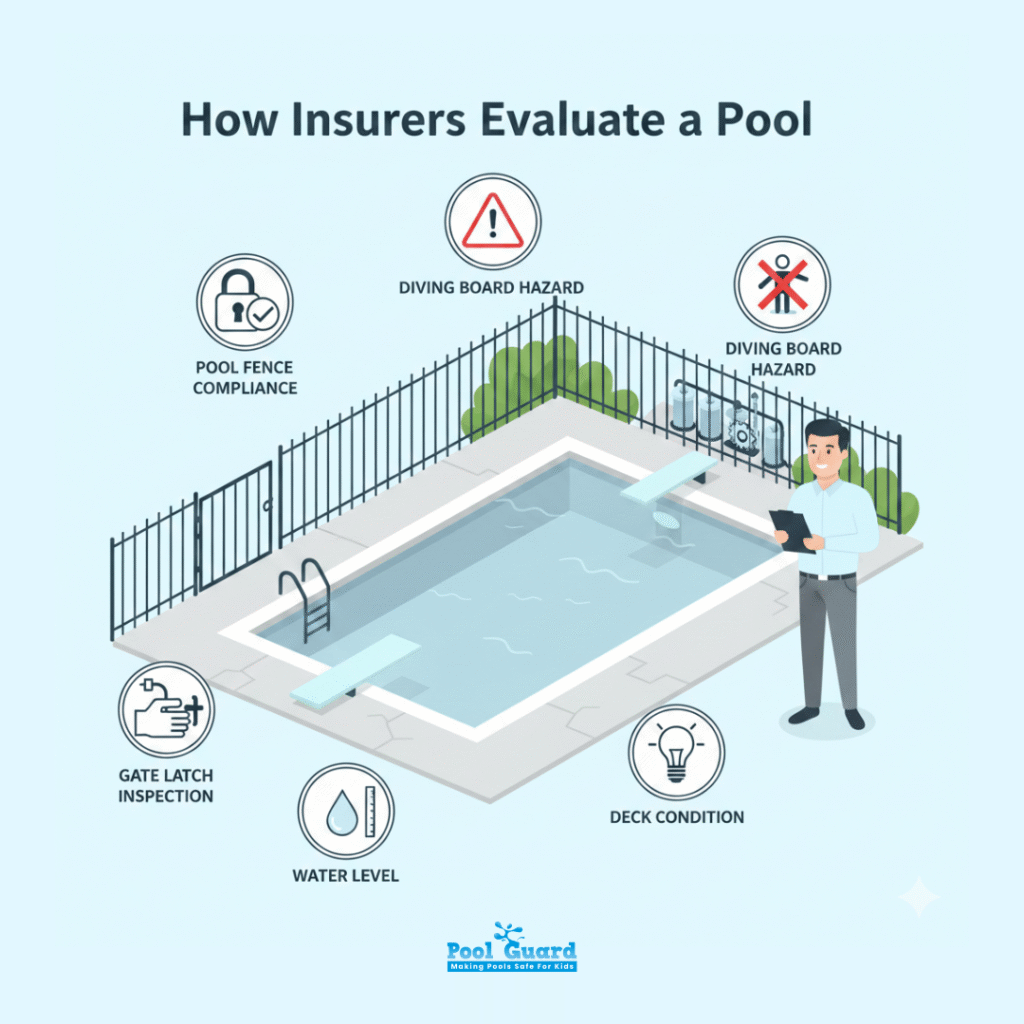
What Insurers Look For During Inspections
When you apply for or renew homeowners insurance, the company may send an inspector to your property. Here’s what they check regarding pools:
- Is there a fence? How high is it?
- Is the gate self-latching and locked?
- Are there gaps or broken sections?
- Is the pool visible from the house?
- Are there alarms or security cameras?
- Is the pool covered when not in use?
- Are there diving boards or slides?
- Are there any warning signs posted?
If you fail the inspection, you may have a short time (often 30 days) to add a fence or lose your coverage.
What Kind Of Insurance Do You Need For An Unfenced Pool?
Liability Coverage
Aim for at least $300,000–$500,000 in personal liability coverage. If you host parties or have frequent visitors, go higher.
Medical Payments
This part of your policy pays for small injuries (usually up to $5,000) without proving fault. This can help avoid lawsuits for minor accidents.
Umbrella Policy
If you have significant assets, buy an umbrella policy. This adds $1 million or more in liability coverage over your basic policy.
Pool Structure Coverage
Some policies limit coverage for pool damage (like from storms). Make sure your pool itself is covered for common risks in your area.
Comparison: Insurance Features For Pools
Here’s a quick look at what different types of coverage protect:
| Coverage Type | Protects Against | Typical Limit |
|---|---|---|
| Liability | Injury lawsuits, legal fees | $100,000–$500,000 |
| Medical Payments | Guest injuries, minor accidents | $1,000–$5,000 |
| Umbrella Policy | Major lawsuits, large claims | $1M+ |
| Pool Structure | Physical damage to the pool | Varies by policy |
Ask your agent how each part works with your specific pool.
Mistakes To Avoid With Unfenced Pools And Insurance
- Not telling your insurer about the pool. If you hide it, you risk denied claims.
- Ignoring local laws. Failing to meet fencing rules can void your insurance.
- Choosing low liability limits. Medical and legal costs can be much higher than basic coverage.
- Not installing safety features. Alarms, covers, and cameras show you are serious about safety.
- Thinking “it won’t happen to me.” Accidents can happen to anyone, and the financial risk is too great to ignore.
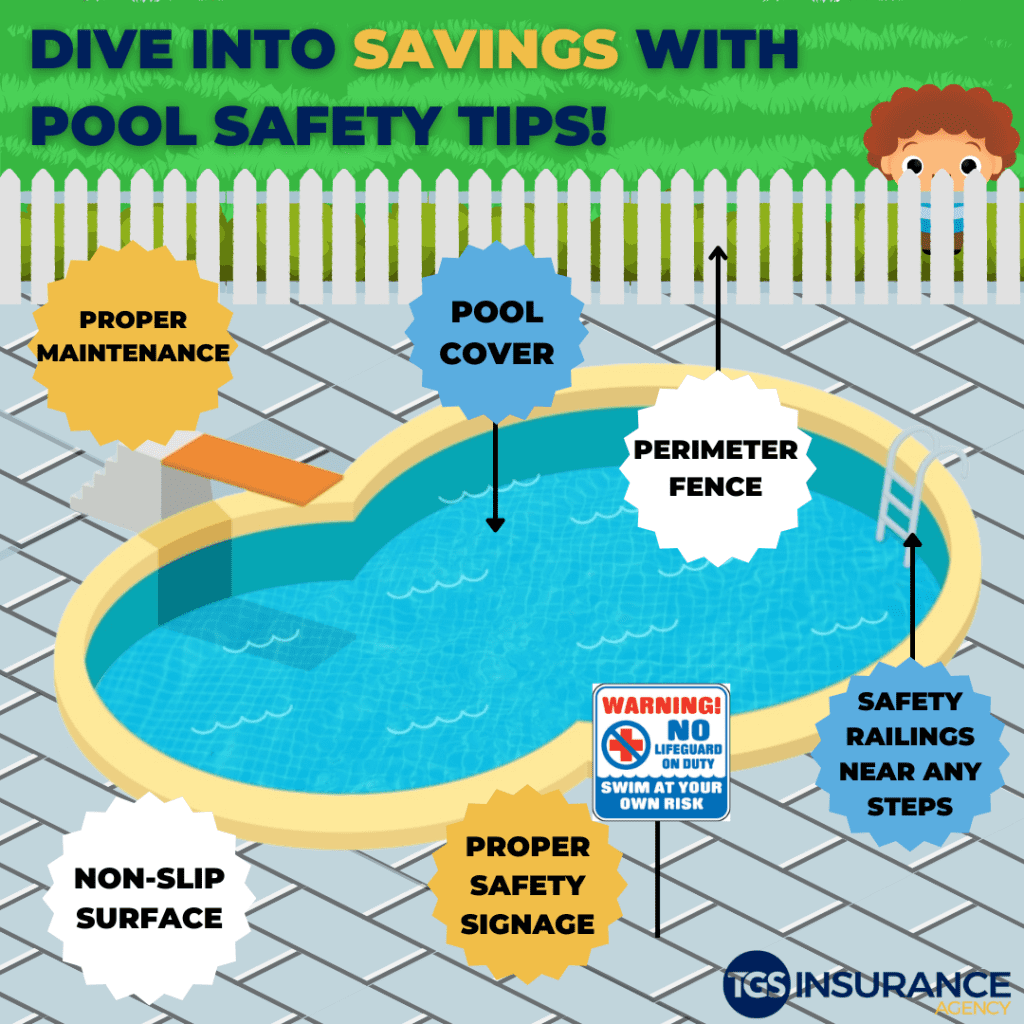
Extra Steps To Improve Pool Safety And Insurance Approval
- Install a pool alarm that alerts you if someone enters the water.
- Add security cameras facing the pool area.
- Post visible safety signs: “No Diving,” “Children Must Be Supervised.”
- Keep rescue equipment (life ring, pole) near the pool.
- Lock up pool chemicals safely.
- Remove ladders from above-ground pools when not in use.
- Teach family members CPR and basic rescue skills.
How To Shop For Homeowners Insurance With An Unfenced Pool
1. Get Multiple Quotes
Every insurer treats pools differently. Get at least three quotes and compare what is covered, the premium, and any special rules about fences.
2. Ask About Discounts
Some companies offer discounts for:
- Installing a fence or alarm
- Completing a pool safety course
- Using a pool cover
3. Read The Fine Print
Look for exclusions, requirements, and limits. Do not assume your pool is covered just because you have homeowners insurance.
4. Work With A Specialist
Some agents specialize in insuring homes with pools. They can find the best policy for your situation.
The Financial Side: Cost Of Not Having A Fence
Not installing a pool fence can be expensive, not just for insurance but also for legal and medical costs.
- A single drowning lawsuit can result in a payout of $500,000 or more.
- Medical costs for a non-fatal pool injury can exceed $100,000.
- Fines for violating local pool safety laws can range from $500 to $5,000.
- Insurance premiums can be $300–$700 higher per year without a fence.
These costs are much higher than the price of installing a fence, which usually ranges from $1,500 to $3,000.
Non-obvious Insights For Pool Owners
- Insurer inspections are not always announced. Some companies use aerial photos or neighbors’ reports to check for pools and fences.
- Policy language changes over time. Even if your pool was covered last year, new rules can appear at renewal. Always review your renewal notice.
- Adding safety features can help even without a fence. While not a substitute, showing a commitment to safety (alarms, cameras, pool covers) can sometimes convince an insurer to offer coverage or lower your rate.
- Your liability extends beyond your property line. If someone uses your pool with your permission and is later hurt, you might still be sued, especially if you did not warn them about the lack of a fence.
Credit: tgsinsurance.com
What To Do After An Accident In An Unfenced Pool
If an injury or accident occurs:
- Get medical help immediately.
- Notify your insurer as soon as possible.
- Do not admit fault or make promises to pay.
- Document the scene: Take photos and write down what happened.
- Cooperate with your insurer’s investigation.
Your response can affect your coverage and legal responsibility.
The Bottom Line: Is It Ever Safe To Have A Pool With No Fence?
While not illegal everywhere, having a pool without a fence is risky for your finances, your family, and your peace of mind. Most insurers, safety experts, and local laws agree: a fence is the best way to prevent tragedy and protect yourself from massive legal or financial harm. If you have a pool and no fence, act now to improve safety and update your insurance. The cost of doing nothing is simply too high.
For further reading on pool safety statistics and prevention, the CDC offers valuable resources: Centers for Disease Control and Prevention.
Frequently Asked Questions
What Happens To My Homeowners Insurance If I Install A Pool Without A Fence?
Your insurer may raise your premium, exclude pool-related incidents, or even cancel your policy. Many companies require a fence before offering full coverage. Always check with your insurer before installing a pool.
Can I Be Sued If Someone Drowns In My Unfenced Pool, Even If They Were Trespassing?
Yes. The “attractive nuisance” law means you can be held responsible for injuries to children or others who enter your pool, even without your permission. You may also face criminal penalties if you break local fencing laws.
Will Adding A Fence Lower My Insurance Premiums?
Usually, yes. Installing a fence shows your insurer that you are reducing risk, which can lower your premium by 5%–20%. You may also qualify for additional safety discounts by adding alarms or covers.
Are Above-ground Pools Treated Differently By Insurers?
Sometimes. Some insurers are less strict about fencing for above-ground pools, but most still require a locked ladder or other barrier. Always check your policy for details.
What If My Local Laws Do Not Require A Fence, But My Insurer Does?
You must follow your insurer’s rules to keep your coverage. Even if your city does not require a fence, your insurance company can deny claims or cancel your policy if you do not meet their requirements.
Taking these precautions and understanding your policy can help you enjoy your pool safely and avoid costly surprises.