
Keeping a carbon steel knife in great condition can feel challenging, especially if you are used to stainless steel. Many people love carbon steel because it gets super sharp and is easy to sharpen, but it needs more care. Without proper cleaning, a carbon steel knife will rust, develop stains, or even pit. The good news: cleaning and caring for these knives is simple once you know how. You do not need expensive tools, but you do need the right habits.
Most new users do not realize how quickly carbon steel reacts with water, acid, and air. Sometimes, just a few minutes is enough for rust to start. In this article, I’ll show you how to clean your carbon steel knife safely, keep it looking good, and avoid common mistakes that many beginners make.
You will also learn how to handle tough stains, protect your knife from rust, and make it last for decades.
Let’s dive into every detail you need to know.
What Makes Carbon Steel Knives Different?
Carbon steel has a reputation for sharpness and easy sharpening. Unlike stainless steel, carbon steel does not have much chromium, which means it can rust much faster. The blade reacts with food, water, and even air. This reaction can create a patina—a grayish-blue film—which helps protect the knife but also shows it’s not stainless.
If you use your knife for acidic foods like onions, tomatoes, or lemons, you may notice color changes quickly. A little patina is normal and actually good, but red or orange rust is not. That’s why cleaning and drying are so important.
Why Care Matters
Without careful cleaning, carbon steel knives:
- Develop rust spots
- Lose sharpness faster
- May get deep pitting that ruins the blade
A well-maintained carbon steel knife, however, can last your whole life and even be handed down to the next generation.
Essential Tools And Materials
You do not need fancy products to clean your knife. Here are the basics:
- Mild dish soap – Avoid strong chemicals or bleach.
- Non-abrasive sponge or soft cloth – No steel wool or rough pads.
- Clean towel or paper towels – For drying.
- Food-grade mineral oil – Or camellia oil. Avoid olive or vegetable oils (they can go rancid).
- Baking soda – For rust removal.
- Rubber gloves (optional) – If you have sensitive skin.
- Toothpicks or cotton swabs – For cleaning tight spots, like around the handle.
You may already have all these at home. The most important thing is to never use the dishwasher or let your knife soak in water.
Step-by-step: Daily Cleaning Routine
Cleaning after each use is the best way to protect your knife. Here’s how to do it right.
1. Rinse Immediately After Use
The longer food or moisture sits on your knife, the more likely it will stain or rust. Right after using the knife, rinse it under warm running water. For sticky foods, use your fingers or a soft cloth to wipe off any bits.
Pro Tip: Never leave your knife sitting in the sink or on a wet cutting board. This is the most common way knives get rusty.
2. Wash Gently With Soap
Add a drop of mild dish soap to your sponge or cloth. Gently clean both sides of the blade, paying attention to the edge and near the handle. Avoid scrubbing too hard, and never use anything abrasive.
Non-obvious Insight: The area near the handle often collects food and water. Many people forget this spot, but it’s where rust often starts.
3. Rinse Off All Soap
Leftover soap can cause spots or interact with the metal. Rinse the knife completely with warm water.
4. Dry Immediately And Thoroughly
Use a clean towel to dry the knife right away. Do not air-dry. Make sure to dry the blade, handle, and all crevices. Even a few drops of water can cause rust overnight.
Important: Pay special attention to the spot where the blade meets the handle. Water often hides here.
5. Apply A Thin Layer Of Oil
Put a tiny drop of food-grade mineral oil on a soft cloth or paper towel. Wipe the blade with a very thin layer, covering all metal surfaces. This adds a barrier against moisture and oxygen.
Beginner Mistake: Using too much oil. You only need enough to leave a slight shine. Wipe off any extra.
What To Avoid When Cleaning
Some cleaning habits can ruin your carbon steel knife fast. Here are the biggest mistakes to avoid:
- Never put the knife in the dishwasher. The heat, water, and detergent will destroy the blade and handle.
- Do not soak your knife. Even a few minutes in water is enough for rust.
- Skip abrasive cleaners. Steel wool, scouring pads, and harsh chemicals scratch the blade and remove protective patina.
- Avoid acidic cleaners. Vinegar and lemon juice can strip patina if used too often.
- Don’t leave the knife dirty. Food acids (like tomato juice) attack the steel quickly.
Deep Cleaning: Dealing With Rust And Stains
Even with care, you may see rust spots or tough stains. Here’s how to fix them safely.
Step 1: Make A Baking Soda Paste
Mix a small amount of baking soda with a few drops of water. You want a thick paste.
Step 2: Apply To Rusty Spots
Spread the paste on the stain or rust. Let it sit for 5-10 minutes.
Step 3: Gently Scrub
Use a soft sponge, old toothbrush, or cloth to scrub the paste in small circles. Do not use steel wool or anything rough.
Step 4: Rinse And Dry
Wash off the paste with warm water, then dry the knife completely. Check if the rust is gone.
Step 5: Oil The Blade
Wipe with a thin layer of food-grade mineral oil.
Advanced Tip: For very stubborn rust, use a special rust eraser or a wine cork with a little baking soda. Do not use sandpaper, as it can ruin the finish.
How To Clean A Carbon Steel Knife With A Patina
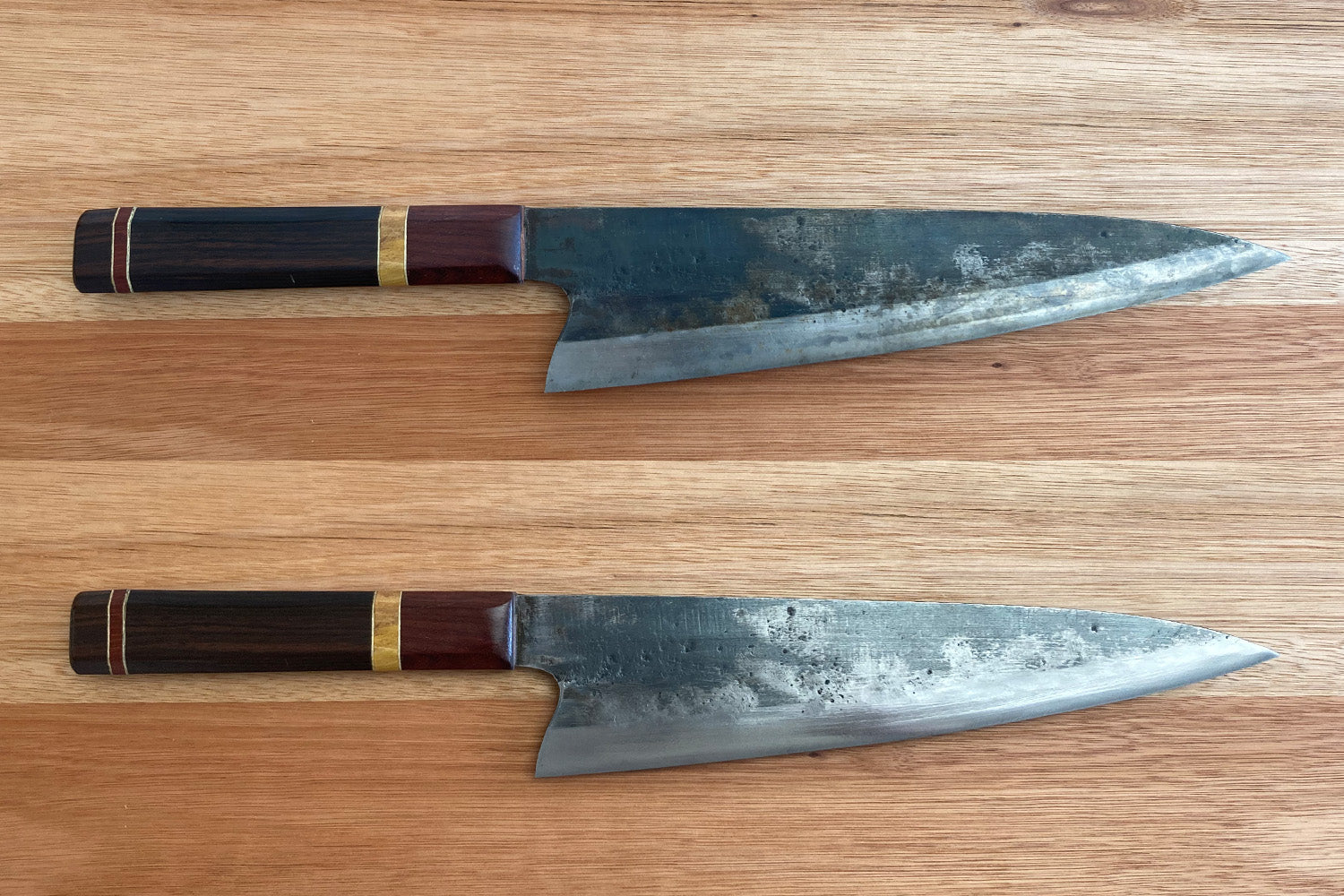
A patina is a blue-gray layer that forms on the blade over time. It helps protect the knife and gives it character. You should not try to remove this layer unless it is uneven or ugly.
If you want to encourage a patina, use your knife on foods like onions, beef, or apples. This is normal and does not mean the knife is dirty.
If the patina looks patchy or you want to even it out:
- Clean the knife with soap and water.
- Dry it well.
- Wipe with a little vinegar, then rinse and dry.
- Use the knife regularly; the patina will become more even.
Cleaning The Knife Handle
Many carbon steel knives have wooden handles. These also need care.
- Wipe the handle with a damp cloth—do not soak it.
- Dry right away.
- If the wood looks dry, rub with a little mineral oil or beeswax.
Plastic or composite handles are easier. Clean them with soap and water, but always dry them well.
How Often Should You Clean And Oil?
- After every use: Wash, dry, and oil (if storing for more than a few hours).
- If using several times a day: Oil once at the end of the day.
- For long-term storage: Clean, dry, and oil the blade well before putting away.
If you live in a humid area, oil more often. Humidity speeds up rust.
Storing Your Carbon Steel Knife
Proper storage is as important as cleaning.
- Use a knife block, magnetic strip, or blade guard.
- Avoid keeping the knife in a leather sheath—leather holds moisture.
- Never store in a damp drawer.
- If you must travel with your knife, wrap it in a dry towel and plastic wrap.
Comparison: Carbon Steel Vs. Stainless Steel Knife Care
Here’s how cleaning routines differ:
| Feature | Carbon Steel | Stainless Steel |
|---|---|---|
| Rust Risk | High | Low |
| Daily Oil Needed? | Yes | No |
| Dishwasher Safe? | No | Usually |
| Patina Forms? | Yes | No |
| Cleaning Required | Hand wash only | Hand or machine |
Non-obvious insight: Even though stainless steel is more “carefree,” it cannot match the sharpness and edge retention of high-carbon steel.
Common Myths About Cleaning Carbon Steel Knives
Many beginners hear bad advice about cleaning these knives. Let’s clear up a few myths:
Myth 1: “You must remove all patina.”
Fact: Patina is good! Only remove orange rust.
Myth 2: “Use olive oil for protection.”
Fact: Olive and vegetable oils can go rancid, causing sticky buildup and bad smells. Use mineral or camellia oil.
Myth 3: “It’s okay to wash the knife later.”
Fact: Delaying cleaning, even for a few minutes, can lead to stains.
Myth 4: “Baking soda will scratch the blade.”
Fact: When used gently, baking soda is safe and does not scratch.
Troubleshooting: Problems And Solutions
Here are some common issues and how to solve them.
Rust Appeared Overnight
- Clean with baking soda paste.
- Dry and oil.
- Store in a drier place.
Black Stains Or Patina
- Normal, as long as it’s not raised or flaking.
- If uneven, wipe with vinegar, rinse, and dry.
Sticky Blade
- Wash with soap and water.
- If sticky, you may have used too much oil or the wrong kind.
Blade Feels Rough
- Fine rust may be forming. Scrub gently with a cork and baking soda, rinse, dry, and oil.
How To Clean After Cutting Acidic Foods
Acidic foods like tomatoes, citrus, or onions react faster with carbon steel. They may cause streaks or spots.
Steps:
- Rinse the knife immediately after cutting.
- Wash with soap and water.
- Dry thoroughly.
- Oil the blade.
If a dark spot appears, do not panic. This is usually just patina. Only worry if you see orange or red rust.
How To Clean A Carbon Steel Knife In The Field
If you are camping, hunting, or cooking outdoors, you may not have soap or oil.
- Rinse the knife with clean water.
- Wipe dry with any clean cloth.
- If possible, rub a bit of animal fat or cooking oil on the blade (temporary protection).
- Clean thoroughly with soap and mineral oil as soon as you return.
Non-obvious insight: Outdoor conditions (humidity, rain, salt air) can cause rust in just a few hours.
Credit: www.reddit.com
Advanced: Removing Heavy Rust Or Pitting
If your knife has been neglected and developed thick rust or pitting, you can still save it, but it takes more work.
- Remove loose rust with a soft brush.
- Use a rust eraser (from knife supply stores) to gently scrub the blade. Move along the length of the blade, not across.
- For deep pits: These are permanent but can be cleaned. Scrub with baking soda paste, rinse, and dry.
- Sharpen the blade after cleaning, as rust can dull the edge.
- Oil the blade well.
If the knife is badly pitted and unsafe, it may be time to retire it or use it for rough jobs.
Data: How Fast Does Carbon Steel Rust?
A 2023 kitchenware study found that carbon steel can form visible rust in as little as 30 minutes when left wet, especially in humid environments. In dry indoor conditions, rust may take 2-4 hours to develop. A thin layer of mineral oil can prevent rust for several weeks.
How To Maintain The Patina On Your Knife
If you like the look of your patina, keep it:
- Use the knife regularly.
- Clean gently—do not scrub hard.
- Avoid acidic cleaners.
- Oil lightly after each use.
If you want to darken the patina, cut onions, beef, or apples, then rinse and dry.
Recommended Cleaning Products
While you do not need anything fancy, these products can help:
- Bar Keepers Friend (for tough stains, use rarely)
- Camellia oil (popular among Japanese knife users)
- Rust erasers (for stubborn rust)
- Microfiber cloths (for gentle drying)
How To Clean Around Knife Bolsters And Rivets
If your knife has a bolster (the thick part between blade and handle) or rivets:
- Use a toothpick or cotton swab to remove dirt or moisture from these spots.
- Oil lightly after cleaning.
This is a common area for hidden rust.
Safe Knife Cleaning For Families
If you share your kitchen with kids or other adults:
- Store knives out of reach when drying.
- Always dry the knife blade away from your body.
- Teach others to clean and dry the knife immediately after use.
How To Clean A Carbon Steel Knife After Butchering Meat
Meat juices can be acidic and sticky.
- Rinse the knife under warm water.
- Wash with soap and a soft sponge.
- Dry thoroughly.
- Oil the blade before storing.
For butchering, consider cleaning the blade between each cut, especially if you are working for a long time.
How To Restore A Neglected Carbon Steel Knife
If you find an old, rusty knife:
- Scrub with baking soda paste and a soft cloth.
- Remove as much rust as possible with a rust eraser.
- Wash and dry.
- Oil the blade well.
- Sharpen the edge.
Some old knives can be brought back to life, though deep pits may remain.
Quick Reference: Cleaning Frequency Table
Here’s a guide for when to clean and oil:
| Task | How Often | Why |
|---|---|---|
| Wash with soap | After each use | Prevents food stains and rust |
| Dry thoroughly | Every time | Avoids water spots and rust |
| Oil blade | Daily or before storage | Protects from moisture |
| Deep clean for rust | As needed | Removes rust, restores blade |
Expert Tips For Long-term Knife Health
- Rotate knives if you have more than one. This gives each knife time to “rest” and keeps them dry.
- Sharpen regularly, but always clean and oil after sharpening.
- Check for loose handles or rivets. Fix them to avoid water getting trapped.
- Use the right cutting board. Wood or plastic is best; stone or glass can damage the edge and hold water.
Real-life Example: Japanese Chef’s Routine
Japanese chefs often use carbon steel knives. Here’s their typical cleaning process:
- Rinse and wipe after each cut, especially with fish or acidic foods.
- Wash, dry, and oil after every shift.
- Store knives in a dry wooden block or wrap in a cloth.
This habit is why their knives often last for decades.
When To Seek Professional Help
If your knife has:
- Deep, spreading rust
- Cracks near the handle
- Severe pitting
Consider taking it to a professional sharpener or restorer. Sometimes, only a pro can save a badly damaged blade.
Credit: www.koiknives.com
Where To Learn More
To dive deeper into the science of knife metals and rust, check out this Wikipedia page on carbon steel.
Frequently Asked Questions
How Do I Know If My Knife Is Carbon Steel?
Carbon steel knives often develop a blue-gray patina, rust more easily, and do not have “stainless” printed on the blade. You can test with a magnet—carbon steel is strongly magnetic. Also, carbon steel is usually sharper and easier to sharpen than stainless steel.
Can I Use Vinegar To Remove Rust From My Knife?
Yes, vinegar can remove light rust, but use it carefully. Wipe the blade with vinegar, let it sit for a few minutes, then rinse and dry. Do not leave the knife soaking in vinegar for long periods, as it can damage the blade and strip the protective patina.
What Oil Is Best For Protecting A Carbon Steel Knife?
Food-grade mineral oil is the safest and most popular. Camellia oil is also good, especially for Japanese knives. Do not use vegetable or olive oils, as they can go rancid and create sticky spots.
Is It Safe To Cut Food With A Rusty Knife?
No, you should not use a rusty knife for food. Rust can flake off and mix with food, which is unsafe. Clean the rust before using the knife again.
How Can I Prevent My Knife From Rusting If I Live In A Humid Area?
Oil the blade lightly after every use, store the knife in a dry place, and avoid leaving it out in the open. Consider using silica gel packs in your knife drawer to absorb moisture.
Caring for your carbon steel knife may feel like extra work, but with the right habits, it becomes second nature. Clean, dry, and oil your knife each time, and it will stay sharp and beautiful for many years. With a little practice, your knife will become one of your most trusted tools in the kitchen.

Credit: www.reddit.com