
A flat top grill is a favorite for outdoor cooking. It gives food that perfect sear and smoky flavor. But when rust appears, it can ruin both the look and the taste of your meals. Many people think a rusty grill is finished, but that’s not true.
With proper cleaning and care, you can restore your flat top grill and make it last for years. In this article, you’ll learn exactly how to clean a rusty flat top grill, what tools and products to use, how to prevent rust in the future, and even how to handle tough rust situations.
Whether you’re a weekend griller or a daily chef, these practical steps will help you cook safely and confidently.
Why Flat Top Grills Rust
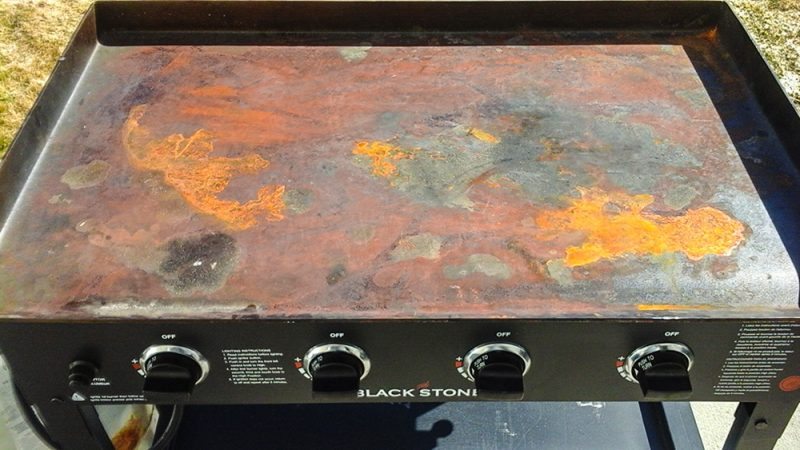
Flat top grills are usually made from carbon steel or cast iron. Both materials are strong but can develop rust if not cared for properly. Rust forms when iron reacts with water and oxygen, creating a reddish-brown layer. This can happen when you leave the grill outside, don’t clean it after cooking, or store it in a humid area. Even a small scratch can let moisture in and start the rusting process. Understanding why rust happens is the first step to preventing it.
Some people are surprised to learn that food acids, like those in tomatoes or citrus, can also speed up rusting. Another common mistake is washing the grill with soap and leaving it wet. Soap removes the protective oil layer, and water left behind creates the perfect environment for rust.
Tools And Materials You’ll Need
Cleaning a rusty flat top grill doesn’t require expensive equipment, but having the right tools makes the job easier and safer. Here’s what you’ll need:
- Metal scraper or grill spatula: For removing stuck-on rust and debris.
- Grill stone or grill brick: For scrubbing away deeper rust without scratching the metal.
- Steel wool or coarse sanding pad: For stubborn rust spots.
- Cooking oil (vegetable, canola, or flaxseed): For seasoning and protecting the surface after cleaning.
- Paper towels or clean rags: For wiping down the grill.
- Bucket of warm water: For rinsing.
- Mild dish soap (optional): Only if grease is heavy, but rinse well.
- Heat-resistant gloves: To protect your hands.
- Spray bottle with water or vinegar: For loosening rust.
- Grill cover: For future rust prevention.
You don’t need all of these for every job, but they cover most situations. For severe rust, a drill with a wire brush attachment can save time.
Safety Precautions Before You Start
Cleaning a rusty grill is safe if you follow a few basic rules:
- Work in a well-ventilated area. Rust dust and cleaning agents should not be inhaled.
- Wear gloves to protect your hands from sharp edges and chemicals.
- Make sure the grill is off and cool before starting. If you need to heat it, do so carefully.
- Keep children and pets away during cleaning.
Never use harsh chemicals or oven cleaners on your flat top grill. They can damage the metal and are unsafe for cooking surfaces.
Step-by-step: How To Clean A Rusty Flat Top Grill
Cleaning a rusty flat top grill is not difficult, but it takes patience and the right technique. Here’s how to do it, step by step:
1. Heat The Grill Slightly
Turn on your grill to low heat for 10-15 minutes. This softens rust and makes it easier to remove. Don’t overheat—just warm enough that the rust loosens but you can still work safely.
2. Scrape Off Loose Rust
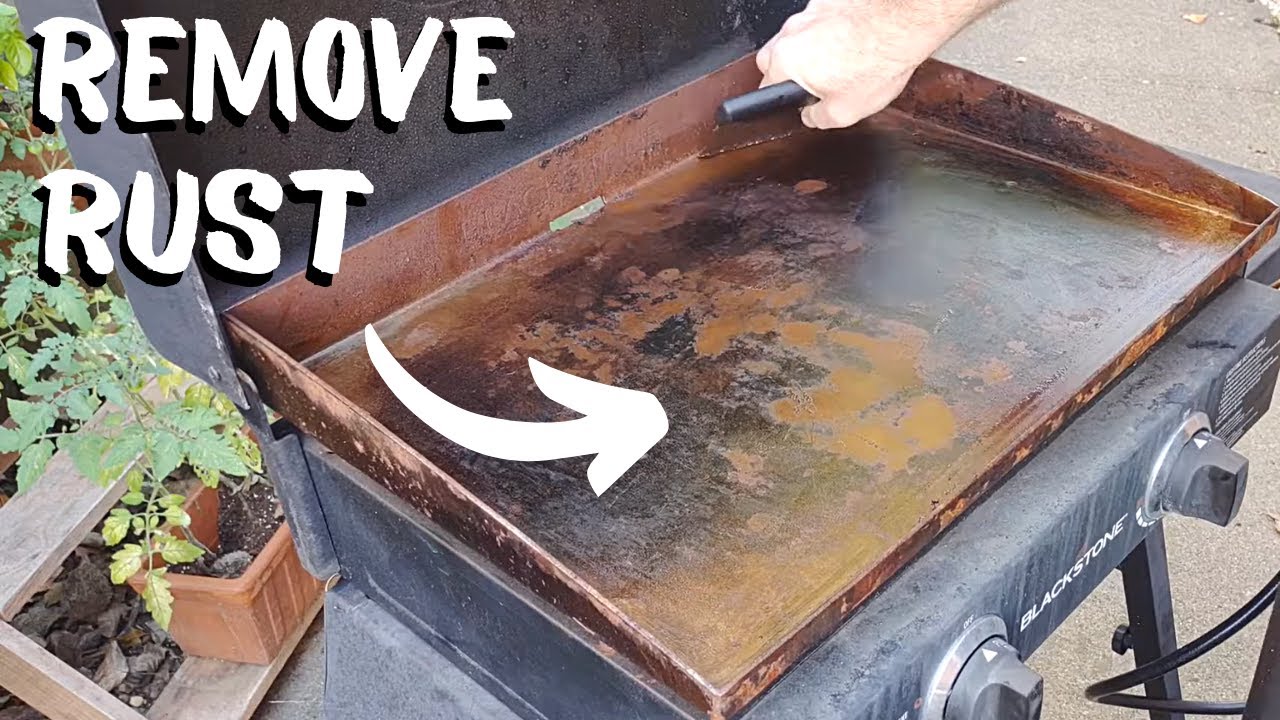
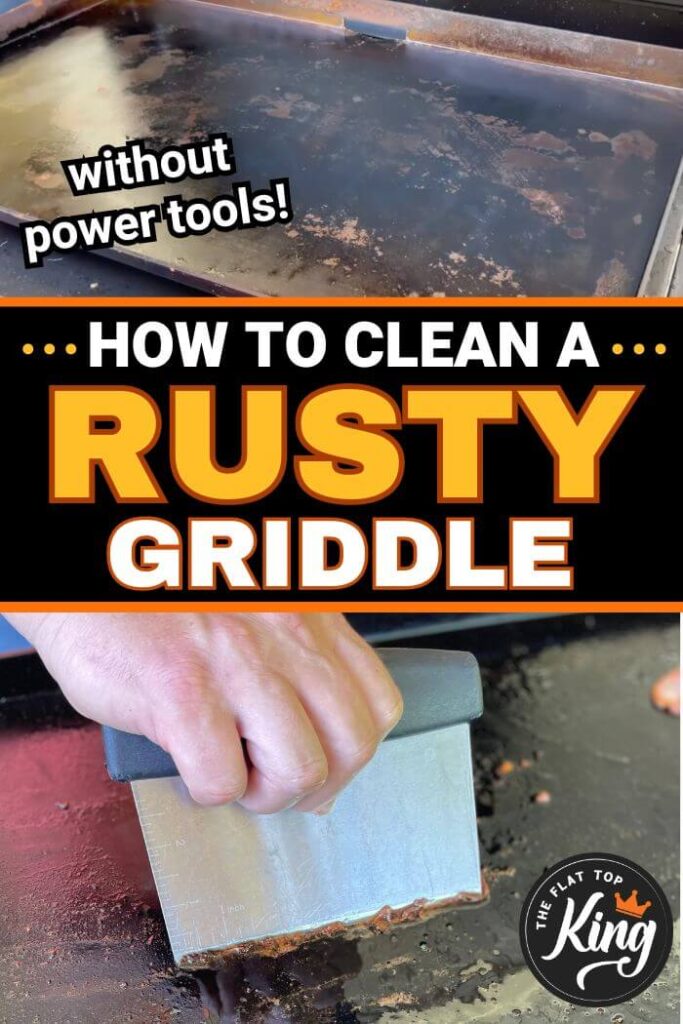
With your grill spatula or metal scraper, gently push away loose rust and debris. Hold the tool at a slight angle and use firm, even strokes. Collect the rust in a pile and wipe it away with a paper towel.
This exposes the deeper rust that needs more attention.
3. Use A Grill Stone Or Grill Brick
A grill stone is made from pumice and is safe for most flat top surfaces. Rub it in a circular motion over the rusty areas. Keep moving the stone to avoid scratching one spot too much. For corners and edges, use the side of the stone or a small piece.
If you don’t have a grill stone, steel wool or a coarse sanding pad works well. Just be gentle—too much pressure can scratch the metal.
4. Apply Vinegar Or Water
Fill a spray bottle with white vinegar or water. Vinegar is more effective because it breaks down rust, but water works for mild cases. Spray the surface and let it sit for 5-10 minutes. The liquid helps lift more rust to the surface.
5. Scrub Again
After letting the vinegar or water sit, scrub the grill again with the stone, steel wool, or a stiff brush. Focus on rusty patches. Wipe away residue with a paper towel.
6. Rinse And Dry
Wipe down the grill with a clean, damp rag to remove any leftover rust or vinegar. Dry the grill completely—moisture is your enemy. Use paper towels or let the grill air-dry with low heat for a few minutes.
7. Season The Grill
Seasoning restores the protective layer that prevents rust. Pour a thin layer of cooking oil onto the surface. Use a clean paper towel to spread the oil evenly. Heat the grill on medium until the oil starts to smoke, then turn it off. Let it cool and wipe off excess oil. This leaves a shiny, rust-resistant finish.
8. Repeat If Needed
Some grills have deep rust that needs more than one cleaning. Repeat steps 3–7 until the surface is smooth and black, not orange or rough.
Comparison: Common Rust Removal Tools
Choosing the right tool makes a big difference. Here’s how popular rust removal options compare:
| Tool | Effectiveness | Surface Safety | Cost |
|---|---|---|---|
| Grill Stone | High | Very Safe | Moderate |
| Steel Wool | Medium | Safe with care | Low |
| Wire Brush | High | Risk of scratches | Low |
| Sandpaper | Medium | Moderate risk | Low |
| Drill Attachment | Very High | Best for severe rust | High |
Grill stones are best for most people—they’re safe and effective. Use wire brushes or drill attachments only for severe rust, and always follow up with seasoning.
Homemade Rust Removal Solutions
Some people prefer natural solutions. Here are a few you can try at home:
- Baking Soda Paste: Mix baking soda and water into a thick paste. Spread on rusty spots, let sit for 20 minutes, then scrub with a brush.
- Lemon and Salt: Sprinkle salt on the rust, then squeeze lemon juice over it. Let it sit for 30 minutes. Scrub with a grill brush.
- Vinegar Spray: Spray pure white vinegar on the grill, wait 10 minutes, then scrub and wipe clean.
These solutions are safe but work best for light to moderate rust. For heavy rust, you’ll need stronger tools.
Credit: blackstoneproducts.com
How To Handle Severe Rust
Sometimes, grills are left outside for months or even years. Severe rust can look like thick flakes or deep pitting. Here’s how to rescue a badly rusted grill:
- Start with a wire brush attachment on a drill. Wear goggles and gloves.
- Work slowly, focusing on the worst areas first.
- After most rust is gone, switch to a grill stone for a finer finish.
- Clean, rinse, and dry as in the normal method.
- Season the grill multiple times. Heat, oil, and cool the grill 2-3 cycles to rebuild the protective layer.
If rust has eaten through the metal (holes or weak spots), repair is not possible. At this point, replacement is safer.
Seasoning: Why It Matters
Seasoning is not just about taste. It’s the best defense against rust. Each time you heat oil on the grill, it bonds with the metal and forms a nonstick, rust-resistant layer. This layer gets better with use.
- Use high-smoke-point oils like canola, vegetable, or flaxseed.
- Avoid butter or olive oil—they burn off too quickly.
- Season the grill after every deep clean and at least once a month during regular use.
A well-seasoned grill turns black and shiny. Food sticks less, and rust stays away.
Credit: www.youtube.com
Routine Maintenance To Prevent Rust
Regular care is easier than deep cleaning. After each use:
- While the grill is still warm, scrape off any food bits with a metal spatula.
- Wipe down with a paper towel.
- Add a thin layer of oil and spread it evenly.
- Let the grill cool, then cover it or store it in a dry place.
If you grill outside, always use a grill cover. Humidity and rain are the main causes of rust.
What Not To Do When Cleaning Rust
Many beginners make mistakes that can damage their grill or make rust worse:
- Never use soap for regular cleaning—it strips away seasoning.
- Don’t soak your grill in water—prolonged moisture causes rust.
- Avoid harsh chemicals like oven cleaner or bleach.
- Don’t use too much pressure with steel wool or brushes—this can scratch the surface.
If you’re not sure, test a small area first before cleaning the whole grill.
Credit: www.bibliotecaoscura.com
Comparing Flat Top Grill Materials
Not all flat top grills rust the same way. Here’s a quick comparison:
| Material | Rust Risk | Care Needed | Durability |
|---|---|---|---|
| Carbon Steel | High | Regular seasoning | Very durable |
| Cast Iron | High | Frequent oiling | Long-lasting |
| Stainless Steel | Low | Less seasoning | Resists rust |
| Enamel-Coated | Very Low | Gentle cleaning | Vulnerable to chips |
Carbon steel and cast iron grills give the best cooking results but need more attention. Stainless steel and enamel are easier to maintain but may not heat as evenly.
Signs Your Flat Top Grill Needs Cleaning
You don’t always need to wait for visible rust. Here are some signs your grill needs cleaning:
- Brown or orange spots appearing on the surface.
- Food starts to stick more than usual.
- Uneven heating or cold spots.
- Flaking or rough patches when you run your hand over the surface.
- Strange flavors or odors during cooking.
Addressing these early makes cleaning easier and prevents bigger problems.
How To Store Your Flat Top Grill
Proper storage is key to rust prevention:
- If your grill is portable, bring it indoors or store it in a garage during winter or rainy seasons.
- Always use a waterproof grill cover if left outside.
- Before storing, clean and season the grill. Wipe away all moisture.
- For long-term storage, place a layer of wax paper or parchment paper between the grill surface and cover. This absorbs any trapped moisture.
Humidity is the biggest enemy. Even in a covered area, moisture in the air can cause rust, so check the grill every few weeks.
Common Questions About Rust And Grills
Many people have the same worries and myths about rusty grills. Here are some things beginners often miss:
- Is a little rust dangerous? Small amounts are not usually harmful, but they can affect flavor and texture.
- Can you cook on a rusty grill? It’s better to clean the rust first. Cooking on rust can make food stick and taste metallic.
- Is all rust the same? No—surface rust is easier to remove. Deep, flaky rust means the grill has been neglected longer.
- Can you prevent rust forever? With regular seasoning and proper storage, you can keep rust away for years.
- Does weather matter? Yes—grills rust faster in humid or salty climates.
Knowing these facts helps you make smarter choices and avoid problems.
When To Replace Your Flat Top Grill
Most flat top grills last for many years with good care. But there comes a point where repair is not safe:
- Holes or deep pitting in the metal.
- Warped or uneven surface that won’t stay flat.
- Loose bolts or broken frame that can’t be fixed.
- Rust keeps returning even after cleaning and seasoning.
If you see these signs, it’s time for a new grill. Cooking on a damaged grill is unsafe.
Quick Tips For Keeping Your Grill Rust-free
- Clean and oil after every use—it takes only a few minutes.
- Always dry the surface before putting the cover on.
- Check for rust spots regularly and address them early.
- Avoid storing in humid places like basements or sheds without ventilation.
- Use high-quality oil for seasoning.
- Don’t stack heavy objects on the grill, which can scratch the surface.
- Re-season before and after long storage.
These habits prevent most rust problems.
The Science Behind Rust Removal
Rust is iron oxide, and it forms when iron, oxygen, and water mix. Removing rust is about breaking this bond. Acids like vinegar or lemon juice dissolve rust, while abrasives like grill stones or steel wool physically scrape it off. Combining both is most effective.
Professional kitchens use similar methods, but with more powerful tools and strict cleaning schedules. At home, consistency is more important than strength.
Case Study: Restoring An Old Flat Top Grill
Let’s look at a real example. A family found an old cast iron flat top in their garage. It hadn’t been used for years and was covered in thick, flaky rust.
- First, they used a drill with a wire brush to remove large rust flakes.
- Next, they scrubbed the surface with a grill stone and vinegar.
- After rinsing and drying, they seasoned the grill three times with canola oil.
- The surface turned black and smooth again, and food stopped sticking.
This process took about two hours. The grill is still in use today, showing that even heavily rusted grills can be saved.
Popular Myths About Cleaning Rust
- “You need special chemicals.” Not true—simple tools and household items work well.
- “Once rust appears, the grill is ruined.” Most rust is surface-level and easy to fix.
- “Soap is the best cleaner.” Soap removes oil, which can cause more rust.
- “You can skip seasoning if you clean well.” Seasoning is the key step that prevents future rust.
Trust proven methods over myths for the best results.
Environmental Impact Of Rust And Cleaning
Using natural cleaning solutions like vinegar and baking soda is safer for the environment. Disposing of rust flakes with regular trash is usually fine. Avoid letting oily rags or chemical cleaners go down the drain.
If you use a wire brush or drill, collect loose rust and dust. Wear a mask if you have allergies.
Recommended Oils For Seasoning
Not all oils are equal. Here’s a look at the most popular choices:
| Oil | Smoke Point | Cost | Flavor Impact |
|---|---|---|---|
| Canola Oil | 400°F / 204°C | Low | Neutral |
| Vegetable Oil | 425°F / 218°C | Low | Neutral |
| Flaxseed Oil | 225°F / 107°C | High | Nutty |
| Peanut Oil | 450°F / 232°C | Medium | Mild |
High smoke point oils are best for seasoning because they bond well and don’t burn easily.
Expert Advice: When To Call A Professional
If your grill has very heavy rust, deep pitting, or structural damage, it may be worth hiring a professional. Grill repair services can sandblast and re-season the surface, which saves time. For valuable or vintage grills, this protects the investment.
However, most rust cleaning can be done at home with patience and the right tools.
Frequently Asked Questions
How Often Should I Clean My Flat Top Grill To Prevent Rust?
Clean and oil your grill after every use. For grills used less often, do a deep clean and seasoning at least once a month.
Is It Safe To Use Vinegar On A Cooking Surface?
Yes, white vinegar is food-safe and effective at removing rust. Always rinse and dry the grill thoroughly after using vinegar.
Can I Use Sandpaper To Remove Rust?
You can use fine-grit sandpaper for stubborn rust spots. Be gentle to avoid scratching the surface. Always season the grill after sanding.
What Should I Do If Rust Keeps Coming Back?
Persistent rust usually means the grill is not being dried or seasoned properly. Check your storage location, use a grill cover, and season more often.
Are There Commercial Products For Grill Rust Removal?
Yes, there are commercial rust removers and grill cleaners. Choose products labeled as food-safe, and follow instructions carefully. For most people, household solutions like vinegar work well.
By following these steps and tips, you can keep your flat top grill in great shape, cook delicious meals, and enjoy outdoor cooking for years. For more on grill care and rust prevention, check resources like The Spruce Eats.