
Many people love cooking on a Blackstone griddle. The big, flat cooking surface gives perfect results for burgers, veggies, pancakes, and more. But sometimes, after a few uses or a long season outside, you might see brown spots, flakes, or even reddish patches on your Blackstone. This is rust. It doesn’t just look bad—it can ruin your food and shorten your griddle’s life if you ignore it.
The good news? You can fix a rusted Blackstone. You don’t have to throw it away or panic. With the right steps, tools, and a bit of effort, you can make your griddle look and work like new. In this guide, you’ll learn exactly how to remove rust, restore the cooking surface, and protect it from coming back.
You’ll see common mistakes to avoid and get expert tips to keep your Blackstone in top shape. Whether your griddle is lightly spotted or covered in rust, this guide covers everything you need.
Why Blackstone Griddles Get Rusty
Before you start fixing the rust, it helps to know why it happened. Blackstone griddles are made of cold-rolled steel, a strong material perfect for high-heat cooking. But steel rusts easily when exposed to air and moisture. Here are the main reasons rust appears:
- Humidity: Outdoor air contains moisture, especially in rainy or coastal areas.
- Rain: Leaving your griddle uncovered outside makes it easy for water to sit on the surface.
- Dew and condensation: Even if you don’t see rain, dew or condensation can cause small water drops that lead to rust.
- Improper cleaning: Washing with too much water or not drying your griddle lets moisture stay on the surface.
- Poor seasoning: The protective oil layer (seasoning) wears off or is not applied correctly.
- Scratches: Metal tools or scrubbing can remove the seasoning and expose steel.
Understanding these causes is important. It helps you not only remove rust but also prevent it from coming back.
Safety First: Preparing To Remove Rust
Fixing a rusted Blackstone is safe, but you should still take some basic steps before you start:
- Work outside or in a well-ventilated area. Rust removal can create dust and requires strong cleaners.
- Wear gloves. Protect your hands from sharp edges and chemicals.
- Have a mask and eye protection if you’ll be using power tools or wire brushes.
- Gather all tools and supplies before starting, so you don’t have to pause in the middle.

Credit: blackstoneproducts.com
Tools And Materials You’ll Need
You don’t need expensive equipment to fix a rusted Blackstone, but having the right tools makes the job faster and easier. Here’s what you’ll need:
- Griddle scraper or putty knife: For scraping off flakes and heavy rust
- Wire brush or grill brush: To scrub surface rust
- Steel wool (medium or coarse): To remove stubborn rust
- Paper towels or clean rags: For wiping down the surface
- Cooking oil (flaxseed, canola, or vegetable): To re-season the griddle after cleaning
- Mild dish soap: For deep cleaning (if needed)
- Bucket of warm water: For rinsing
- Aluminum foil (optional): As a last resort scrubber
- Power drill with wire brush attachment (optional): For severe rust
Some people use vinegar or baking soda for tough rust, but most rust can be handled with basic tools.
Step-by-step Guide: How To Fix Rusted Blackstone
Restoring your griddle takes patience. Don’t rush—each step matters for getting a smooth, rust-free cooking surface.
1. Inspect And Assess The Rust
Start by removing the griddle top (if possible) and placing it on a stable, flat surface. Look at the rust:
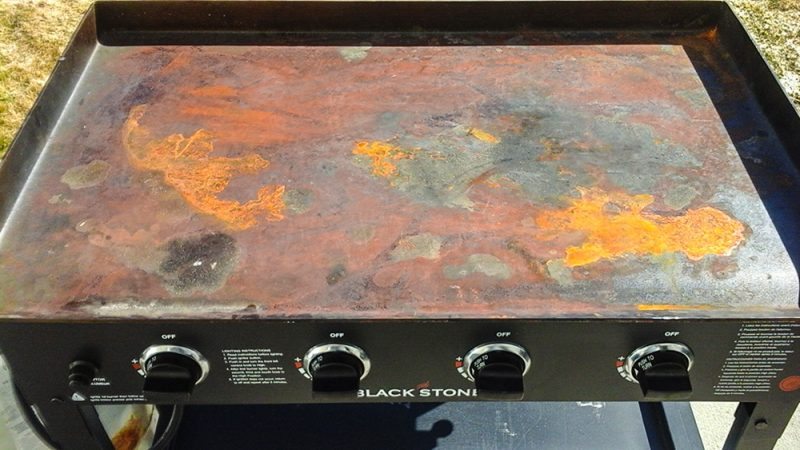
- Light surface rust: Looks like orange or brown dust, wipes off easily.
- Heavy rust: Thick patches, flakes, or pitting in the steel.
If the rust is deep and the surface is rough, you’ll need to work longer and may need power tools. If it’s just surface rust, cleaning and reseasoning is enough.
2. Scrape Off Loose Rust And Debris
Use your griddle scraper or a stiff putty knife to gently scrape the surface. Push firmly but try not to gouge the steel.
- Work in short, straight strokes.
- Wipe away debris with a paper towel as you go.
- Focus on flaky or loose patches first.
This step removes the worst of the rust and makes later cleaning easier.
3. Scrub With A Wire Brush Or Steel Wool
Next, use a wire brush or steel wool to scrub the rusty areas. For big griddles, a grill brush works well.
- Move in small circles, applying steady pressure.
- For corners and edges, use a smaller brush or fold steel wool.
- Remove all orange or brown color you can see.
If you hit a spot that won’t come clean, try a bit of water or mild dish soap. Rinse and dry the area right away after using soap.
4. Attack Stubborn Rust With Aluminum Foil (optional)
If you see stubborn rust that won’t come off, try scrubbing with a ball of crumpled aluminum foil. Foil is softer than steel but hard enough to scour away rust without scratching the griddle deeply.
- Dip the foil in a bit of water for more abrasion.
- Rub firmly but gently.
This trick is especially good for small patches.
5. Deep Cleaning (if Needed)
If your griddle feels sticky, greasy, or if you used soap, do a deep clean:
- Mix a few drops of dish soap in warm water.
- Wipe the surface with a rag dipped in soapy water.
- Rinse with clean water—never soak the griddle!
- Dry immediately with paper towels.
Never leave water sitting on the griddle after cleaning. This causes new rust.
6. Heat The Griddle To Dry And Open The Pores
Set the griddle on your burners or grill. Turn the heat to high for 10–15 minutes. This does two things:
- Dries any leftover moisture.
- Opens the steel pores so oil can soak in during seasoning.
Don’t skip this step—cold griddles don’t season well.
7. Re-season The Blackstone
After rust removal, the most important part is restoring the protective oil layer. This is called seasoning. Here’s how to do it right:
- Apply a thin layer of oil (about one tablespoon for a 28-inch griddle) to the warm surface. Use a paper towel to spread it evenly. Don’t leave pools of oil.
- Let the oil smoke. Turn the burners on high. The oil will start to smoke after a few minutes—this means it’s bonding to the steel.
- Wait until the smoke stops (usually 10–15 minutes).
- Repeat steps 1–3 three to four times, using a fresh thin layer of oil each time.
Seasoning builds up a black, shiny coating that protects the steel from air and water. The more coats you add, the better the protection.
8. Cool Down And Wipe
Once the last layer of oil has smoked and cooled, turn off the heat. Let the griddle cool to a safe temperature, then wipe off any sticky spots with a clean paper towel.
Your griddle should now look dark, smooth, and mostly rust-free. Some small stains may remain, but these won’t affect cooking if you did the steps correctly.
Comparing Rust Removal Methods
Different rust problems call for different tools. Here’s a quick comparison:
| Method | Best For | Pros | Cons |
|---|---|---|---|
| Griddle Scraper | Loose, flaky rust | Quick, easy, cheap | Not for deep rust |
| Wire Brush | Surface and medium rust | Thorough cleaning | Requires elbow grease |
| Steel Wool | Stubborn patches | Fine control | Can scratch if used too hard |
| Aluminum Foil | Small, tough spots | Cheap, gentle | Not for large areas |
| Power Tool (Wire Wheel) | Severe rust, pitting | Fast, deep cleaning | Can remove too much steel |
Choose your method based on how bad the rust is and what tools you have.
How To Prevent Rust After Cleaning
You’ve cleaned your Blackstone and it looks great. But how do you keep it from rusting again? Prevention is easier than repair. Here’s what works:
Season Regularly
Every time you use your griddle, add a thin coat of oil before and after cooking. This keeps the protective layer strong.
Store Properly
- Always cover your griddle with a fitted cover.
- For long-term storage, keep it indoors or in a shed.
- If you must leave it outside, tilt the griddle slightly so water runs off.
Clean The Right Way
- After each cook, scrape off food bits while the griddle is still warm.
- Wipe with a paper towel and a little oil.
- Avoid using lots of water or soap.
Check For Scratches
Inspect for scratches or worn spots in the seasoning. Add extra oil in these areas to prevent rust from starting.
Use The Right Oils
Oils high in polyunsaturated fats (like flaxseed or canola) bond better to steel and last longer.
Control Humidity
In wet climates, consider using moisture-absorbing packs or a dehumidifier in your storage area.
Common Mistakes When Fixing Rusted Blackstone
Even experienced cooks make errors that make things worse. Avoid these pitfalls:
- Skipping the seasoning step: Cleaning alone is not enough. Steel must be re-seasoned right away.
- Using too much water: Water causes rust. Always dry the griddle fully after cleaning.
- Applying thick layers of oil: Too much oil makes sticky, uneven seasoning.
- Scrubbing with harsh chemicals: Avoid oven cleaner, bleach, or strong acids—they damage the steel.
- Leaving the griddle outside uncovered: Rain and humidity will undo all your hard work.
- Not removing all loose rust: Small flakes left behind will keep spreading under the seasoning.
- Panicking over discoloration: Some brown or blue spots are normal and harmless after seasoning.
When Is A Rusted Griddle Beyond Repair?
Most Blackstone griddles can be saved, even with heavy rust. But in rare cases, damage is too deep:
- Holes or cracks: If rust has eaten all the way through the steel, the griddle can’t hold heat evenly or safely.
- Severe pitting: Deep, rough pits mean the surface won’t ever be smooth.
- Warping: Extreme rust can warp the steel, making it hard to cook evenly.
If you see these problems, it may be safer to replace the griddle top. Replacement parts are available from Blackstone and other sellers.
Credit: blackstoneproducts.com
Real-world Example: Restoring A Rusted Blackstone
Let’s look at a real-world case. Alex left his Blackstone outside uncovered during the rainy season. He found:
- Heavy orange rust over most of the surface
- Flaking in the corners
- Some blue-black spots from old seasoning
Alex used a scraper to remove flakes, then a wire brush and steel wool for the rest. He spent about 45 minutes scrubbing. After heating the griddle, he applied four thin layers of flaxseed oil. The surface became dark, smooth, and nearly as good as new.
Most importantly, Alex now always covers his griddle and oils it after every use.
How Long Does The Process Take?
Fixing a rusted Blackstone is not a ten-minute job. Here’s a typical time breakdown:
| Step | Time (minutes) |
|---|---|
| Setup and inspection | 10 |
| Scraping and brushing | 20–60 (depends on rust) |
| Deep cleaning and drying | 15 |
| Heating the griddle | 15 |
| Seasoning (3–4 layers) | 45–60 |
| Final wipe and cool down | 10 |
Total time: 1.5 to 2.5 hours for most rusted griddles.

Credit: www.youtube.com
How To Tell If The Rust Is Gone
After cleaning, your Blackstone should:
- Look mostly black or dark brown
- Feel smooth to the touch
- Have no loose flakes or powder
- Show no orange or red spots
If you still see rough or reddish areas, repeat the scrubbing and seasoning steps. A few stains are okay as long as the surface is smooth and oiled.
Extra Tips For A Longer-lasting Blackstone
Experienced users know a few tricks that keep rust away and make cooking better:
- Use a dedicated griddle cover—not just any tarp or cloth.
- Oil under the edges and corners—rust often starts here.
- Heat the griddle for 5 minutes before each use to burn off moisture.
- Avoid cooking acidic foods (like tomatoes) on a freshly seasoned griddle. Acid can strip the oil layer.
- Mark your seasoning date on a calendar. Refresh it every few months, even if the surface looks fine.
What If You Have A Stainless Steel Blackstone?
Most Blackstones are cold-rolled steel, but a few models are stainless steel. Stainless is more rust-resistant but not rust-proof. The same cleaning steps work, but use a softer brush and less aggressive scrubbing. Stainless needs seasoning too, but the coating may look lighter.
Alternative Rust Removers: Are They Safe?
Some people use vinegar, lemon juice, or commercial rust removers. These can work, but there are risks:
- Vinegar and lemon juice are acidic and can pit steel if left too long.
- Commercial rust removers may leave chemicals that affect food taste or safety.
If you use these, rinse very well and re-season thoroughly. For most people, mechanical scrubbing is safer and just as effective.
Comparing Oils For Seasoning
Not all oils work the same. Here’s a quick look:
| Oil Type | Seasoning Quality | Smoke Point | Cost |
|---|---|---|---|
| Flaxseed | Best, hard finish | 225°C (437°F) | High |
| Canola | Very good | 204°C (400°F) | Low |
| Vegetable | Good | 204°C (400°F) | Low |
| Olive Oil | Okay (not as durable) | 190°C (375°F) | Medium |
| Avocado Oil | Good, high smoke point | 271°C (520°F) | High |
Choose flaxseed or canola if you want the hardest, longest-lasting seasoning.
When To Call The Experts
If you’ve tried everything and rust keeps coming back, or if the griddle is badly pitted or warped, it may be time for professional help. Some grill shops offer sandblasting and re-coating for a fee. Or you can buy a replacement top. Visit the official Blackstone site for parts and support.
Frequently Asked Questions
How Often Should I Season My Blackstone Griddle?
For best results, season your griddle after every use. At a minimum, do a full seasoning (3–4 layers) every few months, especially if you see bare spots or after deep cleaning.
Can I Use Soap To Clean My Blackstone?
A small amount of mild dish soap is safe if your griddle is very dirty or rusty. But always rinse and dry completely, then re-season right away. Daily cleaning with just oil and a scraper is better.
Is A Little Rust On My Blackstone Dangerous?
Small spots of rust won’t harm you, but they can spread and ruin the taste and look of your food. It’s best to remove rust as soon as you see it.
What Is The Best Oil For Seasoning My Blackstone?
Flaxseed oil gives the hardest, most durable finish, but canola and vegetable oils also work well. Avoid butter, margarine, or low-smoke-point oils.
Can I Fix A Blackstone Griddle With Deep Pitting?
If the surface is rough but still solid, you can smooth it with a wire wheel and reseason. If the pitting is deep enough to catch a fingernail or affects cooking, consider replacing the top for safety and even heat.
Bringing your rusted Blackstone back to life is not just about cleaning—it’s about learning proper care. With regular oiling, smart storage, and quick action at the first sign of rust, you’ll enjoy years of delicious meals from your griddle. Treat your Blackstone well and it will reward you every time you fire it up.