
Floating shelves can completely change how your kitchen looks and feels. They offer a chance to add your style, create extra storage, and keep your space feeling open and fresh. But decorating floating shelves in the kitchen is not as easy as putting a few dishes on them.
Many people find it hard to make their shelves look organized, beautiful, and practical at the same time. A well-arranged shelf can make your kitchen feel bigger, brighter, and more personal, while a cluttered or empty shelf can do the opposite.
If you want your kitchen to look like the ones you see in magazines or on social media, you need a plan—and some clever ideas you may not have thought about.
In this guide, you’ll discover how to decorate floating shelves in your kitchen so they work for you and look fantastic. You’ll learn how to choose what to display, how to arrange your items, and how to mix beauty with function.
Whether your kitchen is small or large, modern or classic, this article will help you decorate your floating shelves with confidence.
Understanding Floating Shelves In The Kitchen
Floating shelves are shelves attached to the wall with hidden brackets. This design makes the shelf look like it’s “floating” without any visible supports. Kitchens are one of the most popular places to use these shelves, but why?
First, floating shelves save space. Cabinets can make a kitchen feel tight or crowded, especially in small spaces. Shelves open up the walls, making the room feel larger and lighter. They are also flexible—you can add them almost anywhere you have wall space, above counters, or even in corners.
Second, they let you show off your style. With open shelves, you can display your favorite dishes, plants, or cookbooks. They make the kitchen feel more personal and inviting. Plus, everything is easy to reach when you’re cooking or setting the table.
But floating shelves also have a challenge: if you put too much on them, they look messy. If you put too little, they look empty. The key is finding a balance between function and decoration.
Planning Your Shelf Decor
Before you start decorating, a little planning goes a long way. Good planning means you won’t waste time, money, or effort.
Measure Your Space
Always measure the length, depth, and height between shelves. This tells you how much space you have for items. Standard kitchen floating shelves are usually 8-12 inches deep, but yours may be different. Knowing the size helps you pick items that fit well and won’t fall off.
Think About Purpose
Decide what you want the shelves to do for you. Do you want them mainly for storage, decoration, or both? Some people use floating shelves for everyday dishes, while others use them for plants and art.
Choose A Color Theme
Kitchens look best when the shelf items match or complement the rest of the room. Pick a color theme for the shelves. For example, all white dishes, or a mix of wood and green plants. This makes your shelves look intentional, not random.
Set A Budget
Decorating shelves can be cheap or expensive, depending on what you buy. You don’t need all new items—mix things you already have with a few new pieces. If you’re buying, set a budget for things like jars, baskets, or art.
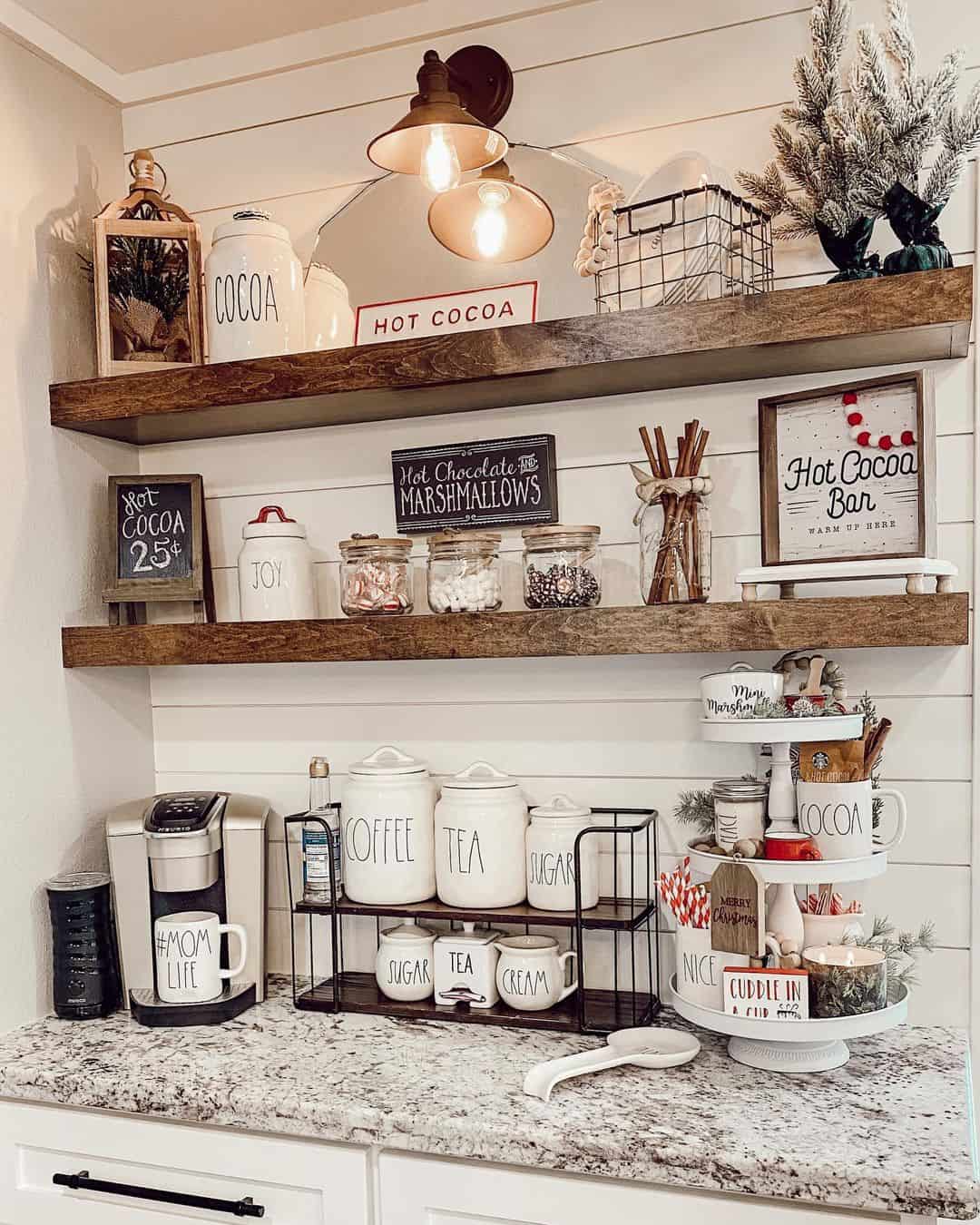
Credit: www.soulandlane.com
Selecting What To Display
What you put on your floating shelves makes a huge difference. Some things look great and are useful. Others can make the shelf crowded or hard to clean.
Everyday Essentials
Items you use every day are perfect for open shelves. They’re easy to grab and put away.
- Plates and bowls (especially matching sets)
- Cups and mugs
- Drinking glasses
- Mixing bowls
Stacking these items neatly keeps the shelf tidy.
Decorative Items
Add a few decorative pieces to give the shelves personality.
- Small plants (herbs, succulents)
- Vases or pitchers
- Art prints or framed photos
- Decorative jars or bottles
- Candles
Plants bring life to the kitchen, while vases and jars add shape and color.
Cookbooks
Cookbooks not only look nice, but they’re also useful. Stack them flat or line them upright. Choose books with attractive covers for extra style.
Storage Containers
Clear storage jars or canisters are both practical and pretty. Fill them with pasta, rice, oats, or snacks. They add color and keep food fresh.
Seasonal Items
Change your shelf decor with the seasons. For example, display pumpkins in the fall or fresh flowers in spring. This keeps your kitchen feeling new and exciting.
What To Avoid
Not everything works on floating shelves. Avoid:
- Heavy appliances (they can break the shelf)
- Messy items (open bags or leaky containers)
- Too many small things (they can look cluttered)
Arranging Items Like A Designer
How you arrange your items matters as much as what you choose. Designers use a few simple tricks to make shelves look balanced and stylish.
Use Odd Numbers
Groups of three or five look better than pairs. For example, put three small jars together, not just two. This feels natural and pleasing to the eye.
Mix Heights And Shapes
Don’t put everything at the same height. Mix tall vases, medium jars, and short bowls. This adds interest and movement.
Create Layers
Put larger items at the back and smaller items in front. For example, lean a cutting board against the wall, then place a small plant in front. This layering makes the shelf look full but not crowded.
Leave Empty Space
Don’t fill every inch. Leaving some open space makes the shelf look lighter and helps each item stand out.
Repeat Colors Or Materials
If you use wood, glass, or a certain color, repeat it in different spots. For example, wood bowls on one side, a wood tray on the other. This ties the shelf together.
Use Trays Or Baskets
Small trays or baskets can group items together. For example, put oil, vinegar, and salt on a tray. This keeps small things organized and easy to move.
Styling For Different Kitchen Looks
Every kitchen has its style. The way you decorate floating shelves should fit with the rest of your room. Here are tips for popular kitchen styles:
Modern Kitchens
Modern kitchens are simple, clean, and often use white, black, or gray. Choose items with simple shapes and neutral colors. Use clear glass jars, white plates, and black or metallic accents. Avoid too many decorations—less is more.
Rustic Or Farmhouse Kitchens
Rustic kitchens use warm wood, metal, and natural textures. Decorate with wooden cutting boards, stoneware, old jars, and herbs in clay pots. Add a vintage sign or a woven basket for extra charm.
Minimalist Kitchens
Minimalist kitchens focus on the basics. Only display what you need. Use one color, like all white or all gray, and keep items simple. Even two or three well-chosen items can be enough.
Eclectic Or Colorful Kitchens
If you love color, show it! Mix bright dishes, colorful bowls, and fun art. Just keep the overall look balanced. Too many colors can feel messy, so repeat a few main colors throughout.
Scandinavian Kitchens
Scandinavian style uses lots of white, pale wood, and green plants. Choose simple dishes, clear glass, and add a few small plants. Keep the look fresh and uncluttered.
Mixing Storage And Style
You don’t have to choose between beauty and function. Floating shelves are perfect for both.
Make Storage Pretty
Store things you use every day in nice containers. For example, flour in a glass jar, tea in a tin, or utensils in a ceramic cup. This way, your storage is also part of the decoration.
Hide Clutter
Use baskets or boxes for things you don’t want on display. For example, put snack bars or napkins in a basket. Baskets add texture and keep shelves neat.
Add A Focal Point
Choose one special item for each shelf. This could be a favorite bowl, a colorful plant, or a piece of art. Arrange other items around this focal point.
Practical Tips For Long-lasting Shelves
It’s easy to make shelves look good for a day. Keeping them nice every day is the real challenge. Here’s how:
Clean Regularly
Open shelves collect dust and grease, especially in the kitchen. Wipe them down every week. Wash dishes or containers often so they don’t get sticky.
Don’t Overload
Floating shelves have weight limits. Check the instructions when you install them. Most kitchen shelves can hold about 15-30 pounds (7-14 kg), depending on the wall and brackets.
Rotate Decor
Change things up once in a while. Move items to different shelves, or swap in something new. This keeps your kitchen feeling fresh and lets you clean behind items.
Keep Everyday Items Within Easy Reach
Put things you use most often on the lower shelves. Save the top shelves for special items or decorations.
Use Shelf Liners
A thin liner or mat can protect your shelf from scratches and spills. Choose one that matches your style.
Real-life Examples For Inspiration
Sometimes seeing real-life examples can spark new ideas. Here are a few ways people decorate floating kitchen shelves:
- The Minimalist Cook: Three white plates stacked, two glass jars of oats and rice, a tiny plant. Clean, simple, and easy to keep tidy.
- The Coffee Lover: A row of mugs, a jar of coffee beans, a French press, and a small sign that says “But First, Coffee.” Everything you need for your morning routine in one place.
- The Baker’s Shelf: Mixing bowls, flour and sugar in glass jars, a rolling pin, and a measuring cup. Looks pretty and is ready for baking.
- Family-Friendly: Colorful bowls, matching cups for each family member, a container for snacks, and a framed child’s drawing.
- The Green Thumb: Small pots of basil, mint, and parsley, a watering can, and a wood cutting board. Fresh herbs add beauty and flavor to your meals.
- The Traveler: Souvenir mugs, a small world map, and a jar of spices from different countries.
If you want even more design ideas, you can check inspirations on Houzz, a top resource for home decor.
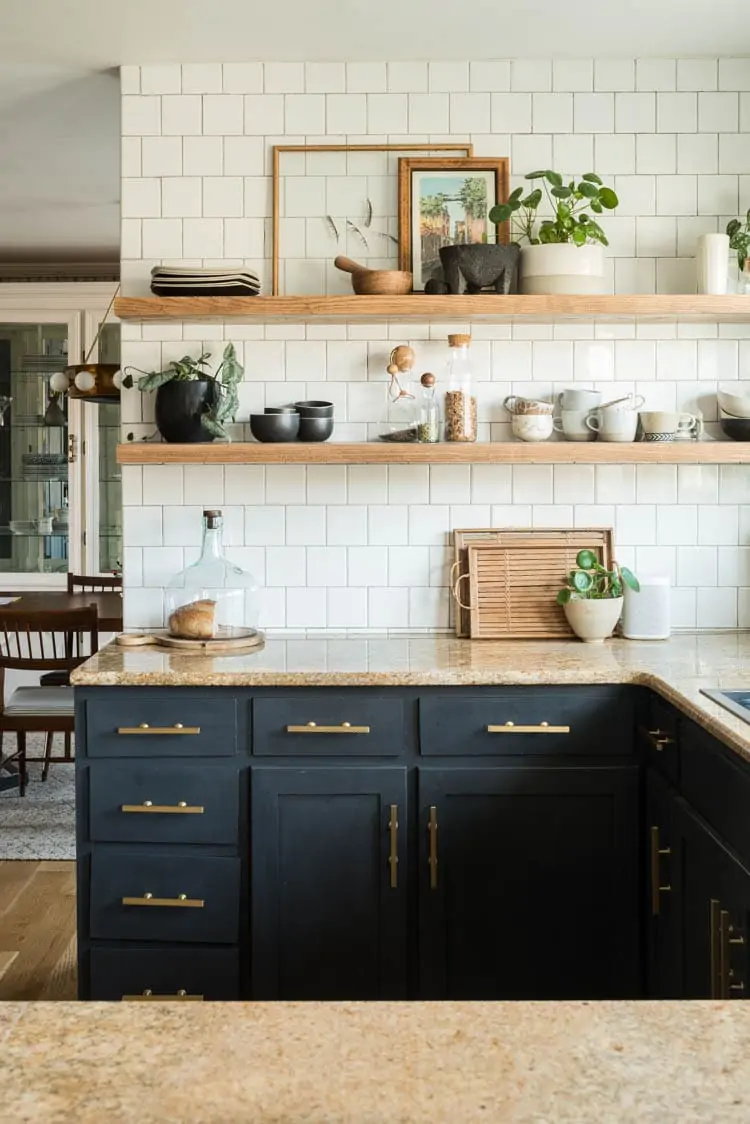
Credit: biggerthanthethreeofus.com
Mistakes To Avoid When Decorating Kitchen Floating Shelves
Even with good intentions, it’s easy to make mistakes. Here are some common problems and how to fix them.
- Too Much Clutter: Cramming too many things makes the shelf look messy. Stick to a few key items.
- Ignoring Balance: If one side is full and the other is empty, the shelf feels off. Spread items evenly.
- Mixing Too Many Colors: Too many different colors can look chaotic. Stick to a few main colors.
- Forgetting About Cleaning: Some items, like open bags or wooden boards, can collect grease. Choose items that are easy to clean.
- Ignoring the Wall Behind: The wall color or pattern shows between shelves. Make sure it matches or complements your decor.
Comparing Shelf Materials And Finishes
Different shelf materials change the look and feel of your kitchen. Here’s a comparison to help you choose:
| Material | Appearance | Durability | Maintenance |
|---|---|---|---|
| Wood | Warm, natural, fits most styles | High (if sealed) | Wipe clean, may need oiling |
| Metal | Modern, sleek, industrial look | Very high | Easy to clean, can scratch |
| Glass | Light, elegant, open | Medium | Shows fingerprints, clean often |
| Laminate | Many colors, affordable | Medium | Wipe clean, can chip |
Wood shelves are the most popular for kitchens because they look warm and can handle weight if installed well. Metal is good for modern kitchens, while glass makes the space feel open but needs more cleaning.
Best Practices For Shelf Arrangement
Here’s a side-by-side look at two different approaches to arranging kitchen floating shelves:
| Approach | Features | When to Use |
|---|---|---|
| Functional First | Stacks plates, bowls, glasses; uses matching jars; focuses on easy access | For busy kitchens, families, everyday use |
| Decorative First | Mixes art, plants, special ceramics; leaves more empty space | For show kitchens, less daily use, open floor plans |
Most kitchens are a mix of both. If you cook a lot, keep essentials easy to grab. If your kitchen is more for show, focus on style.
How To Make Small Kitchens Feel Bigger With Floating Shelves
Small kitchens can be tricky, but floating shelves help them feel more open. Here’s how:
- Use Lighter Colors: White or light wood shelves blend with the wall and make the room feel bigger.
- Keep Shelves Thin: Thinner shelves look less heavy.
- Don’t Overfill: Too many items shrink the space. Stick to a few things you really like.
- Add Mirrors or Glossy Surfaces: A small mirror or shiny objects reflect light and make the room brighter.
- Go Vertical: Stack two or three shelves upward rather than spreading them out wide.

Credit: www.youtube.com
Creative Ideas To Personalize Your Shelves
Your kitchen should show your personality. Here are creative ways to make your floating shelves unique:
- Display a family recipe card in a frame.
- Hang small mugs from hooks under the shelf.
- Arrange fruit in a pretty bowl for color and freshness.
- Add a string of fairy lights for a cozy glow.
- Show off travel souvenirs like spices, mugs, or art.
- Feature a favorite quote on a small sign.
You can change these personal touches anytime for holidays or special events.
Safety And Installation Tips
Even the most beautiful shelf is a problem if it falls. Here’s how to keep your floating shelves safe:
- Find Wall Studs: Always attach shelves to studs, not just drywall. This gives strong support.
- Use the Right Brackets: Check the weight limit for both the shelf and the brackets.
- Level the Shelf: Use a level tool so your shelf isn’t crooked.
- Follow Instructions: Every shelf is different. Read the instructions carefully.
- Test Before Loading: Put a little weight on first, then add more once you’re sure it’s strong.
A shelf that’s not installed well can be dangerous, especially with glass or heavy items.
Updating Your Shelves Over Time
Your shelves don’t have to stay the same forever. It’s easy to update them as your life or taste changes.
- Swap out dishes as your collection grows.
- Change plants with the seasons.
- Add a new cookbook or art print.
- Try different color themes for holidays.
This makes your kitchen feel alive and keeps you enjoying your space.
Budget-friendly Decor Tips
You don’t need to spend a lot to decorate floating shelves. Here’s how to save money:
- Shop Your Home: Use dishes, jars, or art you already have.
- DIY Art: Frame a pretty napkin or your own drawing.
- Thrift Stores: Find unique vases or bowls for cheap.
- Use Food as Decor: Pasta, beans, or spices in jars look great and cost little.
- Propagating Plants: Grow new plants from cuttings instead of buying new ones.
Sometimes the best shelf decorations are things with memories, not things with big price tags.
Seasonal And Holiday Decorating
Floating shelves are perfect for adding seasonal cheer. Here’s how to do it without a lot of work:
- Spring: Fresh flowers, pastel mugs, lemon decor.
- Summer: Bright bowls, small vases with herbs, seashells.
- Fall: Mini pumpkins, cinnamon sticks, orange and brown colors.
- Winter: Pinecones, candles, red or silver dishes.
Just swap a few items for each season, and your kitchen will always feel up to date.
Frequently Asked Questions
How Much Weight Can Floating Kitchen Shelves Hold?
Most floating kitchen shelves can hold between 15 to 30 pounds (7 to 14 kg) if installed into wall studs with good brackets. Always check the instructions for your specific shelf. Avoid putting heavy appliances or large stacks of dishes unless you’re sure the shelf is strong enough.
What Is The Best Way To Clean Floating Shelves In The Kitchen?
Wipe shelves with a damp cloth and mild soap once a week. For sticky spots, use a bit of vinegar or dish soap. Avoid harsh chemicals, especially on wood. Remove all items before cleaning to reach every corner.
How Do I Keep Floating Shelves From Looking Cluttered?
Keep to a few main colors and repeat them. Use baskets or trays to group small items. Leave some empty space on each shelf. Regularly remove things you don’t use or love. Remember, less is often more with open shelves.
Should Floating Shelves Match My Kitchen Cabinets?
They don’t have to match, but they should complement your cabinets. For example, white shelves look good with any color cabinets. Wood shelves add warmth to white or gray kitchens. If you want a bold look, try shelves in a contrasting color.
Can I Install Floating Shelves Myself, Or Do I Need A Professional?
If you’re comfortable with tools and can find wall studs, you can install shelves yourself. Use a level, drill, and the correct brackets. If your walls are tricky or the shelves are very heavy, it’s smart to hire a professional.
Floating shelves can make your kitchen both beautiful and practical. With a little planning, the right items, and smart arrangement, you’ll have a space that works for you and impresses anyone who visits. Remember to update your look as your style changes, and enjoy the process of making your kitchen truly yours. For more inspiration, you can explore House Beautiful, a trusted source for home decor trends.