
Folding prosciutto for a charcuterie board is more than a simple kitchen task—it’s an art that can transform your gathering from ordinary to memorable. When you present prosciutto beautifully, guests notice. They see the care you put into every detail, and the board becomes a centerpiece that sparks conversation. But many people find prosciutto tricky: it’s thin, sticky, and tears easily. You might wonder, “Is there a right way to fold prosciutto?” or “How do I make my charcuterie look professional?” This guide gives you everything you need to know, from basics to advanced techniques, so your next board will impress anyone, no matter your skill level.
Let’s explore how to handle prosciutto confidently, with clear steps, practical examples, and insider tips you won’t find in most guides. Whether you’re preparing for a family get-together or hosting a larger event, you’ll learn not just how to fold prosciutto, but also how to choose, store, and serve it for the best results.
Why Prosciutto Deserves Special Attention
Prosciutto stands out among cured meats because of its unique texture and flavor. Made from the hind leg of a pig, it’s aged for months, sometimes years. The result is a delicate, melt-in-the-mouth experience with a sweet, salty taste that pairs well with cheese, fruit, and bread.
Unlike thicker meats, prosciutto slices are paper-thin and can be tricky to work with. If you just lay them flat, they might stick together or look dull. Folding prosciutto creates volume, catches the eye, and makes it easier for guests to pick up slices without tearing them. The right fold also controls portion size, ensuring everyone gets a taste.
Choosing The Best Prosciutto
Before folding, you need quality prosciutto. Not all prosciutto is the same, and your choice affects both taste and appearance.
Types Of Prosciutto
- Prosciutto di Parma: From Italy, aged at least 12 months. Slightly nutty and sweet.
- Prosciutto di San Daniele: Also Italian, aged a bit longer, darker color, sweet and intense.
- Domestic Prosciutto: Made outside Italy, usually milder and less expensive.
When possible, choose authentic Italian prosciutto. Look for a thin, even fat layer. The fat adds flavor and keeps slices moist.
How To Buy Prosciutto
- Pre-sliced packs: Convenient, but can stick together. Choose ones with visible marbling.
- Freshly sliced at a deli: Fresher and easier to separate. Ask for “paper-thin” slices.
A good rule: buy about 1 to 2 ounces per person for a charcuterie board. This avoids waste and keeps the board balanced.
Storage Tips
- Keep unopened prosciutto refrigerated.
- After opening, wrap tightly in plastic or parchment to avoid drying out.
- Use within 2-3 days for best texture.
Preparing Prosciutto For Folding
Handling prosciutto gently makes folding much easier. Here’s what you need to know before you start folding.
Separation
- If slices stick, let them warm to room temperature for 5–10 minutes. This makes them more flexible.
- Gently peel each slice apart, supporting with two hands.
- If slices are torn, don’t worry. You can still fold them or use them for rustic boards.
Surface And Tools
- Use a clean, non-stick surface (parchment paper or a wood cutting board).
- Clean, dry hands are essential. Wet or greasy hands can tear the meat.
- Avoid using metal tongs—they can shred thin slices.
Portioning
- Standard slices are about 3–4 inches wide and 6–8 inches long.
- If slices are very wide, cut them in half for easier folding.
Classic Prosciutto Folding Techniques
There is no single “correct” way to fold prosciutto, but some methods are especially popular for charcuterie boards. Each style creates a different visual effect and eating experience.
1. Simple Ribbon Fold
The ribbon fold is classic, easy, and always looks elegant.
How to do it:
- Take a slice of prosciutto and lay it flat.
- Gently fold it back and forth, like a loose accordion or ribbon, making soft curves.
- Place each folded piece onto the board so the folds stand up slightly.
Why use it?
This fold adds height and makes the board look full. Guests can grab a “ribbon” easily without unrolling the whole slice.
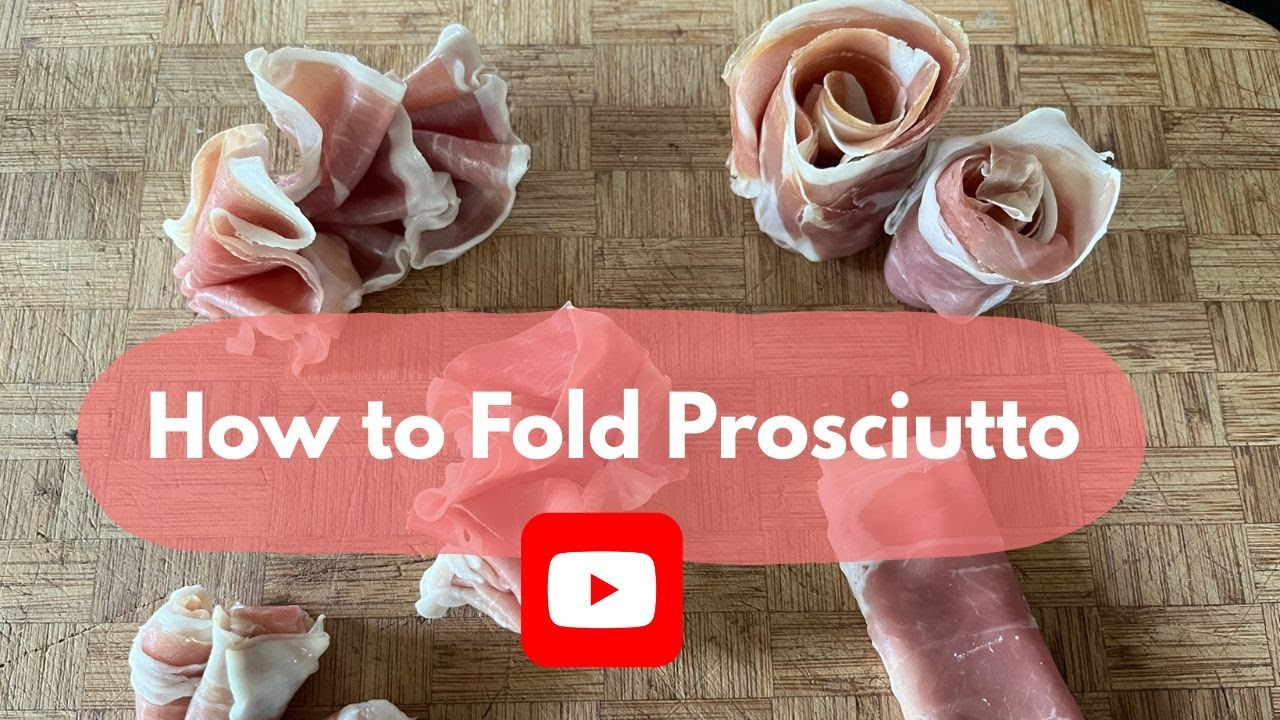
2. Rosette Or Flower Fold
Prosciutto flowers are showstoppers on a board, perfect for special occasions.
How to do it:
- Lay a slice flat. Starting from one short end, roll it tightly about halfway.
- Loosen the rolling for the remaining length, letting the edge flare outward.
- Stand the rolled side down, and gently open the flared end to look like petals.
Pro tip:
Use two slices for larger “flowers. ” Place the finished rosettes in the center or corners for visual impact.
3. Loose Roll
A loose roll is less fancy than a rosette but still neat and easy to pick up.
How to do it:
- Lay a slice flat.
- Starting from one end, loosely roll the slice into a cylinder.
- Place seam-side down so it doesn’t unravel.
When to use:
This works well if you want tidy, uniform pieces, or if guests will be eating with their hands.
4. Folded Fan
The fan fold shows off the marbling and creates a sense of movement.
How to do it:
- Fold a slice in half lengthwise.
- Fold again, making a quarter-width strip.
- Gently curve it into a semi-circle or “fan,” and arrange on the board with edges showing.
Best for:
Highlighting the color contrast between meat and fat.
5. Twisted Nest
For a more rustic, natural look, try the nest.
How to do it:
- Take a slice and twist it gently along its length.
- Coil the twisted slice into a small “nest” or circle.
- Place on the board, tucking the ends underneath.
Why choose it?
It adds texture and looks less formal, perfect for casual gatherings.
6. Overlapping Waves
This fold is great for filling longer spaces on rectangular boards.
How to do it:
- Fold each slice in half crosswise.
- Overlap the folded slices like roofing tiles, forming a line or curve.
- Repeat with several slices, arranging them side by side.
Good to know:
This makes it easy for several people to grab pieces at once.
Advanced Folding Techniques For Prosciutto
If you want to take your presentation to the next level, try these more advanced folds. They require a bit more patience but can truly impress your guests.
1. Prosciutto Roses With A Glass
This method creates perfect, uniform roses using a wine glass.
- Drape a prosciutto slice over the rim of a clean wine glass.
- Add a second slice, overlapping the first by about half.
- Continue adding slices, rotating around the rim, until you have 3–5 slices layered.
- Push gently into the glass, then carefully turn it over and lift the glass away.
The petals will fall open, creating a full rose.
Tip:
Chill the glass first to keep the slices from sticking.
2. Prosciutto “petals” On Toothpicks
Great for bite-sized, mess-free servings.
- Fold a slice into quarters.
- Skewer through the base with a toothpick, then gently fan out the layers at the top.
- Arrange upright in a jar or directly on the board.
3. Layered Prosciutto Ribbons
This technique maximizes the look of abundance.
- Fold several slices in half lengthwise.
- Stack them slightly offset, then fold the stack back and forth in a wide “S” shape.
- Place on the board so the folds are visible.
This style works especially well with other thin meats, like salami or coppa.
Comparing Folding Techniques: Looks Vs. Practicality
To help you choose the right folds for your next charcuterie board, here is a comparison of the most common folding styles:
| Folding Style | Visual Appeal | Ease of Grabbing | Skill Needed |
|---|---|---|---|
| Ribbon Fold | Elegant, classic | Very easy | Beginner |
| Rosette | High impact | Medium | Intermediate |
| Loose Roll | Neat, tidy | Very easy | Beginner |
| Fan Fold | Showcases marbling | Easy | Beginner |
| Twisted Nest | Rustic, casual | Easy | Beginner |
| Overlapping Waves | Full, abundant | Very easy | Beginner |
| Glass Rose | Showstopper | Medium | Advanced |
How To Arrange Folded Prosciutto On Your Board
Folding is just the start. How you arrange prosciutto matters as much as the fold itself.
Placement Tips
- Start with the main items (cheeses, bowls of olives or spreads).
- Add folded prosciutto in small clusters near cheese or fruit.
- Place folds at different angles for a dynamic look.
- Avoid overcrowding—each fold should be easy to pick up.
Color And Texture
Mix prosciutto with different meats (like soppressata or mortadella) for color contrast. Add green grapes, figs, or red cherries nearby to make the pink of the prosciutto stand out.
Board Size And Shape
- Round boards: Place prosciutto in a circle or radiate out from the center.
- Rectangular boards: Use lines or clusters in the corners and along the sides.
Serving Size
Plan for 2-3 folds per guest if prosciutto is a main feature. For larger boards with many meats, one fold per person is enough.
Practical Tips For Handling Prosciutto
Many beginners struggle with prosciutto sticking or tearing. These practical tips solve common problems:
Preventing Tears
- Always separate slices slowly, supporting the middle with your hand.
- If cold, let slices come to room temperature before handling.
- Never pull from one end only—this causes tearing.
Reducing Stickiness
- Place slices between sheets of parchment before folding.
- If using pre-sliced prosciutto, gently fan out the slices before folding.
Keeping Prosciutto Fresh
Prosciutto dries quickly on a board. To keep it soft:
- Add just before serving, not hours ahead.
- If serving outdoors, cover with a clean cloth until guests arrive.
- For longer events, keep extra prosciutto in the fridge and replenish as needed.
Pro Insights Most People Miss
- Use a light brush of olive oil on your hands or board to prevent sticking (just a drop—don’t make it greasy).
- Use the fat side: When folding, keep the fat edge on the outside for a glossy, appetizing look.

Credit: www.youtube.com
Pairing Prosciutto With Other Charcuterie Board Elements
Even the best-folded prosciutto can be lost without thoughtful pairing. Here’s how to make your board unforgettable.
Cheese Pairings
Prosciutto pairs well with both soft and hard cheeses. Some favorites:
- Mozzarella: Mild, creamy, balances the saltiness.
- Parmesan: Aged, nutty, enhances flavor depth.
- Brie: Rich and soft, contrasts with prosciutto’s texture.
Fruits And Vegetables
Sweet fruits balance salty prosciutto:
- Figs and melon: Classic Italian pairing.
- Grapes, cherries, pears: Add color and sweetness.
Add arugula, roasted peppers, or pickled onions for a fresh, tangy note.
Breads And Crackers
Offer a mix:
- Grissini (breadsticks): Wrap folded prosciutto around the end for a fun bite.
- Sliced baguette: Neutral, lets flavors shine.
- Water crackers: Crisp, light.
Spreads And Condiments
A little sweetness or spice elevates the experience:
- Honey or fig jam
- Whole-grain mustard
- Balsamic glaze
Place these in small bowls near the prosciutto for easy pairing.
Wine And Beverages
Prosciutto works with both red and white wine. Good choices:
- Prosecco or Champagne: Bubbles cut the fat.
- Chianti: Italian red, earthy and smooth.
- Pinot Grigio: Crisp, refreshing.
For non-alcoholic options, try sparkling water with lemon or a tart apple juice.
How Prosciutto Compares To Other Meats On Charcuterie Boards
Here’s a quick comparison to help you balance your selection:
| Meat | Texture | Flavor Profile | Best Folding Style |
|---|---|---|---|
| Prosciutto | Delicate, silky | Sweet, salty | Ribbon, Rosette |
| Salami | Firm, chewy | Spicy, tangy | Fan, Overlapping |
| Capicola | Thin, marbled | Herbal, rich | Loose Roll |
| Speck | Slightly firmer | Smoky, savory | Twisted Nest |
Insight:
Mixing different textures and flavors keeps your board interesting and prevents palate fatigue.
Mistakes To Avoid When Folding Prosciutto
Even experienced hosts make simple errors. Avoid these to keep your board looking and tasting its best:
- Overhandling: Excess touching warms the meat, making it limp and hard to fold.
- Folding too early: Prosciutto dries out quickly. Fold and arrange just before guests arrive.
- Stacking slices too tightly: Slices will stick together, making them hard to separate.
- Ignoring the fat layer: Hiding the fat side can make the prosciutto look dull. Always show off the glossy, white edge.
- Using cold prosciutto: Cold slices are stiff and tear easily. Let them warm up for better folding.
Making Prosciutto The Star: Presentation Tips
Want your board to stand out? Here are some creative ways to showcase folded prosciutto:
- Create a prosciutto “river”: Run ribbon folds diagonally across the board for movement.
- Build height: Stack rosettes or nests in small bowls or glasses for a 3D look.
- Highlight with garnish: Place fresh basil or rosemary sprigs beside the folds for a pop of green.
- Use color: Add red strawberries or purple grapes next to prosciutto for contrast.
Prosciutto Folding For Special Diets
Some guests might avoid pork or require gluten-free options. Here’s how to adjust:
- Substitute turkey or beef prosciutto for non-pork eaters.
- Prosciutto itself is gluten-free, but check crackers and breads.
- For low-sodium diets, use smaller folds so guests can control portions.
Cleaning Up: What To Do With Leftover Prosciutto
If you have extra prosciutto after your event, don’t waste it.
- Wrap tightly and refrigerate for up to 2 days.
- Add to scrambled eggs, salads, or pasta.
- Use as a pizza topping or in sandwiches.
Never refreeze prosciutto—it changes the texture.

Credit: fancyaproncooking.com
Prosciutto Folding For Large Events
If you’re preparing a board for 20 or more guests, efficiency matters.
- Fold prosciutto ahead in small batches and cover with plastic wrap.
- Use simple folds (like ribbon or roll) for speed.
- Enlist a helper to keep up with demand and avoid warm, sticky slices.
Insider tip:
For very large boards, make a mix of folds for visual interest without adding too much work.
Sustainability And Prosciutto
Prosciutto is a premium product, and sustainability matters.
- Choose certified producers who follow traditional, humane methods.
- Use every slice—imperfect pieces can be chopped for salads or cooked dishes.
For more on ethical cured meats, see the Slow Food Foundation.
Credit: www.youtube.com
Frequently Asked Questions
How Do I Stop Prosciutto From Sticking When Folding?
Let slices come to room temperature before separating. Use a non-stick surface or parchment paper. If slices stick, gently peel apart with two hands, supporting the center.
Can I Fold Prosciutto Ahead Of Time?
You can fold prosciutto up to an hour before serving. Cover tightly with plastic wrap and refrigerate. Arrange on the board just before guests arrive for best texture.
What’s The Best Fold For Beginners?
The ribbon fold is easiest for beginners. It’s quick, neat, and hard to mess up. Just fold the slice back and forth and place it on the board.
How Much Prosciutto Should I Serve Per Person?
Plan for 1 to 2 ounces per person if prosciutto is a main feature. For mixed boards with several meats, 0.5 to 1 ounce per guest is enough.
Is Prosciutto Safe To Eat Raw?
Yes, high-quality prosciutto is cured and safe to eat as is. Always buy from reputable sources and keep refrigerated until serving.
Folding prosciutto for your charcuterie board is about more than looks—it shows thoughtfulness and elevates your gathering. With the techniques in this guide, you can confidently handle, fold, and arrange prosciutto for any occasion. The right fold makes serving easy, keeps the meat fresh, and brings out the best flavors.
Whether you use simple ribbons or elaborate roses, your board will look as good as it tastes. Enjoy the process, experiment with styles, and most of all, have fun sharing your creation with others.